





 Dr. Arjun Srivastav
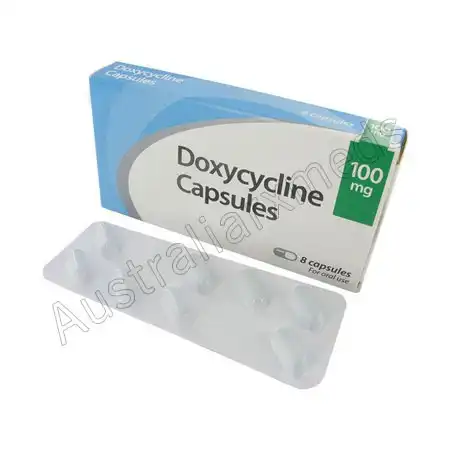
Doxycycline 100 mg is a tetracycline antibiotic you can only get with a prescription. Doctors reach for it when they are treating certain bacterial infections, and it has a handful of other specific uses too. That 100 mg figure on the box? It is just the strength of each tablet or capsule. It tells you how much active ingredient sits inside a single dose, not how often you should swallow one. In Australia this medicine is strictly prescription only, and the dose, the frequency, and the full length of your treatment all come down to what exactly you are being treated for. You might spot it written as doxycycline 100 mg or doxycycline 100mg on a pack or prescription slip. Both mean the same thing. Same medicine, same strength.
Doxycycline 100 mg at a Glance
| Product fact | Information |
|---|---|
| Active ingredient | Doxycycline |
| Strength | 100 mg |
| Medicine type | Tetracycline antibiotic |
| Main uses | Certain bacterial infections, acne, malaria prevention and other specific indications |
| Form | Tablet or capsule depending on the product |
| Prescription | Prescription only in Australia |
One thing worth knowing straight away. The exact formulation changes between brands. Some Australian products carry doxycycline as the hydrochloride (hyclate) salt, and others use the monohydrate form. Both deliver the same active ingredient into your body. The salt mainly affects small details like how you store the product or whether the food instructions differ slightly, so always lean on the leaflet that comes with your own pack. You might receive a doxycycline 100 mg tablet from one pharmacy and doxycycline 100 mg capsules from another. The strength and the uses stay the same. Only the physical form is different.
What Is Doxycycline 100 mg?
Doxycycline belongs to the tetracycline family of antibiotics. It has been around for decades, and it remains a genuinely common choice for a range of susceptible bacterial infections. The 100 mg strength is one of the most frequently dispensed, and the doxycycline 100 mg tablet is a form many Australians end up being prescribed.
Here is the part people often misunderstand. That number on the box is simply the amount of medicine packed into each unit. It does not mean every person takes 100 mg on the same schedule, or for the same number of days.
So how does it actually work? At a simple level, doxycycline interferes with the way bacteria build the proteins they need to grow and multiply. Block that process, and the bacteria cannot keep increasing in number. That gives your own immune system the room to step in and clear the infection. This is why you will sometimes see it described as slowing or inhibiting bacterial growth rather than killing bacteria outright.
One distinction really matters here. Doxycycline acts on susceptible bacteria. It does nothing against viruses. It will not help with a common cold, the flu, or any other viral illness. Australian medicine information spells this out explicitly, and for good reason. Using antibiotics for viral infections gives you no benefit at all, and it feeds straight into the problem of resistance.
What Is Doxycycline 100 mg Used For?
When people type what is doxycycline 100 mg used for or what is doxycycline 100 used for into a search bar, they are usually trying to work out one thing. Does the medicine they have been given actually match their condition? The doxycycline 100 mg uses spread across several different purposes, and the reason you personally have been prescribed it shapes everything about how you take it. Instead of dumping a long catalogue of organisms on you, it makes more sense to think in terms of the main use categories. That is really what explains what is doxycycline 100 mg for.
Certain bacterial infections
Doxycycline may be prescribed for specific susceptible bacterial infections. That can include some respiratory infections and certain sexually transmitted infections. The prescriber picks it when the bacteria involved are expected to respond, and that judgement is usually guided by local resistance patterns and the individual situation in front of them.
Acne
Doxycycline can be prescribed to help control acne. Its value here actually comes from two effects working together. There is an antibacterial action that reduces the bacteria linked to acne, and there is an anti inflammatory action that calms the redness and swelling of inflamed spots. Healthdirect specifically describes this combined role in acne treatment.
Malaria prevention
For travel into certain high risk areas, doxycycline can be prescribed to help prevent particular forms of malaria. This is a preventive use. You take it over a defined period, and it is not a treatment for an active infection. It is usually combined with other protective measures.
Other specific indications
Australian product information lists several less common uses that a doctor may consider in particular circumstances. These are clinician directed, and they do not apply to most people taking the medicine.
Keep this in mind though. Doxycycline is not suitable for every infection. The right choice depends on the organism involved, the condition being treated, and the individual patient. Australian consumer medicine information notes that doxycycline is not appropriate for certain organisms unless susceptibility has been confirmed. That is exactly why self selecting an antibiotic is never a good idea.
How Does Doxycycline 100 mg Work?
If you have been wondering what does doxycycline 100 do inside the body, the answer is more straightforward than you might expect. After you swallow it, doxycycline gets absorbed and travels to the site of infection. Once there, it interferes with bacterial protein production. That is the mechanism bacteria rely on to grow and reproduce. Take away their ability to make those proteins, and the bacteria can no longer multiply. The defences of your body are then better able to clear them.
This action is specific to bacteria. Viruses use a completely different process to replicate, so doxycycline has zero effect on viral infections like colds or flu.
Why can it also help with acne? The same antibacterial effect reduces the bacteria associated with breakouts, while a separate anti inflammatory effect dampens the swelling and redness of inflamed lesions. That dual action is what makes it useful well beyond straightforward infections.
How to Take Doxycycline 100 mg
The question doxycycline 100 mg how to take comes up constantly, and getting it right genuinely changes how well the medicine works and how comfortable the whole experience feels.
Follow your prescribed schedule. Take it exactly as directed. Try to take each dose at around the same time each day, because a consistent routine helps keep steady levels of the medicine in your body. That consistency is also the real key to the related question of doxycycline 100 mg when to take.
Swallow with plenty of water. Take the tablet or capsule with a full glass of water and follow the specific instructions printed on your pack. Then stay upright, whether that means sitting, standing, or walking, for at least 30 minutes afterwards. This matters more than people realise. Doxycycline can irritate the oesophagus (the food pipe) if it lingers there, and staying upright helps the medicine pass through quickly.
Food. Taking doxycycline with food or immediately after eating can take the edge off stomach upset. The exact food guidance can depend slightly on the formulation, so check your leaflet. Healthdirect advises taking it with food or right after a meal and remaining upright for at least 30 minutes to minimise oesophageal irritation.
Do not stop early. Even if you feel completely better, finish the full course unless your doctor tells you otherwise. Stopping early can let the infection return, and it contributes to antibiotic resistance. This is the heart of the question how long should I take doxycycline 100 mg. The answer is always the same. For the full length your doctor prescribed. No less. Even once your symptoms ease.
Missed dose. If you forget a dose, take it when you remember, provided there is enough time before the next one is due. If it is nearly time for the next dose, just skip the missed one and carry on as normal. Do not take a double dose to make up for the one you missed.
💡 Tip
Doxycycline 100 mg Dosage
There is no single universal dose for doxycycline 100 mg. Australian consumer medicine information shows different schedules for different indications, which is exactly why the answer to how many tablets should I take always comes back to the prescription.
- Certain infections: Often 200 mg on the first day, then 100 mg daily, but this varies with the infection
- Acne: May use a different strength or regimen, clinician directed
- Malaria prevention: A specific daily schedule based on travel and medical advice
- Other indications: Determined by the treating clinician
Is doxycycline 100 mg taken once or twice a day? This is the real question behind the search doxycycline 100 mg how many times a day, and the honest answer is that frequency varies by condition and prescription. Some regimens use a single daily dose. Others split the dose across the day, particularly in the early stage of treatment or for certain infections. Your prescription label and the leaflet in your pack will tell you exactly how often to take yours. This is why you should never compare your schedule with that of someone else. The same medicine can be taken very differently depending on what it is treating.
That breakdown above is an explanatory guide. It is not a self dosing instruction. Always follow the dose your doctor has prescribed for your specific situation.
🔔 Reminder
How Long Does Doxycycline 100 mg Take to Work?
There is no single timeframe that applies to everyone. The search doxycycline 100 mg how long does it take to work does not have one clean answer, because how quickly you notice improvement depends on the infection or condition being treated, its severity, and your individual response.
What is generally true is that symptoms may start to ease before the course is finished. Feeling better is a good sign. But it does not mean the treatment is complete or that you should stop early. Finishing the prescribed course is what helps prevent the infection coming back.
If your symptoms worsen, or if they have not improved after several days of taking doxycycline, contact your prescriber. Healthdirect specifically advises speaking with a doctor if symptoms do not improve or get worse after you have been taking the medicine for a few days.
Doxycycline 100 mg Side Effects
Like all medicines, doxycycline can cause side effects. Not everyone gets them, but plenty of people search doxycycline side effects and doxycycline 100 mg side effects, and knowing what to watch for helps you respond sensibly rather than panicking over something harmless or ignoring something serious.
Doxycycline 100 mg and Sun Exposure
Doxycycline can make your skin noticeably more sensitive to sunlight and UV light. It raises your risk of sunburn, sometimes more quickly than you might expect. This photosensitivity is a well recognised effect of the tetracycline class, and it is worth its own section rather than being buried in a list of side effects.
A few practical steps help. Apply a broad spectrum sunscreen. Wear protective clothing. Avoid spending long periods in strong sun, particularly during peak UV hours. If you notice your skin becoming unusually red or reacting to sun exposure while taking doxycycline, contact your doctor. Healthdirect specifically recommends increased sun protection while taking this medicine.
⚠️ Warning
Doxycycline 100 mg Interactions
Some other products can interfere with how well doxycycline is absorbed. The main ones to be aware of fall into a few categories:
- Antacids
- Calcium supplements
- Magnesium supplements
- Iron supplements
- Zinc supplements
- Other prescription medicines and non prescription products
Why do these matter? Certain minerals can bind to doxycycline in the gut, which reduces the amount your body actually absorbs. Healthdirect advises separating antacids and supplements containing iron, calcium, zinc or magnesium from doxycycline by at least two hours.
To stay safe, tell your doctor and pharmacist about every medicine you take. That means prescription, non prescription, vitamins, and herbal supplements included. Let them check for interactions before you start.
Precautions Before Taking Doxycycline 100 mg
A short conversation with your doctor before starting helps make sure doxycycline is right for you. Things worth mentioning include:
- Any allergy to doxycycline or other tetracycline antibiotics
- Whether you are pregnant or planning pregnancy
- Whether you are breastfeeding
- The age of the person taking it, since tetracyclines have specific restrictions for young children
- Any liver or other medical conditions
- Work or lifestyle that involves high sun or UV exposure
- All other medicines and supplements you are taking
This is not an exhaustive warning list. Its purpose is simply to answer the practical question people actually have, which is, is there anything I should tell my doctor before taking this? Australian consumer medicine information highlights allergies, pregnancy, breastfeeding, existing medical conditions, other medicines, and significant sunlight exposure as the key points to disclose.
❗ Important
Doxycycline 100 mg for Acne
Doxycycline for acne is one of the more frequent reasons this medicine comes up in conversation. It gets prescribed because of the way its two effects work together. The antibacterial action reduces bacteria linked to breakouts, while the anti inflammatory action helps settle the redness and swelling of inflamed spots. Healthdirect explains both roles in its guidance on doxycycline.
A few points are worth noting. Acne dosing is not automatically the same as infection dosing. It may use a different strength or regimen, and the length of treatment is clinician directed. It is also not appropriate for every acne case. A doctor decides whether an oral antibiotic is the right step based on the type and severity of the acne and what has already been tried.
Is Doxycycline 100 mg Prescription-Only Medicine in Australia?
Yes. Doxycycline products are Schedule 4 prescription only medicines in Australia, which means you need a prescription from a doctor to obtain them. For anyone searching doxycycline 100 mg Australia, the key point is that it cannot be bought over the counter. A doctor determines whether doxycycline is appropriate for your situation and, if so, which product and dose to use. Several different brands and formulations are available, so the one you receive will depend on what your prescriber and pharmacist supply. Healthdirect identifies doxycycline products as Schedule 4 prescription only medicines.
FAQs
What is doxycycline 100 mg used for?
Doxycycline 100 mg is used to treat certain susceptible bacterial infections, to help control acne, and to prevent particular forms of malaria. It also has a small number of other specific indications determined by a doctor.
What does doxycycline 100 mg do?
It interferes with bacterial protein production, which stops susceptible bacteria from multiplying and allows your body to clear the infection. It also has an anti inflammatory effect that is useful in acne.
How should I take doxycycline 100 mg?
Take it exactly as prescribed, with a full glass of water, and stay upright for at least 30 minutes afterwards. Taking it with food or just after a meal can reduce stomach upset. Always check your pack leaflet for the specific instructions for your product.
When should I take doxycycline 100 mg?
Take it at the times set out in your prescription, and try to keep those times consistent from day to day. Your doctor will have chosen the timing based on the condition being treated.
How many times a day do you take doxycycline 100 mg?
It depends on the condition and the prescription. Some regimens use one dose a day, while others use two doses spaced through the day, especially at the start of treatment or for certain infections. Follow the schedule on your prescription label.
How long does doxycycline 100 mg take to work?
There is no universal timeframe. It depends on the infection or condition and your individual response. Symptoms may start improving before the course is finished, but you should still complete the full course. If symptoms worsen or do not improve after a few days, contact your doctor.
Can doxycycline 100 mg be used for acne?
Yes, it can be prescribed for acne because of its antibacterial and anti inflammatory effects. However, acne dosing may differ from infection dosing, the length of treatment is clinician directed, and it is not suitable for every acne case.
Is doxycycline 100 mg prescription only in Australia?
Yes. Doxycycline is a Schedule 4 prescription only medicine in Australia, so you need a prescription from a doctor to obtain it. A doctor decides whether it is appropriate for you and which product and dose to use.


Nora Alice –