

Diabetes And Erectile Dysfunction Affect Men
By Ezra Allen, Feb-04-2023


 Dr. Arjun Srivastav Medical Reviewer (Pharm D)
 If you are a man living with diabetes and have noticed changes in your sexual function, you are far from alone. Erectile dysfunction is one of the most common complications of diabetes, yet it rarely gets talked about openly. Many men suffer in silence, not realising that the link between blood sugar and sexual performance is well documented in medical research.
This guide breaks down how diabetes affects erections, what treatment options exist (including ED medications), and the lifestyle steps that make a real difference.
Quick Answer: Can diabetes cause erectile dysfunction?
Yes. Diabetes is one of the leading causes of erectile dysfunction (ED) in men. High blood sugar damages the blood vessels and nerves that control erections. Over half of men with diabetes experience ED, and they are roughly 3 times more likely to develop it than men without diabetes.
The good news? Around 95% of ED cases are treatable with medications like sildenafil and tadalafil, lifestyle changes, and blood sugar management.
| Quick Facts | Information |
| ED prevalence in diabetic men | ~52.5% overall |
| Type 2 diabetes ED rate | 66.3% |
| Type 1 diabetes ED rate | 37.5% |
| Risk increase vs. non-diabetic men | 3x higher |
| Treatable cases | ~95% |
| First-line treatment | Oral PDE5 inhibitors (sildenafil, tadalafil) |
What Is Erectile Dysfunction?
Erectile dysfunction is the ongoing difficulty getting or keeping an erection firm enough for sexual activity. Most men experience occasional trouble that is completely normal. It becomes a medical concern when the problem persists for weeks or months.
- Occasional ED affects almost every man at some point.
- Persistent erectile dysfunction is worth discussing with a doctor.
- ED is often an early warning sign of an underlying condition, frequently diabetes or heart disease.
It is not simply a normal part of getting older, and it is not something you just have to live with.
How Diabetes Leads to Erectile Dysfunction
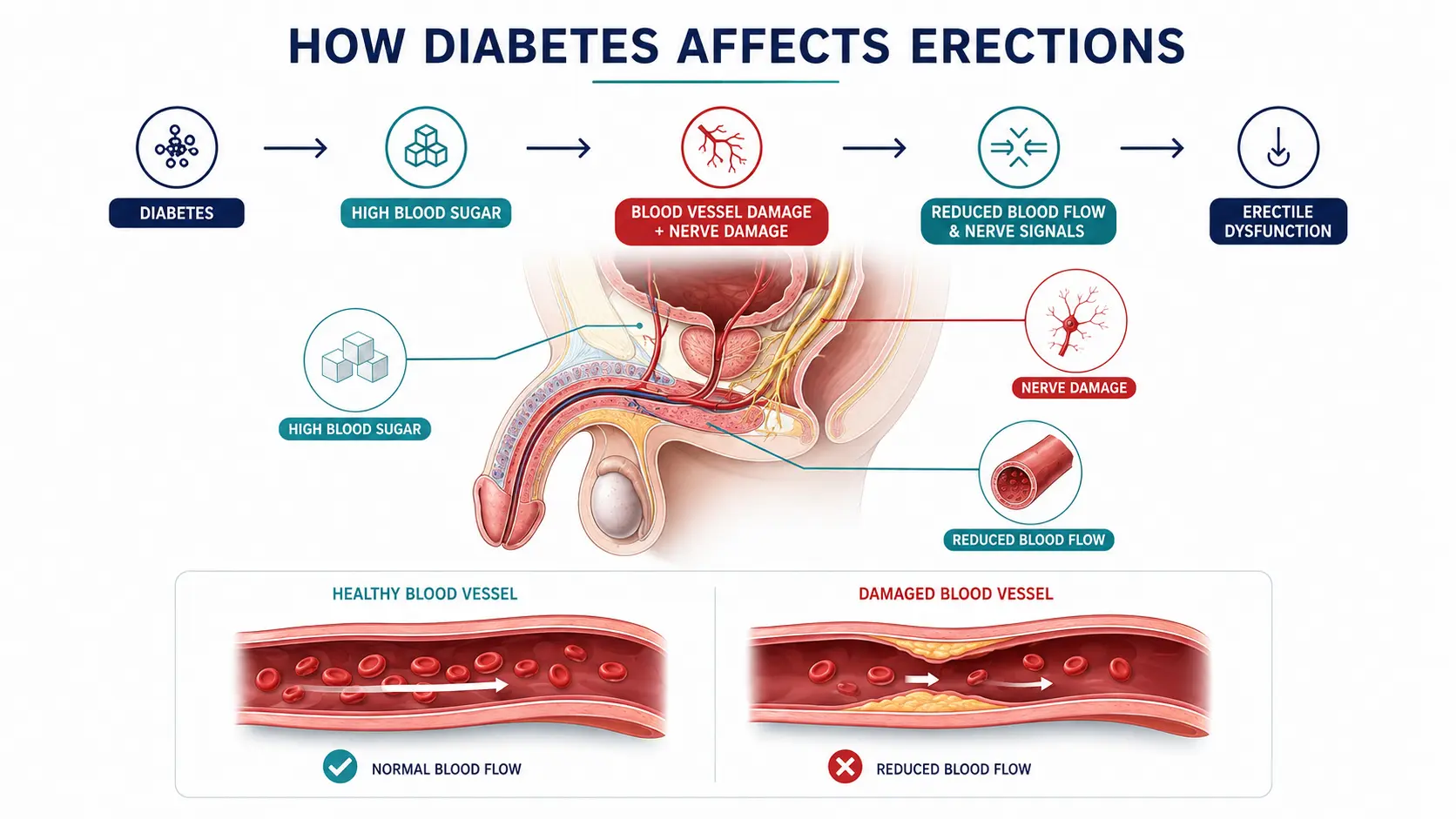
An erection relies on healthy blood vessels, properly functioning nerves, balanced hormones, and a calm state of mind. Diabetes can interfere with nearly every one of these.
Blood Vessel Damage
High blood sugar damages the inner lining of blood vessels (the endothelium). This lining produces less nitric oxide, the chemical that tells blood vessels to widen during arousal. Less nitric oxide means less blood reaches the penis. Think of it like a water pipe with reduced flow; the plumbing is there, but the pressure drops.
Nerve Damage (Diabetic Neuropathy)
Nerves carry the signal from the brain to the penis during arousal. Chronic high blood sugar damages these nerves over time. Even if blood flow is fine, the “message” may not get through. This is called diabetic neuropathy, one of the most common complications of long-standing diabetes.
Low Testosterone
Men with diabetes are more likely to have low testosterone. Testosterone drives sex drive and erection quality. When levels drop, libido falls and erections become harder. This is a hormonal disease, separate from blood flow, though both can happen together.
Psychological Impact
Living with a chronic condition takes a mental toll. Stress, anxiety, and depression are more common in people with diabetes, and each affects sexual performance. The cycle is tricky; worrying about ED leads to more anxiety, which makes ED worse.
Some Medications
Certain blood pressure or diabetes medications may contribute to erectile dysfunction. If you suspect this, do not stop your medication on your own; talk to your doctor about alternatives.
How Common Is ED in Men With Diabetes?
The numbers tell a clear story:
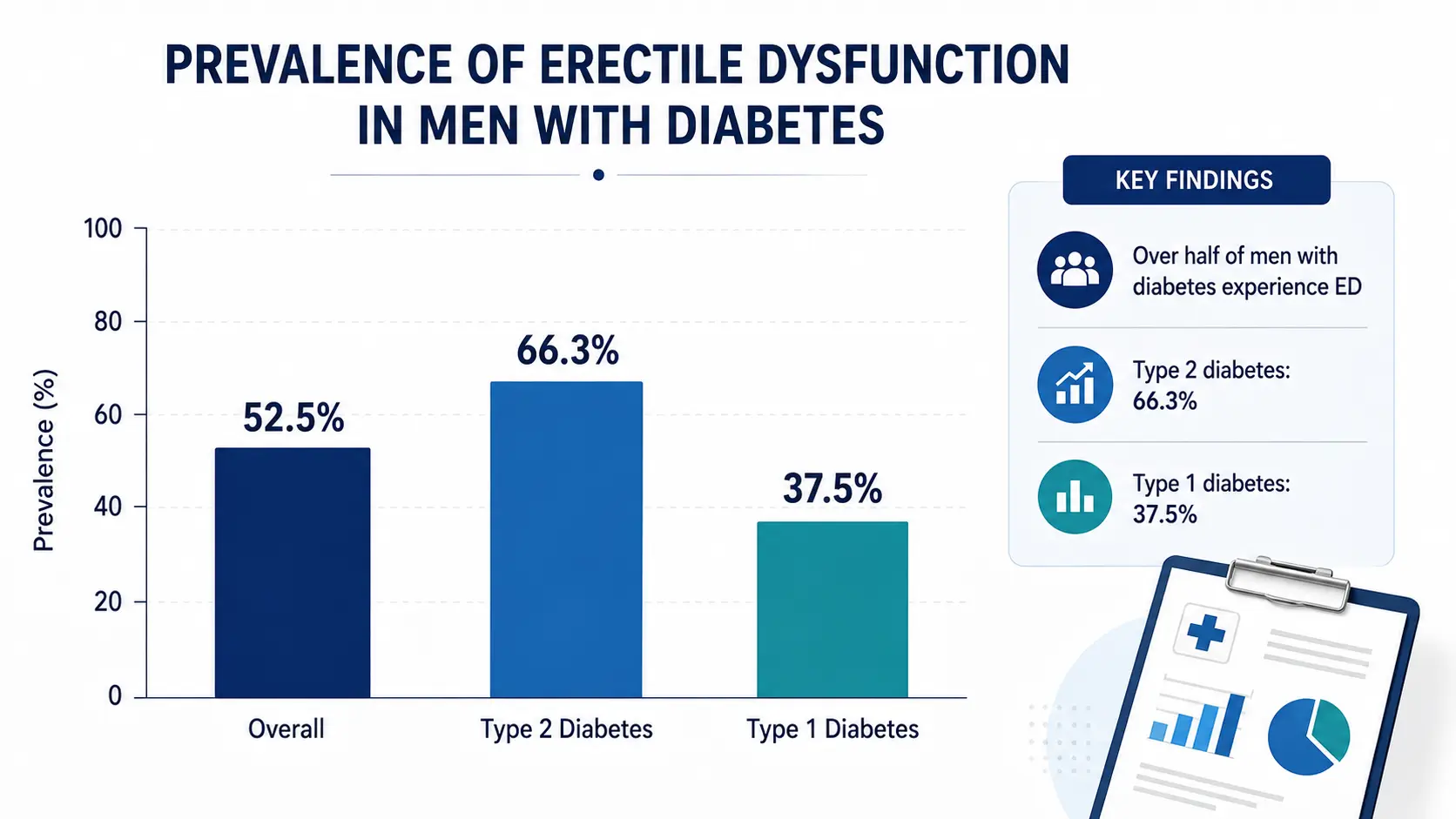
- 52.5% of men with diabetes experience ED overall.
- 66.3% in type 2 diabetes, 37.5% in type 1.
- Global pooled prevalence sits at 65.8% across multiple studies.
- Men with diabetes are 3 times more likely to develop ED.
- 50% of men develop ED within 10 years of a diabetes diagnosis.
- ED tends to appear 10–15 years earlier in men with diabetes.
- Despite all this, around 95% of erectile dysfunction cases are treatable.
If you have diabetes and are experiencing erectile dysfunction, you are part of a very large group, and there is real hope for improvement.
Type 1 vs. Type 2 Diabetes: How Do They Compare?
Both types raise the risk of erectile dysfunction, but they do not affect men in exactly the same way.
| Factor | Type 1 Diabetes | Type 2 Diabetes |
| ED prevalence | 37.5% | 66.3% |
| Typical onset | Often diagnosed at a younger age | Usually diagnosed in adults over 40 |
| Primary cause | Body does not produce insulin | Body cannot use insulin properly |
| ED severity link | Tied to disease duration | Tied to age, weight, and blood pressure |
| Blood sugar control matters | Yes, critical | Yes, critical |
Type 2 shows higher ED rates, but type 1 with a long duration carries its own serious risk. Blood sugar control matters equally for both.
Risk Factors That Make ED Worse
Some men develop ED quickly, while others never do. The difference often comes down to these factors:
- Age over 40: risk nearly doubles.
- Diabetes lasting more than 10 years: more accumulated damage.
- Peripheral vascular disease: the highest risk factor, nearly tripling the odds.
- Obesity (BMI over 30): worsens insulin resistance and reduces blood flow.
- Smoking: narrows blood vessels and lowers nitric oxide.
- High blood pressure and cholesterol: add further vessel damage.
- Poor blood sugar control (high HbA1c): accelerates all damage.
- Sedentary lifestyle and excessive alcohol: reduce circulation and affect nerve function.
If several apply to you, it does not mean erectile dysfunction is inevitable; it means the case for taking action is even stronger.
Can Erectile Dysfunction from Diabetes Be Reversed?
This is one of the most common questions men ask. The honest answer: it depends on how early you act.
Early-stage ED: Mild and recent often improves with better blood sugar control, lifestyle changes, and medication. The body can heal when given the right conditions.
Long-standing ED: Years of uncontrolled diabetes are harder to reverse. Nerve damage may be permanent, blood vessel changes may be advanced, and tissue changes in the penis (fibrosis) can make erections difficult even with treatment.
The earlier you manage your blood sugar and seek treatment, the better your chances.
- ✅ Early intervention leads to better outcomes
- ✅ Blood sugar control can stop ED from progressing
- ⚠️ Long-term untreated damage may not fully reverse
- ⚠️ Do not wait speak to a doctor sooner rather than later
Treatment Options for Diabetic Erectile Dysfunction
Erectile dysfunction is one of the most treatable complications of diabetes. There is a clear ladder of options, and most men find something that works.
Oral Medications (PDE5 Inhibitors): The First Choice
These work by relaxing blood vessels in the penis, increasing blood flow during arousal. They do not cause an erection on their own you still need stimulation.
The four main options:
- Sildenafil (Viagra): Starts in 30–60 minutes, lasts 4–6 hours.
- Tadalafil (Cialis): Lasts up to 36 hours, also available as a daily low dose (2.5–5 mg).
- Vardenafil (Levitra): Similar to sildenafil, slightly faster for some.
- Avanafil (Stendra): Fastest onset at 15–30 minutes, fewer side effects for some.
How well do they work for men with diabetes?
- Oral medications are effective for about 50% of men with diabetes.
- PDE5 inhibitors are considered safe and beneficial for men with type 2 diabetes.
- Tadalafil works regardless of HbA1c level even when blood sugar control is not perfect.
- Men with diabetes often need higher doses because their ED tends to be more severe.
📌 Important:
These medications must not be taken with nitrates (used for heart conditions). The combination can cause a dangerous drop in blood pressure. Always consult your doctor first.
Generic ED Medications
Generic sildenafil and tadalafil contain the same active ingredients as Viagra and Cialis but cost less. They come in tablet form and as oral jelly for faster absorption. Always buy from a registered pharmacy with a valid prescription.
Other Treatments: When Pills Are Not Enough
| Treatment | How It Works | Who It Is For |
| Injection therapy (Alprostadil) | Injected into the penis before sex | Men who do not respond to oral medications |
| Urethral suppository | A small pellet inserted into the penis tip | An alternative to injections |
| Testosterone therapy | Replaces low testosterone via gel, patch, or injection | Men with confirmed low testosterone |
| Vacuum erection device | Uses vacuum pressure to draw blood into the penis | Men who prefer to avoid medication |
| Penile implant (surgery) | A surgical device that is inflatable or malleable | Last-resort option; implants last 12–15 years |
The right choice depends on your overall health, the severity of your erectile dysfunction, and your doctor’s guidance.
Lifestyle Changes That Help Prevent and Manage ED
Medication is one part of the picture. Lifestyle is the other, and for many men, it makes a bigger difference than they expect.
Control Your Blood Sugar: The Foundation
This is the single most important step. Keeping your HbA1c within your doctor’s recommended range slows down damage to nerves and blood vessels. Everything else builds on this.
Exercise Regularly
Aim for around 150 minutes of moderate activity each week, such as walking, swimming, or cycling. Exercise improves blood circulation, increases insulin sensitivity, and can naturally boost testosterone.
Eat for Vascular Health
What is good for your heart is good for your erections. A Mediterranean-style diet of vegetables, whole grains, lean protein, nuts, and fish supports both diabetes and vascular health. Limit processed sugar and fried foods.
Quit Smoking and Limit Alcohol
Smoking narrows blood vessels and lowers nitric oxide, the opposite of what you need for healthy erections. Quitting improves blood flow within weeks. Heavy drinking damages blood vessels and nerves, so stick to moderate consumption.
Manage Stress and Sleep
Stress, anxiety, and depression all feed directly into erectile dysfunction. Whether it is meditation, therapy, or simply talking openly with your partner, find what helps. Poor sleep lowers testosterone and worsens blood sugar control, so aim for 7–9 hours per night. If you snore heavily, ask your doctor about sleep apnea.
When to See a Doctor
Do not wait if you notice any of the following:
- ED lasting more than a few weeks
- ED that came on suddenly
- ED alongside other symptoms frequent urination, extreme thirst, fatigue, or blurry vision
- ED affecting your confidence, mood, or relationship
- ED that does not improve after lifestyle changes
Erectile dysfunction can be an early warning sign of heart disease or undiagnosed diabetes. The blood vessels in the penis are smaller than those in the heart, so they often show damage first. Catching it early could protect more than just your sex life.
Doctors deal with erectile dysfunction every single day. There is nothing embarrassing about it the only mistake is putting off the conversation.
Key Takeaways
- Over half of men with diabetes develop ED common, but not inevitable.
- Main causes: blood vessel damage, nerve damage, low testosterone, and psychological factors.
- Early blood sugar control is the most powerful preventative step.
- Treatments range from oral medications (sildenafil, tadalafil) to injections, devices, and surgery.
- Around 95% of erectile dysfunction cases are treatable the only real mistake is waiting too long.

Years of Experience: 12+ Years Education: Master of Sexology - [University of Sydney] MBBS (Bachelor of Medicine, Bachelor of Surgery) - [Torrens University Australia] BSc in Medical Laboratory Technology -…

