





Testosterone
Showing all 6 results


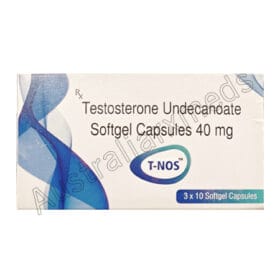
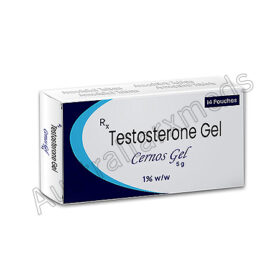
What Is Testosterone?
Testosterone is a natural male hormone that develops and manages the male reproductive system. It controls the health and well-being of the penis, testes, and prostate. Alongside that, it also controls the fertilisation capacity of males.
Although testosterone is a male hormone and functions more in males, the same is secreted naturally in females, too. Testes secrete testosterone in males, and in case of females, the hormone is secreted by the ovaries, and later, the same is converted to female sex hormones. In both males and females, the same is produced by the adrenal gland.
The level of testosterone formation depends on age. While it gradually increases in children as they move towards puberty, the same decreases with age after the 50s.
What Is The Role Of Testosterone?
➦ In Teens (Male):
Testosterone plays an important role in the development of the reproductive organs in males like penis and testicles. As male passes through their puberty, testosterone causes changes in:
- Deep voices
- Muscle strength
- Growth of body hair
- Penis growth and
➦ In Male Adults:
- As they become adult, the same control several bodily actions like:
- Regulating Libido and controlling mood.
- Regulates bone strength and the strength of muscles.
- It helps make new blood cells.
- Allows and enables the testes to form sperm.
➦ In Female Adults:
- Regulates bone strength, muscle tension
- Controls sex drive
- Forms oestrogen.
What Are The Causes Of Testosterone Deficit?
Testosterone and its secretion are controlled by the loop of feedback between your brain, pituitary gland, and testes. Hence, the reason for low testosterone can either be in the testes or an anomaly at the pituitary gland. Known as hypogonadism (androgen deficit), the major reasons for such an anomaly are:
Low Testosterone In A Normal Male:
Wound or hurting of the testicles can be caused by an injury or for diseases like measles and mumps.
- Issue at your pituitary gland.
- Obesity or a critical health condition like diabetes.
- Some other medications
- Cancer and tumours
- Klinefelter Syndrome
Low Testosterone In Aged Men:
Low testosterone can also be caused due to ageing. It is a natural happening and is not a medical issue. It is also called male menopause, although it is often a mislead as this is not any medical issue.
In case the drop of testosterone is sudden, there can be some treatments at the back like obesity treatment, cancer treatment, or other treatments.
Low Testosterone In Females:
Low testosterone in females can be caused by:
- Excessive use of contraceptive pills.
- Some steroid therapies (side effects)
- Side effects of some other medicines, like thyroxine.
How To Identify That You Are Having A Low Testosterone Issue?
Here are the symptoms of low testosterone in men:
- Low urge in sexual intimacy.
- Poor sleep or frequent change in sleeping patterns
- Low on energy (fast fatigue)
- Too much sweating
- Lowered mood
- Erection issues or ED.
- Memory weakening.
Some physical aspects will make you understand low testosterone externally:
- Obesity all of a sudden
- Breast tendering or inflammation
- Less growth of body hair
- Reduction in muscle bulk
Ion case of puberty, low testosterone can be marked with:
- No growth of facial hair
- Late in voice change or no voice change
- Small penis or no erection.
In the case of females, the same causes lower urge in sexual intimacy.
When Shall I See A Doctor?
- If you are facing issues regarding fertilization, erection, or pregnancy, then only there is a need to see a doctor regarding testosterone anomaly. In such cases, you will be recommended an endocrinologist, who is specialized in hormones.
- If males find issues with their erection and they face issues with sperm count or motility, they need to see a doctor, as there can be issues with testosterone at that time.
- In females, low testosterone is common during or after menopause. See a doctor if only you face issues with obesity.
- Both male, female and teens can see a doctor for low testosterone if they find issues with their bone strength.
Testing Of Your Testosterone Level
To test your testosterone level, you need to undergo one or two blood tests. More than one test is recommended as testosterone levels can fluctuate in males and females, depending on several factors, such as:
- Mood
- Weather and climatic condition
- Stress (mental and physical)
The usual testing mode is the morning blood test, with fasting. This is the time when testosterone remains high in the blood.
In some critical conditions, a doctor might suggest a
- Haemochromatosis or
- Karyotype tests
To know whether the trend and the reason for low testosterone are hereditary or not.
Treatment Of Low Testosterone
The options that are open for treatment of low testosterone are:
Replacement Therapy Of Testosterone
- Injections, creams, gels, and tablets are there for the treatment by this means. Usually, the infusion given here is on every 3 months.
- If you are going through any of the reasons stated above for low testosterone, then you need a treatment for that anomaly.
- If all the things are regular and you are not even having an age factor responsible for the low testosterone, the popular recommendation given by doctors is a routine of exercise.
- To test the improvement, condition and finding out the reason of low testosterone, doctor might test you from time to time including a test of bone health.
- Note: if you are planning for a baby, your doctor will not recommend you a replacement therapy. In such cases, you will have to go through other mechanisms or treatment procedures.
Other Testosterone-Controlling Methods
Here are some of the other mechanisms to increase your testosterone level:
- Regular exercises (moderate)
- Stress management.
- Healthy and balanced diet.
- Lose weight with rigorous exercise and fat control medication (in case of obesity).
Complications With Low Testosterone
Risks of low testosterone are not confined to fertility. They can also be extended to:
- Osteoporosis
- Fragile bones (breaking often)
- Skin reactions (acute to mild acne)
- Extreme hair loss and baldness (in men)
- High count of RBC and low count of WBC. (platelet count issues).
- Reduction in fertility (both male and female).
Testosterone is one of the major hormones that controls many things in the human body. Hence, monitoring the same is always a need.