

Is Female Masturbation Normal? Benefits, Myths, and Facts
By Erica Wilson, Nov-14-2026


 Dr. Arjun Srivastav Medical Reviewer (Pharm D)
Female masturbation is a subject that many women search for when they have questions about their bodies, sexual preferences or personal experiences. Some want reassurance that it is normal, while others are curious about its possible benefits, safety and effects on everyday life. Questions about frequency, fertility and relationships are also common.
Despite being a natural topic of curiosity, masturbation is not always discussed openly. This can leave women relying on assumptions or information that may not be accurate. Understanding the subject through reliable sexual health information can help remove unnecessary confusion. Here is a closer look at female masturbation, including its different aspects, common misconceptions and practical considerations.
Quick Answer: Is Female Masturbation Normal?
Yes, female masturbation is generally considered a normal form of personal sexual expression. Women have different preferences and experiences, so there is no fixed frequency that applies to everyone. Understanding personal boundaries, maintaining hygiene and avoiding activities that cause discomfort are important considerations.
Is Female Masturbation Normal?
Yes, female masturbation is generally recognised as a normal form of sexual expression. It involves touching or stimulating one’s own body for personal pleasure. Women may have different experiences and attitudes towards it, depending on their preferences, circumstances and personal beliefs.
There is no universal pattern that determines how often a woman should masturbate. Some may choose to do it regularly, while others may have little interest in the activity. Both are personal preferences and do not automatically indicate anything unusual about someone’s sexuality.
Another common concern is whether masturbation is acceptable for women who are married or in relationships. Personal sexual expression does not necessarily change when someone enters a relationship. A woman may enjoy intimacy with a partner and still prefer private sexual experiences.
Feelings of guilt or embarrassment can sometimes arise from cultural expectations, upbringing or social attitudes. However, having questions about sexuality is nothing to be ashamed of. Women can make their own decisions based on comfort, personal boundaries and individual values.
What Is Female Masturbation and Why Do Women Do It?
Female masturbation refers to self stimulation for sexual pleasure. It may involve touching sensitive areas of the body, including the vulva and clitoris. The type of stimulation and level of interest can differ considerably between women.
Understanding personal sexual preferences also involves recognising that sexual interest and experiences can differ between individuals, including differences in sexual activity between men and women.
There is no single reason why someone chooses to masturbate. For some, curiosity plays an important role, while others associate it with enjoyment or relaxation.
Common reasons include:
- Exploring personal sexual preferences.
- Becoming familiar with female anatomy.
- Understanding individual responses to stimulation.
- Experiencing sexual pleasure without a partner.
- Enjoying private time and personal comfort.
Masturbation is not something every woman needs to experience. It is an individual decision rather than an expectation or requirement.
What Are the Benefits of Female Masturbation?
The benefits of female masturbation are often discussed in connection with personal enjoyment, sexual awareness and relaxation. Experiences are different for everyone, so it is important not to treat these possible benefits as guaranteed outcomes.
1. Greater Awareness of Personal Preferences
Understanding what feels comfortable and enjoyable can help women become more familiar with their own bodies. This awareness may also make it easier to recognise personal boundaries and communicate preferences during intimate situations.
2. An Opportunity for Relaxation
Some women associate masturbation with relaxation and personal enjoyment. The experience may provide private time away from everyday responsibilities, although its effect on mood differs between individuals.
3. Understanding Sexual Responses
Women may have questions about arousal, sensitivity and orgasm. Exploring personal responses can help them become more familiar with how their bodies react to different forms of stimulation.
There is no particular response that should be considered necessary or expected. Sexual experiences are personal, and individual preferences do not need to match those of others.
4. Personal Comfort During Menstruation
Some women report feeling more comfortable after orgasm during their menstrual period. Others may prefer to avoid sexual activity during this time. Both preferences are valid, and there is no requirement to masturbate during menstruation. Understanding menstrual cycle and period changes can also help women become more familiar with their individual experiences during menstruation.
5. Better Communication About Intimacy
Knowing personal preferences can provide a useful starting point for conversations with a partner. Women may find it easier to explain what they enjoy, what makes them uncomfortable and which boundaries they want respected.
These aspects should be understood as individual experiences rather than medical benefits or guaranteed improvements in health.
Common Myths About Female Masturbation
Misinformation can make women unnecessarily worried about an activity they may simply want to understand. The following are some common misconceptions about female masturbation.
Myth 1: Female Masturbation Causes Infertility
Female masturbation is not a recognised cause of infertility. It is important to distinguish personal sexual activity from reproductive health concerns. Women who have questions about their ability to conceive should seek appropriate reproductive health advice rather than attributing fertility concerns to masturbation.
Myth 2: It Causes Permanent Hormonal Changes
Sexual arousal and orgasm involve temporary bodily responses. These should not be confused with a lasting hormonal disorder. Masturbation is not established as a cause of permanent hormonal imbalance.
Myth 3: It Reduces Sexual Desire
There is no universal relationship between masturbation and reduced libido. Some women may experience changes in sexual interest over time, while others maintain similar preferences. Personal circumstances and relationship experiences can also influence sexual desire.
Several personal and lifestyle factors can influence changes in sexual desire, so masturbation should not automatically be considered the reason for reduced interest.
Myth 4: Women in Relationships Should Avoid Masturbation
This belief is based on an assumption that personal sexual experiences must stop once someone has a partner. In reality, relationship status does not determine an individual’s interest in masturbation.
A woman can value her relationship while maintaining personal boundaries and preferences. Masturbation does not automatically indicate a lack of attraction or dissatisfaction with a partner.
Myth 5: Female Masturbation Damages the Vagina
Masturbation does not ordinarily damage vaginal tissue. However, excessive friction, rough handling or unsuitable products may cause temporary irritation.
Paying attention to comfort and avoiding activities that cause pain are sensible ways to approach personal sexual activity.
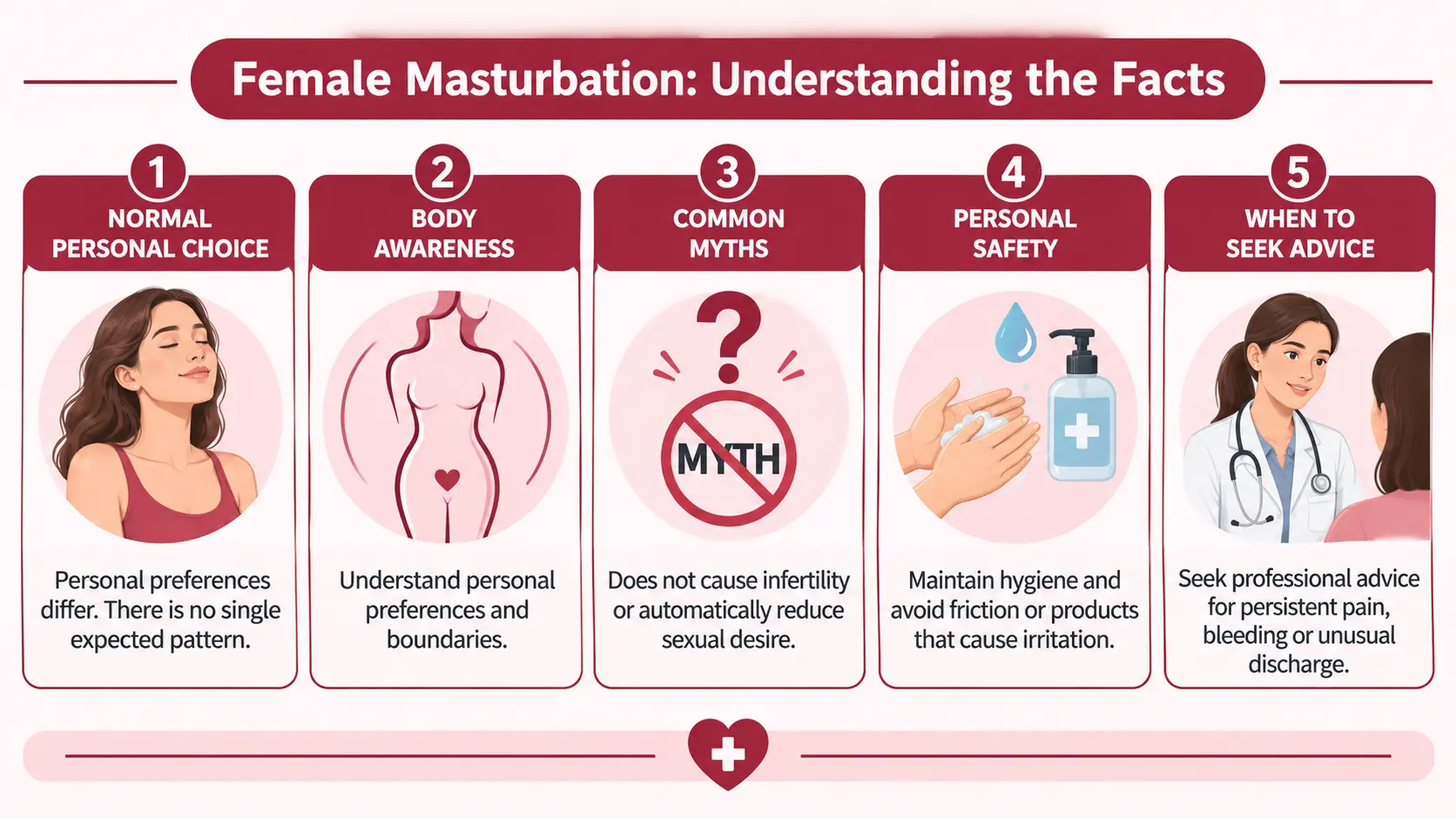
How Often Is Female Masturbation Normal?
There is no fixed number that defines how often a woman should masturbate. Frequency can differ according to personal interest, age, circumstances, relationship status and individual preferences.
Some women may masturbate every day, while others may do so occasionally. There are also women who choose not to masturbate at all. None of these patterns automatically indicates a problem.
Rather than comparing frequency with other people’s experiences, it is more useful to consider whether the activity fits comfortably into everyday life.
It may be worth seeking professional guidance if masturbation:
- Takes up time needed for work or everyday responsibilities.
- Becomes difficult to manage despite attempts to change the behaviour.
- Causes repeated physical discomfort.
- Creates significant emotional distress.
- Interferes with important personal relationships or activities.
The main consideration is whether the behaviour feels manageable and remains consistent with personal wellbeing.
Female Sexual Wellbeing Check
Four points to reflect on your personal experience.
♡ Personal choice
Your choices should reflect your own preferences and comfort.
◷ Daily routine
Consider whether it fits comfortably into everyday life.
♡ Physical comfort
Pay attention to irritation, sensitivity or discomfort.
◎ Personal boundaries
Respect your preferences and personal boundaries.
Please note: This is a personal reflection guide, not a medical assessment. Seek professional advice about persistent pain, bleeding or unusual symptoms.
Is Female Masturbation Safe? Side Effects and Precautions
Female masturbation is generally a personal activity, but physical comfort and cleanliness should remain priorities. Certain habits or products may cause unwanted irritation, particularly when they are unsuitable for sensitive intimate areas.
Possible Side Effects
Temporary soreness, tenderness or skin irritation may occur following excessive friction or rough handling. These experiences should not be ignored, especially when discomfort continues.
Other symptoms that deserve attention include:
- Persistent genital irritation.
- Unusual vaginal discharge.
- Unexpected bleeding.
- Ongoing pain or tenderness.
These symptoms should not automatically be attributed to masturbation. A healthcare professional can help identify their possible cause.
Simple Hygiene Precautions
Maintaining cleanliness is an important part of personal intimate care.
- Wash your hands before touching the genital area.
- Clean personal sexual devices according to their instructions.
- Avoid sharing uncleaned intimate products.
- Use suitable lubrication if friction causes discomfort.
- Avoid heavily scented products around sensitive genital areas.
- Do not use household objects that are not designed for intimate use.
These precautions help women make informed decisions about personal hygiene without creating unnecessary concerns around normal sexual behaviour.
Can Female Masturbation Affect Relationships and Sexual Satisfaction?
Masturbation can be part of an individual’s private life, regardless of whether she has a partner. It does not automatically replace partnered intimacy or indicate dissatisfaction within a relationship.
Some women prefer to keep their personal sexual experiences private, while others are comfortable discussing them with their partners. There is no single approach that suits every couple.
Differences in expectations can sometimes create misunderstandings. For example, one partner may view masturbation as a private activity, while the other may have questions about its place in the relationship.
Open communication can help both individuals understand each other’s perspectives. Respecting personal boundaries is equally important.
Ultimately, relationship satisfaction depends on many aspects of a partnership. Masturbation alone should not be used to judge the quality of an intimate relationship.
When Should You Speak to a Healthcare Professional?
Although questions about female masturbation are common, certain physical or emotional concerns may require professional attention.
Consider speaking with a GP, gynaecologist or qualified sexual health professional if you experience persistent genital discomfort, unexpected bleeding, unusual discharge or repeated irritation.
It may also be helpful to seek support if sexual behaviour causes significant distress, becomes difficult to manage or starts interfering with everyday responsibilities. Persistent concerns involving sexual desire, arousal, orgasm or discomfort may need further assessment, as discussed in the context of female sexual function.
A healthcare professional can discuss these concerns without judgement and help determine whether further assessment is appropriate.
Final Thoughts on Female Masturbation
Female masturbation is an individual aspect of sexuality, and there is no standard frequency or experience that applies to every woman. Understanding personal preferences, respecting boundaries and paying attention to physical comfort are important considerations. Reliable information can also help clear up misconceptions surrounding fertility, relationships and sexual health. Women should feel comfortable asking questions and seeking professional guidance whenever something causes concern.
Medical Disclaimer
FAQ
1. Is female masturbation normal for adults?
Yes. It is generally recognised as a normal form of personal sexual expression. Some women enjoy it, while others have no interest in the activity.
2. Is daily female masturbation normal?
Daily masturbation is not automatically a concern. What matters more is whether it causes discomfort, emotional distress or disruption to everyday responsibilities.
3. Can female masturbation affect the ability to become pregnant?
No. Masturbation itself is not a recognised cause of infertility. Women with concerns about conception should discuss them with an appropriate healthcare professional.
4. Can women masturbate during their periods?
Menstruation does not automatically prevent a woman from choosing to masturbate. Personal comfort and preference are the main considerations.
5. Does female masturbation affect sexual desire?
It does not automatically decrease sexual desire. Libido differs between individuals and may change with personal circumstances, relationships and other factors.
6. Should women feel guilty about masturbation?
There is no reason to assume that masturbation is wrong simply because someone has questions or concerns about it. Personal values and boundaries matter, and women should have access to accurate information without judgement.

Years of Experience: 10+ years Education: B.Sc. in Biomedical Science (Monash University, Melbourne, Australia) PG Diploma in Health & Medical Communication (University of Sydney, Australia) Experience: Erica Wilson is an…

