

What Is a Bacterial Infection? Common Types, Warning Signs & Treatments
By Erica Wilson, Nov-13-2026


 Dr. Arjun Srivastav Medical Reviewer (Pharm D)
When bacteria enter parts of the body where they can cause harm, they may lead to an infection. Some bacterial infections affect the throat or lungs, while others involve the skin, urinary tract or digestive system. Their symptoms can differ considerably, which is why understanding the possible warning signs is useful.
If you are wondering what a bacterial infection is, how it develops, whether it can spread to other people or when treatment may be necessary, this guide explains the subject in straightforward language. It also covers common examples, diagnostic tests, antibiotics and practical ways to reduce exposure.
What Is a Bacterial Infection?
A bacterial infection occurs when harmful bacteria enter the body, multiply and cause illness. It can affect the skin, throat, lungs, urinary tract or digestive system. Common symptoms include fever, swelling, redness, pain and digestive discomfort. Diagnosis and treatment depend on the type of bacteria and the affected body area.
What Is a Bacterial Infection?
A bacterial infection occurs when harmful bacteria enter the body, multiply and cause damage or trigger an inflammatory response. Bacteria are microscopic, single celled organisms found in the environment and throughout the human body. Not all of them are harmful. Many live naturally on the skin, in the mouth and inside the digestive system without causing illness.
Problems can arise when disease causing bacteria enter a vulnerable area, multiply beyond normal levels or interfere with the body’s usual functions. The type of organism and the location of the infection influence the symptoms a person experiences.
For example, a bacterial infection affecting the throat may cause discomfort when swallowing, whereas an infection involving the urinary tract may lead to burning during urination. These differences explain why bacterial infections do not have one universal set of symptoms.
What Are the Common Types of Bacterial Infections?
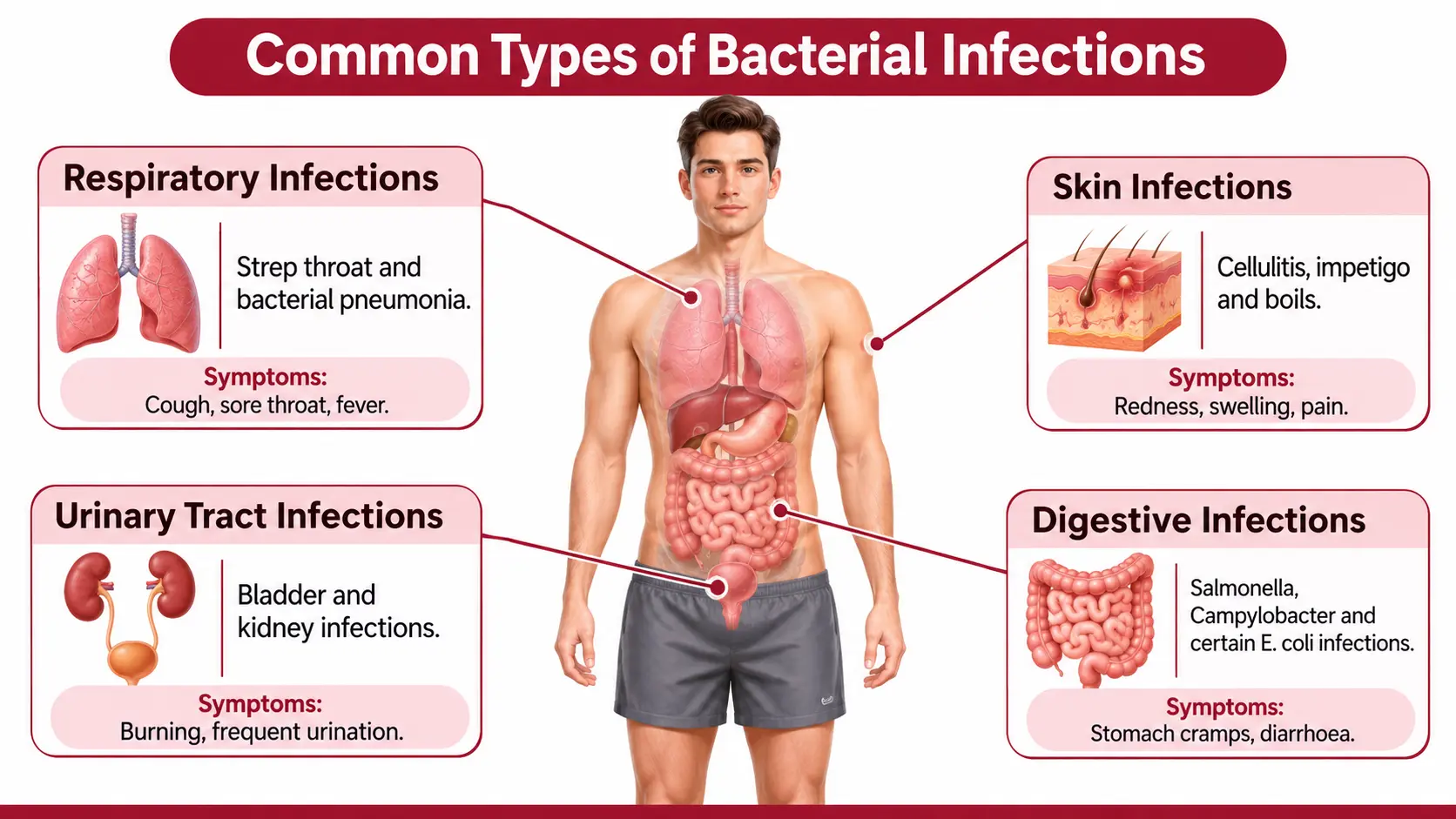
Bacterial infections can affect several parts of the body. Understanding their common forms makes it easier to recognise the different conditions associated with bacterial growth.
Respiratory Bacterial Infections
These infections involve parts of the respiratory system, including the throat and lungs. Examples include strep throat, bacterial pneumonia and whooping cough. Depending on the condition, a person may experience coughing, throat discomfort, fever or breathing difficulties.
Skin and Soft Tissue Infections
Bacteria can enter through damaged skin or affect the tissues beneath its surface. Common examples include cellulitis, impetigo and boils. Redness, swelling, tenderness and changes around an affected area can occur.
Urinary Tract Infections
Urinary tract infections, commonly called UTIs, involve the urinary system. They can affect the bladder, urethra and kidneys. Symptoms may include a burning sensation during urination, frequent urges to urinate and discomfort in the lower abdomen.
Gastrointestinal Bacterial Infections
Some bacteria affect the digestive system after entering through contaminated food or water. Salmonella, Campylobacter and certain strains of E. coli are examples associated with gastrointestinal infections. Diarrhoea, abdominal cramps, nausea and vomiting may occur.
Other Bacterial Infections
Other conditions include tuberculosis, meningococcal disease and sexually transmitted bacterial infections such as chlamydia and gonorrhoea. Each has its own transmission patterns, affected body areas and diagnostic requirements.
What Are the Warning Signs and Symptoms of a Bacterial Infection?
Bacterial infection symptoms depend on the organism involved and the part of the body affected. Some people experience localised discomfort, while others notice general changes such as tiredness or fever.
Common Symptoms
Possible symptoms include:
- Fever or chills
- Unusual tiredness and weakness
- Headaches or body aches
- Nausea and vomiting
- Diarrhoea
- Swelling or tenderness
- Redness around an affected area
These signs do not automatically mean someone has a bacterial infection. Similar symptoms can occur with viral illnesses and other health conditions.
Symptoms According to the Affected Area
| Affected body area | Possible symptoms |
| Skin | Redness, warmth, swelling, tenderness or pus |
| Respiratory system | Coughing, throat discomfort or chest symptoms |
| Urinary system | Burning urination, frequent urination or lower abdominal discomfort |
| Digestive system | Diarrhoea, nausea, vomiting or stomach cramps |
| Throat | Pain when swallowing or swollen glands |
Recognising where symptoms occur can help a healthcare professional decide which examinations or tests may be appropriate. However, symptoms alone cannot reliably identify the bacteria responsible.
What Causes Bacterial Infections?
Bacterial infections develop when bacteria reach a body area where they can multiply and cause harm. The source of exposure and the route through which bacteria enter the body can vary.
Common Ways Bacteria Enter the Body
Some common routes of exposure include:
- Damaged skin: Cuts, scratches, burns and open wounds can provide an entry point for bacteria.
- Contaminated food or water: Certain organisms can enter the digestive system through improperly handled food or unsafe drinking water.
- Respiratory exposure: Some bacteria pass between people through respiratory droplets released when an infected person coughs or sneezes.
- Direct contact: Contact with infected skin or bodily fluids can spread particular bacterial organisms.
- Sexual contact: Certain bacteria can pass between sexual partners during intimate contact.
- Medical exposure: Some infections are associated with medical procedures or devices, depending on the circumstances.
Factors That May Increase Infection Risk
A person’s circumstances can influence their exposure to bacteria and their ability to respond to infection. Factors include an impaired immune system, existing health conditions, skin injuries, certain medical procedures and contact with contaminated environments.
Understanding these possible causes helps explain why different people may experience different types of bacterial infections.
How Do Bacterial Infections Spread?
The way bacterial infections spread depends on the organism responsible. Some bacteria pass between people, while others are associated with environmental exposure or contaminated substances.
Common transmission routes include:
Person to person contact: Certain bacteria spread through direct physical contact with an infected individual.
Respiratory droplets: Some organisms travel in respiratory droplets released during coughing or sneezing.
Contaminated food and water: Food preparation, storage and water safety are relevant to infections involving the digestive system.
Contaminated surfaces: Bacteria may remain on certain objects and transfer to hands or other surfaces.
Blood and bodily fluids: Specific organisms can spread through exposure to infected blood or other bodily fluids.
Animal contact: Some bacterial infections are associated with contact with infected animals or animal products.
Not every bacterial infection is contagious. For example, the transmission pattern of a foodborne infection differs from that of an infection that spreads through respiratory exposure. Identifying the organism is important when understanding how a particular infection can spread.
What Is the Difference Between a Bacterial and Viral Infection?
Bacterial and viral infections are caused by different types of microorganisms. Although their symptoms can overlap, their biological structures and treatment approaches are not the same.
| Comparison | Bacterial infection | Viral infection |
| Cause | Bacteria | Viruses |
| Biological structure | Single celled organisms | Infectious particles |
| Common examples | Strep throat, some UTIs | Influenza, common cold |
| Reproduction | Bacteria reproduce independently under suitable conditions | Viruses require host cells to replicate |
| Treatment | May involve antibiotics | May involve supportive care or specific antiviral medicines |
| Antibiotics | Used for selected bacterial infections | Do not treat viral infections |
One common question is whether antibiotics work for both types of infection. They do not. Antibiotics target bacteria and are not a treatment for viruses such as those responsible for the common cold or influenza.
It is also important to understand that symptoms alone may not distinguish a bacterial infection from a viral one. A healthcare professional may need to consider the medical history, examination findings and test results before identifying the likely cause.
How Are Bacterial Infections Diagnosed?
Bacterial infection diagnosis involves assessing symptoms, considering possible exposure and identifying the organism when testing is appropriate.
A healthcare professional may begin by asking when the symptoms started, which body areas are affected and whether there have been any recent illnesses or relevant exposures.
Medical Examination
A physical examination may involve checking the skin, throat, breathing, abdomen or other areas depending on the symptoms. The purpose is to gather information that can help guide further assessment.
Common Diagnostic Tests
Different tests may be used depending on the suspected infection.
| Diagnostic test | Purpose |
| Blood test | Provides information about changes associated with illness |
| Urine test | Examines a urine sample for signs of a urinary infection |
| Throat swab | Collects a sample from the throat for testing |
| Wound swab | Collects material from an affected skin area |
| Stool test | Examines a stool sample for certain infectious organisms |
| Bacterial culture | Allows selected bacteria to grow in a laboratory for identification |
| PCR test | Detects genetic material from specific organisms |
Not everyone requires every test. The choice depends on the suspected condition, symptoms and information available during the medical assessment.
How Is a Bacterial Infection Diagnosed?
01. Symptoms
02. Medical examination
03. Sample collection
04. Laboratory testing
05. Results and next steps
Not every suspected infection requires laboratory testing.
How Are Bacterial Infections Treated?
Bacterial infection treatment depends on the type of bacteria, the affected body area and the nature of the illness. Not every bacterial infection requires the same approach, so treatment decisions should be based on an appropriate medical assessment.
Antibiotics for Bacterial Infections
Antibiotics are medicines used to treat selected bacterial infections. They work by targeting bacteria through different mechanisms.
There are two broad categories:
- Bactericidal antibiotics: These medicines kill bacteria.
- Bacteriostatic antibiotics: These medicines interfere with bacterial growth and multiplication.
The choice of antibiotic depends on factors such as the suspected organism, infection location and relevant test results. Some infections may require a different approach rather than antibiotic treatment.
Antibiotics should only be used when appropriately prescribed. Taking leftover medicines, sharing prescriptions or using antibiotics for a viral illness is not appropriate.
Supportive Care During Recovery
Depending on the infection and medical advice, supportive measures may form part of the overall care plan. These can include adequate rest, drinking sufficient fluids and managing discomfort.
The appropriate measures vary between conditions. A person experiencing digestive symptoms may have different care requirements from someone being treated for a skin infection.
What Is Antibiotic Resistance?
Antibiotic resistance occurs when bacteria develop the ability to survive exposure to medicines that would previously have affected them. This can make certain infections more difficult to treat.
Resistance is a concern because it reduces the number of effective treatment options available for particular bacterial infections.
Unnecessary antibiotic use contributes to the problem. Using these medicines only when prescribed, following professional instructions and avoiding the sharing of medication are important parts of responsible antibiotic use.
When Should You Seek Medical Attention?
It is important to pay attention to symptoms that are severe, persistent or getting worse. A suspected bacterial infection should not be diagnosed through symptoms alone, particularly when the person is experiencing significant discomfort or changes in their general condition.
Consider seeking medical assessment if you notice:
- A fever that persists or is accompanied by worsening symptoms.
- Increasing redness, swelling or pain around a wound.
- Pus or unusual discharge from an affected area.
- Difficulty urinating or significant urinary discomfort.
- Persistent diarrhoea or vomiting.
- Symptoms that continue without improvement.
Emergency warning signs
Sepsis is a serious medical emergency associated with the body’s response to infection. Warning signs can include confusion, difficulty breathing, clammy skin, a rapid heartbeat and severe illness. If sepsis is suspected, call 000 for an ambulance in Australia.
People with weakened immune systems, older adults and young children may need particular attention when infection symptoms develop. If you are uncertain about the seriousness of symptoms, contact a healthcare professional for advice.
How Can You Prevent Bacterial Infections?
Preventing bacterial infections involves reducing exposure to harmful organisms and following suitable hygiene practices. Although exposure cannot always be avoided, everyday precautions can help limit opportunities for bacteria to spread.
Some practical steps include:
- Wash your hands: Use soap and water, particularly before preparing food, after using the toilet and after handling waste.
- Handle food safely: Cook food properly, refrigerate perishable items and keep raw ingredients separate from ready to eat foods.
- Use safe drinking water: Pay attention to water quality, especially when travelling or visiting unfamiliar locations.
- Care for skin injuries: Clean minor cuts appropriately and protect them from dirt and contamination.
- Maintain personal hygiene: Avoid sharing personal items such as razors and toothbrushes.
- Practise safer sex: Use appropriate barrier protection and follow relevant sexual health advice.
- Follow vaccination guidance: Keep up to date with recommended vaccinations for relevant bacterial diseases.
- Follow medical hygiene advice: Observe infection prevention instructions during medical care and when looking after someone who is unwell.
These practices are useful parts of everyday hygiene. The precautions required may differ depending on the particular bacterial infection and its transmission route.
Final Thoughts
Bacterial infections cover a wide range of conditions, from common urinary and skin infections to illnesses affecting the respiratory and digestive systems. Their symptoms, transmission routes and treatment requirements depend on the bacteria involved.
Understanding the possible warning signs, knowing how infections spread and recognising the difference between bacterial and viral illnesses can help people make informed decisions about their health. When symptoms are concerning or getting worse, seeking appropriate medical advice is important. Antibiotics should only be used when they are considered suitable by a healthcare professional.
⚠️ Medical Disclaimer
What Is a Parasite Infection?
Understand what parasite infections are, how they develop, common types of parasites, and the symptoms they may cause.
FAQ
Can a bacterial infection go away on its own?
Some mild bacterial infections may resolve without antibiotic treatment. However, others require medical attention and appropriate treatment. The correct approach depends on the organism, affected body area and severity of the condition.
How long does a bacterial infection last?
There is no single recovery period for all bacterial infections. Duration varies according to the type of infection, individual circumstances and whether treatment is required. A healthcare professional can provide more specific guidance.
Are all bacterial infections contagious?
No. Some bacterial infections spread between people through direct contact, respiratory droplets or bodily fluids. Others develop following exposure to contaminated food, water or environmental sources. The transmission method depends on the bacteria involved.
Can you have a bacterial infection without a fever?
Yes. Fever is not present in every bacterial infection. Some people experience localised symptoms, such as skin redness, urinary discomfort or digestive problems, without developing an elevated body temperature.

Years of Experience: 10+ years Education: B.Sc. in Biomedical Science (Monash University, Melbourne, Australia) PG Diploma in Health & Medical Communication (University of Sydney, Australia) Experience: Erica Wilson is an…

