

What Is the Refractory Period? Duration, Stages & Factors That Affect It
By Erica Wilson, Nov-12-2026


 Dr. Arjun Srivastav Medical Reviewer (Pharm D)
Have you ever wondered why a man may not be able to achieve another erection immediately after ejaculation, even when he still feels sexually interested? This experience is commonly associated with the refractory period, a temporary recovery interval following orgasm. The body needs time to move away from the heightened state of sexual arousal before another response may become possible. However, the experience is not identical for everyone.
While some men feel ready for further sexual activity relatively soon, others prefer a longer break. Understanding the refractory period meaning can help explain what happens after ejaculation, how recovery time varies and why personal circumstances may influence sexual responsiveness.
Quick Answer: What Is the Refractory Period?
The refractory period is the recovery time after orgasm when a person may temporarily be unable to reach another orgasm or respond to sexual stimulation in the same way.
- Its duration varies from person to person.
- Age, hormones, health and stress can influence recovery time.
- There is no single normal duration for everyone.
What Is the Refractory Period?
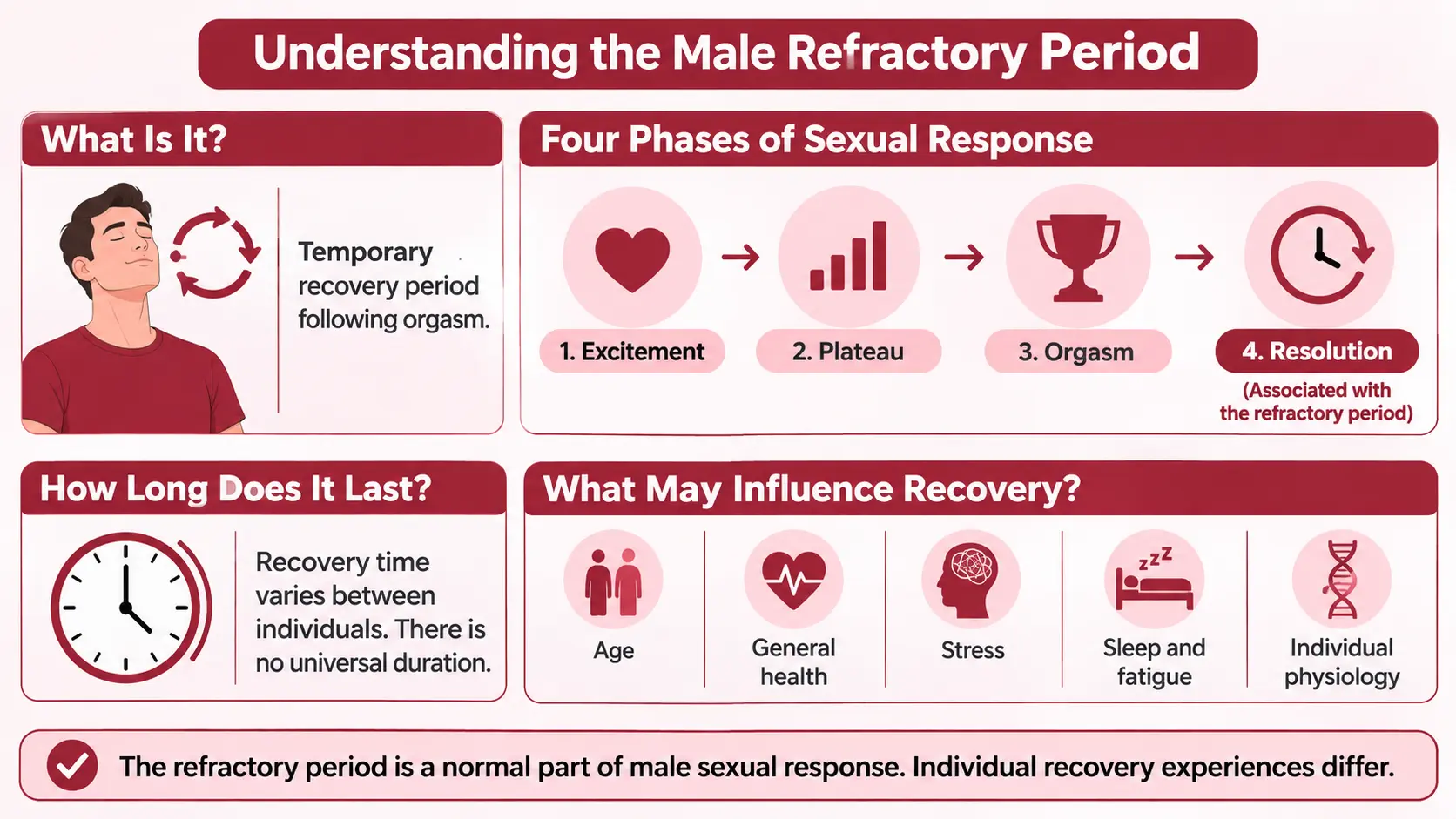
The refractory period is the interval following orgasm during which a man may find it difficult to achieve another erection or experience another orgasm. Often described as the recovery period after ejaculation, it involves a temporary reduction in sexual responsiveness.
For men researching what is a refractory period, the simplest explanation is that it is a natural pause between one sexual climax and the body’s readiness for another. During this interval, sexual interest may decrease, sensitivity can change and further stimulation might not produce an immediate erection.
This temporary response is associated with male sexual physiology. It does not automatically indicate a problem with sexual performance or a lack of attraction towards a partner.
It is also useful to understand the difference between orgasm and ejaculation. Understanding the difference between orgasm and ejaculation can provide further context about the physical and neurological processes involved in sexual climax.
Orgasm refers to the pleasurable sensation associated with sexual climax, whereas ejaculation involves the release of semen. Although they commonly occur together, they are separate processes. The refractory period for men generally follows orgasm and is closely associated with the changes that occur afterwards.
Is the Refractory Period the Same as the Resolution Phase?
The two terms are related, but they describe different aspects of the sexual response.
The resolution phase is the final stage of the sexual response cycle. During this period, the physical changes associated with arousal gradually settle, allowing the body to return towards its resting state.
In men, the refractory period is associated with this stage. However, resolution describes the broader recovery process, while the refractory period specifically refers to the temporary reduction in sexual responsiveness.
What Happens During the Refractory Period?
Following orgasm, the body begins moving away from the heightened arousal experienced during sexual activity. One of the most noticeable physical changes in men is penile detumescence, which describes the gradual loss of an erection.
Sensitivity may also change. Touch that previously felt pleasurable might become less comfortable, and the desire for further stimulation can decrease. Some men feel relaxed or tired, while others simply prefer to take a break before attempting another sexual encounter.
These responses do not follow a fixed pattern. The degree of sensitivity, interest in further activity and time needed to feel ready again can vary considerably.
Another important point is that physical recovery and sexual interest do not always return together. A man may feel interested in intimacy before his body is ready to respond with another erection.
The Four Phases of the Sexual Response Cycle
The sexual response cycle is commonly described through four phases. These stages help explain how the body responds to sexual stimulation and what follows orgasm.
- Excitement: Sexual interest and arousal begin to develop. In men, this may involve an erection as the body responds to physical or psychological stimulation.
- Plateau: Arousal increases or remains elevated. Physical responses continue as sexual activity progresses towards climax.
- Orgasm: This is the climax of sexual activity, generally accompanied by intense pleasurable sensations. In men, ejaculation commonly occurs at this point, although the two processes are not identical.
- Resolution: The body gradually returns towards its resting condition. An erection subsides, and the level of sexual responsiveness changes. In men, the refractory period is associated with this final phase.
These stages provide a general framework rather than a strict sequence that every person experiences in exactly the same way.
How Long Does the Refractory Period Last?
There is no fixed answer to how long the refractory period lasts. Recovery time differs considerably between individuals and can range from a relatively short interval to several hours or longer.
Some men become sexually responsive again fairly quickly, whereas others need a substantial break following ejaculation. These differences are not necessarily a reflection of sexual ability or performance. Published estimates should also be viewed cautiously because research has not established one standard duration that applies to everyone.
The same person may experience different recovery intervals on separate occasions. Sleep, tiredness, emotional circumstances and general physical wellbeing can all form part of the broader picture, although their direct influence on the precise duration is not equally well understood.
It is also worth separating the return of an erection from readiness for another orgasm. These experiences are related, but they do not always happen at the same time.
Does the Refractory Period Change With Age?
Age is often mentioned when discussing changes in post ejaculation recovery time. Some men report needing more time before they can achieve another erection as they get older. However, this should not be treated as an unavoidable part of ageing.
Personal health, sexual function and individual physiology also matter when considering these differences. Men of similar ages can have quite different experiences, so age alone cannot determine how long recovery will take.
A more useful consideration is whether the current experience differs noticeably from a person’s usual pattern.
Why Does the Refractory Period Happen?
Sexual arousal involves several processes within the nervous system. The brain, nerves and other physiological systems work together during sexual stimulation, erection, orgasm and ejaculation.
Once orgasm has occurred, the body’s response to further stimulation changes. The heightened state associated with sexual activity begins to settle, and the same stimulation may no longer produce an immediate response.
Neurotransmitters and hormones are also discussed in scientific research examining this recovery process. These chemical messengers are involved in different aspects of motivation, reward and sexual function. Their activity provides part of the background to understanding what happens after climax.
However, the exact biological explanation for the human refractory period is not fully established. It would therefore be inaccurate to attribute the entire process to one hormone, neurotransmitter or isolated event.
Do Dopamine and Prolactin Affect the Refractory Period?
Dopamine and prolactin frequently appear in discussions about sexual recovery because both are relevant to different physiological processes.
Dopamine is associated with motivation, reward and aspects of sexual desire. It plays a part in how the brain responds to rewarding experiences, including sexual activity.
Prolactin is a hormone that has also attracted attention in research involving the period following orgasm. One proposed explanation suggests that changes in prolactin may contribute to reduced sexual responsiveness.
However, this theory should not be presented as a settled explanation. Research has questioned whether prolactin directly causes the refractory period, and its precise involvement in human sexual recovery remains uncertain.
What Factors Affect the Refractory Period?
Recovery following orgasm is influenced by individual circumstances rather than one universal factor. Several aspects of everyday life and personal physiology are relevant when considering differences in sexual responsiveness.
Some commonly discussed influences include:
- Age: Recovery patterns may change over time, although individuals do not all experience the same age related changes.
- General health: Overall physical wellbeing and cardiovascular function are relevant to sexual health.
- Stress and anxiety: Emotional pressure and psychological discomfort can affect interest in intimacy and sexual responses.
- Fatigue and sleep: Tiredness or insufficient rest may influence how someone feels following sexual activity.
- Alcohol and recreational substances: Their use may affect sexual responsiveness and the overall experience.
- Medications and existing conditions: Certain medicines and health conditions can influence aspects of sexual function.
These factors should not be interpreted as a definitive checklist for predicting recovery time. Evidence concerning their direct effects on the refractory period varies, and a change in sexual responsiveness does not necessarily have one identifiable explanation. Understanding testosterone and male sexual health also provides useful context when discussing hormonal factors that may influence sexual function.
Refractory Period in Men vs Women
Post orgasm responses are not identical in men and women. In men, the refractory period is commonly associated with temporary difficulty achieving another erection or reaching another orgasm following climax.
Women may experience a different pattern of recovery. Some can have multiple orgasms without experiencing the same typical male response, while others prefer a period of rest before continuing sexual activity. Differences in sexual desire and libido can also influence how individuals experience intimacy and respond to sexual stimulation. Sensitivity following climax can also influence whether additional stimulation feels comfortable.
There is considerable variation within both groups. Not every woman experiences multiple orgasms, just as not every man experiences the same length of recovery.
Research into female refractory responses is also more limited, and the terminology is not applied consistently across all studies.
Can You Shorten the Refractory Period?
Many men search for how to shorten the refractory period because they would like to resume sexual activity sooner. Others specifically look for how to reduce refractory period duration after ejaculation. However, there is no established method that guarantees a shorter recovery interval.
A sensible starting point is to consider general wellbeing. Regular physical activity, sufficient sleep and a balanced daily routine are reasonable parts of maintaining overall health. Managing stress and avoiding excessive alcohol may also support a more comfortable sexual experience.
Giving the body enough time to recover is equally important. Repeated stimulation when someone is not ready may feel uncomfortable, particularly when sensitivity has changed following orgasm.
Various exercises, supplements and medications are sometimes promoted online as ways to reduce recovery time. Such suggestions should not automatically be considered effective solutions. There is insufficient evidence to recommend a guaranteed approach for this specific purpose. For men experiencing ongoing erection difficulties outside the normal recovery period, managing erectile dysfunction may be a more relevant area to investigate.
Medication should not be started, stopped or adjusted solely to influence the refractory period without discussing individual circumstances with a qualified healthcare professional.
When Should You Be Concerned About a Long Refractory Period?
Taking longer to feel ready for another sexual encounter is not automatically a cause for concern. Individual recovery patterns differ, and there is no universal duration that every man should meet.
However, a persistent change from your usual experience may deserve further attention. Difficulty achieving or maintaining an erection outside the normal recovery interval is different from temporarily losing an erection after ejaculation. Understanding the differences between erectile dysfunction and premature ejaculation can help distinguish these sexual health concerns from normal post-orgasm recovery.
Pain, unusual symptoms or ongoing changes in sexual function should also be discussed with a qualified healthcare professional. An individual assessment can help clarify what may be happening.
Refractory Period vs Erectile Dysfunction
Both can involve erection difficulties, but they describe different experiences.
Refractory Period
- Occurs after orgasm.
- Sexual responsiveness temporarily decreases.
- Another erection or orgasm may not be possible immediately.
- Recovery time varies between individuals.
Erectile Dysfunction
- Can occur independently of orgasm.
- Involves difficulty achieving an erection.
- May involve difficulty maintaining an erection.
- Persistent symptoms may need medical assessment.
Key distinction: Temporary erection loss after ejaculation can be part of normal recovery. Ongoing erection difficulties outside this period deserve further attention.
⚕️ Medical Disclaimer
Male Sex Hormones: Their Role in Men’s Health
Understand the main male sex hormones, their functions, and how hormonal changes may influence sexual health and well-being.
FAQ
What Is the Normal Refractory Period for Men?
There is no single normal duration that applies to every man. Some need a relatively short recovery interval, while others may require several hours or longer. Individual experiences vary.
Is It Normal to Have a Long Refractory Period?
Recovery time varies between individuals. A longer interval alone does not establish a sexual health problem, although persistent changes from your usual experience may warrant professional advice.
Can a Man Have Two Orgasms in a Row?
Some men can experience more than one orgasm during a sexual encounter. However, a recovery interval may occur between climaxes, and the time required differs from person to person.
Does Masturbation Affect the Refractory Period?
Masturbation can be followed by a similar recovery response to orgasm during partnered sexual activity. The experience and duration may vary according to individual circumstances.
Can the Refractory Period Last 24 Hours?
Some individuals may need a day or longer before feeling ready for further sexual activity. There is no established universal time limit for recovery.
Does Testosterone Determine Refractory Period Duration?
Testosterone is associated with aspects of male sexual function, but it should not be treated as the sole determinant of recovery time.
Is the Refractory Period the Same as Erectile Dysfunction?
No. The refractory period describes temporary reduced sexual responsiveness following orgasm. Erectile dysfunction refers to ongoing difficulty achieving or maintaining an erection when sexual activity is desired. They are different experiences.

Years of Experience: 10+ years Education: B.Sc. in Biomedical Science (Monash University, Melbourne, Australia) PG Diploma in Health & Medical Communication (University of Sydney, Australia) Experience: Erica Wilson is an…

