

Female Sexual Dysfunction: Causes, Symptoms, Types & Treatment Guide
By Ezra Allen, Sep-05-2026


 Dr. Arjun Srivastav Medical Reviewer (Pharm D)
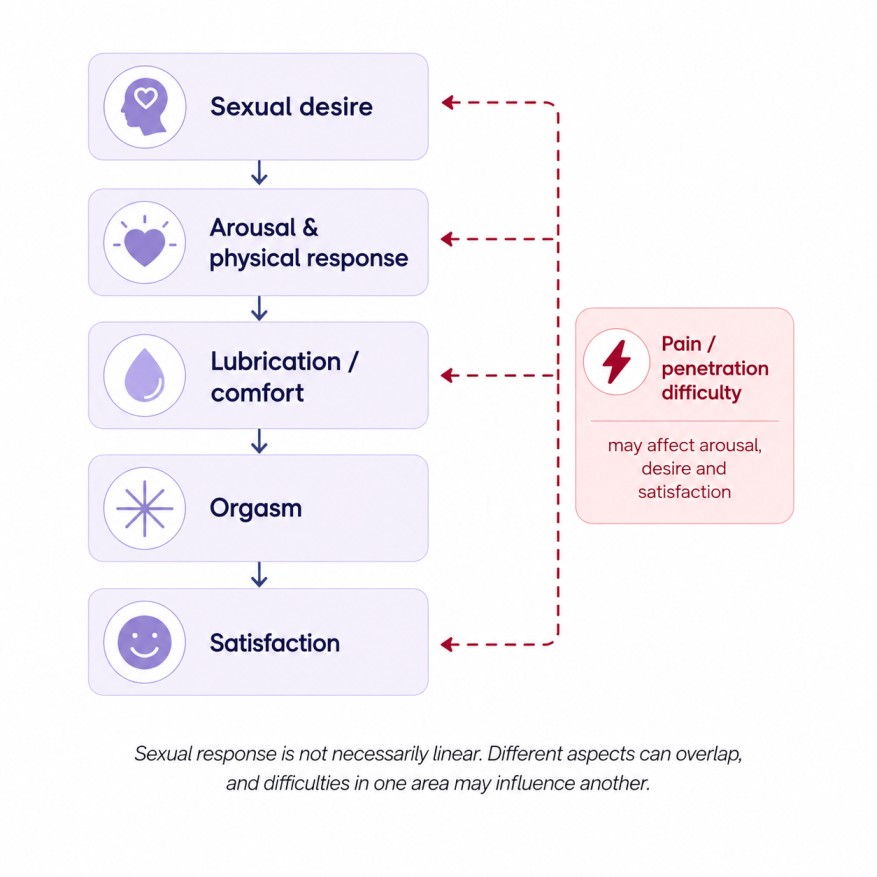
 Sexual health can change at different stages of a woman’s life. Problems may involve sexual desire, arousal, lubrication, orgasm, satisfaction, or pain during sexual activity. These concerns can have more than one cause, including hormonal changes, health conditions, medicines, emotional factors, or relationship difficulties.
Female sexual dysfunction is not one single condition. The symptoms and their underlying causes can differ from one woman to another, which is why treatment is usually based on the specific problem rather than a single approach.
TL;DR – Quick Answer
Female sexual dysfunction involves ongoing problems with sexual desire, arousal, orgasm or pain. Common causes include hormonal changes, health conditions, medicines, psychological factors and relationship issues. Treatment depends on the cause and may include counselling, pelvic-floor therapy, lubricants, hormonal treatment or selected medicines. Sildenafil has been studied in women, but evidence remains mixed and is not applicable to every type of sexual dysfunction.
What Is Female Sexual Dysfunction?
Female sexual dysfunction is a broad medical term used for ongoing sexual problems involving desire, arousal, orgasm, or pain during sex. These problems can occur at any stage of life and may happen occasionally or persist over time.
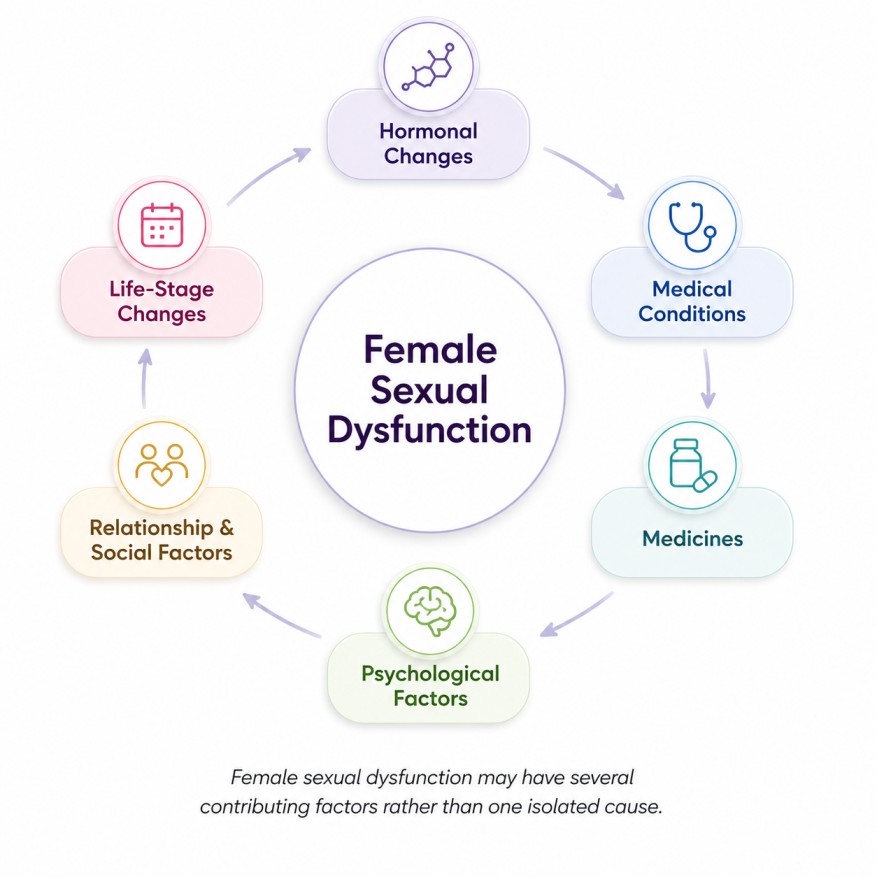
Sexual response is influenced by several parts of a person’s health and circumstances. Hormones, physical health, women’s care medicines, mental wellbeing, lifestyle and relationships can all affect sexual function.
It is also important to distinguish a temporary change from a sexual disorder. A period of lower desire or difficulty reaching orgasm does not automatically mean that someone has sexual dysfunction in female. Healthcare professionals consider the nature and persistence of the problem and whether it causes meaningful distress or interferes with sexual wellbeing.
How Common Is Female Sexual Dysfunction?
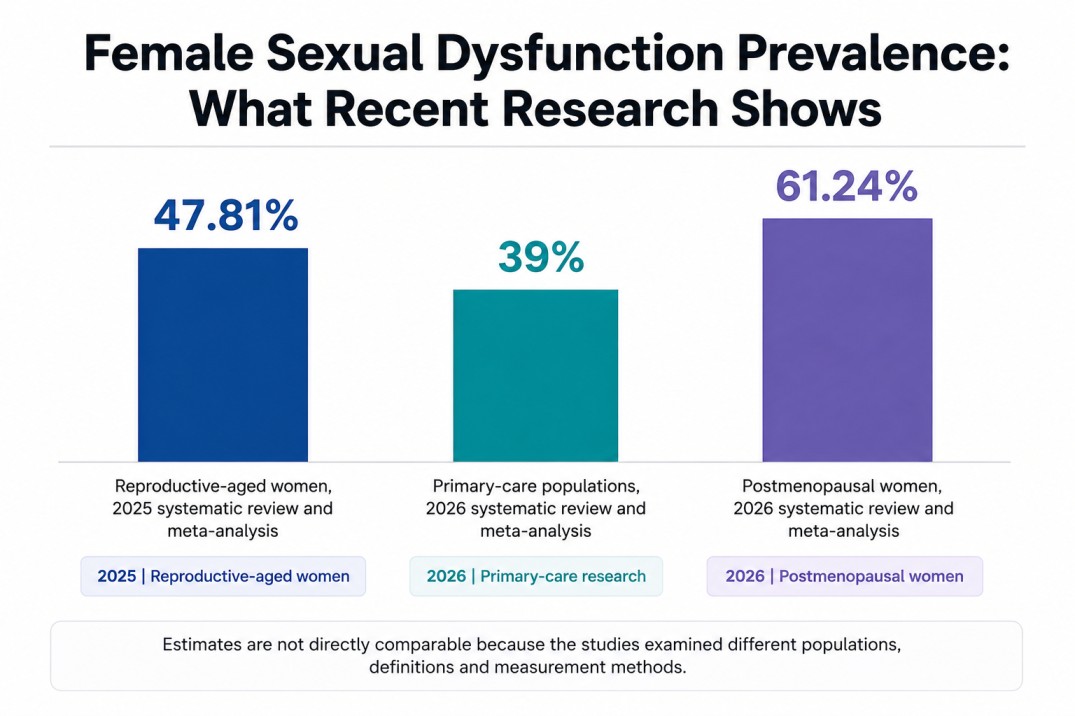
Female sexual dysfunction is common, but its reported prevalence differs considerably between studies. The variation does not necessarily mean that one study is right and another is wrong. Researchers may study different age groups, health conditions and populations, while also using different definitions and assessment tools.
A 2025 systematic review and meta-analysis of reproductive-aged women reported a pooled FSD prevalence of 47.81% (95% CI 39.19–56.43%). The review included studies that examined sexual dysfunction and sexual distress and identified sociodemographic, reproductive, interpersonal, psychological and medical factors associated with FSD.
A separate 2026 systematic review and meta-analysis examined women sexual dysfunction in primary-care settings. Among 16 studies that assessed overall FSD, the pooled prevalence was 39%. The researchers also reported estimates for individual domains: desire 29%, arousal 28%, lubrication 29%, orgasm 26%, pain 24% and satisfaction 27%. These figures should not be treated as interchangeable because the studies examined different populations and used different methods.
What Does Recent Research Show?
| Research | Population / setting | Main finding |
|---|---|---|
| 2025 systematic review | Reproductive-aged women | 47.81% pooled FSD prevalence |
| 2026 systematic review | Primary-care populations | 39% pooled overall FSD prevalence |
| 2026 systematic review | Postmenopausal women | High prevalence reported across included studies |
The 2026 postmenopausal review included 23 original studies and examined evidence published between 2000 and 2026. It assessed biological, psychological, clinical, social and cultural factors associated with sexual dysfunction after menopause.
Why Do Female Sexual Dysfunction Statistics Differ?
There is no single percentage that applies to every woman. Prevalence estimates can change according to:
- Age and life stage
- Menopause status
- Medical conditions
- Study population
- Country and cultural setting
- Definition of sexual dysfunction
- Questionnaire or screening tool used
- Whether sexual distress is assessed
- Clinical versus community-based participants
The 2025 review specifically noted substantial variation in reported prevalence and called for studies using representative populations and validated questionnaires. The 2026 primary-care meta-analysis likewise reported considerable variation in populations and measurement methods.
This is why simply quoting one large percentage without explaining the study behind it can give readers a misleading picture.
What Are the Types of Female Sexual Dysfunction?
Female sexual dysfunction can involve several areas of sexual response. These problems may also overlap.
Desire-Related Problems
A desire problem involves reduced interest in sexual activity or fewer sexual thoughts and fantasies. Low desire can occur at different stages of life and may be influenced by health, hormones, medicines, stress, emotional wellbeing or relationship factors.
Arousal Problems
Arousal difficulties may involve trouble becoming or remaining sexually aroused. A woman may experience mental interest without the expected physical response, or the physical response may occur without feeling mentally aroused.
Orgasmic Problems
Orgasmic dysfunction can involve taking longer to reach orgasm, having fewer or less intense orgasms, or being unable to reach orgasm. These difficulties can have physical, psychological, relationship or medication-related contributors.
Sexual Pain and Penetration Problems
Pain during sex can occur in the vulva, vagina or pelvic region. Some women may also experience involuntary tightening of the vaginal muscles, making penetration difficult or painful. Conditions such as dyspareunia and vaginismus are associated with sexual pain and penetration difficulties.
Medication or Substance-Related Sexual Problems
Some medicines can affect sexual desire, arousal or orgasm. ACOG lists certain antidepressants, heart medicines, hormone medicines and anticholinergic medicines among drugs that may contribute to sexual problems. Alcohol, marijuana and opioids can also affect sexual function.
What Are the Symptoms of Sexual Dysfunction in Female?
The symptoms depend on which part of sexual function is affected. Common signs include:
- Reduced interest in sexual activity.
- Fewer sexual thoughts or fantasies.
- Difficulty becoming sexually aroused.
- Difficulty maintaining arousal.
- Reduced vaginal lubrication.
- Difficulty reaching orgasm.
- Less frequent or less intense orgasms.
- Pain or burning during sexual activity.
- Difficulty with vaginal penetration.
- Avoiding sexual activity because of pain or fear of pain.
Symptoms may occur alone or together. For example, vaginal dryness can contribute to painful sex, while pain itself may reduce sexual desire or lead to avoidance of sexual activity.
What Causes Female Sexual Dysfunction?
Female sexual dysfunction can have physical, hormonal, psychological, medication-related and relationship-related causes. More than one factor may be involved at the same time.
Hormonal Changes
Hormonal changes can affect sexual function during:
- Perimenopause
- Menopause
- Pregnancy
- The postpartum period
- Breastfeeding
Lower estrogen levels after menopause can contribute to changes in genital tissues, vaginal dryness and pain during intercourse. Hormonal changes after childbirth and during breastfeeding can also affect lubrication and sexual desire.
Medical Conditions
Health conditions associated with sexual difficulties include:
- Diabetes
- Heart disease
- Cancer
- Kidney disease
- Multiple sclerosis
- Certain neurological conditions
- Some gynaecological conditions
The effect depends on the condition and the individual.
Psychological Factors
Stress, anxiety and depression can affect sexual desire and arousal. Emotional concerns, body-image issues and previous negative sexual experiences may also influence sexual wellbeing.
Relationship and Social Factors
Relationship difficulties, communication problems, lack of privacy and stressful life circumstances can affect sexual response. ACOG also recognises relationship problems and past negative sexual experiences as possible contributors.
Medicines
Some medicines can affect sexual desire or orgasm. If symptoms begin after starting, stopping or changing a medicine, the timing is worth discussing with a healthcare professional rather than changing the medicine independently.
Can Menopause Cause Female Sexual Dysfunction?
Menopause can affect several aspects of sexual function. Declining estrogen levels may reduce vaginal lubrication and change the vaginal tissues, which can make sexual activity uncomfortable or painful. Some women also experience changes in sexual desire during the menopausal transition.
Sexual difficulties around menopause can also be influenced by sleep problems, mood changes, medical conditions, medicines and relationship factors. For this reason, the symptoms should be considered as part of the person’s overall health rather than attributed to hormones alone.
How Is Female Sexual Dysfunction Diagnosed?
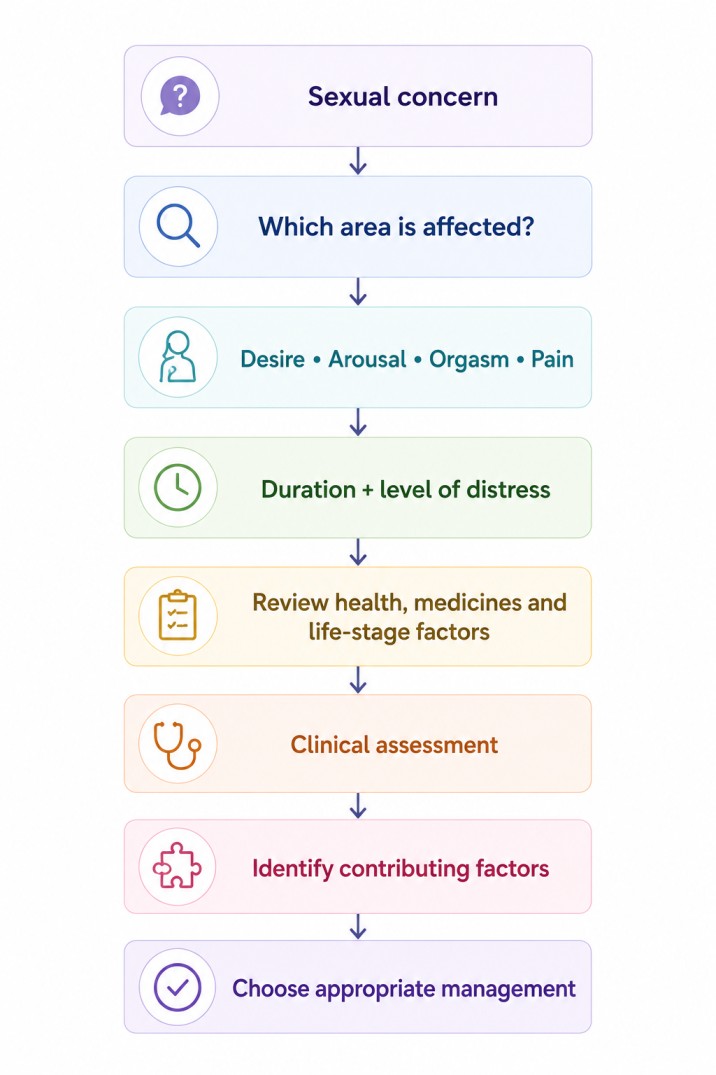
There is no single test that can diagnose every form of female sexual dysfunction. Assessment usually starts with a detailed conversation about the symptoms, sexual history, health conditions, medicines and factors that may be affecting sexual wellbeing. A healthcare professional may ask about:
- When the problem started.
- Whether it happens every time or only in certain situations.
- Changes in sexual desire, arousal, orgasm or comfort.
- Pain or vaginal dryness.
- Menstrual or menopausal changes.
- Pregnancy, childbirth or breastfeeding.
- Current medicines and other substances.
- Stress, anxiety or mood changes.
- Relationship or communication difficulties.
A physical or pelvic examination may be appropriate when symptoms such as pain, dryness or other physical changes are present. Laboratory tests are generally selected according to the symptoms and suspected underlying cause rather than performed routinely for every person.
Questionnaires Used in Assessment
Validated questionnaires can help healthcare professionals assess sexual function and associated distress. Two commonly referenced tools are:
- Female Sexual Function Index (FSFI)
- Female Sexual Distress Scale–Revised (FSDS-R)
These tools can support clinical assessment, but they do not replace a healthcare professional’s evaluation.
How to Fix Female Sexual Dysfunction?
There is no single method that fixes every type of female sexual dysfunction. Management depends on the symptoms, their underlying causes and whether several factors are involved at the same time. Treatment may include:
Counselling and Sex Therapy
Psychological or relationship factors can contribute to sexual difficulties. Counselling, sex therapy and cognitive behavioural therapy may be considered when these factors are relevant.
Pelvic Floor Therapy
Pelvic-floor physical therapy may be useful for some women with pelvic-floor dysfunction or pain associated with sexual activity. Treatment is tailored to the underlying problem.
Lubricants and Vaginal Moisturisers
Water- or silicone-based lubricants can reduce friction during sexual activity. Vaginal moisturisers may provide longer-lasting relief from vaginal dryness.
Hormonal Treatment
For selected women experiencing menopause-related vaginal and urinary symptoms, local vaginal estrogen and other hormonal options may be considered after medical assessment. The appropriate treatment depends on the individual’s symptoms and medical history.
Treating an Underlying Condition
If a health condition or medicine is contributing to sexual difficulties, addressing that factor may improve sexual function. Medicines should not be stopped or changed without medical advice.
Female Sexual Dysfunction Treatment: What Are the Options?
| Main concern | Management may include |
|---|---|
| Reduced sexual desire | Counselling, sex therapy, medication review and selected prescription treatments |
| Arousal difficulties | Addressing underlying causes, lubrication, therapy and selected medicines |
| Difficulty reaching orgasm | Sex therapy, behavioural approaches and review of contributing medicines |
| Vaginal dryness | Lubricants, moisturisers and selected hormonal treatments |
| Pain during sex | Treating the underlying cause, lubrication, pelvic-floor therapy and appropriate medical treatment |
Treatment is usually matched to the main problem rather than the label “female sexual dysfunction” alone.
Recent research supports a more individualised approach because the evidence and response to treatment differ between sexual-function problems. A 2026 systematic review of treatment options found evidence for several interventions but also highlighted variation between studies and limitations in the available evidence.
Female Sexual Dysfunction Medication
Medication is not suitable for every type of female sexual dysfunction. The choice depends on what is causing the problem, the symptoms involved, menopausal status, medical history and other medicines being taken. Depending on the diagnosis, treatment may involve:
- Flibanserin for selected women with acquired, generalised hypoactive sexual desire disorder.
- Bremelanotide for selected premenopausal women with acquired, generalised hypoactive sexual desire disorder.
- Vaginal estrogen for menopause-related vaginal dryness and other genitourinary symptoms when appropriate.
- Other treatments aimed at an underlying medical condition or medication-related sexual problem.
For some women, counselling, sex therapy, pelvic floor therapy, lubricants or treatment of an underlying health condition may be more relevant than medication. In many cases, more than one approach is used.
Sildenafil and Female Sexual Dysfunction
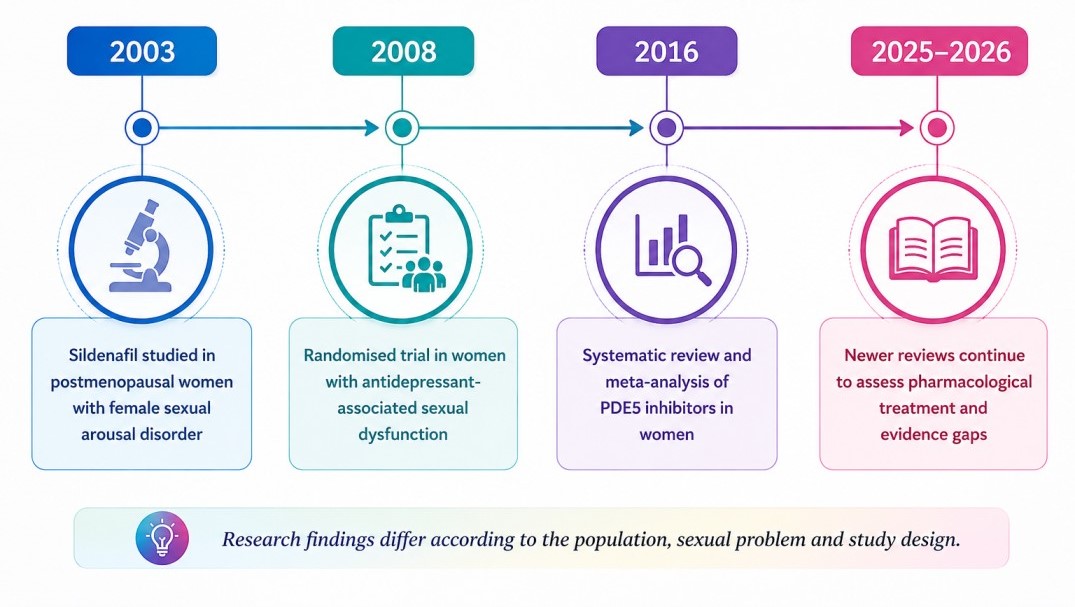
Sildenafil has also been studied in women because it belongs to the PDE5 inhibitor class, which affects blood-flow pathways. However, the evidence does not support sildenafil as a general treatment for every type of sexual dysfunction in women. Research has produced different findings in different groups:
- A 2003 clinical study examined sildenafil in postmenopausal women with female sexual arousal disorder.
- A 2008 randomised controlled trial included 98 premenopausal women with sexual dysfunction associated with antidepressant treatment. Sildenafil produced better sexual-function outcomes than placebo in that specific study population.
- A 2016 systematic review and meta-analysis assessed PDE5 inhibitors in women and found mixed results across the available studies. Differences in participants, conditions and study methods limited the ability to apply the findings broadly.
Sildenafil may have a role in certain situations, but it should not be described as a universal medicine for Women sexual dysfunction. A healthcare professional can determine whether it is appropriate for the particular sexual problem and medical history. Some researches also notes that research on PDE5 inhibitors in women has produced mixed results.
What About Filagra, Female Viagra and Cenforce FM?
Some products marketed for women’s sexual concerns are sold under names such as “Viagra for Women” and “Pink Pill”. These names should not be treated as interchangeable with a medically established diagnosis or treatment for sexual dysfunction in female.
Female Viagra is commonly used as a search and marketing term for products intended to address women’s sexual concerns. It is not, by itself, the name of a specific female sexual dysfunction diagnosis or a universal treatment.
Products such as Filagra Pink 100 mg and Cenforce FM 100 mg may be marketed as sildenafil-based products for female sexual concerns. Their relevance therefore depends on the active ingredient, the specific sexual problem and the individual’s medical circumstances.
Sildenafil can interact with certain medicines, including nitrates. Anyone considering a sildenafil-containing product should discuss its suitability with a doctor, particularly when taking other prescription medicines.
When Should You See a Healthcare Professional?
Consider seeking medical advice if:
- Sexual difficulties continue or keep returning.
- Pain makes sexual activity uncomfortable.
- Vaginal dryness is persistent.
- Symptoms began after starting or changing a medicine.
- Changes occur around menopause, pregnancy or childbirth.
- The problem causes significant distress.
- Sexual difficulties are affecting your wellbeing or relationship.
A healthcare professional can help determine whether the symptoms are related to a medical condition, medication, hormonal change or another factor.
Final Thoughts
Female sexual dysfunction can affect different parts of sexual health, and its causes are often more complex than low desire alone. Recent research also shows why prevalence figures vary between studies and why treatment cannot be reduced to one medicine or one approach.
Recognising the symptoms and identifying possible contributing factors is an important first step. Once the underlying issue is understood, treatment can be considered according to individual needs and medical circumstances. AustraliaRxMeds provides information on medicines and sexual health topics to help readers make more informed decisions about their treatment options.
FAQ
What is sexual dysfunction in females?
Female sexual dysfunction refers to ongoing problems with sexual desire, arousal, orgasm or pain during sexual activity that cause concern or distress. It can occur at different stages of life and may have physical, hormonal, psychological, medication-related or relationship-related causes.
What is the most common female sexual dysfunction?
Low sexual desire is one of the most common forms of female sexual dysfunction. Other common problems include difficulty becoming aroused, difficulty reaching orgasm and pain during sex.
How do you fix female sexual dysfunction?
There is no single treatment because the approach depends on the type and cause. Options may include counselling or sex therapy, pelvic floor therapy, lubricants, treatment for vaginal or hormonal changes, reviewing medicines and selected prescription treatments.
How do I know if I have sexual dysfunction as a woman?
You may want to speak with a healthcare professional if you have persistent problems with sexual desire, arousal, orgasm or pain that concern or distress you. Assessment may include questions about your sexual and medical history, medicines, symptoms and, when appropriate, a physical or pelvic examination.

Years of Experience: 12+ Years Education: Master of Sexology - [University of Sydney] MBBS (Bachelor of Medicine, Bachelor of Surgery) - [Torrens University Australia] BSc in Medical Laboratory Technology -…

