

Hormonal Imbalance in Women: Signs, Causes and Treatment
By Erica Wilson, Oct-27-2026


 Dr. Arjun Srivastav Medical Reviewer (Pharm D)
Hormones shape almost every part of how a woman feels and functions each day. They guide the menstrual cycle, influence fertility, regulate metabolism, affect mood, support restful sleep and help maintain steady energy.
Levels shift naturally across different stages of life, which makes some variation completely normal. When symptoms become persistent, unusual or disruptive, that pattern may deserve a closer look from a medical professional.
This guide walks through the signs of hormonal imbalance in women, the possible causes, the diagnostic process and the treatment options worth discussing with a doctor. Understanding the topic begins with knowing what these chemical messengers actually do.
Quick Answer: Hormonal Imbalance in Women
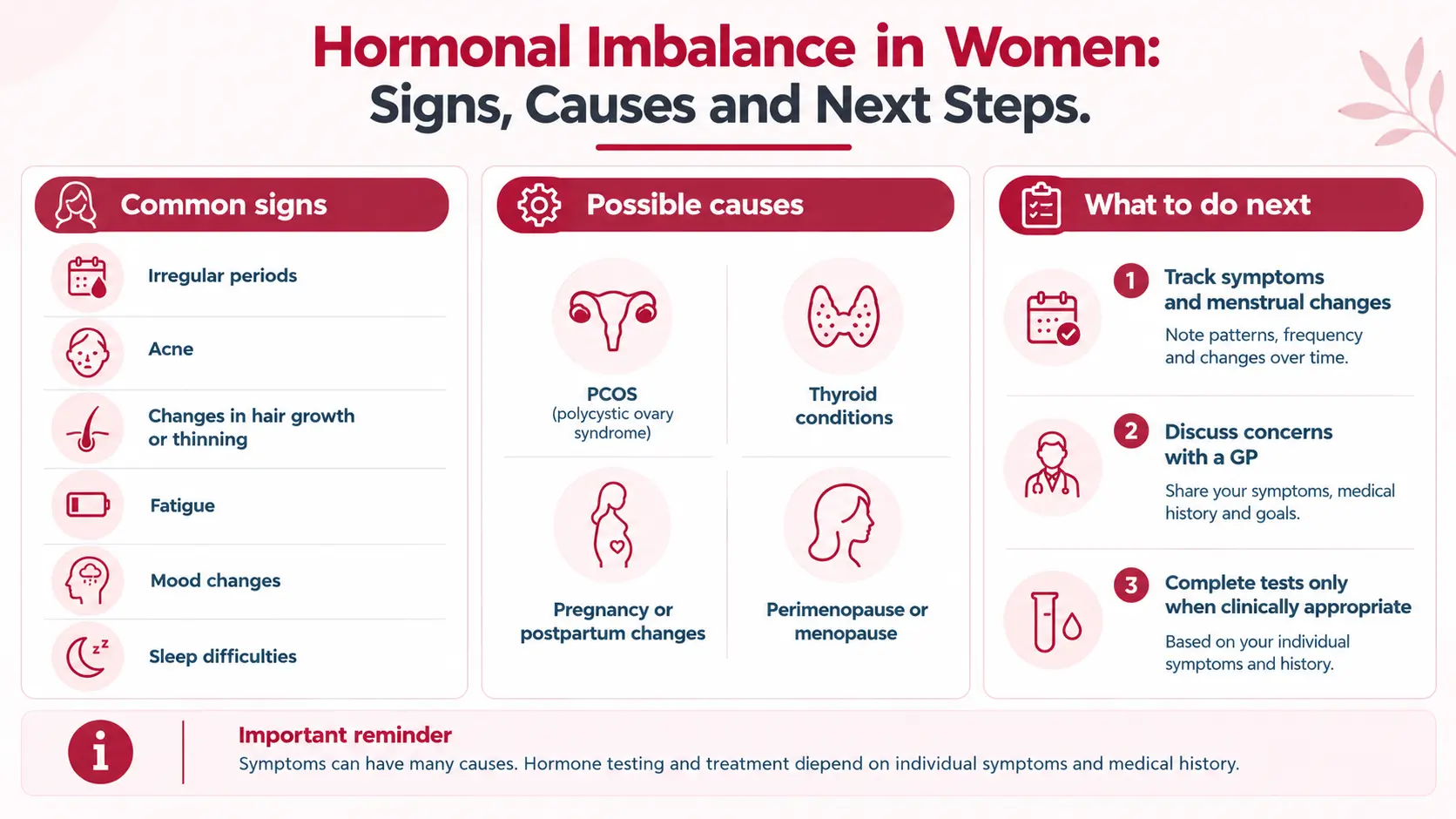
Hormonal imbalance occurs when hormone levels are too high or too low for the body’s needs. Some hormonal changes are normal, while persistent symptoms may need medical assessment.
Common signs
Irregular periods, acne, hair changes, fatigue, mood changes and sleep problems.
Possible causes
PCOS, thyroid conditions, pregnancy and menopause-related changes.
How it is checked
Medical history, symptoms and targeted tests when appropriate.
What can help
Treatment depends on the cause. A GP can help identify the next steps.
Remember: These symptoms can have causes other than hormonal changes. Avoid self-diagnosing from symptoms alone.
What Is Hormonal Imbalance in Women?
Hormones act as chemical messengers produced by endocrine glands throughout the body. These messengers travel through the bloodstream to tissues and organs, where they help regulate growth, metabolism, reproduction and mood.
Several hormones play important roles in female health, including oestrogen, progesterone, testosterone, thyroid hormones, insulin and prolactin. Each one carries specific responsibilities, and their levels rise and fall in response to the menstrual cycle, pregnancy, ageing, medications and underlying health conditions.
There is no single condition that the term hormonal imbalance in women describes. Instead, it can refer to different situations involving different hormones. Normal fluctuations happen across every cycle and every life stage.
Clinically significant hormone abnormalities are different because they involve patterns that fall outside expected ranges or produce ongoing symptoms. Understanding this distinction helps explain why two women with similar complaints may have entirely different explanations for what they are experiencing.
What Are the Signs of Hormonal Imbalance in Women?
Symptoms depend heavily on which hormone or bodily system is involved. Many of the changes described below also have causes completely unrelated to hormones, which is why context matters so much when evaluating signs of hormonal imbalance in women.
Menstrual and reproductive changes
Periods that arrive irregularly, stop altogether, become unusually heavy or last longer than usual can signal that something has shifted. Changes in cycle length and fertility often accompany these patterns.
Some women notice breast tenderness or changes in vaginal comfort that develop alongside menstrual irregularity. Tracking these changes over a few months gives a clearer picture than looking at a single cycle.
Skin and hair changes
Persistent acne, especially along the jawline or chin, can develop when certain hormone levels rise. Increased oiliness may accompany these breakouts.
Hormonal changes, particularly those associated with menopause, can affect the vaginal environment. Understanding vaginal pH can provide additional context, although pH alone cannot identify the cause of symptoms.
Some women notice more facial or body hair growth, while others see scalp hair thinning or patches of hair loss. These outward changes often reflect what is happening internally and can be among the visible signs of a hormone shift.
Changes in energy, mood and sleep
Fatigue, difficulty falling asleep, irritability and mood shifts are common complaints. These symptoms are nonspecific, meaning they can have several explanations ranging from stress and sleep habits to thyroid function or iron levels.
Because they overlap with so many areas of life, they rarely point to one cause on their own. This is why recognising a hormone shift requires looking at the full pattern rather than one isolated symptom.
Metabolic and sexual health changes
Unexplained weight changes, shifts in appetite, changes in libido and vaginal dryness can all appear during periods of hormone fluctuation. Experiencing one or more of these does not confirm a hormone disorder.
Changes in libido can have hormonal, physical, psychological or medication-related causes. Persistent sexual difficulties that cause concern may benefit from a broader assessment of female sexual dysfunction.
Many factors influence appetite, weight and sexual health, and a thorough assessment helps separate contributing elements before drawing any conclusion about a hormone shift.
Symptom interpretation guide
Understanding how symptoms connect to possible explanations makes it easier to have a productive conversation with a GP.
Period changes combined with acne and increased facial hair may relate to androgen levels. Fatigue alongside weight gain and feeling cold often points toward thyroid function. Hot flushes and changing cycle patterns commonly appear during perimenopause.
Bringing these observations to an appointment helps the doctor decide which questions to ask next when assessing the situation.
What Causes Hormonal Imbalance in Women?
Several conditions and life events can affect hormone levels. Each one produces its own pattern of changes, and the same cause does not always lead to identical symptoms in every person.
Polycystic ovary syndrome (PCOS)
PCOS involves androgen related changes that can affect ovulation. Irregular ovulation often leads to menstrual irregularity, and other features may include acne, increased hair growth and challenges with fertility.
PCOS can affect ovulation and menstrual regularity, and understanding related changes in vaginal discharge with PCOS can help put some symptoms into context. However, discharge alone cannot confirm PCOS.
The presentation varies widely among women, which is why assessment considers each person individually rather than applying a one size fits all description. PCOS remains one of the most common causes of hormonal imbalance in women during the reproductive years.
Thyroid disorders
The thyroid gland produces hormones that regulate metabolism and energy. Hypothyroidism occurs when thyroid function slows, which can contribute to fatigue, weight changes and altered menstrual patterns.
Hyperthyroidism involves overactive thyroid function and can produce different effects, including noticeable changes in energy and heart rate. Both conditions are manageable once identified and frequently underlie hormone changes in women.
Perimenopause and menopause
As women approach menopause, ovarian hormone production changes gradually. This transition, called perimenopause, can bring hot flushes, night sweats, shifting cycle patterns and sleep disturbance.
Menopause itself refers to the point when periods have ceased for twelve months, and the reduction in ovarian hormones can continue to influence how the body feels. This life stage represents another major cause of hormonal imbalance in women.
Pregnancy and postpartum changes
Pregnancy triggers substantial hormone shifts that support fetal development and prepare the body for birth. After childbirth, levels adjust again during recovery.
Some women notice changes in mood, energy or hair during this period, many of which resolve as the body settles into its new rhythm. These natural shifts are part of why hormone changes can appear at any point along the reproductive timeline.
Other medical and contributing factors
Elevated prolactin can affect menstrual function and fertility. Certain medications influence hormone activity, and significant changes in energy intake or exercise patterns can also play a role.
Other conditions may contribute depending on the individual. It helps to separate underlying medical conditions from lifestyle factors that can affect how symptoms feel or how hormone function operates when exploring the topic.
How Do Hormonal Symptoms Differ Across Life Stages?
Hormone related changes look different depending on where a woman is in her life. The table below offers a concise comparison.
| Life stage | Possible changes |
|---|---|
| Puberty | Menstrual cycles may take time to become regular as the body establishes its rhythm |
| Reproductive years | Cycle changes, PCOS related symptoms or thyroid related effects may appear |
| Pregnancy and postpartum | Changes associated with pregnancy and recovery after childbirth |
| Perimenopause | Changing cycle patterns, hot flushes and sleep disturbance |
| Menopause | Symptoms related to reduced ovarian hormone production |
Age alone cannot establish the cause of any symptom. Unusual or persistent changes deserve assessment regardless of life stage, because the underlying explanation for hormonal imbalance in women may not match expectations based on age alone.
How Is Hormonal Imbalance Diagnosed?
Diagnosis begins with a conversation rather than a test. A GP gathers information through several steps, each one building on the last.
Medical history comes first. The doctor asks about symptoms, when they started, menstrual patterns, the possibility of pregnancy, current medications and contraception use. This conversation often reveals more than any single test could.
Physical examination follows when relevant to the symptoms and clinical history. Not every appointment requires an examination, and the doctor decides based on what the history suggests.
Blood tests may be selected to assess thyroid function, prolactin, glucose regulation or particular reproductive hormones. The choice depends entirely on the suspected condition. There is no universal hormone panel suitable for every woman, and broad testing without clinical context rarely provides useful answers when investigating hormonal imbalance in women.
Additional investigations such as ultrasound may be appropriate in selected cases. Some diagnoses rest on clinical history and established criteria, while hormone results need interpretation in relation to the menstruation, medications and other individual factors.
Your Symptom Pattern: What Should You Track?
Symptoms alone cannot identify a hormone problem. These patterns can help you prepare for a GP appointment.
01 · Period changes
Track: Cycle dates, missed periods, bleeding duration and flow.
Discuss: New or persistent changes in your menstrual cycle.
02 · Skin or hair changes
Track: When acne, increased facial hair or hair thinning began.
Discuss: Whether these changes are new, persistent or occurring alongside period changes.
03 · Energy, mood or temperature changes
Track: Fatigue, sleep, mood, heat sensitivity and when symptoms occur.
Discuss: Other possible causes, medicines and whether targeted tests are appropriate.
Bring to your appointment: Your symptom timeline, menstrual dates, current medicines and supplements, and any recent changes in health.
This guide is for preparation, not diagnosis. Seek urgent medical care for severe pelvic pain, fainting or very heavy bleeding.
How Is Hormonal Imbalance in Women Treated?
Hormonal imbalance treatment depends on the underlying diagnosis, symptom severity, reproductive goals and individual circumstances. No single approach fits every situation.
For PCOS, management may address menstrual irregularity, androgen related symptoms, metabolic health or fertility goals. Different women prioritise different outcomes, and care plans reflect those priorities.
Thyroid disorders require treatment tailored to whether thyroid function is underactive or overactive. The specific diagnosis guides the approach, and ongoing monitoring helps ensure the plan continues to fit.
Perimenopause and menopause care may involve menopausal hormone therapy or suitable non hormonal options. Discussing the benefits and considerations of each approach with a healthcare professional helps each woman make an informed choice based on her history and preferences.
Other causes may require changes to medications, targeted treatment or further investigation. Not every hormonal change requires medication, and treatment for hormonal imbalance in women should never begin solely on the basis of a symptom checklist or an unverified hormone test. Care decisions rest on proper assessment.
Can Lifestyle Changes Help Manage Hormonal Symptoms?
Practical, evidence informed habits can support general wellbeing and help manage some symptoms. Balanced nutrition with adequate energy intake gives the body what it needs to function steadily.
Regular physical activity suited to individual ability supports both physical and mental health. A consistent sleep routine helps regulate energy and mood. Sustainable stress management strategies make daily demands easier to handle.
It helps to approach hormone related supplements and restrictive diets with caution. Unverified hormone balancing products and extreme eating plans can do more harm than good.
Lifestyle measures support overall health, but they do not replace treatment for conditions such as thyroid disease or clinically significant PCOS. Supportive habits work alongside medical care for hormonal imbalance in women, not instead of it.
When Should You See a Doctor About Hormonal Symptoms?
Some changes warrant a GP appointment rather than continued observation. Persistent or unexplained menstrual changes deserve attention.
New or worsening acne, increased facial hair growth or hair loss that appears without explanation may need assessment. Ongoing fatigue, weight changes or other symptoms that affect daily life are worth discussing. Menstrual changes accompanied by other concerning symptoms also call for a visit.
Certain situations need urgent care. Very heavy bleeding, fainting, sudden severe pelvic pain or possible pregnancy accompanied by pain or bleeding all require immediate medical attention.
Australian readers can seek individual advice from a GP or qualified healthcare professional rather than relying on self diagnosis. General information offers context, but personal assessment provides answers tailored to each situation and helps confirm or rule out hormonal imbalance in women.
How to Prepare for a GP Appointment
A little preparation makes any appointment more productive.
- Record period dates and any changes in bleeding
- Note when symptoms started and how often they occur
- List current medicines, contraception and supplements
- Record relevant sleep, exercise and health changes
- Prepare questions about possible causes, appropriate tests and treatment options
These steps turn general information into an actionable plan without encouraging self diagnosis and help the doctor assess the situation more efficiently.
Common Myths About Hormonal Imbalance
Misconceptions about hormones circulate widely, and clearing them up helps women make better decisions.
Weight gain always means a hormone imbalance. This idea oversimplifies a complex topic. Weight changes can have numerous causes, and hormones are only one possible factor among many.
Everyone with hormonal symptoms needs a full hormone panel. Testing depends on the clinical picture. Broad panels without context often create confusion rather than clarity when evaluating hormonal imbalance in women.
Natural supplements are always safe and effective. Evidence varies widely across products, and supplements can cause adverse effects or interact with medications. What works for one person may not suit another.
Medical Disclaimer
Female Sexual Arousal: Factors That Can Affect It
Understand factors that may influence female sexual arousal and why sexual health concerns can have different causes and treatment approaches.
FAQ
What are the first signs of hormonal imbalance in women?
There is no single first sign. Menstrual changes often appear early, but skin changes, fatigue, mood shifts and other symptoms depend entirely on the cause. What shows up first varies from person to person, which is why tracking patterns over time helps more than focusing on one symptom.
Can hormonal imbalance cause weight gain?
Some conditions can contribute to weight changes, but weight gain alone does not establish a hormonal cause. Many factors influence weight, including activity, nutrition, sleep, stress and underlying health. A proper assessment considers the full picture rather than assuming hormones are responsible for hormonal imbalance in women.
How do doctors test for hormonal imbalance?
Testing follows a symptom led assessment. A GP starts with history and examination, then selects specific tests based on what the clinical picture suggests. Targeted testing provides more useful information than broad, unguided panels when diagnosing hormonal imbalance in women.
Can hormonal imbalance be treated naturally?
Supportive lifestyle measures can help manage some symptoms and support general health. Conditions such as thyroid disease or clinically significant PCOS require medical treatment. Natural approaches work best alongside proper care, not as a replacement for it.
How long does it take to manage hormonal symptoms?
The timeline varies by cause, treatment and individual response. Some changes settle within weeks, while others require ongoing management. Working with a healthcare professional helps set realistic expectations for managing hormonal imbalance in women based on the specific situation.

Years of Experience: 10+ years Education: B.Sc. in Biomedical Science (Monash University, Melbourne, Australia) PG Diploma in Health & Medical Communication (University of Sydney, Australia) Experience: Erica Wilson is an…

