

Semen Color: What Is Normal and When to Worry
By Erica Wilson, Oct-26-2026


 Dr. Arjun Srivastav Medical Reviewer (Pharm D)
Semen is typically whitish gray, but its appearance can vary from one ejaculation to the next. You might notice clear, yellow, green, pink, red or even brown fluid at different points.
Wondering what those shades mean is completely natural. A color change does not automatically point to a medical condition, and appearance alone cannot determine sperm health or fertility.
This article walks through a practical semen color chart, explores possible reasons behind different shades and highlights the warning signs that warrant a conversation with a healthcare professional.
Quick Answer: What Is Normal Semen Color?
Semen is usually whitish-gray or off-white, but its appearance can vary. Yellow, clear, pink, red or brown semen may have different explanations.
- White or gray: Typical appearance.
- Yellow: May be harmless or related to a medical issue.
- Clear or watery: Does not automatically mean low sperm count.
- Pink, red or brown: May indicate blood and should be assessed.
When to seek help: Consult a healthcare professional for persistent changes, visible blood or symptoms such as pain or fever. Sudden, severe testicular pain requires emergency care.
What Is the Normal Color of Semen?
What healthy semen usually looks like
Healthy semen usually appears whitish gray or slightly off white. It has a somewhat thick, opaque consistency right after ejaculation and tends to thin out after a few minutes.
It helps to understand the distinction between semen and sperm. Semen is the fluid released during ejaculation, while sperm are the microscopic reproductive cells carried within that fluid.
Normal looking semen does not guarantee normal sperm parameters. Visual inspection alone is never a reliable way to judge reproductive health.
Why semen appearance can vary
Natural variation between ejaculations is common. The time since your previous release, hydration levels, diet and individual factors can all influence how semen looks on a given day.
Some people notice a slightly different shade after a longer gap between ejaculations, while others see changes based on lifestyle habits.
Because of this variation, a single color change should be interpreted alongside any symptoms and your broader medical history rather than in isolation.
Understanding what color should your semen be means recognizing that some fluctuation falls within the expected range. Considering what is the normal color of semen for your own body over time provides a more reliable baseline than comparing against a single moment.
Semen Color Chart: What Different Colors Mean
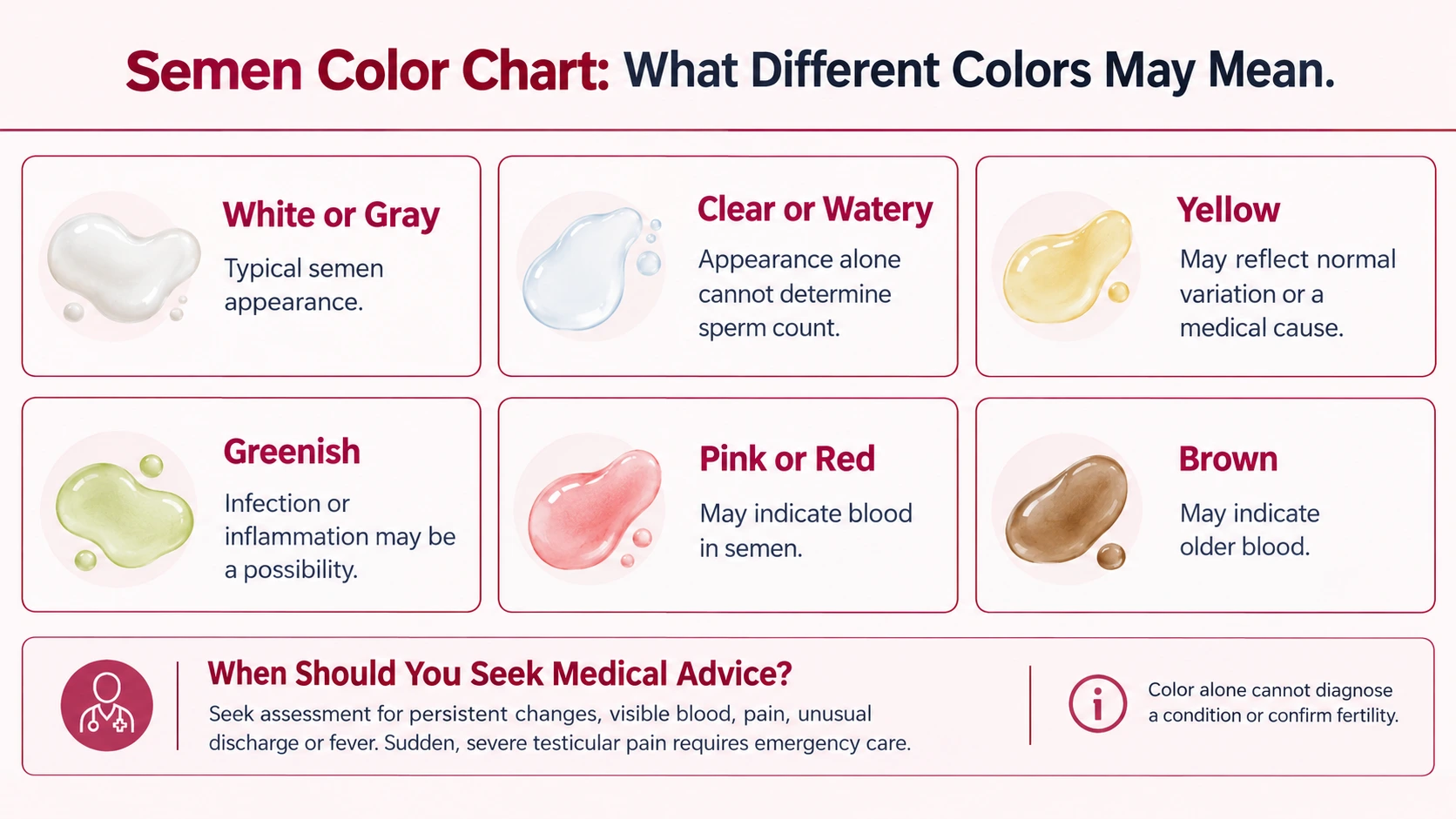
A semen color chart can offer helpful clues, but it cannot independently diagnose an infection or any other condition. Use the overview below as a starting point, and remember that context matters.
| Appearance | Possible explanation | Recommended action |
|---|---|---|
| White or gray | Typical semen appearance | Usually no concern if consistent with your usual pattern |
| Clear or watery | Natural variation | Seek advice if persistent or associated with fertility concerns |
| Yellow | Normal variation or possible medical causes | Assess accompanying symptoms |
| Greenish | Possible infection or inflammation | Seek medical advice, particularly with symptoms |
| Pink or red | Possible blood | Arrange medical assessment |
| Brown | Possible older blood | Seek assessment, especially if recurrent |
Appearance alone cannot confirm reproductive health. A consistent white or gray color is simply one indicator that things may be within the expe
Clear or Watery Semen
Semen may sometimes appear more transparent or less thick than usual. This can happen due to natural variation, frequent ejaculation or hydration levels.
Clear or watery semen does not establish a low sperm count on its own. If this appearance persists or you have fertility concerns, discussing it with a healthcare professional can provide clarity.
Yellow Semen
Mild yellowing can occur for several reasons. Normal variation, possible mixing with residual urine in the urethra and certain dietary factors can all contribute to a slightly yellow tint.
Persistent changes or accompanying symptoms such as pain or discharge warrant professional assessment. The question of why is my semen yellow often has a straightforward explanation, but ongoing shifts deserve attention.
Green or Greenish Semen
Greenish semen can sometimes be associated with infection or inflammation in the reproductive tract. Relevant symptoms might include painful urination, unusual discharge or fever.
Color alone cannot establish the presence of a sexually transmitted infection. Greenish semen accompanied by any of these symptoms should prompt a visit to a healthcare professional for proper evaluation.
Pink or Red Semen
Pink or red semen may indicate blood mixed with the seminal fluid. Possible causes vary widely and require clinical context to interpret accurately.
Because blood in semen can stem from many different sources, medical assessment is recommended whenever you notice a pink or red shade.
Brown or Dark Brown Semen
Brown semen may reflect older blood that has had time to darken within the reproductive tract. The color alone cannot establish the underlying cause.
Assessment is recommended, particularly when the change recurs or appears alongside other symptoms. For those wondering does semen color brown indicate a specific issue, the answer depends on individual circumstances and clinical evaluation.
Why Is Semen Yellow?
Common reasons for yellow semen
Mild yellowing may occur as a normal variation and is often harmless. One frequent explanation is the mixing of semen with residual urine left in the urethra, since urine carries a natural yellow pigment.
Individual circumstances such as diet, hydration and supplements can also influence the appearance of semen. Occasional yellow sperm or yellow semen is not unusual, and many people notice this shade at some point without any underlying issue.
When yellow semen may indicate a medical issue
Infection or inflammation may sometimes be associated with yellowish semen. Accompanying symptoms can include painful urination, pelvic discomfort, unusual discharge or fever.
It is important to understand that yellow semen does not automatically indicate a sexually transmitted infection or infertility. Medical assessment is recommended when the change persists or occurs alongside other symptoms, as a healthcare professional can evaluate the full picture.
What Do Brown, Red or Pink Semen Mean?
Pink, red or brown semen may indicate blood mixed with the seminal fluid. The medical term for this occurrence is haematospermia.
Red or pink shades may reflect fresher blood, while brown may reflect older blood that has darkened over time. Possible causes include inflammation, infection, recent medical procedures or other conditions that a clinician would evaluate.
Blood in semen or blood in sperm is not always a sign of a serious condition, but it should not be ignored. Medical assessment is recommended, especially when blood recurs or occurs alongside pain, fever or urinary symptoms.
What Does Healthy Sperm Look Like?
Can you identify healthy sperm by appearance?
Sperm cells cannot be assessed by looking at semen with the naked eye. What you see is the seminal fluid, not the individual reproductive cells within it.
Semen color, thickness and volume cannot independently confirm sperm health, and visible appearance should not be used to diagnose infertility. People often search for what does cum look like expecting a clear visual answer, but the visible fluid only tells part of the story.
Diet provides nutrients that support general health, but no single food can confirm or guarantee healthy sperm. For more on this topic, read our guide to how pineapple may relate to men’s sperm health.
How sperm health is assessed
Semen analysis is a laboratory test that provides detailed information about reproductive function. It can assess sperm concentration, motility and morphology, offering a far more accurate picture than visual inspection ever could.
People with fertility concerns can discuss testing with a healthcare professional to determine whether a semen analysis is appropriate for their situation. Understanding semen color and fertility together requires looking beyond appearance and relying on clinical evaluation.
Look beyond appearance
3 Things Semen Color Cannot Tell You
Visible changes can be worth noticing, but appearance has important limits.
01. Sperm count
White, gray or clear-looking semen cannot tell you how many sperm are present. A laboratory semen analysis can measure sperm concentration.
02. Sperm movement and shape
Semen appearance cannot show whether sperm move effectively or have typical shapes. These characteristics require laboratory assessment.
03. Fertility
Neither normal-looking nor unusual-looking semen can confirm fertility on its own. A clinician can recommend appropriate testing if conception is a concern.
What can you do instead?
Notice persistent changes, take note of accompanying symptoms and discuss concerns with a healthcare professional. A semen analysis provides more useful information about sperm parameters than visual inspection.
Educational information only. This visual does not diagnose fertility problems or other medical conditions.
What Color Is Dried Semen?
Dried semen may appear off white or pale yellow on various surfaces. The specific appearance depends on the material it lands on, the lighting conditions and how quickly it dries.
A dried stain cannot establish sperm health, fertility or infection status. For any concerning changes in fresh semen, seek medical guidance rather than relying on the appearance of dried fluid. Knowing what color is dried semen might satisfy curiosity, but it carries no diagnostic value.
When Should You Worry About a Change in Semen Color?
Signs that warrant medical assessment
Several semen color changes and accompanying symptoms warrant attention from a healthcare professional:
- A persistent or repeatedly recurring color change
- Pink, red or brown semen that may contain blood
- Pain during ejaculation or urination
- Unusual penile discharge or genital discomfort
- Fever or other symptoms that may suggest infection
When to seek urgent medical care
Severe pain, significant swelling or fever accompanied by substantial illness warrants prompt assessment. Sudden, severe testicular pain requires emergency evaluation without delay.
When concerning symptoms are present, it is not advisable to wait for a fixed period. Knowing when to see a doctor for semen color changes means recognizing that certain combinations of symptoms call for immediate attention rather than watchful waiting.
How Is an Unusual Semen Color Checked?
A medical assessment for unusual semen color typically begins with a thorough medical history and a discussion of how long the change has been present. The healthcare professional reviews accompanying symptoms, relevant medications and any recent procedures.
A physical examination may be performed when appropriate. Urine or sexually transmitted infection testing can be ordered if indicated, and further investigations or semen analysis may follow depending on the circumstances.
Investigations are always selected according to the individual symptoms and medical history, ensuring that each evaluation is tailored to the person rather than following a one size fits all approach.
Key Takeaways About Semen Color
Semen is typically whitish gray, although normal variation occurs from one ejaculation to the next. Yellowing may be harmless or associated with a medical issue depending on context.
Red or brown semen can indicate blood and deserves attention. Color alone cannot diagnose a condition or confirm fertility. Persistent changes, visible blood or accompanying symptoms warrant medical advice.
Paying attention to patterns over time gives you and your healthcare professional more useful information than any single observation. This article is for general educational purposes only and does not replace individual medical advice. Always consult a qualified healthcare professional for concerns about your reproductive health.
Medical Disclaimer
FAQ
What is the healthiest semen color?
Semen is typically whitish gray, but appearance alone cannot establish reproductive health. Variation occurs naturally, and the healthiest color is simply one that is consistent with your usual pattern.
Is yellow semen always a problem?
Yellowing can occur for several reasons, including natural variation and urine mixing. Persistent changes or accompanying symptoms warrant medical assessment rather than assumption.
Can semen color tell you if you are fertile?
Visible appearance cannot confirm fertility. Semen analysis may be useful when clinically appropriate, as it provides detailed information that visual inspection cannot.
Does brown semen always mean blood?
Brown semen can reflect older blood, but color alone cannot confirm the cause. Clinical evaluation is needed to understand what does healthy sperm look like in the context of reproductive health.
Should I worry if my semen is clear?
Clear or watery semen does not automatically mean low sperm count or infertility. Natural variation is common, and professional advice can help if concerns persist.
What color is dried semen?
Dried semen may appear off white or pale yellow, depending on the surface and drying conditions. It carries no diagnostic value.

Years of Experience: 10+ years Education: B.Sc. in Biomedical Science (Monash University, Melbourne, Australia) PG Diploma in Health & Medical Communication (University of Sydney, Australia) Experience: Erica Wilson is an…

