

Can Premature Ejaculation Be Controlled? Effective Ways and Treatment Options
By Erica Wilson, Oct-30-2026


 Dr. Arjun Srivastav Medical Reviewer (Pharm D)
Premature ejaculation is a common sexual concern that many men experience at some point in life. The reassuring part is that it can often be managed with the right combination of approaches.
Different methods may help improve ejaculation control. These range from simple behavioural techniques to psychological support, lifestyle adjustments and medical treatments. The most suitable path usually depends on what is driving the concern and whether the experience has been lifelong or more recently acquired.
Understanding sexual health concerns is an important part of maintaining overall men’s health, including recognising changes in sexual function and knowing when to seek support.
Understanding the available options can make it easier to take confident steps toward better premature ejaculation control.
Can Premature Ejaculation Be Controlled?
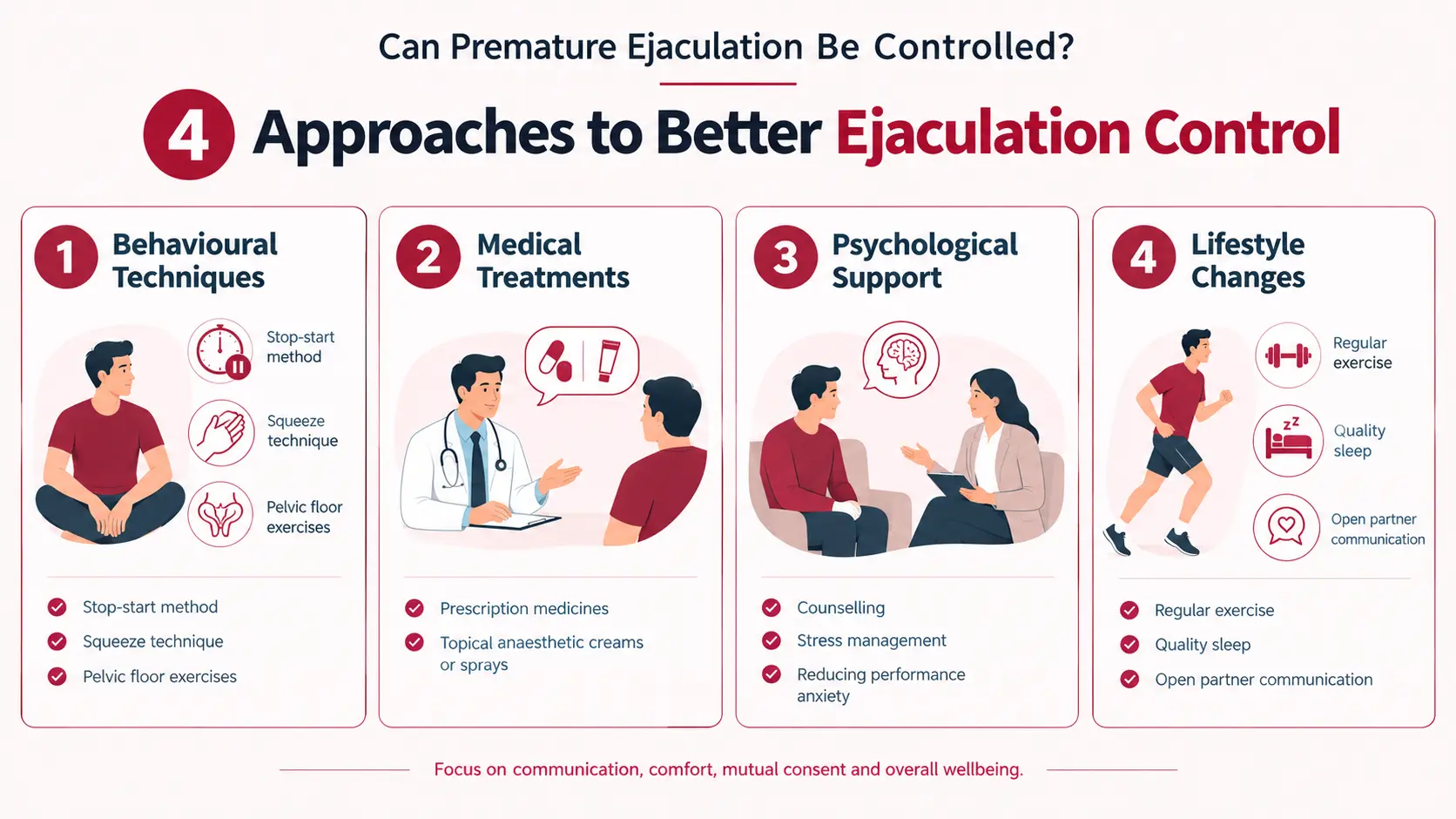
Yes, premature ejaculation can often be managed with suitable techniques and treatment. The right approach depends on its underlying cause and whether it is lifelong or acquired.
Behavioural methods
Stop-start, squeeze technique and pelvic floor training.
Medical options
Prescription medicines and topical anaesthetics when appropriate.
Psychological support
Counselling and stress management.
Lifestyle changes
Better sleep, exercise and partner communication.
Treatment outcomes vary. A healthcare professional can help identify suitable options.
Can Premature Ejaculation Be Controlled?
Premature ejaculation refers to reaching climax sooner than a person or their partner would like during sexual activity. It is important to distinguish between occasional early ejaculation, which most men experience from time to time, and persistent premature ejaculation that happens regularly and causes distress.
Recognising common premature ejaculation symptoms can help distinguish occasional experiences from a persistent concern that may need professional attention.
There are two main recognised forms.
- Lifelong premature ejaculation is present from the first sexual experience and tends to continue over time.
- Acquired premature ejaculation develops later in life after a period of normal ejaculation control.
Complete control may not always be possible, but management is achievable for many men. Results differ between individuals because the underlying causes and personal circumstances vary so widely.
What Causes a Lack of Ejaculation Control?
Several factors can contribute to difficulty controlling ejaculation. Performance anxiety and everyday stress often play a significant role, creating a cycle where worry about finishing too quickly makes the concern more likely. Relationship difficulties can add emotional pressure that affects sexual function.
Erectile dysfunction is another common contributor. When maintaining an erection feels uncertain, some men may rush through sexual activity, which can lead to earlier ejaculation.
Changes in sexual arousal and sensitivity also matter, as heightened responsiveness may reduce the time before climax. Certain health conditions, including thyroid issues and other relevant medical concerns, can influence sexual function as well. Both psychological and physical factors are often involved, which is why understanding the personal pattern matters.
How to Control Premature Ejaculation: 6 Effective Approaches
Oral Medications for Premature Ejaculation
Certain oral medicines are sometimes considered as part of premature ejaculation treatment. Selective serotonin reuptake inhibitors, known as SSRIs, are a category of medication that may delay ejaculation as an effect. Dapoxetine is one specific option that has been studied for this purpose and is taken as needed rather than daily.
These medicines may help extend the time before climax for some men. Because they can interact with other medications and may produce adverse effects such as nausea, headache or dizziness, they require a prescription and proper medical assessment.
A healthcare professional can determine whether this approach is suitable based on individual health history and current medications. Self medicating is never advisable because the suitability of these treatments depends on personal circumstances.
Behavioural Techniques
Behavioural methods focus on building awareness and control during sexual activity. The stop start technique involves pausing stimulation when arousal feels close to the point of climax, then resuming once the intensity subsides. Repeating this cycle can help extend the experience.
The squeeze technique works in a similar way. When nearing climax, gentle pressure is applied to the base of the glans to reduce the urge to ejaculate, allowing activity to continue afterward.
Both methods require patience and practise. They can be effective for some men, but results vary and they may take time to master. Setting realistic expectations matters, as progress is often gradual rather than immediate.
Correct pelvic floor training may also complement other behavioural approaches. Understanding Kegel exercises for premature ejaculation can help explain how these muscles are involved in ejaculation control.
Psychological Approaches and Counselling
Psychological support can address the mental and emotional side of premature ejaculation. Cognitive behavioural therapy, or CBT, helps identify and reframe negative thought patterns that may contribute to performance anxiety. When worrying thoughts are replaced with more balanced perspectives, the pressure around sexual performance can ease.
Individual counselling gives space to explore personal concerns. Couples counselling can improve communication and reduce tension between partners. For men whose ejaculation concerns are linked to stress, anxiety or relationship strain, psychological approaches may be a valuable part of the overall plan.
Pelvic Floor Exercises
The pelvic floor muscles support the bladder and bowel and also play a role in sexual function, including ejaculation. Strengthening these muscles through Kegel exercises may help some men gain better control over the timing of climax.
Proper technique matters. Identifying the correct muscles can be done by noticing the muscles used to stop the flow of urine, though this is only a way to locate them and not a regular habit to practise.
Relaxation is just as important as strengthening, because overly tense muscles can sometimes work against the goal. Guidance from a healthcare professional can help ensure the exercises are performed correctly. Improvement is not guaranteed, but some men find practise over time worthwhile.
Topical Anaesthetic Creams and Sprays
Topical products containing lidocaine or prilocaine are applied to reduce sensitivity in the area. Lower sensitivity may delay ejaculation for some men. These preparations come as creams and sprays and are available in different strengths.
There are points to keep in mind. Numbness or irritation can occur, and the product may transfer to a partner during sexual activity, reducing their sensation as well. Washing the product off before contact or using a condom can help manage transfer.
Following the product instructions carefully is important to avoid excessive application and to use the product as intended.
Lifestyle Changes and Partner Communication
General wellbeing can influence sexual function. Regular physical activity supports cardiovascular health and stress reduction. Adequate sleep and effective stress management contribute to overall balance. A nutritious diet supports general health in ways that can support sexual wellbeing too.
Open communication with a partner can reduce anxiety and create a more relaxed environment. Talking openly about preferences and concerns often eases pressure.
Lifestyle improvements support general wellbeing, but they are not established standalone treatments for persistent premature ejaculation. They work best alongside other approaches when the concern is ongoing.
Some men also consider natural approaches to premature ejaculation, although evidence for herbal remedies and supplements remains limited and they should not replace appropriate medical care.
Additional Ways to Improve Ejaculation Control
Recognise the Signs of Rising Arousal
Becoming more aware of increasing arousal can support better premature ejaculation control. Noticing the physical and emotional signs as arousal builds creates a window to pause or adjust before reaching the point of no return.
This awareness complements the stop start technique because recognising rising intensity early makes it easier to apply the method effectively. Learning this awareness takes attention and practise, and the point of no return differs for each person.
Understanding the Ejaculation Control Window
Recognising changes in arousal may help identify when to pause stimulation before ejaculation becomes difficult to stop.
Stage 1
Stage 2
Stage 3
Stage 4
Sexual excitement begins and physical arousal gradually develops.
Arousal increases. Becoming aware of physical sensations can help with timing.
Pause stimulation using the stop-start technique. Resume when the urge to ejaculate has eased.
Once this threshold is reached, pausing may no longer prevent ejaculation.
Remember: The control window varies between individuals. Learning to recognise rising arousal may help with behavioural techniques, but it does not guarantee delayed ejaculation.
Educational illustration · Not a diagnostic tool
Experiment With Condoms and Sexual Positions
Condoms may reduce sensation during sexual activity, which can sometimes extend the time before climax. Different types and thicknesses vary in their effect, so individual responses differ.
Sexual positions also influence the level of stimulation. Some positions may be less stimulating than others, and experimenting can help a person discover what works for them. There is no universal answer, as preferences and responses vary between individuals.
Understand the Second Attempt Approach
Some men find that a second round of sexual activity after the first ejaculation involves a longer time before climax. This is sometimes referred to as the second attempt approach. The reason is that sensitivity and arousal levels can be different after the first experience.
Individual variation is significant here, and the time needed to become aroused again differs widely between men. This is not a guaranteed treatment, but it is a pattern some men notice and use to their advantage.
How Are Premature Ejaculation and Erectile Dysfunction Connected?
Premature ejaculation and erectile dysfunction can occur together, and the link between them is worth understanding. When a man is concerned about losing an erection, he may rush through sexual activity, and that urgency can lead to earlier ejaculation.
In this situation, the premature ejaculation may be a response to the erectile concern rather than a separate issue. Addressing the underlying erectile difficulties may improve the ejaculation related concerns.
When erection difficulties are also present, a healthcare professional may assess whether appropriate erectile dysfunction treatments could help address the underlying concern.
Because the two conditions can influence each other, both need appropriate assessment by a healthcare professional. Treating one without considering the other may not resolve the full picture.
How Do Doctors Diagnose Premature Ejaculation?
Diagnosis usually begins with a medical and sexual history. A doctor may ask when the symptoms started, how often they occur and how much distress they cause. Understanding perceived ejaculation control and its impact on relationships is part of the assessment.
Questions about erectile function and other symptoms help identify contributing factors. A physical examination or targeted investigations may be considered when indicated, but they are not always necessary.
There is no single test that confirms every case, because the diagnosis relies largely on the individual experience and history.
Behavioural Techniques vs Medical Treatment: What Is the Difference?
Understanding the difference between behavioural and medical approaches can help in choosing a direction.
- Behavioural approaches focus on developing better arousal awareness and control. Examples include the stop start technique, the squeeze technique and cognitive behavioural therapy. Professional support may involve a sex therapist, and results can vary from person to person.
- Medical treatments aim to delay ejaculation through medication or reduced sensitivity. Examples include dapoxetine, prescribed SSRIs and topical anaesthetics. These require appropriate medical guidance, and side effects and suitability need careful consideration.
Some individuals may benefit from a combination of both approaches, drawing on the strengths of each to suit their circumstances.
When Should You Seek Professional Help?
Professional guidance is worth considering when difficulty controlling ejaculation persists over time. Anxiety or distress that affects sexual relationships is another reason to seek support.
Sudden changes in ejaculation patterns or associated erectile difficulties also warrant attention. When self help approaches are not providing adequate improvement, a healthcare professional can help explore other premature ejaculation treatment options and identify any underlying factors.
Can Premature Ejaculation Be Completely Cured?
The idea of a complete cure is complex. Management is often the more realistic goal, and many men achieve meaningful improvement with the right approach.
Lifelong and acquired premature ejaculation may have different treatment outcomes because their causes differ. Sustained improvement is possible, especially when the contributing factors are well understood and addressed.
Guarantees are not possible, as individual responses vary, but progress is achievable for many.
Conclusion
Premature ejaculation can be managed through various approaches, including behavioural techniques, psychological support, lifestyle adjustments and medical treatments. The right path depends on the underlying cause and whether the concern is lifelong or acquired. When symptoms persist, seeking professional assessment is a practical step toward finding a suitable approach and improving overall sexual wellbeing.
⚕️ Medical Disclaimer
FAQ
Can premature ejaculation be controlled naturally?
Natural approaches such as behavioural techniques, pelvic floor exercises and stress management may help some men improve control. Results vary, and persistent concerns may benefit from professional assessment.
How long does it take to improve ejaculation control?
There is no fixed timeline. Some men notice changes within weeks of practising behavioural techniques, while others may take longer. Consistency and realistic expectations play a role.
Can Kegel exercises help with premature ejaculation?
Kegel exercises strengthen the pelvic floor muscles, which may support better control for some men. Proper technique and regular practise matter, and improvement is not guaranteed.
Does masturbation before sex help delay ejaculation?
Some men find that ejaculating before sexual activity extends the time before climax during the next round. Individual responses vary, and this is not a guaranteed method.
Can stress cause premature ejaculation?
Stress and anxiety can contribute to ejaculation concerns by increasing tension and performance pressure. Managing stress may support better control, though it is one of several possible factors.
Are premature ejaculation sprays effective?
Topical sprays containing anaesthetic ingredients may reduce sensitivity and delay ejaculation for some men. Effects vary, and following instructions helps manage potential side effects.
Can premature ejaculation return after treatment?
Symptoms may return, especially if contributing factors such as stress or anxiety persist. Ongoing management and addressing underlying causes can help maintain progress.

Years of Experience: 10+ years Education: B.Sc. in Biomedical Science (Monash University, Melbourne, Australia) PG Diploma in Health & Medical Communication (University of Sydney, Australia) Experience: Erica Wilson is an…

