

How to Stop Overthinking During Sex and Enjoy Intimacy Again
By Erica Wilson, Nov-21-2026


 Dr. Arjun Srivastav Medical Reviewer (Pharm D)
Intimacy is meant to be an opportunity to feel close to your partner, enjoy physical sensations and share a comfortable experience. However, it can become difficult to relax when your mind is occupied with thoughts about your appearance, performance or whether your partner is satisfied.
You might find yourself analysing every movement, worrying about losing an erection, wondering whether you are taking too long or thinking about what your partner expects. These distractions can make it harder to stay connected to the moment.
Learning How to Stop Overthinking During Sex starts with understanding why these thoughts appear and finding practical ways to manage them. You do not need to control every aspect of intimacy. Instead, the aim is to feel more comfortable, communicate openly and allow the experience to develop naturally.
Quick Answer: How to Stop Overthinking During Sex
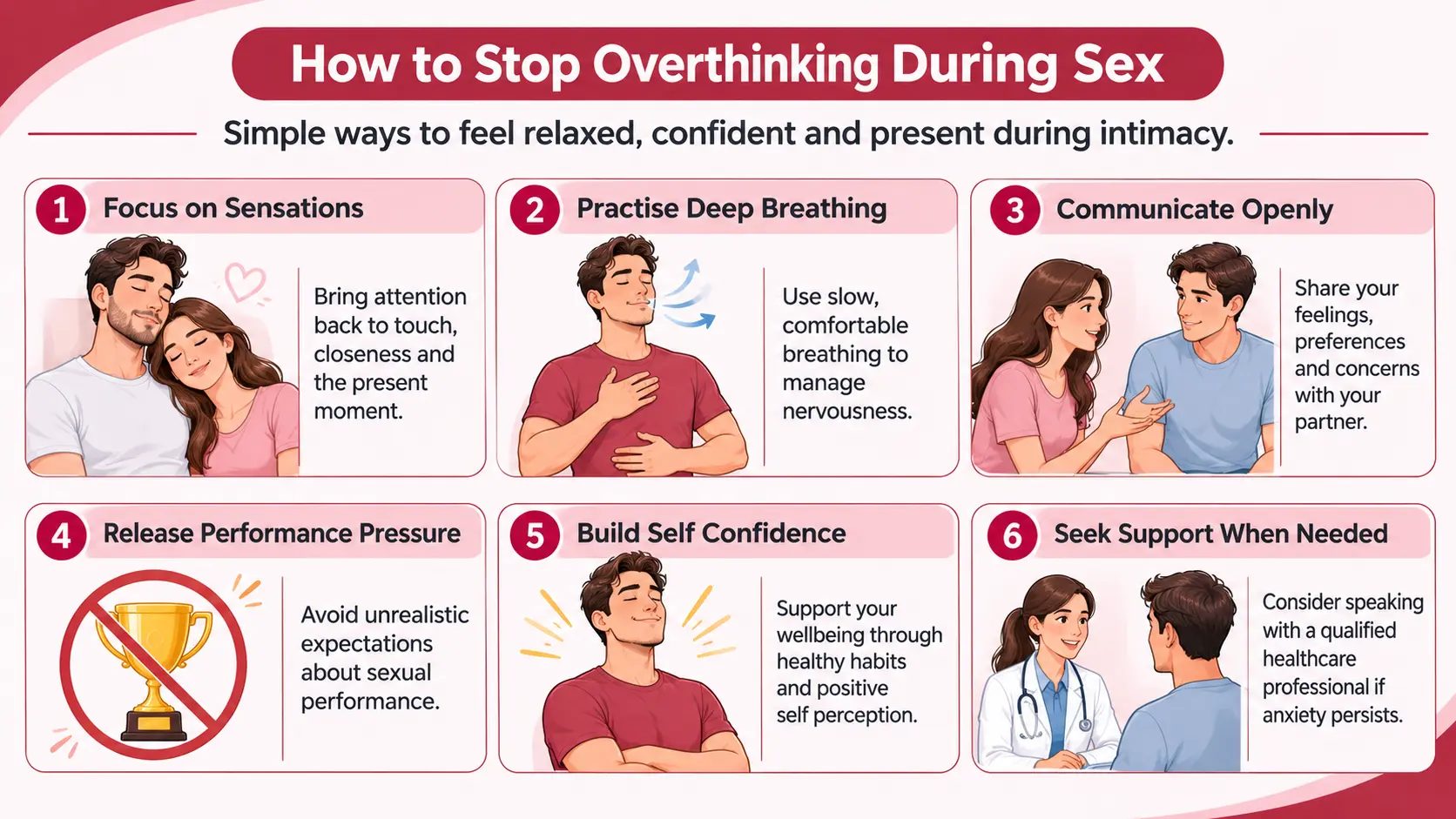
To stop overthinking during sex, focus on the present moment instead of worrying about performance or expectations.
- Pay attention to physical sensations.
- Practise slow, comfortable breathing.
- Communicate openly with your partner.
- Let go of pressure to achieve a specific outcome.
- Create a comfortable and private environment.
- Seek professional support if anxiety persists.
Why Do You Overthink During Sex?
Overthinking during sex can happen for several reasons. Sometimes it is connected to personal insecurities, while in other situations it may develop from stress, relationship concerns or previous intimate experiences. Mental stress and emotional wellbeing can influence intimate experiences, and the connection between mental health and sexual health is worth understanding when anxiety starts affecting intimacy.
Understanding the source of your worries can help you respond to them more effectively.
Fear of Not Satisfying Your Partner
You may feel responsible for making sure your partner enjoys every moment. This expectation can create unnecessary pressure, particularly when you are concerned about your sexual performance.
Thoughts such as whether you are doing something correctly or whether your partner is enjoying the experience can distract you from physical sensations. Instead of responding naturally, you may start monitoring your actions.
Intimacy is not a test that requires a perfect performance. Both partners contribute to the experience, and their comfort and preferences can change over time.
Body Image and Self Confidence
Feeling uncomfortable about your body can affect how freely you participate in intimate moments. Concerns about weight, appearance, physical features or perceived imperfections may occupy your attention.
These thoughts can make you more conscious of how you look rather than how you feel. Building body confidence takes time, but recognising that your appearance does not determine your worth as a partner is a useful starting point.
Previous Uncomfortable Experiences
An earlier experience involving embarrassment, rejection, discomfort or sexual difficulties can influence how you approach intimacy later.
You may begin anticipating the same outcome, even when your current situation is different. This expectation can increase nervousness and make it harder to feel relaxed.
It can help to recognise that one difficult experience does not predict what will happen in the future.
Stress and Relationship Concerns
Work pressure, financial worries, family responsibilities and unresolved disagreements can follow you into the bedroom. When your attention is already occupied, shifting your focus towards intimacy may feel difficult.
Hormonal factors can also influence sexual wellbeing, and understanding how low testosterone in men may affect sexual desire and function can provide useful context when exploring changes in sexual health.
Relationship tension can also contribute to anxiety. If you feel uncertain about your partner’s expectations or emotional connection, those concerns may become more noticeable during sex.
Sexual Performance Anxiety
Sexual performance anxiety involves feeling worried about your ability to perform sexually or meet certain expectations. Concerns may include maintaining an erection, reaching orgasm, lasting longer or satisfying a partner.
These worries can create a cycle in which anxiety makes intimacy more stressful, and that stressful experience increases future apprehension.
How Does Overthinking Affect Your Sexual Experience?
Your thoughts and physical responses are closely connected. When your attention is focused on fear or self criticism, it may become harder to respond to what is happening around you.
Overthinking can affect intimacy in several ways:
- Reduced concentration: You may struggle to focus on touch, closeness and other physical sensations.
- Increased nervousness: Worrying about the outcome can make intimate situations feel pressured.
- Difficulty staying present: You may spend more time evaluating your performance than enjoying the experience.
- Communication problems: Fear of disappointing your partner can make it harder to express your preferences.
- Lower confidence: Repeatedly analysing an intimate experience may create further doubts about your abilities.
It is also helpful to understand that sexual responsiveness can vary naturally, including the recovery time associated with the refractory period after orgasm.
These effects are not the same for everyone. Occasional distractions are normal, and having an anxious thought does not mean something is wrong with your sexual health.
How to Stop Overthinking During Sex
There is no single solution that works for everyone. The most helpful approach is to reduce unnecessary pressure and gradually become more comfortable with intimacy.
The following strategies can help you manage distracting thoughts and develop a healthier connection with your partner.
1. Bring Your Attention Back to Physical Sensations
When your mind starts analysing the experience, gently redirect your attention towards what you can feel in the present moment.
Notice your breathing, your partner’s touch, physical comfort and the sensations you are experiencing. You do not have to force yourself to concentrate perfectly. Simply recognise when your attention has wandered and bring it back without judging yourself.
This approach can help you understand how to stop thinking during sex without treating every distracting thought as a problem.
2. Use Slow and Comfortable Breathing
Breathing exercises can be useful when you notice tension building before or during intimacy.
Try breathing in gently through your nose and allowing your exhale to be slow and comfortable. Repeat this for several cycles without forcing your breathing or holding it for too long.
The purpose is not to follow a complicated technique. It is to give yourself a simple point of focus when your thoughts become overwhelming.
3. Challenge Negative Thoughts
Not every thought that enters your mind reflects reality. You might assume your partner is disappointed, believe you must perform perfectly or worry that a small difficulty will ruin the entire experience.
Instead of accepting these assumptions immediately, consider whether you have a clear reason to believe them.
For example, ask yourself whether your partner has actually expressed dissatisfaction or whether you are making an assumption based on your own insecurity.
Replacing harsh self criticism with a more balanced perspective can gradually reduce performance pressure.
4. Communicate Openly With Your Partner
Honest communication can make intimacy feel less intimidating. If you are nervous, distracted or unsure about something, discussing it with your partner may help reduce uncertainty.
You can talk about what makes you comfortable, what you enjoy and whether anything is creating pressure. You do not need to explain every thought or turn the conversation into a serious discussion.
A supportive partner can help create an environment where both people feel heard and respected.
5. Remove the Pressure to Perform
Sex does not have to follow a fixed routine or lead to a particular outcome every time. Focusing too heavily on erections, orgasm, duration or other expectations can make intimacy feel like an obligation.
Allow the experience to develop at a comfortable pace. Affection, kissing, touching and emotional connection can all be meaningful parts of intimacy.
Taking the pressure away from a specific result can make it easier to enjoy being close to your partner.
6. Build Confidence Outside the Bedroom
Sexual self confidence is influenced by more than what happens during intimacy. Your general wellbeing, relationship satisfaction and how you view yourself can all play a role.
Make time for activities that help you feel comfortable and positive about yourself. Regular physical activity, adequate rest and managing everyday stress may support your overall wellbeing. Regular movement and healthy daily habits can also support overall wellbeing. If you want to understand how physical activity may contribute to sexual wellness, learn about natural exercises to support sex drive.
Try not to judge your confidence by a single intimate experience. Developing a healthier mindset takes consistency rather than immediate results.
7. Create a Comfortable Environment
Your surroundings can influence how relaxed you feel. If you are worried about interruptions, lack of privacy or feeling rushed, it may be difficult to focus on your partner.
Choose a setting where both of you feel comfortable. Give yourselves enough time and avoid turning intimacy into something that must happen according to a strict schedule.
Small adjustments can make the experience feel more natural.
8. Try Sensate Focus Exercises
Sensate focus is an approach sometimes used in sex therapy to help partners pay attention to physical sensations without concentrating on sexual performance.
It usually involves taking turns exploring comfortable, non demanding touch. The emphasis is on noticing sensations rather than trying to achieve an erection, orgasm or another specific result.
Partners can begin with simple touch and gradually communicate about what feels comfortable. A qualified sex therapist can explain how to practise these exercises appropriately.
How to Calm Your Mind Before Intimacy
Managing anxiety before sex can make it easier to approach the experience without carrying unnecessary pressure into the moment.
Consider these practical steps:
- Set aside daily worries: Give yourself time to finish important tasks or mentally step away from stressful responsibilities.
- Avoid unrealistic expectations: Remind yourself that intimacy does not need to be perfect to be enjoyable.
- Take time to connect: Spend time talking, cuddling or sharing affection before becoming sexually intimate.
- Respect your comfort level: You should never feel pressured to have sex when you are not ready.
- Limit distractions: Put away your phone and choose a private setting where you can focus on each other.
If you notice nervousness, acknowledge it rather than trying to suppress every thought. A calmer approach can help you feel more prepared.
How to Get Out of Your Head During Sex With a New Partner
Feeling nervous with a new partner is common. You may be unsure about their preferences, worried about making a good impression or uncertain about how they will respond.
Rather than trying to impress them, focus on getting to know each other. Give yourself permission to move slowly and communicate about comfort and boundaries.
Remember that your partner may also have their own insecurities. Open conversation can help both people feel more at ease.
If you become distracted, return your attention to the interaction instead of criticising yourself. You do not need to prove anything during your first intimate experience with someone.
Can Overthinking Cause Sexual Performance Anxiety?
Yes. Repeated worries about sexual performance can contribute to performance anxiety. When you become overly focused on whether your body will respond in a particular way, the pressure itself may make intimacy more difficult. If worries about ejaculation timing continue to affect your confidence, understanding premature ejaculation symptoms can help distinguish occasional concerns from a recurring sexual health issue.
For example, someone who is worried about maintaining an erection may continually check whether it is happening. This self monitoring can interrupt concentration and increase nervousness.
However, sexual difficulties do not always result from anxiety. Physical health conditions, medication effects, hormonal changes, relationship factors and other concerns may also contribute.
If difficulties continue, a healthcare professional can help identify possible causes and discuss suitable support.
When Should You Seek Professional Help?
Occasional nervousness or distraction during sex is not usually a reason for concern. However, professional guidance may be useful when anxiety becomes persistent or starts affecting your relationship and general wellbeing.
Consider speaking with a qualified healthcare professional if:
- You regularly experience intense anxiety before or during intimacy.
- Worry is causing you to avoid sexual activity or emotional closeness.
- You have ongoing difficulties with erections, ejaculation, arousal or sexual comfort.
- Relationship concerns are becoming difficult to manage.
- Negative thoughts are affecting your confidence or daily life.
Depending on your circumstances, support may involve a doctor, psychologist, counsellor or qualified sex therapist. Approaches such as cognitive behavioural therapy may help people recognise unhelpful thought patterns and develop healthier ways to respond to anxiety.
Seeking help does not mean you have failed to manage the situation yourself. It is a practical way to understand what is happening and find appropriate support.
Conclusion
Learning How to Stop Overthinking During Sex is less about controlling every thought and more about changing how you respond to them. Worrying about performance, appearance or your partner’s expectations can make intimacy feel stressful, but these concerns do not have to define your experiences.
Start with small changes. Pay attention to physical sensations, communicate honestly, give yourself time and avoid treating sex as a performance. If anxiety continues to interfere with your intimate life, professional guidance can help you understand the underlying reasons and explore suitable ways forward.
A comfortable and satisfying intimate relationship develops through mutual understanding, patience and trust. Allow yourself the space to enjoy that process.
⚕️ Medical Disclaimer
8 Ways to Overcome Today’s Anxiety
Find practical ways to manage everyday anxiety, handle stressful situations, and support your emotional well-being.
FAQ
1. Is it normal to overthink during sex?
Yes. Many people experience distracting thoughts during intimacy. Concerns about appearance, performance, relationship expectations or everyday stress can affect concentration. Occasional overthinking is common, but persistent anxiety may benefit from professional support.
2. How can I stop thinking about my performance during sex?
Try shifting your attention towards physical sensations, breathing and connection with your partner. Avoid setting strict expectations around duration or sexual outcomes. Open communication can also reduce uncertainty and make intimacy feel more comfortable.
3. Why do I feel nervous even when I am attracted to my partner?
Attraction does not automatically remove anxiety. You may still worry about satisfying your partner, being judged or having a negative experience. Personal insecurities and previous experiences can also influence how comfortable you feel.
4. Can anxiety affect erections?
Anxiety can contribute to erection difficulties in some people because worry and self monitoring may interfere with sexual arousal. However, erection problems can have several causes, so ongoing difficulties should be discussed with a healthcare professional.
5. How do I relax during sex with a new partner?
Take your time, communicate openly and avoid putting pressure on yourself to impress the other person. Focus on mutual comfort rather than trying to meet an imagined standard. It is perfectly acceptable to slow down or pause when needed.
6. Does mindfulness help with sexual anxiety?
Mindfulness may help you notice distracting thoughts without becoming caught up in them. Paying attention to breathing and physical sensations can encourage present moment awareness. Some people also find mindfulness exercises helpful outside intimate situations.
7. Can overthinking reduce sexual pleasure?
It can. When your attention is occupied by worries or self criticism, you may find it harder to concentrate on pleasurable sensations and emotional connection. Reducing performance pressure may help you become more engaged in the experience.
8. Should I see a therapist for sexual anxiety?
A therapist or qualified sex therapist may help if anxiety is persistent, affects your relationship or makes intimacy difficult. A healthcare professional can also assess whether physical or medication related factors are contributing to your concerns.

Years of Experience: 10+ years Education: B.Sc. in Biomedical Science (Monash University, Melbourne, Australia) PG Diploma in Health & Medical Communication (University of Sydney, Australia) Experience: Erica Wilson is an…

