

Hormonal Imbalance in Men: Low Testosterone Explained
By Erica Wilson, Feb-02-2026


 Dr. Arjun Srivastav Medical Reviewer (Pharm D)
Many men notice changes in their energy, mood, or sexual health and start searching for answers online. Hormones regulate sexual function, reproduction, muscle and bone health, mood, and many other bodily processes that keep everything running smoothly.
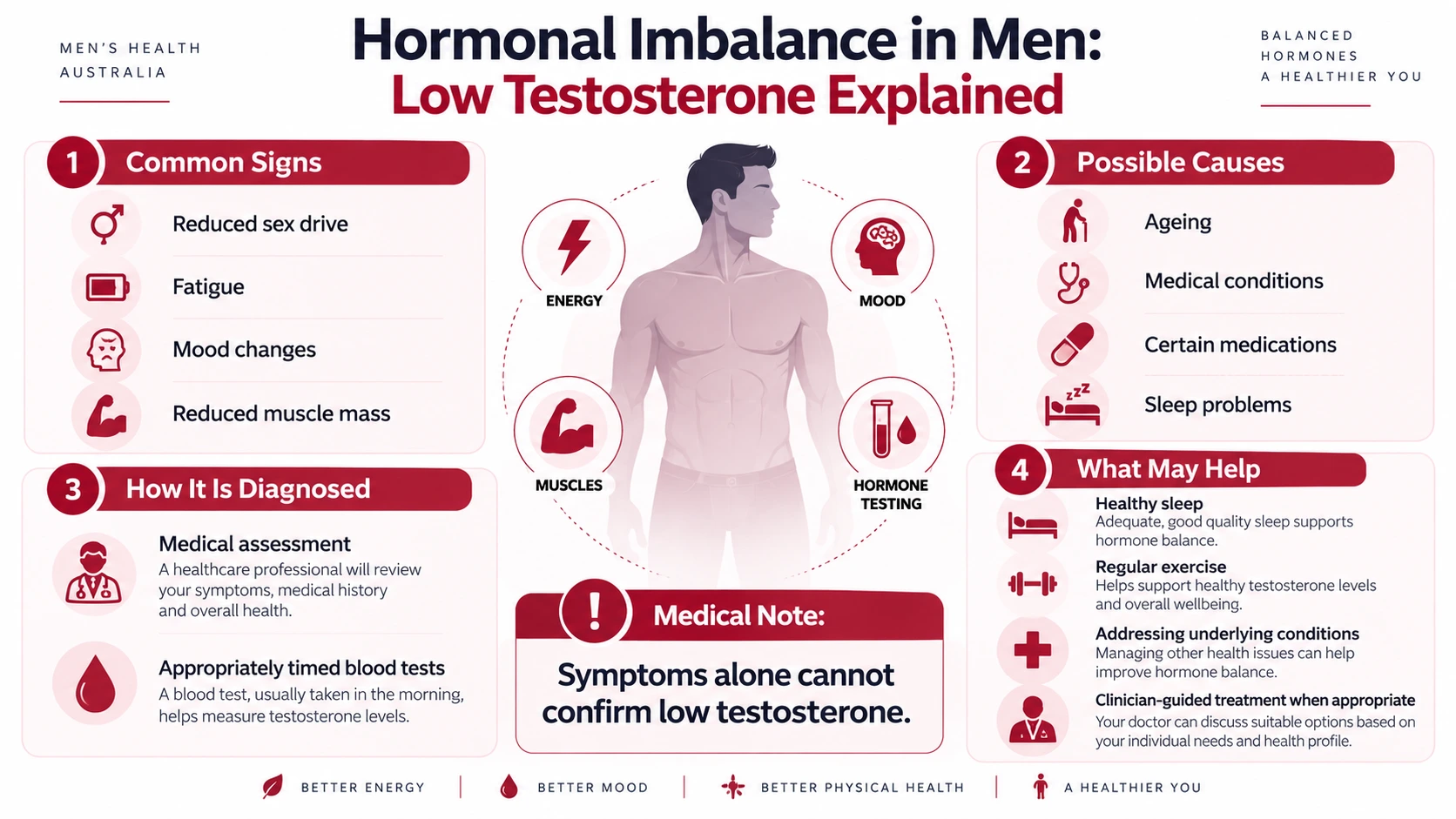
Testosterone is one of the most important male sex hormones. When its levels drop, men may experience reduced sex drive, persistent fatigue, mood changes, and loss of muscle mass.
Hormonal imbalance in men is a broader topic than most people realize. Not every imbalance stems from low testosterone. Symptoms can have several possible causes, and diagnosis requires appropriate medical assessment by a qualified healthcare professional.
This guide walks through what hormones do, how testosterone fits into the picture, and when it makes sense to seek medical advice. Men who have further questions about hormone levels can also find answers to common questions about testosterone.
💡 Quick Answer: Hormonal Imbalance in Men
Hormonal imbalance in men occurs when hormone levels fall outside their normal range. Low testosterone may contribute to reduced sex drive, fatigue, mood changes and loss of muscle mass. These symptoms can have other causes, too. A healthcare professional can assess symptoms and use appropriate blood tests to check for testosterone deficiency and discuss suitable treatment.
What Is Hormonal Imbalance in Men?
Hormonal imbalance occurs when one or more hormones fall outside their typical physiological range. Hormones act as chemical messengers traveling through the bloodstream to tissues and organs. Even small shifts can affect how the body functions day to day.
The endocrine system relies on a delicate balance. When that balance shifts, various symptoms may appear. Understanding what hormones do helps explain why an imbalance can affect so many different areas of health at once.
How Hormones Affect Male Health
Several hormones play distinct roles in male health. Testosterone influences sexual function, muscle maintenance, and bone strength. Thyroid hormones regulate metabolism and energy levels. Prolactin affects reproductive health. Cortisol helps the body respond to stress. Insulin manages blood sugar.
Each hormone has a specific function. An imbalance in one does not necessarily produce the same symptoms as an imbalance in another. This is why a broad approach to evaluation matters rather than focusing on a single hormone.
Is Low Testosterone the Same as Hormonal Imbalance?
No, low testosterone is one specific type of hormonal problem. Other endocrine conditions can produce overlapping symptoms such as fatigue or mood changes.
Hormonal concerns can also involve levels that are higher than expected, so understanding the potential effects of high testosterone in men provides useful context when considering hormone health more broadly.
A proper medical assessment helps identify which hormone, if any, is involved. General hormonal symptoms and confirmed testosterone deficiency are not always the same thing. Some men experience symptoms that feel like low testosterone but actually stem from thyroid issues, sleep problems, or other conditions entirely.
What Does Testosterone Do in the Male Body?
Testosterone contributes to several important functions in the male body. It supports sexual desire and reproductive function. It plays a role in sperm production as part of a wider hormonal process. It helps with muscle development and maintenance. It contributes to bone density and red blood cell production. It influences body hair and the physical changes that occur during puberty. It also plays a role in mood, energy, and general wellbeing.
However, testosterone contributes to these functions but does not independently determine every aspect of sexual performance, mood, or physical health. Many factors work together, and testosterone is one piece of a larger system.
Understanding testosterone’s effects on men’s health can help explain why changes in this hormone may influence several aspects of physical and reproductive wellbeing.
What Are the Signs of Hormonal Imbalance in Men?
Symptoms vary depending on which hormone is affected, the degree of change, and the underlying cause. Male hormone imbalance symptoms can overlap with many other conditions, which is why medical assessment matters. Recognizing the signs of low testosterone is a starting point, not a conclusion.
| Symptom | Possible Hormonal Connection | Other Possible Explanations |
|---|---|---|
| Reduced sex drive | Low testosterone | Stress, relationship concerns, depression |
| Fewer morning erections | Low testosterone | Sleep quality, age, medication effects |
| Fatigue | Testosterone or thyroid imbalance | Sleep disorders, anaemia, depression |
| Reduced muscle mass | Low testosterone | Inactivity, ageing, inadequate nutrition |
| Low mood or irritability | Testosterone or cortisol changes | Life stress, mental health conditions |
| Difficulty concentrating | Multiple hormonal factors | Sleep deprivation, anxiety, burnout |
Sexual Symptoms of Low Testosterone
Sexual symptoms may include reduced sexual desire, fewer spontaneous or morning erections, fertility concerns, and possible changes in erectile function. Some men also search for information about Premature Ejaculation Symptoms when noticing sexual health changes, though this is a separate concern that may or may not relate to hormone levels.
Erectile difficulties can also result from vascular, psychological, medication related, and other health factors. Sexual symptoms alone do not confirm any single diagnosis, and each concern deserves individual evaluation.
Physical Changes
Physical changes may include reduced muscle mass, increased body fat, reduced bone density in some cases, reduced body hair, and breast tissue enlargement where relevant. These changes can develop gradually over months or years, making them easy to overlook until they become more noticeable.
Emotional and Cognitive Changes
Emotional and cognitive changes may involve low mood, irritability, difficulty concentrating, and reduced motivation. These symptoms are nonspecific, meaning they can relate to many different conditions beyond hormonal ones. Stress, work pressure, and life changes can all produce similar feelings.
Fatigue and Reduced Energy
Persistent tiredness can occur alongside testosterone deficiency but may also be associated with sleep disorders, anaemia, thyroid conditions, depression, or other medical issues. Fatigue alone does not confirm any single diagnosis. Anyone dealing with ongoing exhaustion that affects daily life should consider a broader evaluation rather than assuming hormones are the cause.
What Causes Low Testosterone in Men?
Understanding the causes of low testosterone involves looking at multiple factors. Several things can contribute to declining levels, and often more than one factor is at play.
Ageing and Changes in Hormone Production
Testosterone levels can decline with age. Many men experience a gradual decrease over time, and this is considered a normal part of ageing. However, age alone does not establish a diagnosis of testosterone deficiency. Some older men maintain levels within the typical range well into later life.
The question is not whether levels are lower than before but whether they fall below the range that supports healthy function.
Medical Conditions That Affect Testosterone
Several medical conditions can affect testosterone production. Problems affecting the testicles can reduce hormone output directly. Pituitary gland or hypothalamic disorders can disrupt the signals that tell the body to produce testosterone. Obesity and certain metabolic conditions may also play a role. Chronic illnesses and some sleep disorders can contribute as well. Previous chemotherapy, radiation, or testicular injury may also be relevant in some cases. Each of these factors affects a different part of the hormonal pathway.
Medications and Other Contributing Factors
Some medicines can affect testosterone production or regulation, including opioids and glucocorticoids. Readers should not stop prescribed medication without medical advice. Always consult the prescribing doctor before making any changes to medication routines. Stopping a necessary medicine without guidance can create additional health problems.
Stress, Sleep and Lifestyle Factors
Inadequate sleep, significant weight changes, excessive alcohol use, and general health may influence hormonal function. However, stress or a single poor night of sleep does not necessarily cause clinically low testosterone.
It helps to separate potentially reversible contributing factors from disorders that require specific medical investigation. Lifestyle factors can play a meaningful role, but they are rarely the whole story.
How Is Low Testosterone Diagnosed?
Diagnosis involves more than a single test. A healthcare professional looks at the full clinical picture before drawing any conclusions.
Symptoms and Medical History
A healthcare professional considers symptom patterns, medical history, current medications, reproductive goals, and relevant physical findings. The conversation helps guide which tests are appropriate and what the results might mean in context. Sharing complete information about symptoms and lifestyle helps the clinician make a more accurate assessment.
Testosterone Blood Tests
Testing is generally performed in the morning when testosterone levels tend to be higher. An initial low result may need confirmation with another measurement on a different day. The result must be interpreted alongside symptoms and the laboratory reference range. A single low reading does not automatically confirm deficiency. Consistency across multiple tests gives a more reliable picture than one result alone.
Understanding what a testosterone level test measures can help you prepare for a discussion with your healthcare professional about your results.
Other Hormone Tests and Investigations
Depending on the clinical picture, follow up tests may include luteinising hormone (LH), follicle stimulating hormone (FSH), prolactin, or thyroid testing. Further investigation may be needed to distinguish testicular causes from problems involving the pituitary or hypothalamus. These additional tests help pinpoint where in the hormonal pathway the issue lies, which directly informs what comes next.
How Is Low Testosterone Treated?
Low testosterone treatment depends on what is contributing to the low level. There is no single approach that suits every person, and treatment decisions should always involve a qualified clinician.
Treating the Underlying Cause
Treatment depends on what is contributing to the low level. Examples may include managing an underlying condition, reviewing medicines with a prescriber, or addressing a diagnosed sleep disorder. Identifying the root cause guides the approach and may resolve the issue without direct testosterone therapy.
Testosterone Replacement Therapy
Testosterone replacement therapy is a clinician prescribed option for appropriately assessed patients with confirmed deficiency. It is not a casual supplement or over the counter product. Treatment requires follow up and monitoring to track response and adjust dosage as needed. Regular checkups help ensure the therapy remains appropriate over time.
Potential Risks and Fertility Considerations
Testosterone therapy can suppress the body own testosterone production and sperm production. Men who may want children should discuss fertility before starting treatment.
Therapy is not appropriate for everyone. Risks, contraindications, and monitoring requirements need individual assessment by a qualified clinician. Understanding these considerations beforehand helps men make informed decisions aligned with their health goals.
Can Testosterone Levels Improve Naturally?
Practical measures that support overall health may help address some contributing factors. These include:
- Maintaining a sustainable weight where appropriate
- Getting adequate, consistent sleep
- Exercising regularly, including resistance training
- Eating a balanced diet with adequate nutrients
- Limiting excessive alcohol consumption
- Seeking assessment for persistent symptoms or possible sleep disorders
However, healthy habits may help address some contributing factors but cannot reliably correct every cause of testosterone deficiency. Unverified testosterone boosters are not recommended. No natural approach can promise a specific increase in hormone levels.
When Should Men Seek Medical Advice?
Arrange an assessment if you notice persistent or worsening low libido or sexual symptoms. Ongoing fatigue, unexplained physical changes, or fertility concerns also warrant attention. Symptoms that affect daily life or occur alongside other health changes should not be ignored.
Sudden severe testicular pain requires emergency medical care.
Conclusion
Hormonal imbalance in men can affect sexual health, mood, energy and physical wellbeing. Low testosterone is one possible cause, but symptoms alone cannot confirm a deficiency. Medical assessment and appropriate blood tests can help identify the cause and guide suitable treatment.
⚕️ Medical Disclaimer
How Can High Testosterone Be Treated?
Understand possible causes of high testosterone, how it is assessed, and the treatment options a healthcare professional may recommend.
FAQ
What Are the First Signs of Low Testosterone in Men?
Reduced libido and changes in spontaneous erections can be relevant symptoms. However, presentation varies from person to person, and symptoms alone cannot confirm deficiency. Low testosterone in men may present differently depending on age, health status, and other individual factors.
Can Stress Cause Low Testosterone?
Stress, poor sleep, and related health factors may influence hormonal function. Persistent symptoms warrant broader assessment rather than assuming a single cause. Stress affects the body in many ways, and its relationship with testosterone is one of several factors to consider.
Can Low Testosterone Cause Erectile Dysfunction?
There may be an association, but erectile difficulties have many common causes. Testosterone deficiency is only one possible factor among several. Vascular health, psychological factors, medications, and lifestyle all play roles that deserve separate consideration.
Can Testosterone Levels Improve Naturally?
Sleep, exercise, weight management, and treating underlying health conditions all play a role. However, no natural approach can promise a cure or a specific increase in hormone levels. Sustainable habits support overall health but are not a substitute for medical evaluation when symptoms persist.
How Do Doctors Confirm Low Testosterone?
Doctors look for compatible symptoms, appropriately timed blood tests, and confirmation of low results when indicated. The full clinical picture matters, and interpretation always involves comparing results to the reference range used by the testing laboratory.
Does Every Man With Low Testosterone Need Treatment?
Treatment depends on the diagnosis, symptoms, underlying cause, fertility plans, potential risks, and clinical assessment. Not every low reading leads to therapy. Some men benefit from monitoring and lifestyle adjustments, while others may need medical treatment. The decision is always individual.

Years of Experience: 10+ years Education: B.Sc. in Biomedical Science (Monash University, Melbourne, Australia) PG Diploma in Health & Medical Communication (University of Sydney, Australia) Experience: Erica Wilson is an…