

Male Sex Hormones: What They Do and How They Affect Men’s Health
By Erica Wilson, Nov-04-2026


 Dr. Arjun Srivastav Medical Reviewer (Pharm D)
Male sex hormones play an important role in reproductive development, sexual health and several functions throughout the body. Testosterone is the best-known male sex hormone, but it is not the only one involved in male reproductive health. Other hormones, including dihydrotestosterone (DHT), oestradiol and dehydroepiandrosterone (DHEA), also have specific roles.
Understanding male sex hormones can help explain changes in sexual desire, physical development, fertility and hormone levels as men get older. It is also useful to know where these hormones are produced, how they work together and what may happen when their levels change.
This guide explains the main male sex hormones, their functions and the factors associated with hormonal balance.
Quick Answer: What Are Male Sex Hormones?
Male sex hormones are chemical messengers that help regulate reproductive development, sexual function and other body processes.
Testosterone
Supports male reproductive development, muscle and bone health.
DHT
Contributes to male sexual development and prostate growth.
Oestradiol
Supports bone health and other functions in men.
Inhibin B
Helps regulate sperm production through hormonal feedback.
The testes produce most testosterone in adult men, while the brain helps regulate hormone production through signals from the hypothalamus and pituitary gland.
What Are Male Sex Hormones?
Male sex hormones are chemical messengers that regulate reproductive development and several processes within the body. Most of the hormones commonly associated with male reproductive health belong to a group called androgens.
Testosterone is the primary male androgen. It contributes to the development of male reproductive organs, facial hair, muscle mass and sexual characteristics during puberty and adulthood.
However, male sex hormones are not limited to testosterone. DHT, oestradiol and DHEA also contribute to different biological processes.
The body also uses regulatory hormones to control reproductive activity. These include luteinising hormone (LH) and follicle stimulating hormone (FSH), which are released by the pituitary gland.
Together, these hormones help regulate reproductive development, sperm production and other aspects of men’s health.
What Are the Main Male Sex Hormones?
Several hormones contribute to male reproductive function. Each has a different role, and their activity is connected through the body’s endocrine system.
1. Testosterone
Testosterone is the main male sex hormone and belongs to the androgen group. It is produced primarily in the testes by specialised cells called Leydig cells.
Its functions include:
- Supporting the development of male reproductive organs.
- Contributing to facial and body hair growth.
- Supporting muscle development and bone maintenance.
- Influencing sexual desire.
- Participating in sperm production.
- Contributing to changes during male puberty.
Testosterone levels vary between individuals and can also change with age, sleep patterns, general health and other factors. Testosterone also influences several aspects of men’s health, including reproductive development, muscle maintenance and bone health. Read more about testosterone’s effects on men’s health.
2. Dihydrotestosterone (DHT)
Dihydrotestosterone, commonly known as DHT, is an androgen formed when testosterone is converted by an enzyme called 5 alpha reductase.
DHT has a role in the development of male external reproductive characteristics, particularly during fetal development and puberty.
It is associated with:
- Development of external male genitalia.
- Facial and body hair development.
- Changes in the skin and sebaceous glands.
- Prostate development.
Although DHT is produced from testosterone, the two hormones have different biological effects.
3. Oestradiol (Estrogen)
Oestradiol is commonly associated with female reproductive health, but men also produce this hormone.
In men, some testosterone is converted into oestradiol through an enzyme known as aromatase. This conversion takes place in several tissues, including fat tissue.
Oestradiol contributes to:
- Bone maintenance.
- Regulation of reproductive functions.
- Sexual health.
- Normal physiological processes.
Understanding oestradiol is important because male sex hormones include both androgens and hormones traditionally associated with female reproductive health.
4. Dehydroepiandrosterone (DHEA)
DHEA is a steroid hormone produced mainly by the adrenal glands, which are located above the kidneys.
It acts as a precursor that the body can use to produce other steroid hormones, including testosterone and oestrogens.
DHEA is present in both men and women. Its levels generally change throughout life, with higher production during younger adulthood and a gradual decline with age.
5. Inhibin B and Anti-Mullerian Hormone (AMH)
Inhibin B and anti-Müllerian hormone are involved in male reproductive development and testicular function.
Inhibin B is produced by Sertoli cells in the testes. It helps regulate FSH production through feedback between the testes and pituitary gland. It is also used as one of several indicators when assessing aspects of testicular function.
AMH is also produced by Sertoli cells. During fetal development, it has an important role in male reproductive differentiation.
These hormones have different functions from testosterone, but they contribute to the wider male reproductive hormone system.
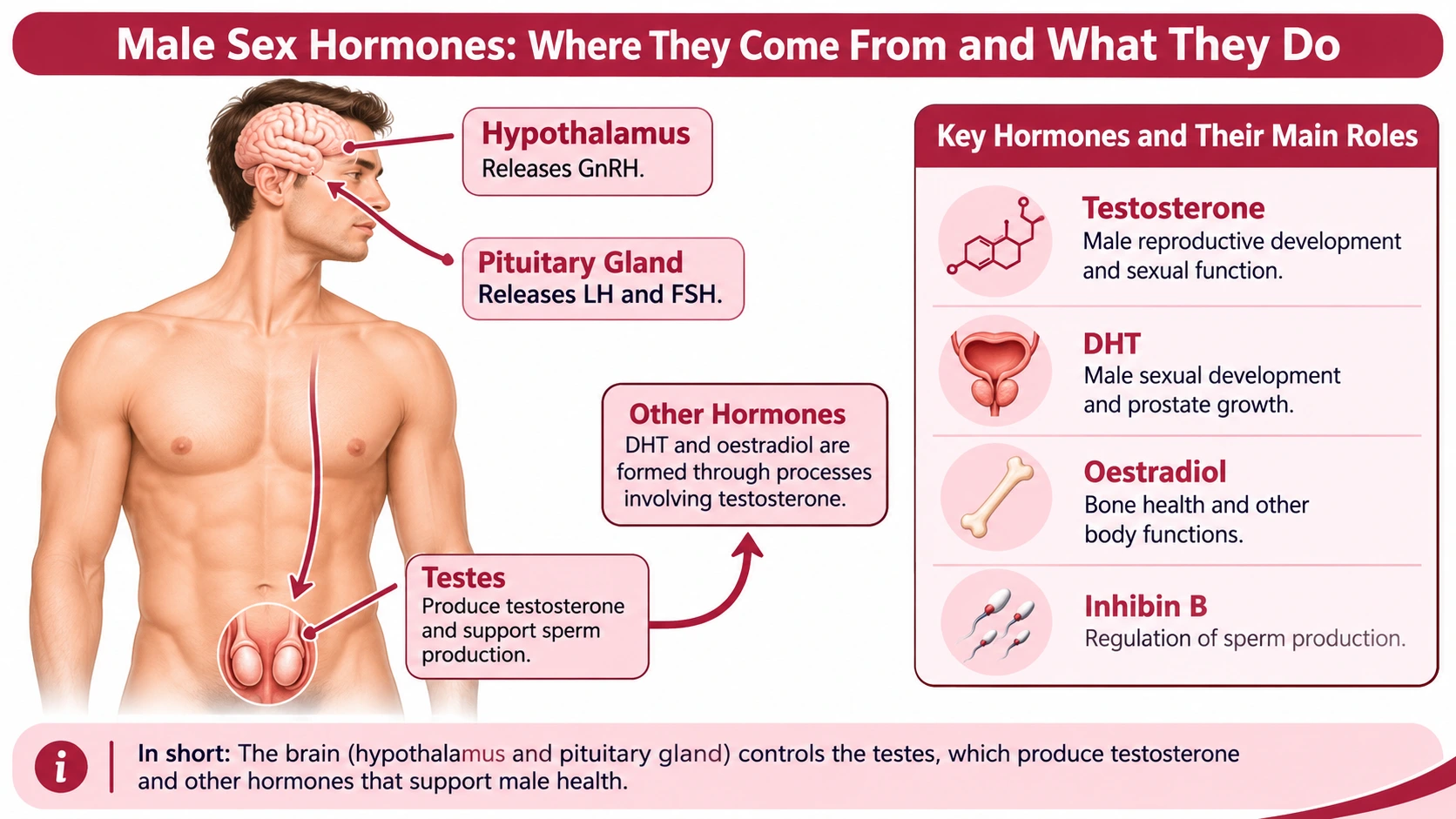
Where Are Male Sex Hormones Produced?
Male sex hormones are produced by different glands and tissues, although the testes are the main source of testosterone.
The primary production sites include:
Testes: Leydig cells produce testosterone, while Sertoli cells produce inhibin B and AMH.
Adrenal glands: These glands produce DHEA and other androgen precursors that contribute to the body’s steroid hormone production.
Peripheral tissues: Certain tissues convert existing hormones into other forms. For example, testosterone can be converted into DHT or oestradiol.
The hypothalamus and pituitary gland also have important roles in regulating hormone production. They do not produce the main male sex hormones, but they send signals that control activity in the testes.
How Do Male Sex Hormones Work Together?
Male sex hormones operate through a communication system involving the brain and reproductive organs. This is commonly known as the hypothalamic-pituitary-gonadal axis.
The Role of the Hypothalamus
The hypothalamus is a region of the brain that releases gonadotropin-releasing hormone (GnRH). This hormone signals the pituitary gland to release reproductive hormones.
The Role of the Pituitary Gland
The pituitary gland releases two important hormones:
Luteinising hormone (LH): Stimulates Leydig cells in the testes to produce testosterone.
Follicle-stimulating hormone (FSH): Acts on Sertoli cells and works alongside testosterone in supporting sperm production.
How the Testes Respond
The testes respond to LH and FSH through their specialised cells. Testosterone production and sperm development are regulated through these hormonal signals.
How Testosterone Is Regulated
The brain and testes work together through a hormonal feedback system.
Hypothalamus
Releases GnRH
→
Pituitary
Releases LH and FSH
→
Testes
Produce testosterone
Feedback regulation: Testosterone helps regulate signals from the hypothalamus and pituitary gland.
How Male Sex Hormones Affect Men’s Health
Male sex hormones are involved in more than reproductive development. They also influence several aspects of physical and reproductive well-being. Morning erections are another aspect of male sexual health, although they do not directly measure testosterone levels or predict sexual performance. Read more about morning erections and sexual performance.
| Health area | Role of male sex hormones |
| Sexual health | Testosterone contributes to sexual desire and reproductive function. |
| Fertility | Testosterone and FSH participate in sperm production. |
| Muscles | Testosterone supports muscle development and maintenance. |
| Bones | Testosterone and oestradiol contribute to bone maintenance. |
| Mood | Hormonal changes can be associated with differences in mood and emotional wellbeing. |
| Puberty | Androgens contribute to male physical and reproductive development. |
| Red blood cells | Testosterone participates in regulating red blood cell production. |
Hormones are only one part of overall health. Physical, psychological and lifestyle factors can also influence these areas.
Male and Female Sex Hormones: What Is the Difference?
Male and female sex hormones are often discussed separately because of their different reproductive roles. However, both men and women produce several of the same hormones.
The main differences relate to their typical concentrations, production patterns and functions within the reproductive system.
| Male reproductive hormone profile | Female reproductive hormone profile |
| Testosterone | Oestrogen |
| Dihydrotestosterone | Progesterone |
| DHEA | Testosterone |
| Oestradiol | DHEA |
| Androstenedione | Androstenedione |
Testosterone is generally present at higher concentrations in adult men, while oestrogen and progesterone have important roles in female reproductive cycles.
However, oestrogen is also important in men, particularly for bone health. Similarly, women produce testosterone, although typically at lower concentrations.
Therefore, male and female sex hormones are not completely separate groups. Both reproductive systems depend on a combination of hormones.
What Happens When Male Sex Hormones Become Imbalanced?
Changes in male hormone levels can occur for different reasons. Some changes are associated with ageing, while others may relate to reproductive conditions, medications or underlying health concerns. Hormonal changes can affect men in different ways depending on the hormone involved and the underlying cause. Our guide to hormonal imbalance in men discusses this topic in more detail.
Signs Associated With Low Testosterone
Low testosterone is sometimes associated with changes in physical health, sexual function, and emotional wellbeing.
Possible signs include:
- Reduced sexual desire.
- Persistent tiredness.
- Reduced muscle mass.
- Changes in mood.
- Fewer spontaneous erections.
- Difficulty with fertility.
These symptoms do not automatically indicate low testosterone. Other health conditions and lifestyle factors can produce similar experiences.
Possible Causes of Hormonal Changes
Factors associated with changes in male sex hormone levels include:
- Testicular conditions.
- Disorders affecting the pituitary gland or hypothalamus.
- Certain prescription medicines.
- Obesity and metabolic conditions.
- Chronic health conditions.
- Changes associated with ageing.
Can Male Hormone Levels Become Too High?
Male hormone levels can also be affected by excessive androgen exposure.
For example, anabolic steroid use can interfere with the body’s natural hormone regulation. It may affect testicular function and sperm production.
High testosterone levels are not necessarily an indication of better reproductive or general health. Hormone results need to be interpreted in the context of an individual’s symptoms and medical history. You can also understand the potential effects of high testosterone in men and why unusually high levels may need medical assessment.
How Are Male Sex Hormones Tested?
Doctors may recommend blood tests when someone experiences symptoms associated with hormonal changes or has concerns about reproductive health.
Depending on the situation, testing may include:
Total testosterone: Measures the amount of testosterone in the blood.
Free testosterone: Estimates the testosterone available outside its protein bound form.
LH and FSH: Help assess signals between the pituitary gland and testes.
SHBG: Measures sex hormone binding globulin, a protein that carries sex hormones in the blood.
Oestradiol: May be assessed when there is a specific reason to investigate oestrogen levels.
Testosterone testing is generally performed in the morning. If an initial result is low, repeat testing may be needed before a diagnosis is considered. A testosterone level test may be recommended when symptoms or medical history suggest that testosterone levels need assessment.
The appropriate tests depend on symptoms, medical history and the reason for the assessment.
How to Improve and Support Healthy Male Sex Hormones Naturally
Men searching for how to increase male sex hormones or how to improve sex hormones in male often want to understand whether everyday habits influence hormone health.
Lifestyle choices are relevant to general health and can be considered alongside medical assessment.
Maintain a Balanced Diet
A varied diet containing vegetables, fruit, whole grains, protein sources and healthy fats provides nutrients needed for normal body functions.
Nutritional deficiencies and restrictive eating patterns may also be relevant when assessing general health.
Exercise Regularly
Regular physical activity supports cardiovascular health, muscle function and weight management. A combination of resistance training and aerobic exercise can form part of a balanced routine. Before considering supplements, understand the safety of testosterone boosters and discuss their suitability with a healthcare professional.
Get Consistent, Quality Sleep
Sleep is an important part of physical and hormonal regulation. Irregular sleep schedules and inadequate rest can affect several body processes, including hormone activity.
Maintain a Healthy Weight
Body weight and metabolic health are relevant when considering testosterone levels. Maintaining a healthy weight through sustainable eating and physical activity is an important part of general wellbeing.
Manage Stress and Limit Alcohol
Ongoing stress and excessive alcohol consumption can affect sleep, mood and general health. Managing daily stress and limiting alcohol intake can support healthier lifestyle habits.
These approaches are not substitutes for medical assessment when an underlying hormonal condition is present.
When Should Men Speak to a Healthcare Professional?
Men experiencing persistent changes in sexual desire, fertility difficulties, unexplained physical changes or ongoing fatigue may benefit from discussing their concerns with a healthcare professional.
A doctor can review symptoms, medical history and relevant blood test results to determine whether further investigation is appropriate.
Avoid starting testosterone products or hormone supplements without professional advice.
Medical Disclaimer
FAQ
What Is the Main Male Sex Hormone?
Testosterone is the main male sex hormone. It belongs to the androgen group and contributes to male reproductive development, sexual desire, muscle maintenance and sperm production.
Are Male Sex Hormones Produced Only in the Testes?
No. The testes are the main source of testosterone, but the adrenal glands also produce androgen precursors. Other tissues convert hormones into different forms, including DHT and oestradiol.
Do Men Have Female Sex Hormones?
Yes. Men produce oestrogens, including oestradiol. These hormones have roles in bone maintenance and other physiological processes.
Do Male Sex Hormones Decrease With Age?
Testosterone levels generally change with age, although the pattern varies between individuals. Age alone does not establish whether someone has a hormonal deficiency.
Can Lifestyle Changes Improve Testosterone Levels?
Sleep, exercise, nutrition and weight management are relevant to general metabolic and hormonal health. Their effects vary, and lifestyle changes do not address every cause of low testosterone.
Which Gland Controls Male Sex Hormone Production?
The hypothalamus and pituitary gland regulate male reproductive hormone activity. They communicate with the testes through GnRH, LH and FSH.

Years of Experience: 10+ years Education: B.Sc. in Biomedical Science (Monash University, Melbourne, Australia) PG Diploma in Health & Medical Communication (University of Sydney, Australia) Experience: Erica Wilson is an…

