

10 Common Causes of Premature Ejaculation in Men
By Erica Wilson, Oct-23-2026


 Dr. Arjun Srivastav Medical Reviewer (Pharm D)
When men notice they finish sooner than they would like during sex, a natural question is why this happens. The causes of premature ejaculation can involve a combination of factors that differ from one person to the next.
These factors generally fall into a few broad areas:
- Psychological influences such as anxiety and stress
- Biological factors including hormonal and nervous system involvement
- Sexual factors like erectile difficulties
- Relationship dynamics that affect intimacy
It helps to know that an occasional early ejaculation does not automatically mean someone has a sexual disorder. What often matters more is when the difficulty began and whether it tends to happen consistently.
Taking time to understand the causes of premature ejaculation in men can help individuals make sense of their situation and recognise when a conversation with a healthcare professional might be worthwhile.
What Is Premature Ejaculation?
Premature ejaculation refers to ejaculation happening sooner than a person desires. It also involves difficulty delaying ejaculation and some level of distress about the experience.
Timing by itself does not determine whether someone has this difficulty. What counts as too soon varies between individuals and situations.
Some men have dealt with this since their first sexual encounters. Others develop it after years of satisfactory control. Occasional episodes can happen to anyone without pointing to an ongoing concern.
Understanding the difference between lifelong and acquired patterns helps frame the conversation around what may be contributing. Recognising common premature ejaculation symptoms can also help distinguish a persistent concern from occasional early ejaculation.
| Pattern | Explanation |
|---|---|
| Lifelong PE | Difficulty controlling ejaculation has been present since the first sexual experiences. |
| Acquired PE | The difficulty develops after a period of satisfactory control. |
| Variable early ejaculation | Occasional episodes occur inconsistently and may reflect normal variation. |
| Subjective PE | A person feels they ejaculate too quickly even when their timing may be within a typical range. |
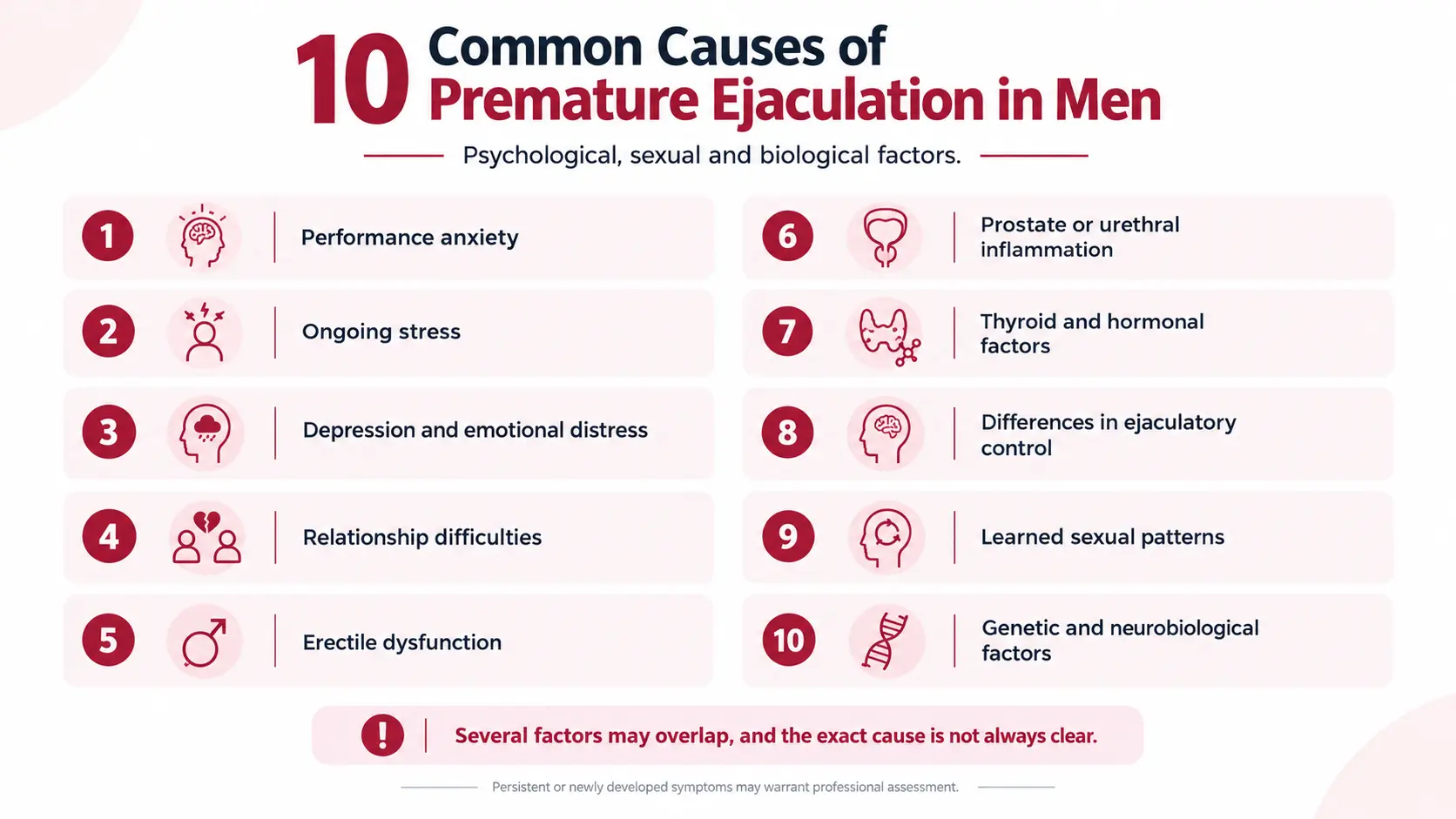
10 Common Causes of Premature Ejaculation
Several factors can overlap when it comes to early ejaculation. No single explanation applies to every man. What follows is a closer look at ten commonly discussed contributors.
1. Performance Anxiety
Worrying about sexual performance or about satisfying a partner can create a sense of pressure that some men find hard to set aside. A previous early episode might linger in mind, and that memory can build anticipation of the same outcome next time.
This cycle can develop as follows:
- An early episode occurs
- Worry about recurrence builds
- Pressure during sex increases
- Difficulty controlling ejaculation may follow
That said, anxiety is not always the underlying reason, even when it appears to be part of the picture.
2. Ongoing Stress
Day to day stress can weigh on a person in ways that extend into intimate moments. Common sources include:
- Work pressure
- Financial concerns
- Family responsibilities
- Emotional strain
When the mind is preoccupied, relaxation and sexual focus may become harder to maintain. General life stress is distinct from anxiety that is specifically tied to sexual performance, though both can coexist and influence the experience. Diet is another aspect of general wellbeing, but no particular food is established as a cure for premature ejaculation; diet and sexual health should be considered in that context.
3. Depression and Other Psychological Factors
Depression, low confidence and persistent negative feelings may be associated with sexual difficulties for some men. Emotional distress can colour how a person experiences intimacy, sometimes making it harder to feel present or in control.
At the same time, psychological factors do not account for every case of premature ejaculation. It is possible for the difficulty to have little or no connection to mood or mental wellbeing.
4. Relationship Difficulties
Unresolved disagreements, communication problems or tension within a relationship can create an emotional backdrop that affects sexual experiences. A man might feel pressure or worry about disappointing his partner, which can add to sexual anxiety.
Not every case involves relationship trouble, though. One useful clue during a professional assessment can be whether symptoms appear in certain situations but not others, which may point to contextual factors worth discussing.
5. Erectile Dysfunction
Concern about losing an erection may lead some men to rush through sexual activity. This can bring on ejaculation sooner than intended.
Erection difficulties and worry about ejaculating early can feed into each other, creating a pattern that is hard to break. Erectile dysfunction and premature ejaculation are separate concerns, even though they can occur together.
Noticing which difficulty appeared first can help a healthcare professional understand the situation more clearly. If premature ejaculation remains a concern, dapoxetine treatment may be one option to discuss with a qualified healthcare professional.
6. Prostate or Urethral Inflammation
Prostatitis and inflammation of the urethra have been discussed as factors that may be associated with acquired premature ejaculation in some men.
Symptoms that might accompany these conditions include:
- Pelvic discomfort
- Painful ejaculation
- Changes in urination
These symptoms do not confirm that inflammation is present. Premature ejaculation is not always linked to infection or inflammation. A healthcare professional can help determine whether further investigation is appropriate.
7. Thyroid and Other Hormonal Factors
An overactive thyroid, known as hyperthyroidism, has been associated with premature ejaculation in some cases. Hormonal factors are complex, and it helps to distinguish established clinical associations from explanations that remain uncertain.
Low testosterone, for instance, is not something to assume as a universal or established cause. Whether any investigation is worthwhile depends on a person’s symptoms and full medical history, which a healthcare professional can review.
Hormonal imbalances can be subtle and may not produce obvious signs, so a thorough evaluation rather than guesswork tends to be more productive.
8. Differences in Ejaculatory Control and Biological Sensitivity
Ejaculation involves coordinated processes between the nervous system and various biological pathways. Some research has explored whether differences in how the body regulates ejaculation or variations in biological sensitivity may play a part for certain individuals.
Sensitivity alone does not account for every experience of early ejaculation. The mechanisms that researchers have proposed should not be treated as definitive explanations for any one person.
9. Learned Sexual Patterns and Previous Experiences
Previous experiences, sexual expectations and learned responses may shape how some men experience intimacy over time. A person’s sexual history can influence anxiety, anticipation and expectations in ways that carry forward into future encounters.
Early sexual experiences, in particular, may set patterns that persist without a man realising it. It would be inaccurate to point to masturbation, pornography or a lack of sexual experience as automatic causes, since these alone do not determine how a person functions sexually.
An association with past experiences does not prove that those experiences caused the difficulty. Many men with similar backgrounds never encounter this concern at all. Some men may also want to understand non-medication approaches, although effectiveness can vary and evidence differs between approaches.
10. Genetic and Neurobiological Factors
Inherited traits and biological signalling pathways have been investigated as possible contributors, particularly in lifelong cases where the difficulty has been present from the start.
The exact mechanisms are not fully understood. Symptoms alone cannot establish that a genetic or neurobiological cause is at work. In many situations, several factors may contribute at the same time, or the precise reason may remain unclear even after careful consideration.
Why Have I Suddenly Started Ejaculating Early?
When early ejaculation develops newly rather than being present from the start, the situation differs from lifelong difficulty. Men who previously had satisfactory control may find themselves wondering why things have changed and what might have triggered this shift.
Possible contributors include:
- Stress
- Performance anxiety
- Erectile difficulties
- Shifts in a relationship
- Relevant medical conditions
Sometimes a major life event such as a career change, a bereavement or a health scare can coincide with the onset of symptoms, which may offer useful context.
If the change is accompanied by urinary symptoms, painful ejaculation or other new concerns, a medical assessment may be worth considering. Persistent changes should not be put down to ageing or psychological stress without further exploration, because assuming a cause might overlook something that deserves attention and proper evaluation.
How Can You Identify the Cause of Premature Ejaculation?
A healthcare professional may begin by asking when the symptoms started and how often they occur. Questions might also cover:
- Erection difficulties
- Pain
- Urinary symptoms
- Emotional stress
- Relationship factors
A medical history and physical examination may help identify whether any relevant conditions are present. Blood tests or other investigations depend on individual symptoms and clinical findings rather than being necessary for everyone.
Understanding what a consultation may involve can help someone prepare and feel more comfortable sharing information that might be relevant.
A useful self-reflection tool
Four Clues That Help Clarify the Pattern
These details can help you describe what is happening. They do not establish a diagnosis or identify a cause on their own.
01
When did it begin?
Has it been present since your first sexual experiences, or did it start after a period of control?
Note: Lifelong or newly developed
02
How often does it happen?
Does it happen consistently, occasionally, or only in certain circumstances?
Note: Frequency and consistency
03
What is happening around it?
Consider stress, performance worries, relationship changes or differences between situations.
Note: Context and recent changes
04
Are there other symptoms?
Notice erection changes, pain, discomfort when urinating or other new health concerns.
Note: Symptoms worth mentioning
Why this matters: The onset, frequency and accompanying symptoms can help a healthcare professional decide whether further assessment is appropriate.
Causes of Premature Ejaculation and Solutions
Understanding the causes of premature ejaculation and solutions that may follow begins with identifying what factors are involved. Management typically depends on the contributing elements rather than taking a single approach.
Psychological or relationship concerns may warrant counselling or psychosexual support. Coexisting erectile dysfunction or an underlying medical condition may need separate assessment. Men with persistent or distressing symptoms are encouraged to discuss suitable options with a healthcare professional who can tailor guidance to their specific situation. Depending on the assessment, medication options for premature ejaculation may also be discussed with a qualified healthcare professional.
Conclusion
Premature ejaculation is a complex experience that can stem from many different sources. As this article has explored, the contributing factors often overlap and no single explanation fits every man.
The most practical step a man can take is to pay attention to patterns in his own experience. Noticing whether symptoms are consistent or situational, whether they developed recently or have been present for years, and whether they accompany other changes can all provide valuable context.
Speaking openly with a healthcare professional remains the most reliable way to understand what may be contributing and to explore options that suit each individual situation. Seeking guidance is a straightforward and positive step toward finding clarity.
Medical Disclaimer
Kegel Exercises for Premature Ejaculation
Learn how pelvic floor exercises may help with ejaculatory control and how this differs from treating erectile dysfunction.
FAQ
What Are the Main Causes of Premature Ejaculation?
The main causes span psychological factors like anxiety and stress, sexual factors such as erectile difficulties, biological factors including hormonal influences, and relationship dynamics that may affect sexual experiences.
Can Anxiety Cause Premature Ejaculation?
Anxiety may contribute to difficulty controlling ejaculation for some men, though it is not the reason in every case. Performance related worry is one of several factors that can play a part.
Can Premature Ejaculation Develop Later in Life?
Yes, acquired premature ejaculation can develop after a period of satisfactory control. When this happens, assessment may help identify associated factors such as stress, medical conditions or relationship changes.
Does Premature Ejaculation Always Mean Something Is Wrong?
Occasional early ejaculation does not automatically indicate a sexual disorder. Many men experience isolated episodes without it pointing to an ongoing problem or underlying condition.
Is Premature Ejaculation Related to Erectile Dysfunction?
The two can coexist and influence one another, but they are not the same problem. Concern about maintaining an erection may lead to rushing, which can affect ejaculation timing.

Years of Experience: 10+ years Education: B.Sc. in Biomedical Science (Monash University, Melbourne, Australia) PG Diploma in Health & Medical Communication (University of Sydney, Australia) Experience: Erica Wilson is an…

