

Is Vaginal Yeast Infection a Serious Illness?
By Erica Wilson, Sep-17-2025


 Dr. Arjun Srivastav Medical Reviewer (Pharm D)
Many women wonder whether a vaginal yeast infection is something to worry about. The question matters because symptoms can feel alarming even when the cause is common.
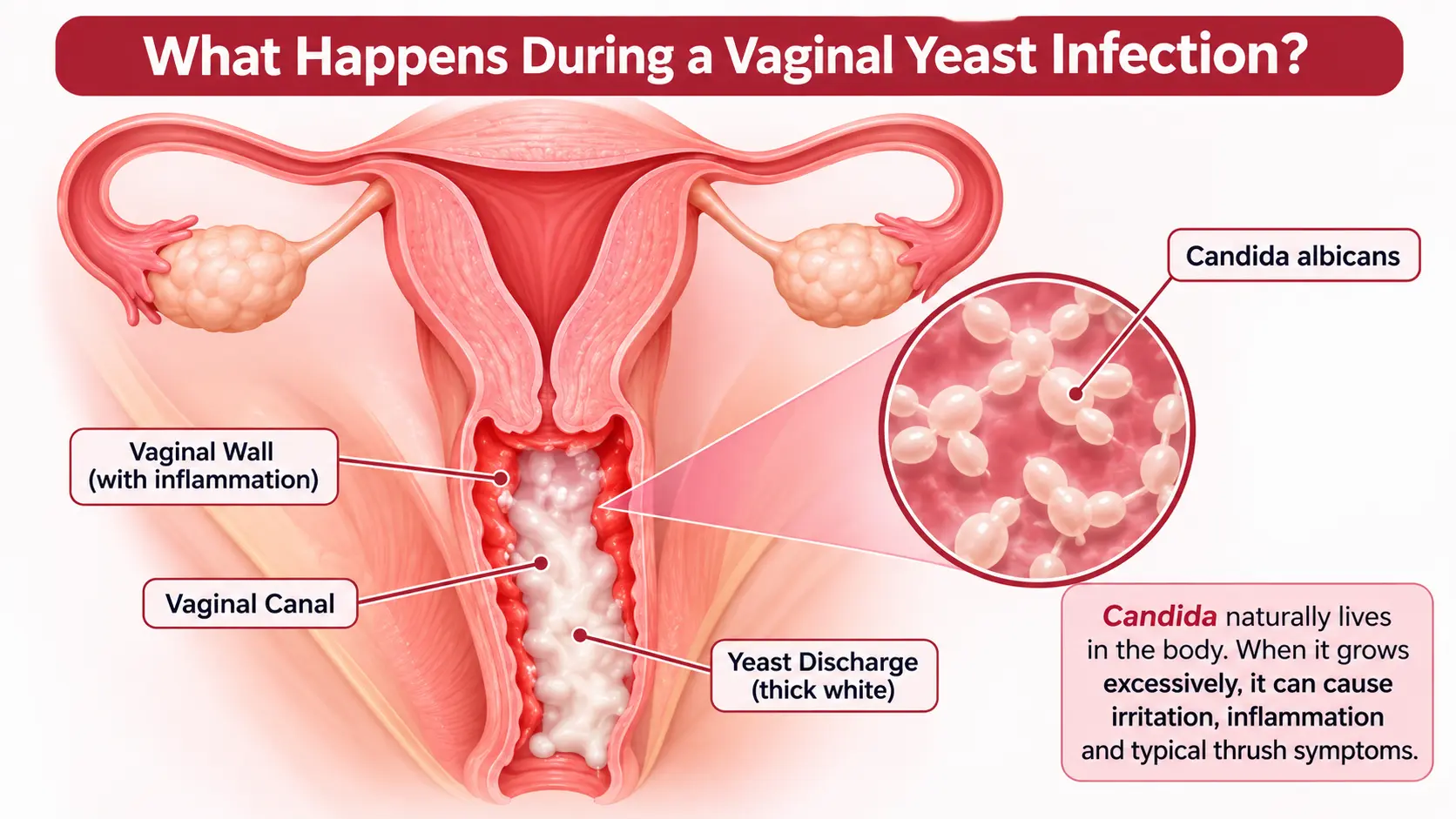
A vaginal yeast infection is a frequent fungal condition. It happens when Candida, a yeast that naturally lives in the body, grows more than usual.
Most uncomplicated cases respond well to suitable care. They do not lead to lasting health problems. Severe, persistent or recurrent vaginal yeast infection symptoms do need proper medical attention.
Getting the diagnosis right matters. Several conditions can create similar discomfort, and the right answer guides the right response.
Quick Answer: Is Vaginal Yeast Infection Serious?
Most vaginal yeast infections are common and manageable with appropriate treatment. They rarely cause lasting health problems.
- Common signs: Itching, redness, burning and thick white discharge.
- When to be concerned: Severe, persistent or recurrent symptoms.
- What to do: Seek medical advice if symptoms are unusual or do not improve.
Is Vaginal Yeast Infection a Serious Illness?
For most women, a vaginal yeast infection is not a serious illness. It is a common fungal condition caused by an overgrowth of Candida, a yeast that normally lives in small amounts in the vagina without causing harm.
When the natural balance shifts and yeast multiplies, irritation and inflammation can follow. Most uncomplicated infections stay mild to moderate and settle with suitable treatment, so they are not regarded as serious health events.
The condition becomes harder to manage when symptoms turn severe, keep coming back, or appear alongside other medical factors. There is a clear difference between temporary discomfort that fades with care and complications that call for clinical assessment.
In short, the average case is manageable, while complicated or recurrent ones deserve closer attention.
What Causes a Vaginal Yeast Infection?
Understanding what causes vaginal yeast infection begins with Candida overgrowth. The yeast lives in the vagina in small quantities, and problems arise when the environment allows it to multiply rapidly.
The vaginal environment is influenced by several factors, including its natural microbiome and hormonal changes. Vaginal pH balance is one part of this environment, although a pH change alone does not confirm a yeast infection.
Several factors can tip that balance:
- Antibiotic use, which reduces the helpful bacteria that usually keep yeast in check
- Pregnancy and hormonal changes that alter the vaginal environment. Hormonal fluctuations can influence the vaginal environment at different stages of life. Understanding hormonal changes in women provides additional context about how these changes may affect reproductive health.
- Poorly controlled diabetes, which raises sugar levels in vaginal fluids
- A weakened immune system
- Certain medications, including some corticosteroids
- Simple changes in the vaginal environment, such as moisture or irritation
Vaginal thrush can occur without any clear trigger. It is not necessarily caused by poor hygiene. When someone asks what causes a vaginal yeast infection, the honest answer is usually a combination of factors rather than a single cause.
What Are the Common Vaginal Yeast Infection Symptoms?
Recognising vaginal yeast infection symptoms helps women tell this condition apart from others.
The most frequent signs include:
- Itching around the vagina and vulva
- A burning sensation and general irritation
- Redness and swelling of the external genital skin
- Thick white vaginal discharge
- Stinging during urination
- Discomfort or pain during sexual activity
Burning and irritation can have several possible causes, so it is important to consider other conditions that may produce similar symptoms. The other causes of vaginal burning can help explain why these signs should not automatically be attributed to a yeast infection.
Not everyone experiences every symptom. Intensity can vary from one episode to the next.
Unusual discharge with a strong odour, pelvic pain or fever may point to a different condition. When symptoms stray from the typical pattern, the picture becomes less clear and clinical review becomes important. Paying attention to what feels normal for your own body makes it easier to notice when something has shifted.
What Does a Vaginal Yeast Infection Look Like?
People often ask what does a vaginal yeast infection look like, hoping visual signs will confirm the diagnosis.
External changes can include:
- Red or irritated vulval skin
- Swelling around the vaginal opening
- Possible small skin cracks or fissures
- Thick white discharge, sometimes with a cottage cheese texture
Appearance varies between individuals, and not every case shows the same features.
The look of discharge and skin irritation cannot confirm a yeast infection on its own. Several other conditions produce similar visual signs, so what you see is a clue rather than proof. When someone searches what does vaginal yeast infection look like, the realistic answer is that appearance alone is not enough for a reliable conclusion.
What Makes a Vaginal Yeast Infection More Serious?
Not every yeast infection carries the same level of concern. Distinguishing between uncomplicated, recurrent and complicated cases helps explain when the condition becomes more serious.
Uncomplicated Vaginal Yeast Infection
An uncomplicated infection is occasional, with mild to moderate symptoms that usually respond to appropriate antifungal treatment. These cases tend to settle without lasting effects and rarely need further investigation.
Recurrent Vaginal Yeast Infection
Recurrent vaginal yeast infection means repeated symptomatic episodes, with symptoms returning after treatment has finished. This pattern may call for culture testing and a closer look at underlying factors that keep encouraging yeast overgrowth.
Repeated self-treatment is not advisable. Each episode may not actually be yeast, and the real cause could be missed.
Complicated Vaginal Yeast Infection
A complicated infection involves severe redness, swelling or fissures, a non-albicans Candida species, poorly controlled diabetes or a weakened immune system. These cases may require longer or different treatment and often need individualised clinical input.
| Infection type | Typical characteristics | What it means |
| Uncomplicated | Occasional and mild to moderate symptoms | Usually responds to standard treatment |
| Recurrent | Repeated symptomatic episodes | Needs further assessment |
| Complicated | Severe symptoms or particular medical risk factors | May require testing and individualised treatment |
Can an Untreated Vaginal Yeast Infection Cause Complications?
Leaving a yeast infection without care can lead to ongoing discomfort.
Possible effects include:
- Persistent itching and burning
- Continuing vulval inflammation
- Skin soreness and small fissures
- Discomfort during sexual activity
- Repeated symptoms that affect daily comfort
Another consideration is delayed diagnosis when a different condition is actually responsible for the symptoms.
Uncomplicated thrush does not generally cause permanent reproductive damage or long-term health problems. Ordinary vaginal thrush is not a cause of infertility, pelvic inflammatory disease or bloodstream infection. The main concern with untreated vaginal thrush is continued discomfort and the risk of missing another explanation for the symptoms.
Can a Vaginal Yeast Infection Spread to Other Parts of the Body?
A common worry is whether the infection can travel beyond the vagina.
Ordinary vaginal candidiasis is a local infection that stays in the vaginal area. It does not normally spread through the bloodstream to other organs.
Invasive candidiasis is a separate and uncommon medical condition. It mainly affects people with serious underlying illnesses or specific healthcare-related risk factors, such as a severely weakened immune system or recent major hospital care.
The everyday yeast infection most women experience is very different from invasive disease. Understanding this gap helps prevent unnecessary alarm while still encouraging sensible attention to symptoms.
Who Is More Likely to Develop Complicated Vaginal Yeast Infections?
Some women face a higher chance of complicated infections. The reasons usually point to an underlying factor that makes Candida harder to control.
Women with Poorly Controlled Diabetes
Raised blood glucose levels can increase sugar in vaginal fluids, which creates an environment where yeast multiplies more readily. When diabetes is poorly controlled, recurrent or complicated Candida infections become more likely. Getting glucose levels into a healthier range often forms part of the overall response.
Women with Weakened Immune Systems
Immune suppression, whether from a medical condition or treatment, reduces the body’s ability to keep Candida in check. Women in this group may experience more severe or stubborn infections that need closer monitoring and a more tailored treatment approach.
Women Taking Certain Medications
Antibiotics and immunosuppressive medicines can disturb the natural balance in the vagina. Antibiotics reduce protective bacteria, while immunosuppressive drugs lower the defences that normally control yeast.
Women Experiencing Recurrent Infections
Repeated episodes should be confirmed rather than assumed to be yeast infections each time. Other conditions can mimic thrush, so culture testing helps ensure the diagnosis is accurate before treatment continues.
How Is a Vaginal Yeast Infection Diagnosed?
Accurate diagnosis combines several steps. A clinician usually begins with a medical history and an assessment of symptoms, followed by a physical examination where appropriate.
Changes in vaginal discharge can have different explanations, and they should be considered alongside other symptoms. The possible causes of unusual discharge provide another example of why appearance alone cannot confirm an infection.
Vaginal swab testing allows laboratory analysis through microscopy and fungal culture, which can identify the Candida species involved. Identifying the specific species matters most in persistent or complicated cases, since different strains can respond differently to treatment.
Vaginal discharge can change for several reasons, and its appearance alone cannot establish the cause. Conditions such as PCOS may also be associated with changes in vaginal health, making it important to consider the wider picture when assessing unusual discharge. Understanding how PCOS can affect vaginal discharge provides additional context.
One important point is that Candida may be present without causing any symptoms. A positive result does not always mean treatment is needed. Test results must be interpreted alongside the symptoms a woman is actually experiencing, which is why self-diagnosis based on signs alone can be misleading.
What Are the Available Vaginal Yeast Infection Treatments?
Several vaginal yeast infection treatments are available. The right choice depends on the type and severity of the infection.
Antifungal Vaginal Creams and Pessaries
A vaginal yeast infection antifungal cream or pessary is often the first option for uncomplicated vaginal thrush. These preparations are applied directly to the vagina and work by reducing the yeast population locally.
Oral Antifungal Medicines
Oral antifungal medicines may be suitable in selected circumstances, but they are not appropriate for everyone. A clinician decides whether an oral option fits the situation, taking into account medical history and other factors.
Treatment for Recurrent or Complicated Infections
When infections keep returning or become complicated, a clinician may recommend testing and a longer or different treatment plan. This individualised approach helps address underlying factors rather than just the current episode.
Treatment during pregnancy requires specific medical advice, and oral fluconazole should never be self-selected during pregnancy. The same caution applies to anyone with diabetes or a weakened immune system, where professional guidance shapes safer choices.
When Should You See a Doctor for Vaginal Thrush?
Knowing when to seek medical advice helps women avoid both unnecessary worry and missed diagnoses. A doctor visit is advisable in several situations:
- First-time symptoms, since confirming the cause matters before any treatment begins
- Symptoms that persist after treatment
- Repeated episodes
- Severe redness, swelling or soreness
- Unusual discharge or a strong odour
- Pelvic pain or abnormal bleeding
- Symptoms during pregnancy
- Diabetes or weakened immunity
Fever, significant pelvic pain or feeling seriously unwell should never be attributed to ordinary thrush without proper evaluation. These signs can point to other conditions that need different care.
Final Thoughts
A vaginal yeast infection is usually manageable, and most women recover without lasting effects. Recurring or complicated cases need proper evaluation rather than repeated self-treatment, since accurate diagnosis shapes the right response. When symptoms turn persistent, severe or unusual, seeking medical advice remains the most sensible step.
⚠️ Medical Disclaimer
FAQ
Can a Vaginal Yeast Infection Become Dangerous?
Most uncomplicated cases are manageable and respond to suitable treatment. Complicated infections, however, require appropriate assessment, especially when severe symptoms or underlying medical factors are involved.
What Happens If a Vaginal Yeast Infection Is Left Untreated?
Without treatment, persistent irritation and discomfort can continue. There is also a real possibility of overlooking another diagnosis that produces similar symptoms.
Can Vaginal Yeast Infection Affect Fertility?
Ordinary vaginal thrush is not generally associated with infertility. The common yeast infection most women experience does not damage reproductive function.
How to Treat Vaginal Yeast Infection?
Antifungal options, including creams, pessaries and sometimes oral medicines, form the main approach. Accurate diagnosis matters first, since treating the wrong condition will not bring relief.
Can Vaginal Yeast Infection Go Away on Its Own?
Symptoms may sometimes settle on their own, but persistent or recurrent symptoms should not be ignored. Waiting is reasonable only for mild cases that clearly improve, while ongoing or worsening signs call for review.

Years of Experience: 10+ years Education: B.Sc. in Biomedical Science (Monash University, Melbourne, Australia) PG Diploma in Health & Medical Communication (University of Sydney, Australia) Experience: Erica Wilson is an…