

How to Improve Erection-Best Foods, Exercises, & Medications
By Erica Wilson, Aug-10-2024


 Dr. Arjun Srivastav Medical Reviewer (Pharm D)
 Erection quality depends heavily on healthy blood flow and healthy nerve and vascular function. The good news is that your daily habits, what you eat, how you move, how you sleep, and how you manage stress, can meaningfully support erectile health. For many men, diet and exercise changes make a real difference.
That said, persistent erection problems are not something to tough out. Ongoing erectile dysfunction (ED) can have an underlying medical cause, and when lifestyle changes aren’t enough, proven medications can help. This guide walks through the foods, exercises, lifestyle habits, and medical options that matter most, and how to know when it’s time to talk to a healthcare professional.
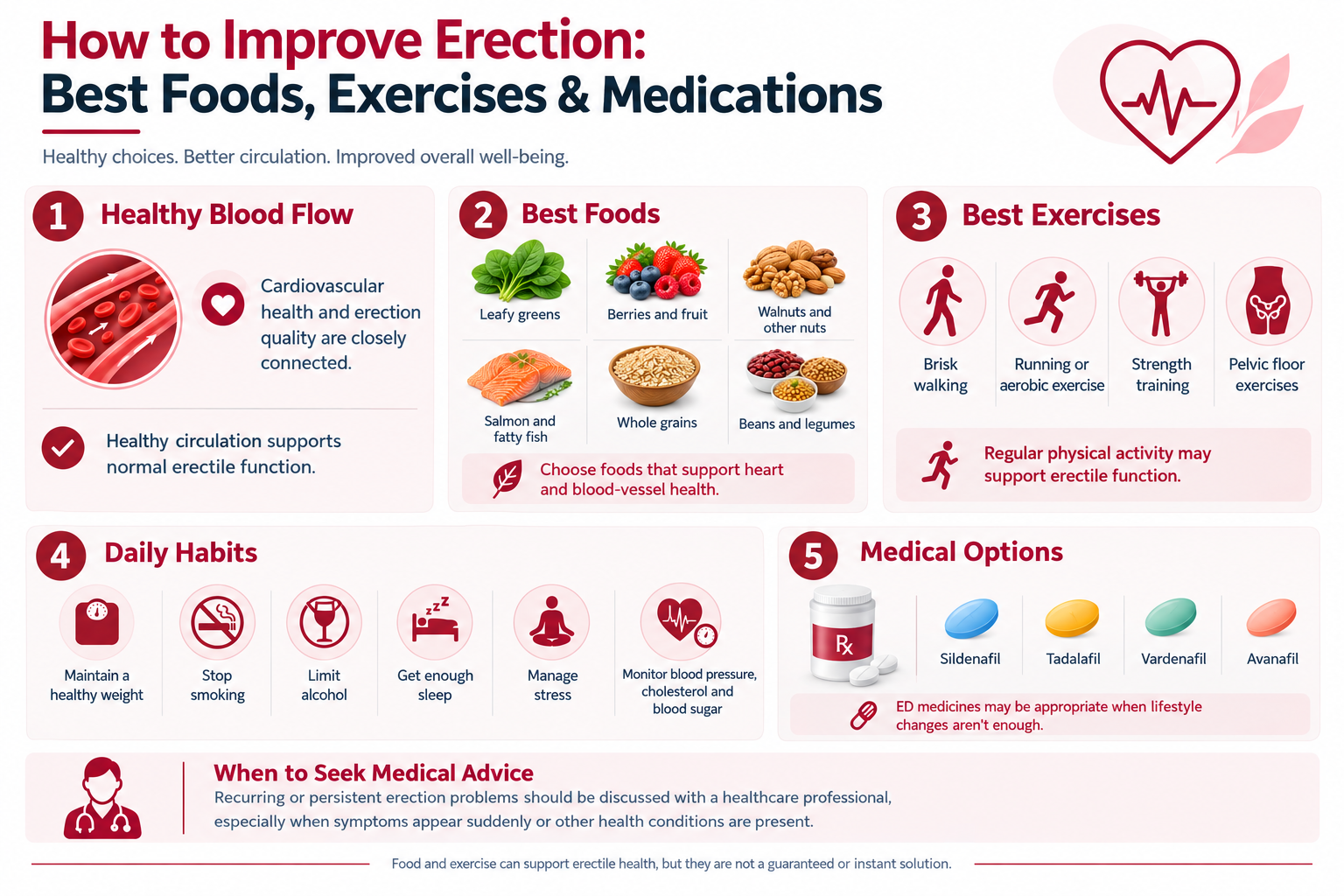
Better erection quality is often linked with healthy blood flow, regular physical activity, a balanced diet and overall health. Helpful steps include:
- 🥗 Eat well: Choose vegetables, fruits, whole grains, nuts, seeds and fish more often.
- 🏃 Exercise regularly: Aerobic activity and pelvic floor exercises may support erectile function.
- 🚭 Avoid smoking: Smoking can affect blood vessels and circulation.
- 🍷 Limit alcohol: Heavy drinking can interfere with sexual function.
- 😴 Sleep and manage stress: Poor sleep and anxiety can affect erections.
- 💊 Consider medical treatment: Medicines such as sildenafil or tadalafil may be prescribed for erectile dysfunction when appropriate.
What Affects How Firm Your Erection Is?
An erection isn’t a single switch, it’s a coordinated process involving blood vessels, nerves, hormones, and the brain. When any part of that system is under strain, firmness can suffer. Understanding the mechanics helps you see why foods, exercise, and stress all matter.
Blood flow
Erections are fundamentally a blood-flow event. When you become aroused, arteries to the penis widen and fill spongy tissue with blood, while veins temporarily trap that blood to maintain firmness. Anything that narrows or damages blood vessels, like high blood pressure, high cholesterol, smoking, or diabetes, can reduce blood flow and weaken erections. This is why ED is often an early warning sign of broader cardiovascular issues.
Nerve signals and arousal
Your nervous system carries the signal from the brain to the blood vessels of the penis. Damage to nerves, whether from diabetes, injury, certain medications, or surgery, can interrupt that signal. Arousal also depends on the brain being relaxed and receptive; when nerves misfire or signals are disrupted, the physical response can lag behind desire.
Cardiovascular health
Your heart and blood vessels are the engine behind erectile function. Conditions that strain the cardiovascular system, hypertension, atherosclerosis (hardening of the arteries), and metabolic syndrome, also restrict the circulation that erections depend on. Looking after your heart is, in a very literal sense, looking after your erections.
Hormones and other health conditions
Testosterone plays a role in libido and sexual function, though it’s not the whole story. Low testosterone, thyroid disorders, and other hormonal imbalances can dampen sexual response. Chronic conditions like diabetes and obesity also disrupt hormone balance and blood vessel health, compounding the effect on erectile function.
Stress and anxiety
The brain is your largest sexual organ. Stress and anxiety trigger the release of adrenaline and cortisol, which constrict blood vessels and redirect blood away from the penis, the opposite of what you want. Performance anxiety specifically creates a frustrating feedback loop: worrying about losing an erection makes it more likely you’ll lose it. We cover this in more depth later.
Best Foods to Support Better Erections
No single food causes an erection. But a diet that supports blood vessel health, circulation, and hormone balance creates the conditions for firmer, more reliable erections. For a closer look at specific dietary choices, see our guide to foods that may help you maintain an erection.
The National Institute of Diabetes and Digestive and Kidney Diseases (NIDDK) notes that a healthy diet can lower the risk of developing ED or improve ED symptoms, particularly through its effects on conditions like diabetes, heart disease, and obesity .
Leafy green vegetables
Think spinach, kale, and rocket (arugula). Leafy greens are rich in dietary nitrates, which your body converts to nitric oxide, a molecule that helps blood vessels relax and widen, supporting healthy blood flow. They’re also packed with folate and magnesium, which support cardiovascular health generally. Rather than promising instant results, think of leafy greens as part of an overall pattern that keeps your circulation in good shape over the long term.
Fruits and berries
Berries, citrus fruits, and apples are all excellent choices. Berries (especially blackberries, blueberries, and strawberries) are rich in flavonoids and antioxidants, which help protect blood vessels from damage and inflammation. Citrus fruits deliver vitamin C, which supports endothelial function, the lining of your blood vessels. An eating pattern high in fruits and vegetables is consistently linked to better cardiovascular and erectile health .
Nuts and seeds
Almonds, walnuts, pistachios, and seeds (such as pumpkin and sunflower seeds) provide healthy unsaturated fats, L-arginine, zinc, and magnesium. Walnuts and pistachios in particular have been studied for their potential link to improved erectile function. These foods support blood vessel health and hormone production as part of a balanced diet .
Fatty fish
Salmon, sardines, and mackerel are rich in omega-3 fatty acids, which reduce inflammation and support the health of blood vessels and the heart. Because erectile function is so closely tied to cardiovascular health, the omega-3s in fatty fish are a smart addition to a diet aimed at better circulation .
Whole grains and legumes
Oats, brown rice, lentils, and beans provide fibre, B vitamins, and steady, slow-release energy. High-fibre whole grains help manage cholesterol and blood sugar, both of which affect blood vessel health. The NIDDK specifically highlights whole-grain foods such as oats and brown rice as part of an eating pattern that supports erectile function .
Foods containing L-arginine and other useful nutrients
L-arginine is an amino acid your body uses to produce nitric oxide, which helps blood vessels relax. It’s found naturally in foods like poultry, dairy, nuts, seeds, and legumes. Rather than reaching for a supplement, getting these nutrients through a varied diet gives you the supporting cofactors (like zinc, vitamin C, and magnesium) that help your body use them effectively. This is about biological relevance, not a supplement pitch.
What foods should you limit?
This is where many articles fall short. To support erectile health, it’s worth cutting back on:
- Heavily processed foods, often high in salt, unhealthy fats, and additives that strain blood vessels.
- Excessive saturated and fried foods, these raise LDL (“bad”) cholesterol and promote atherosclerosis.
- Excessive alcohol, a central nervous system depressant that can impair arousal and blood flow.
- High-sugar dietary patterns, linked to weight gain, insulin resistance, and diabetes, all of which increase ED risk.
The NIDDK specifically notes that foods which lower the risk of diabetes, heart disease, and obesity can also help with ED.
Best Exercises to Improve Erectile Function
Exercise regularly is good advice, but it’s too vague. Here’s what the evidence actually supports, and how much of it matters.
Aerobic exercise
Brisk walking, jogging, swimming, and moderate cycling all count. Aerobic exercise improves cardiovascular fitness and circulation, which directly supports the blood flow that erections depend on. A systematic review and meta-analysis in the British Journal of Sports Medicine found that physical activity and exercise produced a statistically significant improvement in erectile function scores among men with ED, with aerobic exercise of moderate-to-vigorous intensity showing the clearest benefit .
Strength training
Resistance training, lifting weights, bodyweight exercises, or resistance bands, supports overall health, helps maintain muscle mass, and aids weight management. A healthy body composition supports testosterone levels and metabolic health, both of which are relevant to erectile function. Strength training complements aerobic exercise rather than replacing it.
Pelvic floor exercises
Pelvic floor (Kegel) exercises deserve their own subsection because many men specifically search for exercises to strengthen erections. Your pelvic floor muscles sit at the base of your pelvis and support the bladder, bowel, and sexual function. Strengthening them can improve your awareness and control of the muscles involved in rigidity.
A randomised controlled trial found that pelvic floor muscle training, combined with biofeedback, produced significant improvements in erectile function scores in men with ED, with around 40% of participants regaining normal function and over a third seeing improvement . Systematic reviews broadly support pelvic floor training as an effective conservative approach for ED, though the optimal training protocol hasn’t been established .
The key is consistency. Pelvic floor exercises involve repeatedly contracting and relaxing the muscles you’d use to stop the flow of urine. Done regularly over weeks, they can strengthen the muscles and improve control.
How much exercise should you get?
Practical guidance beats an unrealistic exercise every day instruction. An earlier systematic review suggested that supervised training consisting of around 40 minutes of moderate-to-vigorous aerobic exercise, four times per week (roughly 160 minutes per week over 6 months), helped reduce ED in men with relevant risk factors . Newer meta-analyses support exercise generally but do not establish one universally superior programme, so the best routine is one you can sustain .
If you’re starting from nothing, even brisk walking most days is a meaningful improvement. Build up gradually.
Lifestyle Changes That Can Help Improve Erections
Beyond food and formal exercise, your broader daily habits play a major role in erectile health.
Maintain a healthy weight
A healthy weight supports testosterone levels, self-esteem, and metabolic health, and helps prevent diabetes and high blood pressure, both of which can cause ED . Weight loss in overweight men is associated with improvements in erectile function.
Quit smoking
Smoking damages blood vessels and restricts circulation. Quitting is one of the single most impactful changes you can make for vascular and erectile health.
Limit alcohol
A small amount may help you relax, but too much depresses the central nervous system, impairs arousal, and reduces blood flow. Heavy or chronic drinking is strongly linked to ED.
Get enough sleep
Poor sleep disrupts hormone balance (including testosterone), raises stress hormones, and worsens conditions like sleep apnea that are linked to ED. Aim for 7–9 hours of quality sleep per night.
Manage stress and anxiety
Chronic stress keeps cortisol and adrenaline elevated, which constricts blood vessels. Relaxation techniques, mindfulness, therapy, and simply carving out downtime all help.
Stay physically active
This means not just structured exercise but reducing prolonged sitting. Moving regularly throughout the day supports circulation and metabolic health.
Look after blood pressure, cholesterol, and blood sugar
These three underpin cardiovascular health, and cardiovascular health underpins erectile function. Regular check-ups help you catch and manage these early.
Can Stress or Anxiety Make Erections Less Firm?
Yes, and more than most men realise. The brain plays a central role in triggering an erection, so anything that disrupts the brain’s signals can interfere with firmness.
Common culprits include:
- Performance anxiety, worrying about whether you’ll get or keep an erection, which makes it harder to do either.
- Relationship stress, tension with a partner can dampen arousal and connection.
- General anxiety, work, money, or health worries keep your nervous system in “fight or flight” mode, which constricts blood vessels.
- Stress and poor sleep, these feed off each other, compounding the effect on your body.
- The worry cycle, a single difficult experience can spiral into ongoing anxiety about the next one, creating a self-fulfilling pattern.
Breaking the cycle often starts with acknowledging it. Talking with a healthcare professional or a counsellor, whether individually or as a couple, can be genuinely transformative. If anxiety is the root cause, medication alone may not solve it; addressing the mental health side matters too.
What Medications Can Improve Erections?
When lifestyle changes aren’t enough, prescription medications can be highly effective. The most commonly prescribed class is PDE5 inhibitors, which work by increasing blood flow to the penis when sexual stimulation is present. Importantly, they’re not aphrodisiacs, you still need sexual arousal for them to work.
If you’re interested in how ED medicines can affect erection firmness, see our guide to medication can help you get a harder erection.
Sildenafil
Sildenafil is most well-known PDE5 inhibitor. It improves blood flow when sexual stimulation is present and is commonly used to treat ED. It’s taken on demand, typically around 30–60 minutes before sexual activity.
Tadalafil
Also a PDE5 inhibitor, but with a longer duration of action than sildenafil, its effects can last up to 36 hours, which has earned it the nickname “the weekend pill.” As with all PDE5 inhibitors, sexual stimulation is still required.
Vardenafil
Another PDE5 inhibitor in the same family, with a similar onset and duration to sildenafil. It works the same way, by enhancing the natural erectile response to arousal.
Avanafil
Avanafil is newer PDE5 inhibitor that may work slightly faster than some of the older options. It follows the same mechanism of action as the others.
The point of this section isn’t to turn each into a full product profile, it’s to show what medications exist and where they fit. Which one (if any) is right for you depends on your health history, other medications, and personal preferences, decisions best made with a healthcare professional.
Can Food and Exercise Replace ED Medication?
This is one of the most important questions, and it deserves a careful answer.
- Some men do see improvement from lifestyle changes alone, especially when ED is linked to inactivity, poor diet, or weight.
- Diet and exercise address underlying health factors, improving cardiovascular health, blood sugar, and stress, which can reduce or resolve ED.
- But they don’t necessarily replace medication when ED has a significant medical cause, such as nerve damage, vascular disease, or a medication side effect.
- Medication decisions depend on the individual. For some, lifestyle changes plus a PDE5 inhibitor is the right combination. For others, treating an underlying condition is the key.
- Persistent ED deserves medical assessment. It can be an early sign of cardiovascular disease, diabetes, or another condition that needs attention regardless of its effect on erections.
The honest framing is this: lifestyle changes and medication aren’t rivals, they’re complementary. Food and exercise lay the foundation; medication can provide the boost when the foundation isn’t enough.
How Long Does It Take to Improve Erection Quality?
There’s no single timeline, because it depends on what’s causing the problem. The factors that shape your timeline include:
- The cause of your ED
- Your current cardiovascular health
- Your exercise habits and how consistently you stick with them
- Your weight
- Smoking and alcohol use
- Your stress levels
- Any medications you’re taking
- Underlying medical conditions
As a rough guide:
- Lifestyle improvements, changes to diet, exercise, weight, smoking, and sleep, tend to show benefits over weeks to months. The research on aerobic exercise, for example, studied programmes lasting from 8 weeks up to 2 years .
- Prescription ED treatment, PDE5 inhibitors, typically works on demand, within 30–60 minutes of taking the medication (depending on which one).
So if you’re making lifestyle changes, be patient and consistent. If you need faster results or lifestyle alone isn’t working, medication can bridge the gap while you build the foundation.
What If You Can Get an Erection but Can’t Keep It?
This is a common and frustrating experience, and it’s often a different concern from never getting an erection at all. Possible contributors include:
- Reduced blood flow, blood gets in but isn’t being effectively trapped.
- Anxiety, especially performance anxiety, which can interrupt the signals that maintain an erection.
- Alcohol, can blunt arousal and blood flow even in small amounts.
- Fatigue, tiredness affects both libido and physical response.
- Medication effects, some antidepressants, blood pressure medications, and other drugs can interfere.
- Underlying health problems, diabetes, cardiovascular disease, and hormonal imbalances can all play a role.
If this happens occasionally, it’s usually nothing to worry about. But if it happens repeatedly, it’s worth a professional evaluation to identify the cause and find the right solution.
When Should You See a Doctor About Erection Problems?
Talking about ED can feel uncomfortable, but it shouldn’t be scary, and it can be genuinely valuable. Consider seeing a healthcare professional if you experience:
- Recurring erection difficulties that happen often
- Sudden changes in erectile dyfunction
- ED lasting for weeks or months
- Associated symptoms like reduced libido, fatigue, or pelvic pain
- Diabetes, high blood pressure, or heart disease that you want to manage holistically
- Medication side effects you suspect are contributing
- Concerns about low testosterone
The NIDDK notes that healthcare professionals evaluate ED through a medical and sexual history, a physical examination, and, where appropriate, laboratory or other testing, such as blood tests, hormone levels, or imaging to assess blood flow . The goal is to find the underlying cause, not just to prescribe a pill.
Getting checked is also important because ED can be an early warning sign of cardiovascular disease, sometimes appearing years before a heart event. Addressing it early protects more than your sex life.
This article is for educational purposes only and is not medical advice. Always consult a qualified healthcare professional before starting any new diet, exercise programme, or treatment.
FAQ
What foods help improve erections?
No single food directly causes an erection, but a diet rich in leafy greens, berries and citrus, nuts and seeds, fatty fish, and whole grains supports the blood vessel health and circulation that erections depend on. The NIDDK confirms that a healthy diet can lower ED risk and improve symptoms .
What exercise is best for stronger erections?
Aerobic exercise has the strongest evidence base. A meta-analysis found that physical activity significantly improved erectile function scores, with aerobic exercise of moderate-to-vigorous intensity showing the clearest benefit . Pelvic floor exercises can also help, particularly for men with mild to moderate ED .
Can walking improve erectile function?
Yes. Brisk walking is a form of aerobic exercise that improves cardiovascular fitness and circulation, both of which support erectile function. It's an excellent low-impact starting point, especially if you're currently inactive.
Do pelvic floor exercises help erections?
They can. A randomised controlled trial found pelvic floor muscle training significantly improved erectile function, with around 40% of participants regaining normal function . Consistency over weeks is key, there's no quick fix.
Can losing weight improve erections?
Yes, for many men. A healthy weight supports testosterone levels, self-esteem, and metabolic health, and helps prevent diabetes and high blood pressure, all of which influence erectile function .
Can stress cause weaker erections?
Absolutely. Stress and anxiety trigger adrenaline and cortisol, which constrict blood vessels and redirect blood away from the penis. Performance anxiety specifically can create a cycle where worrying about an erection makes it harder to maintain one
When should erectile problems be checked by a doctor?
See a healthcare professional if erection difficulties recur, last for weeks or months, come on suddenly, or are accompanied by other symptoms. ED can be an early sign of cardiovascular disease or diabetes, so getting evaluated protects your overall health, not just your sex life

Years of Experience: 10+ years Education: B.Sc. in Biomedical Science (Monash University, Melbourne, Australia) PG Diploma in Health & Medical Communication (University of Sydney, Australia) Experience: Erica Wilson is an…

