

How to Boost Libido: 10 Natural Ways to Improve Sexual Wellness
By Erica Wilson, Oct-08-2026


 Dr. Arjun Srivastav Medical Reviewer (Pharm D)
 Libido is the word used to describe sexual desire or interest. It is something that naturally shifts over the course of a lifetime.
It is completely normal for interest in sex to rise and fall. There is rarely a single reason behind a change. Libido in men and women can be influenced by physical, psychological and lifestyle factors.
Stress, sleep, relationships, medicines, hormones and general health can all play a part. Often they work together rather than in isolation.
If you are wondering how to boost libido, the honest answer is that no single natural method works for everyone. What tends to help is looking at the wider picture of your life and health, then making small consistent changes where they are needed.
Learning how to boost libido is not about finding one magic solution. It is about understanding your body and your circumstances. When you know how to boost libido in a way that suits your life, the changes tend to feel more sustainable.
Lifestyle adjustments may support sexual wellbeing over time. But persistent or sudden changes in desire are worth discussing with a healthcare professional rather than trying to fix alone with supplements.
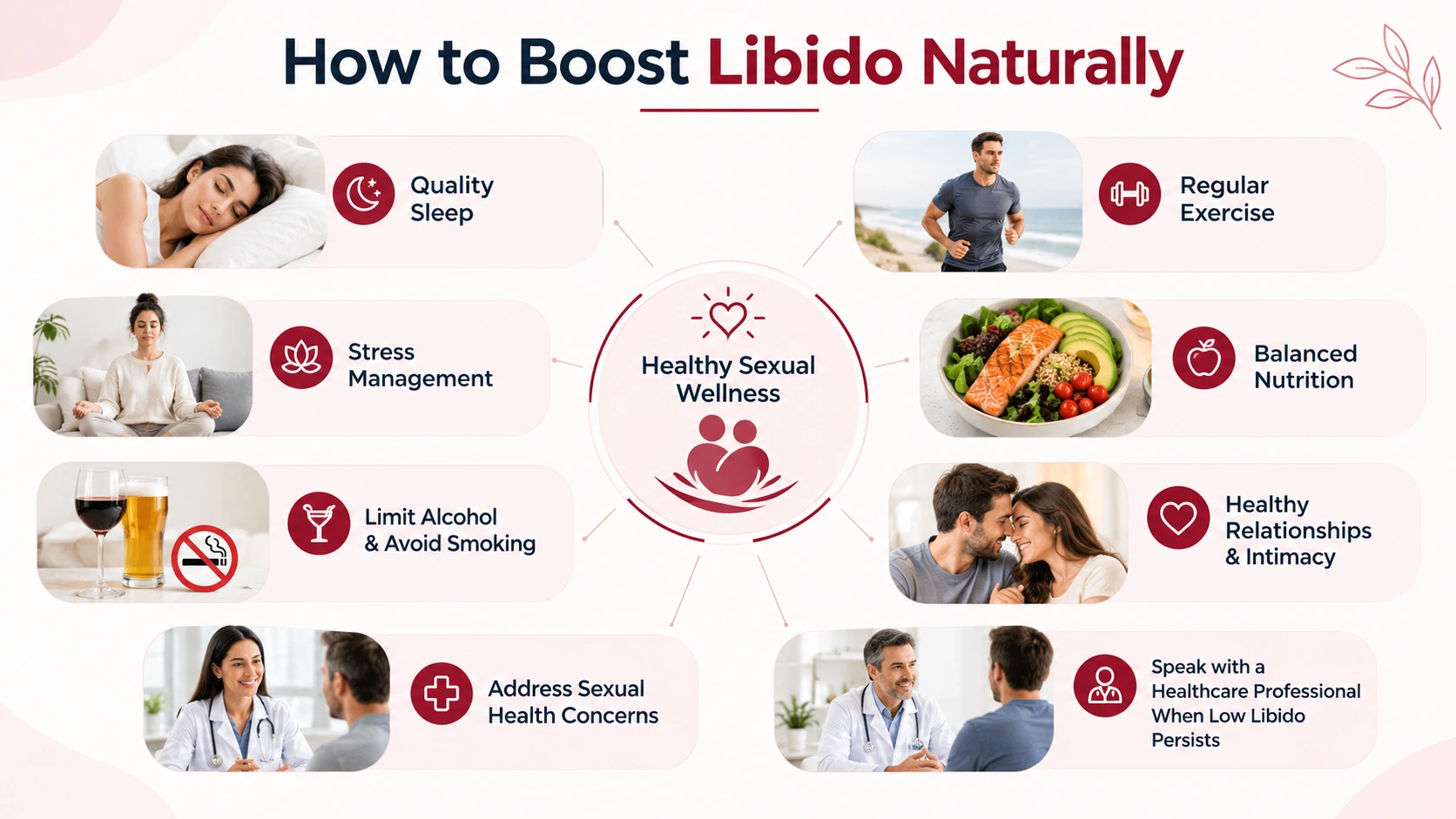
Supporting a healthy libido can start with better sleep, regular exercise, stress management, a balanced diet and healthier lifestyle habits. Relationship factors, medicines, hormones and underlying health conditions can also affect sexual desire. If low libido persists or causes concern, speaking with a healthcare professional can help identify the underlying cause.
What Can Cause Low Libido?
Before diving into how to boost libido, it helps to understand what may be behind a drop in desire. Low libido rarely has one tidy explanation. For most people it is a mix of overlapping factors.
Working out which ones are relevant is the first step toward feeling more like yourself again.
Stress and emotional wellbeing
Chronic stress is one of the most common influences on sexual desire. When you are under ongoing pressure from work, finances or family life, your body stays in a heightened state that can crowd out interest in sex.
Other emotional factors that work in a similar way include:
- Anxiety
- Low mood
- Mental fatigue
Each of these leaves little mental room for spontaneous desire.
Sleep and tiredness
Poor sleep has a direct effect on energy and mood. Both are closely tied to sexual interest.
Exhaustion from irregular sleep patterns or broken nights can make sex feel like another demand rather than something you genuinely want.
Hormonal changes
Hormones shift naturally across life. Some of the most common hormonal influences include:
- Menopause and perimenopause
- Pregnancy and the postpartum period
- Testosterone related concerns
- Other hormonal fluctuations
These can bring noticeable changes to desire without there being anything seriously wrong.
Medicines and health conditions
Some prescription medicines list changes in libido among their effects. Long term health conditions can also influence sexual desire, sometimes without you realising the connection.
Common examples include:
- Diabetes
- Thyroid problems
- Cardiovascular and metabolic conditions
- Other chronic illnesses
Relationship and sexual health factors
Desire does not exist in a vacuum. When sex becomes uncomfortable or stressful, it makes sense that desire fades.
Factors that can reduce interest include:
- Relationship difficulties
- Lack of intimacy
- Sexual pain
- Erectile difficulties
- Vaginal dryness
It is worth remembering that low libido does not always point to one identifiable cause. Often several factors are working together, and untangling them is part of the process.
If your sexual desire has changed, think about what else may have changed in your life or health recently:
- 😴 Have you been getting enough quality sleep?
- 🧠 Has your stress or emotional wellbeing changed?
- 💊 Have you started or changed any medicines?
- ❤️ Are relationship or intimacy concerns affecting you?
- ⚕️ Are you experiencing pain, erectile difficulties or other sexual health concerns?
- 🔄 Have there been recent hormonal or other health changes?
Identifying possible contributing factors can help you decide which lifestyle changes may be worth trying and when professional advice may be appropriate.
10 Natural Ways to Boost Libido
The following ideas focus on practical, realistic changes rather than quick fixes. None of them are guaranteed to work for everyone.
Together they address many of the most common reasons desire drops. Use them as a starting point as you figure out how to boost libido in a way that fits your life. The more you understand about how to boost libido, the easier it becomes to choose changes that actually work for you.
1. Get Better Quality Sleep
Sleep is the foundation that energy and mood are built on. Both are closely connected to sexual interest.
A consistent sleep routine helps your body settle into a steadier rhythm. This can make a real difference to how you feel day to day.
A few simple habits that help:
- Keep your bedtime and wake time reasonably stable
- Aim for adequate rest each night
- Reduce late night screen use where it feels helpful
If sleep problems persist despite your efforts, it is worth raising them with a healthcare professional rather than hoping they resolve on their own.
When you are considering how to boost libido through lifestyle, better sleep is one of the most sensible places to start. Many people searching for how to boost libido overlook sleep, but it underpins everything else.
2. Exercise Regularly
Regular movement supports the body in ways that often translate into how you feel about sex.
Different types of activity each bring something useful:
- Walking for daily movement
- Aerobic exercise for cardiovascular health
- Resistance training for strength and confidence
Exercise can help support cardiovascular health, lift mood, assist with stress management and build energy. Physical activity can also improve body confidence, which matters more than people often realise.
That said, exercise does not directly boost libido in everyone. It is best viewed as one part of a broader approach rather than a guaranteed fix.
The goal is consistency rather than intensity. Choosing something you can stick with matters more than pushing yourself hard. If you want to explore exercise specifically, our guide to natural exercises that may support sex drive looks at the role physical activity can play in sexual wellbeing.
3. Find Practical Ways to Manage Stress
Stress affects desire indirectly through fatigue, mood and relationship strain. Lowering it can gently restore interest over time.
Simple practices that can help quiet a busy nervous system include:
- Breathing exercises
- Mindfulness
- Meditation
- Regular exercise
- Time outdoors
- Genuine relaxation through the day
Counselling can be valuable when stress feels entrenched or tied to deeper concerns.
The aim is not to eliminate stress entirely. It is to stop it from dominating your mental space so there is room again for desire. For many people this is a key part of how to boost libido naturally.
4. Eat a Balanced, Nutrient Rich Diet
A well rounded diet supports overall health, and overall health supports sexual wellbeing.
Focus on dietary quality by including a variety of foods:
- Vegetables and fruits
- Whole grains
- Fish and lean protein
- Nuts and seeds
- Healthy fats
Eating well gives your body the nutrients it needs to function at its best. This can help with energy and mood.
It is important to be clear about one thing though. No individual food is guaranteed to increase libido. The idea that a single item will reignite desire is more myth than reality. A balanced overall pattern matters far more than any one ingredient.
5. Limit Excessive Alcohol and Avoid Smoking
Both alcohol and smoking are lifestyle factors that can quietly affect sexual health.
Excessive alcohol consumption can dull desire and interfere with sleep and energy. Smoking and tobacco use affect cardiovascular health, which is closely connected to sexual function.
Cutting back offers several benefits:
- Better circulation
- Steadier energy
- Improved sleep
All of these create conditions where desire is more likely to return. If you are working on how to boost libido, reducing alcohol and avoiding smoking are straightforward steps worth taking.
This is not about moralising or never enjoying a drink. It is about noticing when habits start to work against how you want to feel.
6. Make Time for Intimacy and Connection
Desire does not always arrive spontaneously. Waiting around for it can create frustration for both partners.
Making time for intimacy means more than scheduling sex. It includes:
- Honest communication with a partner
- Everyday affection
- Genuine emotional connection
- Reducing the pressure around sex itself
Performance anxiety tends to push desire further away. Easing that pressure can paradoxically help desire return.
It also helps to understand that desire is not always a switch that flips on its own. Sometimes interest builds after closeness begins rather than appearing out of nowhere. That is perfectly normal.
7. Address Sexual Pain or Other Sexual Problems
Libido often declines when sex becomes uncomfortable, stressful or frustrating.
Common problems that can turn pleasure into something you would rather avoid include:
- Vaginal dryness
- Pain during sex
- Erectile difficulties
- Ejaculation problems
- Difficulty with arousal or orgasm
The key insight here is that treating the underlying sexual health issue may be far more useful than searching for a generic libido booster.
Lubricants, medical treatments or specialist support can resolve or ease many of these problems. Dealing with them directly often allows desire to return on its own once sex feels good again.
8. Look After Your Overall Physical and Mental Health
Sexual desire does not sit separate from the rest of your health.
The way you care for your body and mind contributes to how interested you feel in sex. This includes:
- Maintaining physical activity
- Managing any chronic conditions
- Looking after your mental wellbeing
- Keeping healthy routines around food, movement and rest
- Regular health checks when appropriate
This is not about repeating the lifestyle advice from earlier. It is about recognising that general health and sexual health are deeply connected.
When your body and mind feel well, desire tends to follow more easily. For this reason, looking after your overall health is a core part of how to boost libido over time.
9. Review Medicines With a Healthcare Professional
Some medicines may affect sexual desire. This is more common than many people realise.
Types of medication that can list reduced libido among their effects include:
- Certain antidepressants
- Some blood pressure medicines
- Particular hormonal treatments
If you suspect a medicine is involved, the right step is to talk to a doctor or pharmacist about it. Knowing how to boost libido safely means getting the right advice before changing anything.
Never stop or change a prescribed medicine simply because you think it is affecting your libido. Stopping medication abruptly can cause real harm. A healthcare professional can often adjust the dose, suggest an alternative or offer additional support while keeping you safe.
10. Give Yourself Time and Address the Underlying Cause
Libido does not necessarily change overnight. Expecting instant results usually leads to disappointment.
How long improvement takes depends on what is driving the change in the first place:
- If stress or sleep is the main factor, things may shift relatively quickly once those improve
- If the cause is hormonal, medication related or connected to a longer standing health condition, it may take more time and proper guidance
Rather than repeatedly trying new supplements in the hope of a quick result, it is usually more effective to identify and address the underlying cause and give your body time to respond.
Patience is an underrated part of how to boost libido. Real change often comes from consistent effort rather than a single intervention. Understanding how to boost libido means accepting that progress is rarely instant.
How to Boost Libido in Women
Search interest in how to increase libido in women is high. It is worth looking specifically at the factors that most commonly affect female desire.
Common factors affecting women’s libido
Many of the same influences apply to women as to anyone else. These include stress, poor sleep and relationship factors.
There are also experiences that are specific to women or more common in women:
- Menopause and perimenopause, which bring significant hormonal changes
- Pregnancy and the postpartum period
- Vaginal dryness and pain during sex, which can make intimacy uncomfortable
- Some medications that list lowered libido among their effects
- Mental health, which plays a substantial role
Practical approaches
The most useful starting points are often the simplest:
- Improving sleep to restore energy and mood
- Managing stress to ease mental pressure
- Staying physically active to support overall wellbeing
- Addressing sexual discomfort directly, whether with lubricants or medical support
- Communicating openly with a partner to reduce pressure and rebuild connection
- Speaking with a healthcare professional when changes persist
These same principles sit at the heart of how to boost libido in women and how to boost female libido. The underlying drivers are usually the same even when the specifics differ.
How to Boost Libido in Men
Low libido in men is common and often misunderstood. Understanding the factors behind reduced desire can make it easier to identify what may be affecting you. Our guide to low libido in men covers some of these causes in more detail.
Contributing factors can include:
- Stress
- Poor sleep
- Excessive alcohol
- Smoking
- Physical inactivity
- Relationship concerns
- Some medications
- Low testosterone concerns
- Erectile difficulties
- Underlying health conditions
There is an important distinction to understand here. Low libido and erectile dysfunction are not the same thing.
A man may have full sexual desire but experience difficulty getting or maintaining an erection. Equally, someone can have entirely normal erectile function but feel little interest in sex.
Confusing the two can lead to frustration and the wrong solutions. It helps to identify which issue is actually present before deciding what to do about it.
Do Foods Really Boost Libido?
People often search for specific foods that supposedly increase desire. Some of the most commonly discussed include:
- Oysters
- Dark chocolate
- Berries
- Nuts
- Avocado
- Fatty fish
- Leafy greens
A balanced diet that includes these foods can certainly support overall health. Overall health matters for sexual wellbeing.
However, there is limited evidence that any single food reliably produces a significant increase in libido. Calling individual foods natural aphrodisiacs overstates what the research actually shows.
A varied, nutrient rich diet is genuinely worth eating. It works by supporting your body as a whole rather than by targeting desire directly.
What About Women’s Libido Supplements?
There is no shortage of herbal products and supplements marketed for female libido. The high search volume for women’s libido supplement shows how much interest there is.
A few things are worth keeping in mind:
- Natural does not automatically mean safe
- Evidence behind these products can vary considerably
- Some supplements can interact with prescription medicines
- Product quality is not consistent across the market
Anyone considering a libido supplement, particularly someone who already takes medicines or has an existing health condition, should speak with a healthcare professional first.
A conversation with a doctor or pharmacist can help you understand whether a supplement is appropriate and safe for your situation before you spend money on it.
Libido vs Sexual Function: What’s the Difference?
These two concepts are often blurred together. Separating them makes the whole topic clearer.
| Libido | Sexual function |
|---|---|
| Sexual desire | Physical sexual response |
| Interest in sex | Erections and lubrication |
| Desire for intimacy | Arousal, orgasm and ejaculation |
Someone can have normal libido but a sexual function problem, such as difficulty with erections or lubrication. Equally, someone can have normal sexual function but low libido.
Understanding which one is actually affected matters. The two call for different approaches and different kinds of support.
When Should You See a Doctor About Low Libido?
There is no need to panic about every dip in desire. But certain situations are worth investigating with professional support.
Consider speaking with a doctor if:
- Your libido changes suddenly
- It has been low for some time
- It causes you distress
- It affects your relationship
- You experience pain during sex
- You notice other unexplained symptoms
- You suspect a medication is involved
- You have concerns about your hormones
- You have an underlying health condition that might be connected
The message here is not alarm but reassurance. Persistent or unexplained changes are worth looking into properly rather than masking them with supplements or hoping they go away. Knowing how to boost libido the right way means taking those changes seriously.
How Long Does It Take to Improve Libido?
There is no fixed timeline for improvement. It depends on what is driving the change.
Possible factors include:
- Stress
- Sleep
- Lifestyle
- Relationship issues
- Medication
- Hormonal changes
- Another health condition
Some people notice shifts fairly quickly once they address an obvious factor. Others need more time and support.
Conclusion
Understanding how to boost libido starts with looking at the full picture of your health, relationships and daily habits. There is no single fix that works for everyone, but small consistent changes to sleep, stress, movement, diet and connection can make a real difference over time. If desire stays low or changes suddenly, speaking with a healthcare professional is the right step rather than relying on supplements alone.
Sexuality in Men and Women
Sexual desire can be influenced by different physical, emotional, hormonal and relationship factors in men and women.
FAQ
How can I boost my libido naturally?
Focus on the basics that support overall health. These include consistent sleep, regular exercise, stress management, a balanced diet and open communication with your partner. If desire stays low, look into possible underlying causes with a healthcare professional.
How can I boost libido in women?
Start with sleep, stress, physical activity and relationship communication. Address any sexual discomfort such as vaginal dryness. Speak with a doctor when changes persist or relate to hormones, medications or menopause.
How can I boost libido in men?
Look at sleep, stress, alcohol, smoking, activity levels and relationship factors. If low testosterone, erectile difficulties or underlying health conditions may be involved, a healthcare professional can help assess them properly.
What foods help with libido?
No single food is guaranteed to increase libido. A balanced diet with vegetables, fruits, whole grains, fish, nuts and healthy fats supports overall health, which in turn supports sexual wellbeing.
Does exercise increase libido?
Exercise supports mood, energy, cardiovascular health and body confidence. All of these can help create conditions for desire. It does not directly boost libido in everyone, but it is a worthwhile part of a broader approach.
Can stress lower libido?
Yes. Chronic stress can reduce sexual interest indirectly through fatigue, low mood and relationship strain. Finding practical ways to manage stress can help restore desire over time.
Are women’s libido supplements effective?
Evidence varies widely between products, and natural does not always mean safe. Supplements can interact with medicines, so anyone considering one should speak with a healthcare professional first.
When should I see a doctor about low libido?
If your libido changes suddenly, persists, causes distress, affects your relationship, involves pain during sex or comes with other symptoms, it is worth speaking with a doctor rather than trying to resolve it alone.

Years of Experience: 10+ years Education: B.Sc. in Biomedical Science (Monash University, Melbourne, Australia) PG Diploma in Health & Medical Communication (University of Sydney, Australia) Experience: Erica Wilson is an…

