

Asthma: Early Warning Signs, Diagnosis, and Treatment
By Erica Wilson, May-28-2025

 Dr. Arjun Srivastav Medical Reviewer (Pharm D)
Asthma is a long term lung condition that changes how the breathing tubes function. The tubes that carry air in and out of the lungs become inflamed, sensitive and narrowed.
Recurring breathing symptoms always deserve a proper medical assessment. A cough that returns every few weeks, a whistling sound from the chest, or a squeezing sensation can all signal an underlying airway problem.
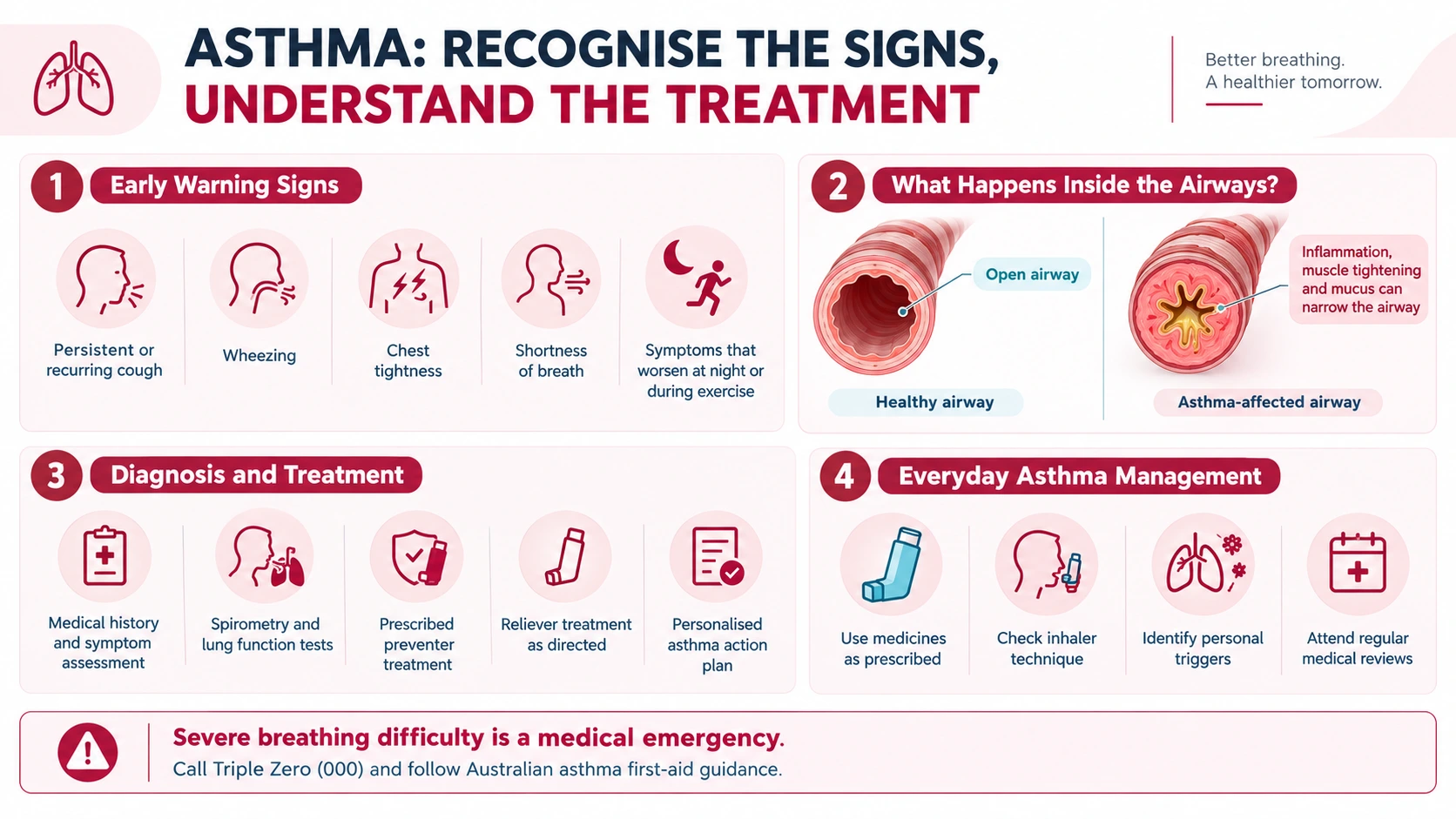
The main symptoms include wheezing, coughing, shortness of breath and chest tightness. Emergency warning signs can appear rapidly and include:
- Severe breathlessness
- Inability to speak in full sentences
- Bluish lips
- Symptoms that keep worsening even after using a reliever inhaler
Learning these signs in advance helps people respond before a situation turns critical.
💡 Asthma: Quick Answer
Asthma is a long-term condition that causes inflammation and narrowing of the airways, which can make breathing difficult.
- Early signs: Coughing, wheezing, chest tightness and shortness of breath.
- Diagnosis: Symptom assessment and lung function tests.
- Treatment: Prescribed inhalers and an individual asthma management plan.
- Emergency: Severe breathing difficulty requires urgent help. Call Triple Zero (000).
What Is Asthma?
Asthma is a chronic inflammatory lung condition that targets the airways. These breathing tubes are responsible for moving air into and out of the lungs. In a person with asthma, the tubes are always more sensitive than normal.
Three distinct changes happen inside the airways:
- The thin muscle around each tube tightens and squeezes, making the passage narrower
- The lining of the tubes becomes swollen and inflamed, reducing space for air
- The tubes can produce extra mucus, which further blocks airflow
Symptoms fluctuate because the airways respond differently depending on what is happening around the person. Someone might feel fine for days and then struggle to breathe after exposure to a trigger.
The time of day, the weather, the season, and the medicines taken all influence how the airways behave. Asthma is chronic, meaning it stays with a person even when they feel well.
There is currently no cure for asthma, although symptoms can often be controlled effectively with appropriate treatment. Understanding asthma symptoms and long-term control helps explain why ongoing management matters, even during periods when symptoms are absent.
What Are the Early Warning Signs of Asthma?
Early warning signs are the body first signals that the airways are becoming irritated. Catching these signs early gives a person time to act before symptoms become severe.
The warning signs differ from person to person and may not all appear together.
Persistent or recurring cough
A cough that keeps coming back or never fully clears up is often the very first sign of asthma. This cough tends to be dry and gets worse at night, early in the morning, or after physical activity.
A lingering cough with no other obvious explanation, particularly in someone who does not smoke, is strongly associated with asthma.
Wheezing during breathing
Wheezing is a high pitched whistling noise that comes from the chest while a person breathes. It occurs when air is forced through narrowed tubes and is often more noticeable when breathing out.
Wheezing is a well known asthma sign, but it does not by itself confirm the diagnosis because other breathing conditions can produce a similar sound.
Chest tightness
Chest tightness from asthma usually feels like pressure or squeezing across the front of the chest. Some people describe it as a heavy weight or a tight band wrapped around their ribs.
This happens because the muscles around the airways are contracting and the tubes are narrowed.
Shortness of breath
Shortness of breath is the sensation of not being able to draw enough air into the lungs. Many people compare it to trying to breathe through a narrow straw.
It can strike quickly after encountering a trigger or build up gradually over several hours or days.
Symptoms that worsen at night or during exercise
Asthma symptoms frequently intensify at night or in the early morning, which can disrupt sleep. A recurring nighttime cough may also indicate poor asthma control, so understanding asthma cough at night can help readers recognise when to seek medical advice.
Physical activity can also bring on symptoms, especially when the air is cold or dry.
This pattern is common enough that it has its own recognised category called exercise induced asthma.
Not everyone with asthma experiences every symptom. One person might only have a persistent cough while another deals with wheezing and breathlessness together.
The combination and severity of symptoms can also shift over time, which is why each person needs an individual assessment.
Common Asthma Triggers
Asthma triggers are anything that can set off symptoms or make existing symptoms worse. Every person has a unique set of triggers, and most people are affected by more than one.
Figuring out personal triggers is one of the most effective ways to keep asthma under control.
Respiratory infections
Colds, flu and other viral respiratory infections rank among the most frequent asthma triggers. A mild cold can inflame the airways enough to bring on symptoms in someone who is susceptible.
Viral infections are a leading cause of flare ups, particularly in children whose airways are smaller and more reactive.
Pollen, dust mites and other allergens
Airborne allergens such as grass pollen, dust mites, pet dander and mould spores can set off symptoms in people with allergic sensitivities.
These particles irritate the already sensitive airways and trigger inflammation. For many people, allergic reactions are a major driver of their asthma.
Smoke, air pollution and airborne irritants
Several airborne irritants can trigger asthma symptoms:
- Cigarette smoke and e cigarette vapour
- Bushfire smoke and vehicle exhaust
- General air pollution
- Strong chemical smells and cleaning fumes
- Airborne dust
These irritants can trigger symptoms even in people whose asthma is not connected to allergies.
Exercise and cold air
Physical activity is a well known trigger, especially when the air is cold and dry. Breathing in cold air during exercise causes the airways to narrow.
Many people can still exercise safely by warming up properly, following their asthma action plan, and using prescribed medicines before activity when advised.
Thunderstorm asthma and seasonal triggers in Australia
Thunderstorm asthma occurs when stormy weather bursts open pollen grains and scatters tiny allergen particles far and wide. This can trigger sudden and severe asthma symptoms in large numbers of people at the same time.
In Australia, the risk peaks during spring grass pollen season. Some people affected by thunderstorm asthma have never had asthma before, making awareness and preparation especially important.
How Is Asthma Diagnosed?
Diagnosing asthma means looking at the whole picture of a person symptoms, medical history and breathing test results. No single piece of evidence is enough on its own.
A doctor gathers information from multiple sources and pieces them together to reach an accurate conclusion.
Medical history and symptom assessment
The doctor begins by asking detailed questions about the symptom pattern. They want to know when symptoms happen, what brings them on, what makes them better, and how often they occur.
They also ask about family history of asthma, allergies and other breathing conditions. A history of fluctuating respiratory symptoms is essential, but history alone is not sufficient to confirm the diagnosis.
Spirometry and lung function testing
Spirometry is the primary breathing test used to check how well the lungs are working. The person blows into a device that measures how much air they can push out and how quickly.
The results show whether the airways are narrowed and help confirm the diagnosis by revealing variable expiratory airflow limitation. Doctors are encouraged to test before starting treatment because confirming the diagnosis becomes harder once symptoms improve.
Bronchodilator response testing
After the first spirometry reading, the person uses a reliever inhaler to open up the airways. The breathing test is then repeated.
If lung function improves significantly after using the reliever, this confirms the diagnosis of asthma provided the clinical history also fits. This step shows that the airway narrowing is reversible.
FeNO testing and allergy investigations when appropriate
A FeNO test measures the amount of nitric oxide in a person exhaled breath. Higher levels indicate more inflammation in the airways.
Allergy testing, done through skin prick tests or blood tests, may also be used to identify specific allergens that contribute to a person asthma.
Other conditions that may cause similar symptoms
Several other health conditions can produce symptoms that look like asthma:
- Chronic obstructive pulmonary disease (COPD): COPD and asthma can share symptoms, but they differ in their underlying causes and patterns of airflow limitation. Understanding COPD vs asthma helps explain why an accurate diagnosis matters.
- Vocal cord dysfunction
- Acid reflux
- Heart problems
- Ongoing respiratory infections
The doctor will consider these possibilities and may order additional tests to rule them out before confirming an asthma diagnosis.
Asthma Treatment Options
Asthma treatment is designed to control symptoms, prevent flare ups and lower the risk of serious attacks. Treatment is built around medicines delivered through inhalers.
Current guidelines recommend that all adults and adolescents receive treatment that includes an inhaled corticosteroid in some form.
Preventer medicines and airway inflammation
Preventer medicines work by reducing the inflammation and swelling inside the airways. Over time, they lower the sensitivity of the airways, leading to fewer symptoms and fewer flare ups.
Preventers typically contain low doses of inhaled corticosteroids and must be taken every day as prescribed, even when the person feels completely well. Skipping preventer doses is one of the most common reasons asthma stays uncontrolled.
Reliever medicines and symptom relief
Reliever medicines act fast by relaxing the tight muscles around the airways. They open the tubes within minutes and make breathing easier during a flare up or before exercise.
Current guidelines recommend an anti inflammatory reliever that combines two medicines in one inhaler. This type both eases symptoms and reduces the chance of serious flare ups.
Combination inhalers
Combination inhalers contain a corticosteroid to reduce inflammation along with a long acting medicine that keeps the airway muscles relaxed.
Putting both medicines into a single device makes treatment simpler and easier to follow. Many people achieve good day to day control with a low dose combination inhaler used regularly.
Add on treatments for severe asthma
Some people have severe asthma that stays uncontrolled even when they use high dose inhaled treatment correctly. For these individuals, a respiratory specialist may prescribe add on treatments.
Options can include:
- Extra inhaled medicines such as long acting bronchodilators
- Tablet medications
- Biologic medicines delivered by injection that target specific inflammatory pathways
Why treatment must be tailored to the individual
Asthma varies enormously from person to person in severity, triggers and response to medicines. Treatment decisions depend on the individual symptom pattern, lung function results, trigger profile and lifestyle.
A doctor adjusts the type and dose of medicines based on how well the asthma is controlled and whether flare ups are happening. What works well for one person may not suit another.
How to Manage Asthma Day to Day
Day to day asthma management means building consistent habits that keep symptoms controlled and flare ups rare. A steady routine has a major impact on quality of life and long term lung health.
Follow a written asthma action plan
A written asthma action plan is a personalised document created together with a doctor. It lists what medicines to take, when to take them, how to spot worsening symptoms, and what to do during a flare up.
Many action plans use a traffic light system:
- Green zone means symptoms are well controlled
- Yellow zone means symptoms are appearing and steps need to be taken
- Red zone means urgent action is needed
Every person with asthma should have an action plan and keep it somewhere easy to find.
Learn the correct inhaler technique and whether a spacer is needed
Using an inhaler correctly helps deliver medicine to the lungs. Different devices require different techniques, and errors can affect how much medicine reaches the airways. Understanding asthma inhalers can help readers learn about inhaler types, their use and the importance of correct technique.
A spacer is a hollow chamber that attaches to the inhaler and helps the medicine travel into the lungs more effectively. A doctor or pharmacist can check technique and advise whether a spacer would help.
Identify personal triggers and reduce exposure where possible
Once a person knows what triggers their asthma, they can take practical steps to reduce exposure:
- Stay indoors on high pollen days
- Keep smoke away from the home
- Manage dust mites in bedding
- Warm up carefully before exercise
Lowering trigger exposure reduces both how often symptoms appear and how severe they become.
Attend regular reviews and discuss worsening symptoms
Regular checkups with a doctor keep asthma management on track. During these visits, the doctor assesses control, adjusts medicines if needed, checks inhaler technique and updates the action plan.
Any change in symptoms should be raised at a review rather than waiting for things to get worse on their own.
Your Asthma Management Checklist
Simple habits can help you follow your treatment plan, recognise changes in symptoms and prepare for an asthma flare-up.
Follow your written asthma action plan. If someone has severe breathing difficulty or is experiencing a medical emergency, call Triple Zero (000) and follow Australian asthma first-aid guidance.
General educational information only. Your asthma action plan and treatment should be tailored to your needs.
What Happens During an Asthma Attack?
An asthma attack, also called a flare up, is when symptoms become noticeably worse than usual. The airways narrow further, inflammation increases, and breathing becomes much more difficult.
Attacks can develop within minutes or build up slowly over hours or days.
Signs of worsening symptoms
Early signs that an attack is building include:
- Needing the reliever inhaler more often than normal
- Waking at night with symptoms
- Increased coughing or wheezing
- Feeling more breathless during ordinary activities
These signs indicate that asthma control is slipping and the action plan should be followed right away.
Severe warning signs
Severe warning signs include:
- Marked difficulty breathing
- Being unable to speak in full sentences
- Breathing very rapidly
- Chest tightness that does not ease
- Little or no improvement after using the reliever inhaler
In children, extra signs can include the skin around the neck or ribs pulling inward with each breath and visible distress.
When Should You See a Doctor About Asthma?
Timing matters when it comes to seeing a doctor about asthma. Getting medical advice at the right moment can prevent symptoms from escalating and reduce the risk of a serious attack.
Recurring cough, wheezing or breathlessness
A cough, wheeze or breathlessness that keeps coming back should be checked by a doctor. These recurring symptoms may point to undiagnosed asthma or another breathing condition.
The earlier the assessment happens, the sooner treatment can begin and the better the long term outcome.
Symptoms disturbing sleep or restricting activities
When asthma symptoms interrupt sleep or stop someone from doing their normal activities, it is a clear sign the condition is not well controlled.
A doctor can review the current treatment and make changes so the person can rest properly and stay active.
Increasing reliance on reliever medication
Needing a reliever inhaler more and more frequently is a warning sign. It suggests the asthma is not adequately controlled by the current preventer treatment.
Anyone relying on a blue or grey reliever alone should see their doctor to discuss updated treatment options.
Symptoms that persist despite following the prescribed plan
If symptoms continue even when the prescribed treatment plan is being followed correctly, the plan may need adjusting. Persistent symptoms could also mean a different or additional condition is present.
A doctor can reassess the diagnosis, review triggers, and consider add on treatments or a referral to a specialist.
Conclusion
Recognising the early warning signs of asthma is the foundation of protecting respiratory health. Symptoms such as a recurring cough, wheezing, chest tightness and shortness of breath all warrant prompt medical attention.
Obtaining an accurate diagnosis matters because it sets the direction for everything that follows. Diagnosis combines a thorough medical history with breathing tests, ensuring the correct condition is identified and the right treatment is selected.
Following an individual management plan ties all the pieces together. A written asthma action plan, correct inhaler technique, regular medical reviews and appropriate medication allow most people to control their asthma and stay active.
⚕️ Medical Disclaimer
FAQ
Can asthma develop in adulthood?
Yes, asthma can begin at any age, including adulthood. Adult onset asthma can appear in people who never had breathing problems earlier in life.
Can asthma symptoms come and go?
Yes, asthma symptoms can fluctuate over time. One of the defining features of asthma is that symptoms come and go depending on triggers, the time of day, the season, and how well the condition is being managed.
Can exercise trigger asthma?
Yes, exercise is a common trigger. Physical activity, especially in cold or dry air, can cause the airways to narrow and produce symptoms.
Is asthma curable?
There is currently no cure for asthma. The condition is chronic and ongoing, even when symptoms are absent.
Can asthma be diagnosed with a single test?
No, asthma cannot be confirmed with a single test. Diagnosis requires a combination of medical history, symptom assessment and breathing tests such as spirometry.
Can asthma be managed with medication?
Yes, asthma can be managed effectively with medication. Preventer medicines reduce airway inflammation over time, while reliever medicines provide quick symptom relief during flare ups.

Years of Experience: 10+ years Education: B.Sc. in Biomedical Science (Monash University, Melbourne, Australia) PG Diploma in Health & Medical Communication (University of Sydney, Australia) Experience: Erica Wilson is an…