

Testicular Inflammation: Everything You Need to Know
By Erica Wilson, Nov-17-2024


 Dr. Arjun Srivastav Medical Reviewer (Pharm D)
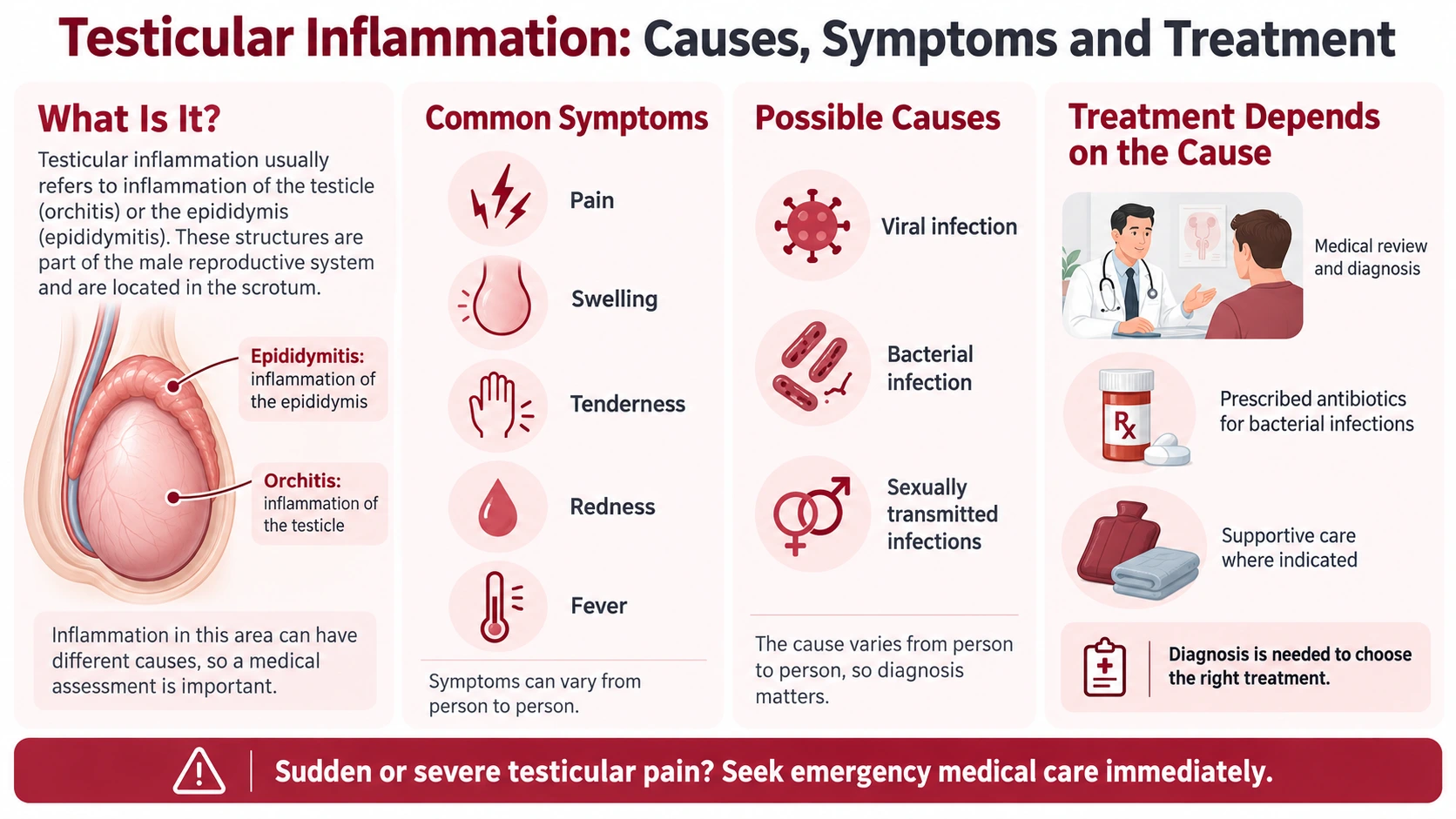
Testicular inflammation refers to swelling and irritation affecting one or both testicles. The medical term for inflammation of the testicle itself is orchitis. When the inflammation also involves the epididymis, the coiled tube that sits behind each testicle, the condition is called epididymo orchitis. The causes range from viral and bacterial infections to sexually transmitted infections, and the treatment approach depends entirely on what is driving the inflammation.
Sudden or severe testicular pain should be treated as a medical emergency. It can signal testicular torsion, a condition where the blood supply to the testicle becomes cut off, and urgent assessment is needed to protect the testicle from lasting damage.
🩺 Quick Answer: What Is Testicular Inflammation?
Testicular inflammation is swelling and irritation of one or both testicles. It is called orchitis and may result from viral or bacterial infections. When the epididymis is also inflamed, the condition is known as epididymo-orchitis.Common symptoms include testicular pain, tenderness, swelling and sometimes fever. Treatment depends on the underlying cause and may involve antibiotics for bacterial infections or supportive care for viral infections.
What Is Testicular Inflammation?
The testes are two oval shaped organs that sit inside the scrotum. They produce sperm and testosterone, the primary male sex hormone.
They produce sperm and testosterone, the primary male sex hormone. Changes in testosterone levels can have several causes, as explained in our article on low testosterone and hormonal imbalance in men.
Each testicle has an epididymis attached to its back surface. The epididymis is a tightly coiled tube where sperm mature and are stored before they travel further along the reproductive tract.
When the testicle becomes inflamed, the condition is called orchitis. When the epididymis becomes inflamed on its own, the term is epididymitis. When both structures are inflamed at the same time, doctors use the term epididymo orchitis.
These terms are closely related because the testicle and the epididymis sit right next to each other and share some of the same tissue pathways. Inflammation in one can easily spread to the other. However, they are not interchangeable because each points to a different anatomical structure and may have a different underlying cause.
What Causes Testicular Inflammation?
Several different factors can lead to testicular inflammation. Understanding the cause matters because it shapes the treatment plan.
Viral infections
The mumps virus is the most well known viral cause of orchitis. Mumps related orchitis can develop when the virus spreads from the salivary glands to the testicles. It tends to affect adults and older boys more often than young children.
Bacterial infections
Bacterial infections can reach the testicle or epididymis through several routes. Bacteria may travel from the urinary tract, the prostate, or the urethra. In older men and boys, urinary tract infections and prostate infections are common sources. In some cases, bacteria that normally live in the gut can also be involved.
Sexually transmitted infections
Sexually transmitted infections are a frequent cause in sexually active adults. Chlamydia and gonorrhoea are the two infections most commonly linked to epididymitis and epididymo orchitis. These infections can spread from the urethra into the epididymis and then into the testicle.
Urinary tract and prostate related infections
Infections of the urinary tract, bladder, or prostate can sometimes spread to the reproductive organs. Men who have an enlarged prostate, a urinary catheter, or a history of urinary tract infections may be more susceptible to this type of spread.
Injury and other conditions
A recent injury to the scrotum can cause swelling that looks similar to orchitis but is not an infection. Other conditions, such as fluid around the testicle, a varicocele, or a cyst on the epididymis, can also cause swelling. Testicular torsion, where the testicle twists on its cord, causes sudden severe pain and is a separate emergency rather than a form of orchitis.
When the cause is not clear
In some cases, the underlying cause of testicular inflammation is not immediately obvious. A healthcare professional may need to carry out further tests before the source of the problem becomes clear.
What Are the Symptoms of Testicular Inflammation?
The symptoms of testicular inflammation can vary from person to person. Some of the most common signs include:
- Pain or tenderness in one or both testicles. The pain may build up gradually or come on more quickly.
- Swelling of the affected testicle or the scrotum on that side.
- A feeling of warmth or redness over the scrotum.
- A heavy or dragging sensation in the scrotum.
- Fever, chills, or feeling generally unwell.
- Pain or a burning sensation during urination.
- Pain during ejaculation.
- Penile discharge or an unusual fluid from the penis, which may suggest a sexually transmitted infection.
Symptoms alone cannot confirm what is causing the inflammation. The same type of pain and swelling can come from bacterial orchitis, a viral infection, a sexually transmitted infection, or a non infectious condition. This is why a medical assessment is important rather than relying on symptoms alone to work out the cause.
Orchitis vs Epididymitis vs Testicular Torsion
A painful or swollen testicle should not automatically be diagnosed as inflammation. Three conditions often cause confusion because they share similar symptoms but require very different responses.
| Condition | Affected Structure | Typical Presentation | Required Response |
|---|---|---|---|
| Orchitis | The testicle itself | Swelling and pain in the testicle, often with fever; may follow a viral infection such as mumps | Medical assessment to identify and treat the underlying cause |
| Epididymitis | The epididymis, the tube behind the testicle | Gradual onset of pain and tenderness at the back of the testicle, often with swelling | Medical assessment and treatment of the underlying infection |
| Testicular torsion | The spermatic cord, which supplies blood to the testicle | Sudden, severe pain, often with swelling, nausea, and vomiting; the testicle may sit higher than usual | Immediate emergency assessment to restore blood flow and protect the testicle |
This comparison matters because testicular torsion is a time sensitive emergency. Mistaking it for a less urgent condition such as epididymitis can delay the treatment that the testicle needs. Any sudden or severe testicular pain should be assessed urgently, even if the initial assumption is that it might be inflammation.
How Is Testicular Inflammation Diagnosed?
Diagnosing testicular inflammation involves several steps that help identify both the condition and its underlying cause.
- Medical history and physical examination. A healthcare professional will ask about symptoms, their onset, sexual activity, recent infections, and any history of urinary problems. They will examine the scrotum and testicles.
- Urine tests and bacterial culture. A urine sample can reveal signs of infection and identify the specific bacteria responsible.
- STI testing. Where a sexually transmitted infection is suspected, swabs or urine tests can check for chlamydia and gonorrhoea.
- Ultrasound. A scrotal ultrasound uses sound waves to examine the testicle and epididymis. It can show swelling and assess blood flow to the testicle.
- Emergency assessment for suspected torsion. When torsion is a possibility, ultrasound and specialist assessment should not be delayed. The window for saving a twisted testicle is limited, and treatment is needed urgently.
How Is Testicular Inflammation Treated?
Treatment for testicular inflammation depends on the underlying cause. The right approach varies from one person to another.
Antibiotics for bacterial causes
When a bacterial infection is responsible, a healthcare professional will prescribe antibiotics. The choice of antibiotic depends on the type of bacteria identified and the likely source of the infection. It is important to complete the full course as prescribed, even if symptoms begin to improve before the medication is finished.
Supportive treatment for viral orchitis
Viral orchitis, such as that caused by mumps, does not respond to antibiotics. Treatment focuses on relieving symptoms while the body deals with the virus. Rest, fluids, and simple comfort measures are the mainstay of care.
Rest, scrotal support, and cold packs
Resting and wearing supportive underwear or a scrotal support can reduce discomfort. Cold packs applied to the scrotum, wrapped in a cloth to protect the skin, may help reduce swelling and ease pain.
Pain relief
Over the counter pain relief can help manage discomfort. Before taking any medication, it is important to check whether it is suitable for the individual, especially for people with other health conditions or those taking other medicines.
Treatment of an underlying STI
When a sexually transmitted infection is the cause, both the infection and any sexual partners may need assessment and treatment. This helps prevent reinfection and further spread.
Why leftover antibiotics and self prescribed treatment are unsuitable
Using leftover antibiotics from a previous illness or self prescribing treatment is not advisable. The medication may not be appropriate for the current infection, and taking the wrong antibiotic can allow the infection to continue or contribute to antibiotic resistance. Treatment should always be guided by a healthcare professional.
How Long Does Testicular Inflammation Take to Heal?
The recovery time for testicular inflammation varies with the cause and how severe it is. Bacterial infections treated with the right antibiotic often begin to improve within a few days of starting treatment. Viral orchitis may take longer to settle.
It is important to distinguish between early improvement and complete resolution. Pain may ease fairly quickly, but swelling can take longer to go down fully. Some men notice that tenderness or mild swelling lingers for several weeks after the main symptoms have passed.
Persistent symptoms, swelling that does not improve, or pain that gets worse rather than better all warrant reassessment. A healthcare professional can check whether the treatment is working as expected or whether a different approach is needed.
Can Testicular Inflammation Affect Fertility?
Testicular inflammation can sometimes affect reproductive health, particularly when the condition is severe or affects both testicles. Men who also have concerns about sexual health may find our article on natural approaches to male sexual enhancement useful for understanding the broader topic.
It is important not to overstate how often this happens. Many men who experience orchitis or epididymo orchitis recover fully without any lasting effect on their fertility. The risk is higher when the inflammation is severe, bilateral, or left untreated for a long time.
Persistent swelling, changes in the size of a testicle, or any concern about fertility are good reasons to seek medical review. A healthcare professional can assess the situation and, where appropriate, arrange further tests to check on testicular function and sperm health.
When Should You Seek Medical Help?
- Immediate emergency assessment. Sudden or severe testicular pain, or sudden swelling that appears quickly, needs emergency care. These signs can indicate testicular torsion, and time is critical.
- Urgent assessment. Testicular pain that comes with nausea, vomiting, or feeling significantly unwell should be assessed urgently. These symptoms may point to a serious condition that needs prompt attention.
- Prompt medical review. New lumps, persistent discomfort, or ongoing swelling that does not settle should be checked by a healthcare professional. Even when symptoms seem mild, a proper assessment helps identify the cause and guide the right treatment.
Can Testicular Inflammation Be Prevented?
Prevention is not always possible, but some measures can reduce the risk.
- Mumps vaccination as advised by a healthcare professional helps protect against mumps related orchitis.
- Safer sex practices and regular STI testing when indicated can lower the risk of sexually transmitted causes.
- Medical review for recurring urinary symptoms or infections can help address problems before they spread.
- Appropriate protective equipment during contact sports helps reduce the chance of injury to the scrotum.
🩺 Medical Disclaimer
This article is for general informational purposes only and does not replace professional medical advice, diagnosis, or treatment. Testicular pain or swelling requires appropriate medical assessment. Sudden or severe testicular pain needs immediate emergency care.
FAQ
Can testicular inflammation go away on its own?
Some mild cases may improve without treatment, particularly when the cause is viral and the symptoms are minor. However, relying on the inflammation to clear up on its own is risky. Without proper assessment, the underlying cause may go untreated, and complications can develop. Medical review is always the safer approach.
Can you develop orchitis without an STI?
Yes. Orchitis can follow a viral infection such as mumps. It can also result from a bacterial infection that spreads from the urinary tract or the prostate. Sexually transmitted infections are one possible cause, but they are not the only one.
Is testicular inflammation contagious?
The inflammation itself is not contagious. However, if the underlying cause is a sexually transmitted infection, that infection can be passed on to a sexual partner. The infection, not the inflammation, is what may spread.
Can it affect one testicle or both?
Testicular inflammation can affect one testicle or both. Mumps related orchitis more often affects both sides, while bacterial and sexually transmitted causes more commonly involve one side. Either way, any swelling or pain needs assessment.
Can testicular swelling return after treatment?
Swelling can return if the original infection was not fully treated, if a new infection develops, or if there is an underlying condition that has not been addressed. Recurrent swelling should always be reviewed by a healthcare professional to identify the reason and guide further care.

Years of Experience: 10+ years Education: B.Sc. in Biomedical Science (Monash University, Melbourne, Australia) PG Diploma in Health & Medical Communication (University of Sydney, Australia) Experience: Erica Wilson is an…

