





 Ezra Allen
Clinical Summary: Adaferin Gel 0.1% is an advanced topical retinoid formulated with 0.1% w/w adapalene in an aqueous, non-greasy gel base. Manufactured by Galderma, the original pharmaceutical developer of the innovator brand Differin – Adaferin Gel is clinically indicated for the once-daily topical treatment of mild-to-moderate acne vulgaris. By binding selectively to retinoic acid receptors in the skin, it unclogs congested pores, stops new blackheads and whiteheads from forming, speeds up cellular turnover, and calms redness without the heavy peeling common to older retinoids.
Product Specifications
| Clinical & Commercial Parameter | Formulation Details |
| Product Trade Name | Adaferin Gel / Adaferin Gel 0.1% |
| Active Pharmaceutical Ingredient (API) | Adapalene USP (0.1% w/w / 1 mg per gram) |
| Innovator Reference Brand | Differin Gel 0.1% |
| Pharmacological Class | Third-Generation Synthetic Retinoid / RAR-/ Agonist |
| Delivery Vehicle | Lightweight, alcohol-free, fragrance-free aqueous gel |
| Standard Packaging | 15 g aluminium collapsible tube |
| Primary Route | Cutaneous (Topical application only) |
| Australian Schedule | Schedule 3 / Schedule 4 (Pharmacist Only / Prescription Only depending on pack format) |
What is Adaferin Gel 0.1%?
Adaferin Gel 0.1% is a third-generation topical retinoid designed specifically to overcome the tolerability issues associated with first-generation retinoids like tretinoin.
The active ingredient, adapalene, is a synthetic naphthoic acid derivative that remains highly stable when exposed to light and oxygen. Unlike older acne formulations, adapalene does not break down in sunlight and can be used safely alongside benzoyl peroxide without losing its potency. Formulated in a clean, water-based gel vehicle by dermatology specialist, Adaferin delivers the active medication directly into the pilosebaceous unit (the pore) while minimizing irritation to the surrounding skin surface.
What is Adaferin Gel 0.1 Used For?
Clinicians prescribe Adaferin Gel 0.1% for several common dermatological concerns:
- Comedonal Acne (Blackheads & Whiteheads): It normalizes the shedding of dead skin cells lining the pores, preventing sebum and keratin plugs from hardening into open comedones (blackheads) or closed comedones (whiteheads).
- Inflammatory Acne Lesions: Calms red, inflamed pimples, papules, and pustules by inhibiting inflammatory immune cell pathways directly within the pore.
- Preventing New Breakouts (Maintenance Therapy): Keeps microcomedones (the microscopic precursors to all acne spots) clear before they can turn into visible blemishes.
- Post-Inflammatory Hyperpigmentation (PIH): Accelerates epidermal cell turnover, helping to fade persistent brown and dark marks left behind after acne spots heal.
- Keratosis Pilaris & Rough Skin Texture (Off-Label): Smooths localized bumpy, rough skin caused by follicular keratin plugs on the face and upper arms.
How Adaferin Gel Works: Mechanism of Action
Acne starts deep within the pore when dead skin cells stick together, trapping oil and creating an environment where Cutibacterium acnes bacteria thrive.
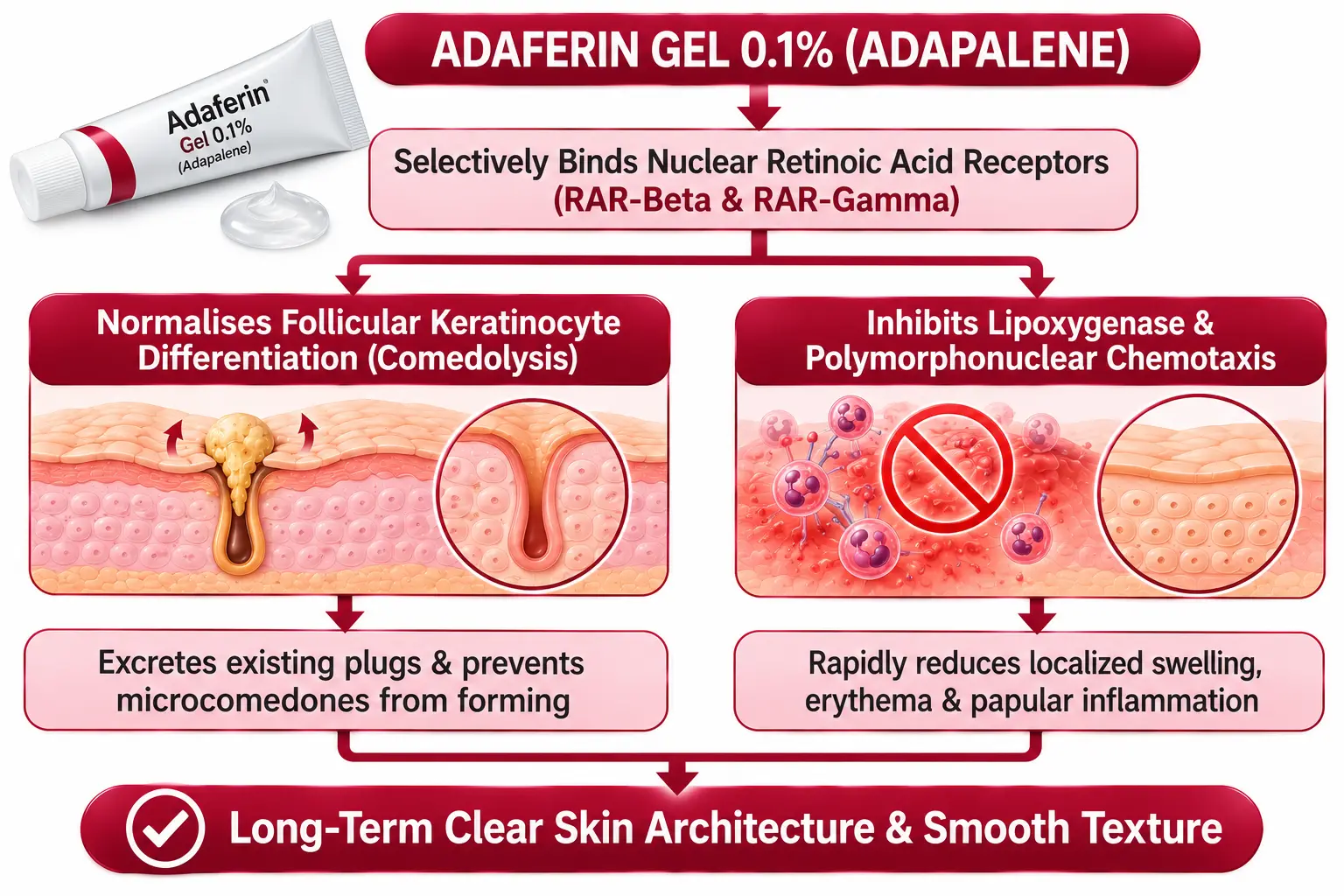
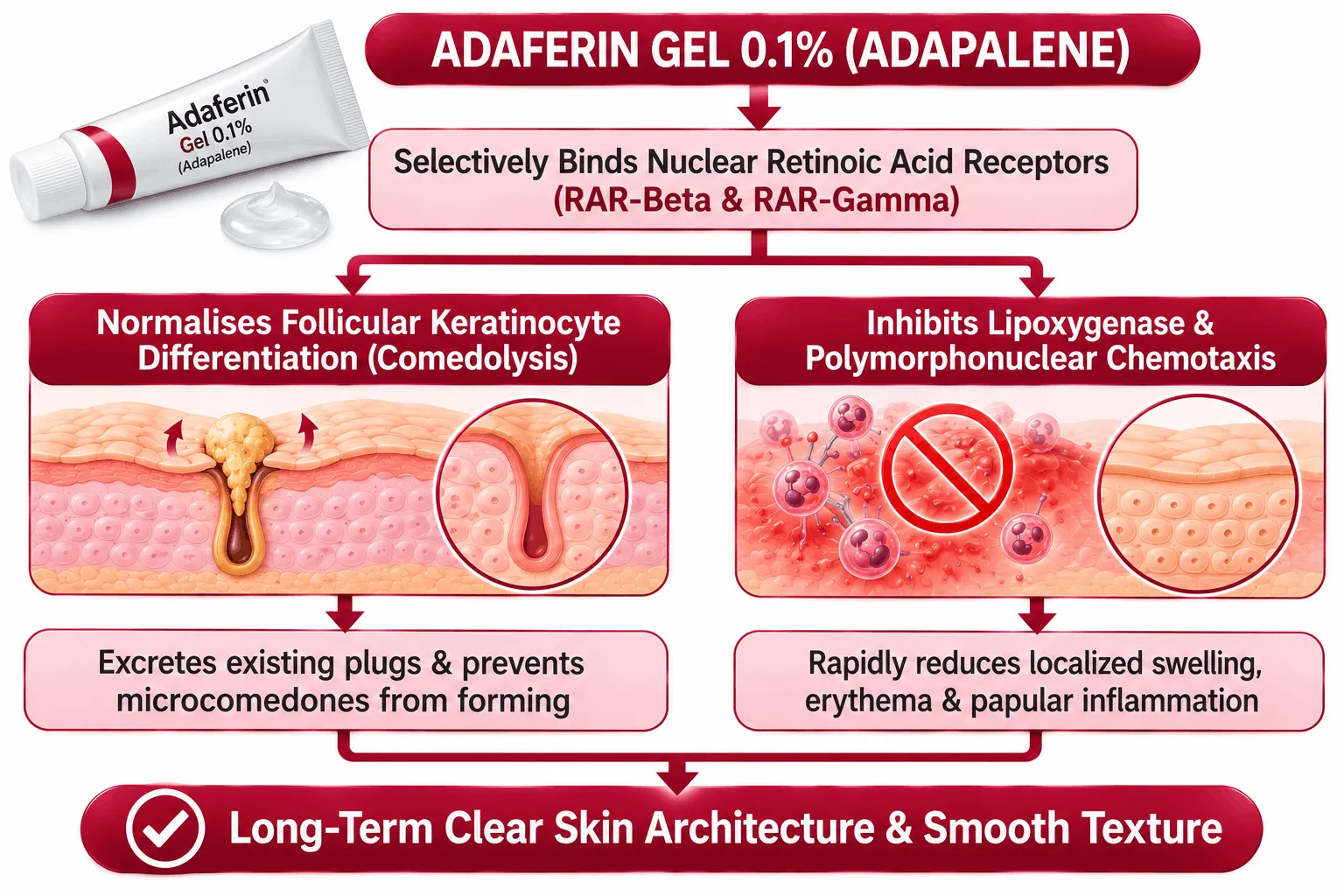
- Selective Receptor Binding: Adapalene targets RAR- and RAR- receptors located within the cell nuclei of the epidermis. By avoiding the RAR- receptor, it causes significantly less peeling, burning, and redness than older, non-selective retinoids like tretinoin.
- Reversing Microcomedones: It signals sticky epithelial cells in the hair follicle to loosen and shed normally, clearing existing plugs and preventing new blockages from forming.
- Direct Anti-Inflammatory Action: Adapalene stops inflammatory white blood cells from gathering at the site of a clogged pore and suppresses inflammatory pathways, calming redness and swelling before a pimple can worsen.
Is Adaferin Gel a Steroid?
No, Adaferin Gel is NOT a steroid. It contains zero corticosteroids or anabolic hormones.
- Retinoid vs. Corticosteroid: Adaferin Gel is a synthetic topical retinoid derived from Vitamin A. Corticosteroids (such as hydrocortisone, betamethasone, or clobetasol) are anti-inflammatory steroids used for eczema and psoriasis, but they can actually cause or worsen acne (steroid-induced acne) and thin the skin over time.
- No Steroid Side Effects: Because Adaferin is not a steroid, it does not cause skin atrophy (skin thinning), spider veins (telangiectasia), stretch marks, hormonal dependency, or topical steroid withdrawal syndrome (TSW).
- Safe for Long-Term Maintenance: Unlike topical steroids, which should only be used for short periods, Adaferin Gel 0.1% is designed and clinically approved for continuous, long-term use to keep acne from returning.
Can Adaferin Gel Remove Dark Spots?
Yes, Adaferin Gel 0.1% helps fade dark spots, specifically post-inflammatory hyperpigmentation (PIH).
How It Improves Dark Marks
- Accelerating Cell Turnover: After an acne spot heals, excess melanin pigment often remains trapped in the upper skin layers, creating a stubborn brown or dark mark. Adapalene speeds up cellular renewal, helping shed pigmented surface cells faster and bringing fresh, evenly pigmented cells to the surface.
- Dispersing Melanin: Continuous retinoid use promotes a more even distribution of melanin throughout the epidermis, gradually brightening the skin tone.
- Preventing Future Spots: By stopping new inflammatory acne breakouts before they start, it breaks the cycle of fresh dark marks forming.
Important Medical Clarification: PIH vs. Atrophic Scars
- Post-Inflammatory Hyperpigmentation (Flat, Dark Spots): Responsive to Adaferin Gel over 8 to 16 weeks of consistent use.
- Deep, Indented Scars (Ice-pick, Boxcar, Rolling Scars): True atrophic acne scars are caused by permanent collagen loss beneath the skin. Topical creams and gels cannot rebuild this lost structural tissue. Deep indented scars require in-clinic dermatological treatments, such as microneedling, chemical peels, subcision, or laser resurfacing.
How to Use Adaferin Gel 0.1%: Step-by-Step Instructions
Topical retinoids work best when applied correctly to minimize initial skin irritation:
Application Rules
- Apply at Night Only: Use once daily during your evening skincare routine.
- Not a Spot Treatment: Do not dab large clumps onto individual spots. Spread a thin, invisible layer across the entire area prone to breakouts to prevent new spots from forming.
- Keep Away from Sensitive Areas: Do not apply directly to the corners of your nose, close around the eyes, or directly onto the lips.
- Start Slowly: For the first two weeks, apply it every other night or two nights a week. Once your skin builds tolerance, increase to every night.
The 12-Week Retinoid Timeline: Managing the Purge
Weeks 1 to 3: The Retinoid Adjustment & “Purge”
- Mild skin dryness, peeling around the mouth, and temporary flaking.
- Some underlying, microcomedones may surface as small whiteheads (the “purge”).
- Skin may feel tighter or more sensitive.
Weeks 4 to 8: Stabilization & Lesion Reduction
- The purge resolves as cellular turnover balances out.
- Active blackheads and inflamed pimples begin clearing noticeably.
- Skin texture feels smoother to the touch.
Weeks 9 to 12+: Long-Term Clearance & Tone Correction
- Significant reduction in active breakouts and clogged pores.
- Post-inflammatory dark marks begin to fade.
- Pores look visibly cleaner, with clearer overall skin clarity.
Side Effects & Important Safety Precautions
Most side effects are localized, mild, and reflect the skin’s natural adjustment to increased cell turnover.
Common, Manageable Reactions (Weeks 1 to 4)
- Retinoid Dermatitis: Mild redness, localized peeling, flaking, or a slight stinging sensation upon applying moisturizer.
- Increased Sun Sensitivity (Photosensitivity): Retinoids thin the outermost dead layer of the stratum corneum, making your skin more susceptible to sunburn. Daily broad-spectrum SPF 50+ sunscreen is mandatory every morning.
- Temporary Dryness: Counteract this by using ceramides, hyaluronic acid, or squalane moisturizers.
What to Avoid While Using Adaferin Gel
- Harsh Scrubs & Strong Exfoliants: Avoid physical facial scrubs, high-strength salicylic acid (BHA), glycolic acid (AHA), or astringents on the same nights you use Adaferin to prevent damaging your skin barrier.
- Waxing: Do not wax areas of facial skin where you apply adapalene, as this can pull off delicate epidermal tissue.
Absolute Contraindications & Pregnancy Warning
- Pregnancy: While systemic absorption through the skin is minimal, Adaferin Gel must NOT be used during pregnancy or if you are actively planning to conceive, in line with precautions for all topical retinoids. Discontinue use immediately if you suspect you are pregnant.
- Broken or Eczematous Skin: Do not apply to open cuts, active eczema flares, or severe sunburns.
Is Adapalene Gel Available in Australia?
Yes, adapalene gel is available in Australia, but with specific pharmacy scheduling rules.
- Scheduling in Australia: Under the Therapeutic Goods Administration (TGA) Poisons Standard, adapalene has historically been scheduled as a Schedule 4 (Prescription Only Medicine). Certain single-ingredient dermal preparations containing 0.1% adapalene (such as Differin) have been reclassified under Schedule 3 (Pharmacist Only Medicine) for acne treatment, allowing direct supply by a pharmacist without a prior doctor’s script following a clinical consultation.
- Domestic Pharmacy Stock Shortages: Australian patients frequently encounter stock shortages or high retail pricing for domestic brands in local chemist chains.
- Personal Importation Under the TGA Scheme: Australian consumers can legally purchase high-quality imported brands like Adaferin Gel 0.1% through licensed digital pharmacies via the TGA Personal Importation Scheme, which allows you to import up to a 3-month supply per order for personal medical use.
Where Can I Buy Adaferin Gel 0.1%?
You can purchase authentic Adaferin Gel 0.1% (Adapalene 0.1% w/w 15g tube) directly from AustraliaRxMeds:
- Direct Online Ordering: Order securely online at AustraliaRxMeds in factory-sealed, genuine packaging.
- Packaging & Delivery: Each order is supplied in a 15 g tube with tracked international shipping and protective packaging to safeguard product stability.
- Sourcing Assurance: Sourcing through AustraliaRxMeds provides access to genuine pharmaceutical-grade adapalene manufactured under strict international Good Manufacturing Practices (GMP) at accessible pricing compared to domestic pharmacy alternatives.
Medical References
-
Galderma Laboratories. Differin (adapalene) Gel 0.1%: Full Prescribing Information and Safety Monograph. U.S. FDA AccessData.
-
Therapeutic Goods Administration (TGA). Scheduling delegate’s final decisions: Adapalene Schedule 3 and Schedule 4 entries. Australian Government Department of Health and Aged Care.
-
Thielitz, A., et al. (2008). Topical retinoids in acne: An evidence-based review with a focus on adapalene. American Journal of Clinical Dermatology, 9(6), 369–381.
-
Weiss, J. S., et al. (2007). Adapalene for the treatment of acne vulgaris: A comprehensive review of efficacy and safety. Journal of Drugs in Dermatology (JDD), 6(6), 611–618.
-
American Academy of Dermatology (AAD). Guidelines of care for the management of acne vulgaris: Topical retinoid recommendations. Journal of the American Academy of Dermatology (JAAD).
FAQs
What is Adaferin Gel 0.1 used for?
Adaferin Gel 0.1 is used for the treatment of mild-to-moderate acne vulgaris on the face, chest, or back. It unblocks clogged pores, clears blackheads and whiteheads, reduces inflamed red pimples, and helps fade the dark marks left behind after breakouts.
Is adapalene gel available in Australia?
Yes, adapalene gel is available in Australia. Depending on the brand and pack format, it is classified under Schedule 3 (Pharmacist Only) or Schedule 4 (Prescription Only) by the TGA. Australians can also import genuine generic brands like Adaferin Gel 0.1% online for personal use under the TGA Personal Importation Scheme.
Can Adaferin Gel remove dark spots?
Yes, Adaferin Gel can remove post-inflammatory dark spots (hyperpigmentation) caused by old acne breakouts. By accelerating epidermal cell renewal, it helps shed melanin-stained surface skin cells faster. However, it cannot repair deep, structural, pitted acne scars, which require professional in-clinic procedures.
Is Adaferin Gel a steroid?
No, Adaferin Gel is not a steroid. It contains adapalene, a synthetic retinoid derived from Vitamin A. It does not contain corticosteroids, does not cause skin thinning, and is safe for long-term daily use to keep acne from recurring.
How long does it take for Adaferin Gel 0.1% to work?
Most patients begin seeing noticeable improvements in skin texture and fewer active spots within 4 to 8 weeks of daily use. Maximum therapeutic benefits, including clear pores and the fading of dark marks, are typically achieved after 12 weeks of consistent application.
What should I do if my skin starts peeling or flaking?
Mild peeling and dryness are normal during the first 2 to 3 weeks as your skin adjusts to the retinoid. Reduce your application frequency to every other night, apply a gentle moisturizer before and after your gel (the "sandwich method"), and avoid using harsh scrubs or strong chemical exfoliants.