

Do You Want To Be More Sexually Active?
By Erica Wilson, Mar-31-2024


 Dr. Arjun Srivastav Medical Reviewer (Pharm D)
Many people reach a point where they want to feel more connected, more interested or simply more satisfied in their intimate life. That wish is common and completely normal.
Being sexually active means different things to different people, and there is no single definition that fits every relationship or every individual. Stress, tiredness, relationship dynamics, overall health and personal circumstances can all influence sexual experiences in ways that shift over time.
The goal of this article is to offer practical changes that may help, while keeping one important point clear from the start. There is no ideal frequency for being sexually active that applies to everyone, and comparing yourself to an imagined standard rarely helps.
Quick Answer
Want to be more sexually active? Focus on building intimacy, communicating openly with your partner, managing stress, getting enough sleep and staying physically active. Addressing ongoing sexual difficulties with a healthcare professional may also help.
🌿 Healthy habits
🤝 Mutual intimacy
What Does Being More Sexually Active Mean?
Before looking at ways to improve your sex life, it helps to understand what the phrase actually refers to. Being sexually active, sexual desire and physical arousal are three distinct things.
Being sexually active covers any intimate behaviour you and a partner choose to share. Sexual desire is the interest or wish to engage in that activity. Physical arousal is the body responding to stimulation. A person can feel desire without arousal, or experience arousal without particular desire, and both situations are normal.
Intimacy can include affection, gentle touch, closeness and many other mutually comfortable activities that do not all lead to sex. Personal preferences and relationship circumstances shape what being sexually active means for each person.
Some couples value frequent physical closeness, while others feel fulfilled with less. Frequency alone does not determine whether a sex life is healthy or satisfying. What matters is that the experience feels comfortable and mutually agreeable for the people involved.
Sexual activity and desire can vary considerably between individuals. Understanding discussions around men or women are more sexually active also requires looking beyond general assumptions about gender.
What Can Affect Your Sexual Activity?
Many factors affecting sexual activity sit outside the bedroom, and understanding them can make a real difference for anyone who wants to be more sexually active. The sections below outline the main influences without turning this into a lengthy guide.
Stress, Tiredness and Sleep
Daily pressures can drain energy and attention, leaving little room for intimacy. When work deadlines, financial worries or family responsibilities weigh heavily, the mind often stays occupied even during quiet moments.
Poor sleep adds to the problem, because tiredness reduces both motivation and the ability to stay present. Feeling rested and relaxed creates a better foundation for staying sexually active, while exhaustion tends to push intimacy down the list of priorities.
Relationship and Emotional Factors
The emotional climate between partners plays a large role. Open communication helps each person feel heard and understood, while unresolved disagreements can create distance that shows up physically as well as emotionally.
A strong emotional connection often supports physical closeness, and differences in expectations can quietly build frustration when left unspoken. Recognising these patterns gives couples a starting point for change.
Recognising unhealthy relationship patterns can also help partners understand emotional distance, communication problems and challenges with intimacy.
Physical Health and Medicines
Overall health influences sexual function in various ways. Hormonal changes, long term health conditions and physical discomfort can all contribute to shifts in desire or response for people who are sexually active.
Certain medicines may also play a part, including some treatments for blood pressure, mood or other ongoing concerns. Noticing when changes line up with starting or adjusting a medication can be useful information to share with a prescriber. For a broader understanding of libido in men and women, it also helps to consider how physical health, emotions and personal circumstances can influence sexual desire.
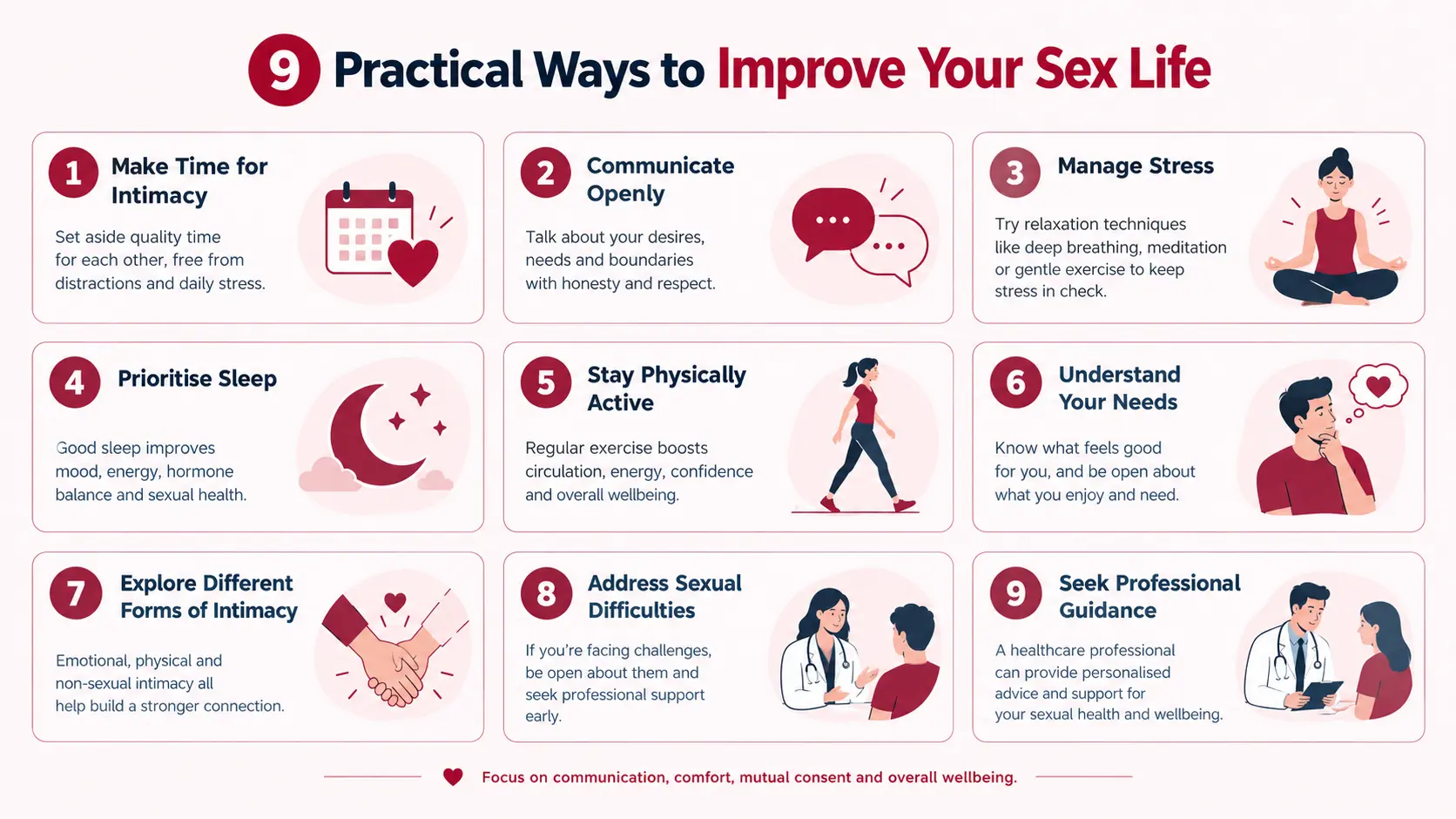
9 Practical Ways to Improve Your Sex Life
The following suggestions focus on realistic changes rather than quick fixes. Each one addresses a different part of the picture for anyone looking to become more sexually active, from communication to lifestyle habits.
1. Make Time for Intimacy
Setting aside relaxed time together creates opportunities for connection without turning sex into an obligation. A quiet evening, a walk or simply sitting without distractions can open space for closeness to develop naturally.
The aim is to remove pressure, not to schedule performance. When both people feel unhurried, being sexually active becomes something to enjoy rather than a task to complete.
2. Talk Openly About Sexual Needs
Honest conversation forms the basis of a satisfying intimate life. Discussing preferences, boundaries, comfort and expectations helps both partners understand each other without guessing.
These talks work best when they happen outside the bedroom, at a calm moment, and when both people feel safe raising concerns. Respectful communication reduces misunderstandings and builds trust over time.
3. Manage Stress and Prioritise Sleep
Reducing daily pressure supports overall wellbeing and can free up mental space for intimacy. Realistic steps include:
- Winding down before bed
- Keeping a consistent sleep routine
- Finding small ways to release tension during the day
Some people find short walks, breathing exercises or simply limiting evening screen time helpful. Better rest does not guarantee change, but it creates conditions where being sexually active feels more possible.
4. Stay Physically Active
Regular movement supports general health, energy levels and cardiovascular fitness. Walking, swimming, cycling or any activity you enjoy can become part of a routine that leaves you feeling more energised.
Physical activity contributes to overall wellbeing, and feeling well often makes intimacy feel more appealing. The connection is indirect rather than guaranteed, which is worth keeping in mind.
For men experiencing erection-related difficulties, certain lifestyle changes may also support overall sexual health. Understanding lifestyle changes to overcome ed can provide additional context.
5. Understand What Helps You Feel Interested in Sex
Recognising personal preferences and emotional needs is a valuable step for anyone who wants to be more sexually active. For some people, interest grows from feeling emotionally close to a partner.
For others, a particular setting, time of day or form of affection matters more. Paying attention to the circumstances that tend to accompany interest can reveal useful patterns. Everyone is different, and learning what works for you is a personal process.
Sexual experiences and responses can differ between individuals, and some discussions also examine differences between male and female sexuality.
6. Explore Different Forms of Intimacy
Intimacy does not always mean sex. Cuddling, massage, holding hands and other forms of affection can all deepen closeness and feel rewarding in their own right.
Exploring these options takes pressure off the idea that every intimate moment must lead somewhere specific. Couples who expand their definition of closeness often find that being sexually active follows more naturally when the expectation lifts.
7. Address Discomfort or Sexual Difficulties
Persistent pain, difficulty achieving or maintaining an erection or other physical concerns deserve attention rather than silence. Ignoring discomfort rarely makes it disappear and can lead to avoidance over time.
Speaking with a healthcare professional opens the door to identifying the cause and discussing options. Acknowledging the issue is a practical first step, not a sign of failure.
8. Review Lifestyle Habits and Medicines
Everyday habits can influence how you feel and how sexually active you are able to be. Alcohol, smoking and recreational substances may affect energy, mood and physical response in various ways.
Some prescribed medicines can also contribute to changes in sexual function. If you suspect a medication is involved, do not stop taking it on your own. Speak with the prescriber, who can advise on possible adjustments or alternatives suited to your situation.
9. Seek Professional Guidance When Needed
Sometimes the most useful step is to ask for help. A GP or another qualified healthcare professional can help identify underlying causes and discuss suitable options based on your circumstances.
Professional guidance is not a last resort. It is a practical choice when changes persist, cause distress or seem linked to a specific health concern.
What If You and Your Partner Have Different Sex Drives?
Different sex drives in relationships are more common than many people realise. One partner may wish to be sexually active more often than the other, and this difference does not automatically mean something is wrong. The way couples handle the gap matters more than the gap itself. When differences in sexual expectations begin affecting emotional wellbeing, understanding the emotional impact of a sexless relationship may offer useful context.
Discussing differences without blame or pressure is a good starting point. Each person can share what they feel and what they need, while the other listens with patience. The aim is not to convince but to understand.
From there, couples can build closeness through mutually comfortable activities and agree on expectations that respect both people. Consent and personal boundaries remain important at every stage. No one should feel pressured into activity they are not comfortable with, and frequency should never come at the cost of genuine willingness.
When differences cause ongoing tension or distress, relationship counselling or professional support can help both people navigate the conversation in a constructive way.
Is Low Libido the Same as Erectile Dysfunction?
These two terms describe different concerns, though they sometimes appear together. Low libido refers to a reduced interest in being sexually active. Erectile dysfunction describes difficulty achieving or maintaining an erection sufficient for sexual activity.
A person can experience one without the other, and the distinction matters because the appropriate response depends on which concern is present.
Treatment depends on the underlying issue, and medicines used for erectile dysfunction do not automatically increase the wish to be sexually active. Addressing desire involves different considerations, often related to emotional wellbeing, relationship dynamics or overall health.
Understanding this difference can guide you toward the right kind of support and help you ask more useful questions when speaking with a professional.
When Should You Speak to a Healthcare Professional?
Certain signs are worth discussing with a qualified healthcare professional rather than leaving them unattended. These include:
- Persistent or distressing changes in the wish to be sexually active that last for some time
- Ongoing erectile difficulties or concerns about arousal
- Pain during sexual activity
- Symptoms that appear after starting or changing a medicine
- Other physical or emotional changes that affect sexual wellbeing
An assessment can help identify contributing factors and point toward appropriate care. Speaking with a professional is a constructive step, and many concerns become easier to address once they are understood. Persistent concerns affecting women’s sexual wellbeing may warrant further assessment, including consideration of female sexual dysfunction.
The aim is not to diagnose yourself but to gather information and guidance from someone qualified to help.
Final Thoughts
Improving your intimate life is about comfort, communication, health and personal preferences rather than reaching a particular frequency. There is no universal standard for being sexually active, and what feels right varies from person to person.
If you experience persistent changes or difficulties, seeking appropriate professional advice is a practical and worthwhile step.
Medical Disclaimer
FAQ
How Can I Become More Sexually Active Naturally?
Prioritising rest, managing stress, staying physically active and communicating openly with a partner all create an environment where closeness feels more possible. No particular food or supplement guarantees increased desire, so approach the topic with patience rather than expecting instant results.
Does Exercise Help Improve Your Sex Life?
Regular physical activity supports general health, energy and cardiovascular fitness, all of which contribute to overall wellbeing. Feeling healthier often makes intimacy feel more appealing, though the connection to sexual desire varies from person to person.
Can Stress Reduce Interest in Sex?
When the mind is preoccupied, intimacy often feels less appealing, and tiredness reduces the mental space available for closeness. Finding ways to manage pressure and create calmer moments can help restore a sense of balance that supports connection.
Is It Normal to Want Sex More Often Than Your Partner?
Yes, differences in desire are common and do not indicate a problem. Honest communication, mutual respect and a willingness to find comfortable ground together matter most, with consent and willingness guiding every decision.
Can Medication Help With Sexual Difficulties?
Some treatments address specific conditions, such as erectile dysfunction, and can be discussed with a healthcare professional. The right approach depends on the particular concern, and medication is one option among several suited to different underlying causes.

Years of Experience: 10+ years Education: B.Sc. in Biomedical Science (Monash University, Melbourne, Australia) PG Diploma in Health & Medical Communication (University of Sydney, Australia) Experience: Erica Wilson is an…