





 Dr. Arjun Srivastav
Overview
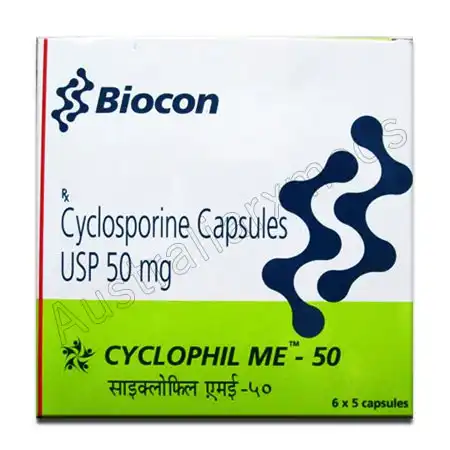
Cyclophil ME 50 mg contains cyclosporine, an immunosuppressant prescribed to help prevent organ transplant rejection and manage certain immune-related conditions under specialist medical supervision.
Cyclosporine ME should be used only under the supervision of a doctor experienced in immunosuppressive therapy because it can affect kidney function, blood pressure, infection risk, and other aspects of health. The 50 mg strength is supplied as an oral soft gelatin capsule.
Important: Cyclosporine requires careful medical supervision and monitoring. Do not start, stop or change the dose of Cyclophil ME 50 mg without advice from your treating doctor.
Cyclophil ME 50 mg at a glance
| Product detail | Information |
|---|---|
| Brand | Cyclophil ME |
| Strength | 50 mg |
| Active ingredient | Cyclosporine |
| Medicine class | Immunosuppressant |
| Route | Oral |
| Main role | Suppression of excessive immune activity |
What Is Cyclophil ME 50 mg?
Cyclophil ME 50 is a brand of cyclosporine made as a microemulsion soft gelatin capsule. The “ME” refers to the microemulsion formulation, which is designed to form a fine emulsion in the gut for more consistent absorption than older cyclosporine products. Each Cyclophil ME 50 mg capsule contains exactly 50 mg of cyclosporine as its active ingredient.
Cyclosporine is classified as an immunosuppressant, a medicine that deliberately reduces the activity of the immune system. In simple terms, the immune system normally defends the body against infections and foreign invaders. Immunosuppression tones down that defense so the body does not overreact, for example, by attacking a newly transplanted organ or by driving inflammation in certain autoimmune diseases.
Because immunosuppression lowers the body’s natural defenses and because cyclosporine can affect the kidneys and blood pressure, treatment is always monitored. Your doctor will order regular blood tests to check drug levels, kidney function, blood pressure, and other markers, and may adjust your dose based on the results.
How Does Cyclophil ME 50 mg Work?
The action of Cyclophil ME is based on the inhibition of a certain part of the immune reaction.
Cyclosporine is an immunosuppressive drug that acts as an inhibitor of calcineurin, an enzyme responsible for activation of T-cells. The latter is one of the immune system cells involved in the coordination of immune reactions
This action is useful when an immune response needs to be controlled, such as after transplantation. However, suppressing the immune system also means the body may become less effective at responding to infections. This is one reason why cyclosporine treatment requires appropriate monitoring.
What Is Cyclophil ME 50 mg Used For?
Cyclophil ME 50 mg is used for two broad categories of conditions: preventing organ rejection after transplantation and treating certain severe autoimmune or immune-mediated diseases when other therapies have not worked well enough. It is not a first-choice medicine for every patient with these conditions; it is prescribed selectively based on your individual situation.
Prevention of Organ Transplant Rejection
After a kidney, liver, or heart transplant, the immune system may recognize the new organ as foreign and try to attack it, a process called rejection. Cyclosporine helps prevent this by suppressing the T-cell response that drives rejection. It is typically used in combination with other immunosuppressants as part of a broader anti-rejection regimen, and dosing is carefully tailored to each transplant type.
Nephrotic Syndrome
Nephrotic syndrome is a kidney disorder in which the kidneys leak large amounts of protein into the urine, causing swelling and other complications. When nephrotic syndrome does not respond adequately to steroids or relapses frequently, cyclosporine may be prescribed to help reduce the abnormal immune activity affecting the kidneys. It is generally considered when other standard treatments have not achieved lasting remission.
Severe Rheumatoid Arthritis
Rheumatoid arthritis is an autoimmune disease in which the immune system attacks the joints, causing pain, swelling, and progressive joint damage. Cyclosporine may be prescribed for severe, active rheumatoid arthritis when patients have not responded well to other medicines such as methotrexate. By dampening the immune-driven inflammation, it can help reduce joint swelling and limit further joint damage.
Severe Psoriasis
Psoriasis is a chronic skin condition in which the immune system triggers overproduction of skin cells, leading to thick, red, scaly patches. Cyclosporine may be used for severe psoriasis that has not responded to other treatments such as phototherapy, retinoids, or methotrexate. It works by reducing the activity of the immune cells responsible for the rapid skin-cell turnover, helping improve scaling and redness.
Severe Atopic Dermatitis
Atopic dermatitis (eczema) is an inflammatory skin condition causing intense itching, dryness, and inflamed skin. In severe cases that have not responded to standard topical treatments or other systemic therapies, cyclosporine may be prescribed short-term to help control the immune-driven inflammation. It is generally used selectively and for limited periods under specialist supervision.
Cyclophil ME 50 mg Dosage
Cyclophil ME 50 mg should not be used by all patients at one particular dose. Dosing of cyclosporine depends on many factors, such as the disease being treated, the patient’s response, other medications, and monitoring.
In the case of transplanted patients, doses may be individually adjusted according to the kind of transplantation, other immunosuppressive medications and the measured concentration of cyclosporine. Other factors, such as renal function, blood pressure and other laboratory results, may be considered by the physician when prescribing treatment.
The 50 mg capsule strength must not be used to determine the dose.
Other Dose:
When to Take Cyclophil ME 50 mg
Take Cyclophil ME exactly as prescribed. Try to take it consistently according to the schedule provided by your doctor or transplant team.
Do not change the timing or dose because you feel well. Consistency is particularly important with medicines such as cyclosporine because treatment needs to remain within an appropriate therapeutic range.
What If You Miss a Dose?
If you forget a dose, follow the instructions provided by your doctor, pharmacist or treatment team. Do not automatically take an extra dose to compensate for a missed one.
If missed doses happen regularly, tell your healthcare professional so that the cause can be addressed.
Can You Stop Cyclophil ME Suddenly?
Do not stop Cyclophil ME without medical advice.
For transplant recipients, maintaining appropriate immunosuppression is particularly important because inadequate treatment can increase the risk of graft rejection. Any change to treatment should therefore be made by the transplant or specialist team.
How to Take Cyclophil ME 50 mg
Swallow the capsule as directed by your doctor. Follow the instructions on your prescription and product packaging.
Important points include:
- Take the medicine at the prescribed times.
- Do not change the dose yourself.
- Do not share Cyclophil ME with another person.
- Tell your doctor about all prescription medicines, non-prescription medicines and supplements you use.
- Do not switch between different ciclosporin formulations or brands without professional advice.
Different formulations of ciclosporin may have different characteristics, so changes should be managed by a healthcare professional.
Cyclophil ME 50 mg Side Effects
Cyclophil ME 50 mg may affect kidney function, so patients taking cyclosporine may require regular renal monitoring. Those looking for additional information can explore Kidney Care.
Important Safety Information
Kidney Function
Kidney function is an important consideration during cyclosporine treatment. The medicine can affect renal function, and monitoring may be required throughout treatment.
Tell your doctor if you have existing kidney problems or notice a significant change in urination.
Blood Pressure
Cyclosporine can increase high blood pressure in some patients. Regular blood-pressure checks may therefore form part of treatment monitoring.
If you already have hypertension, make sure your doctor knows before treatment begins.
Infection Risk
Cyclophil ME suppresses the immune system. As a result, your body may have a reduced ability to fight certain infections.
Contact your healthcare professional if you develop persistent fever, chills, unusual weakness or other symptoms of infection.
Cancer and Long-Term Immunosuppression
Long-term systemic immunosuppression can increase the risk of certain malignancies. The risk is influenced by the degree and duration of immune suppression and by other factors.
Patients receiving long-term treatment should follow their doctor’s recommendations for medical reviews and appropriate screening.
Sun and Skin Protection
Because immunosuppressive treatment can increase certain skin-related risks, discuss appropriate sun protection and skin monitoring with your healthcare professional, particularly if you use cyclosporine long term.
Who Should Discuss Cyclophil ME 50 mg With a Doctor?
Before starting, tell your doctor about your full medical history. The following are important to discuss; they do not automatically mean you cannot take cyclosporine, but they affect how it is used:
- Kidney problems, because cyclosporine can affect kidney function
- Liver problems, because liver function influences dosing
- High blood pressure, because cyclosporine can raise it further
- Active infection, because immunosuppression can worsen infections
- Previous medication allergies
- Pregnancy or planning pregnancy, because cyclosporine is used in pregnancy only if clearly needed
- Breastfeeding, because cyclosporine is generally not recommended while breastfeeding
- Other medicines or supplements, since many interact with cyclosporine
This is a practical discussion list, not an absolute “do not take” list. Your doctor weighs your individual circumstances and may still prescribe cyclosporine with appropriate monitoring.
Cyclophil ME 50 mg Drug Interactions
Cyclosporine has the potential to interact with numerous medicines. Some interactions can increase cyclosporine concentrations and side effects, while others may reduce its effectiveness. Other combinations can increase the risk of kidney problems or other adverse effects.
Before starting Cyclophil ME, provide your doctor or pharmacist with a complete list of:
- Prescription medicines
- Over-the-counter medicines
- Vitamins
- Herbal products
- Mineral supplements
- Other immunosuppressive medicines
Do not start a new medicine or supplement without checking whether it is compatible with your cyclosporine treatment.
Food and Drink Considerations
Certain foods and drinks can affect cyclosporine exposure. Follow the specific food and drink instructions provided by your prescriber or pharmacist and avoid making major dietary changes without discussing them with your treatment team.
Cyclophil ME 50 mg and Alcohol
If you take Cyclophil ME, discuss alcohol consumption with your doctor or pharmacist. The appropriate advice can depend on your underlying condition, other medicines, liver health and overall treatment plan.
Avoid assuming that alcohol is safe simply because you have not experienced a problem previously.
Related Medicines
How Should Cyclophil ME 50 mg Be Stored?
Follow the storage instructions printed on the Cyclophil ME packaging.
- Keep Cyclophil ME 50 mg in its original packaging until you take it
- Follow the storage instructions on the packaging, typically store below 30°C, protected from moisture, heat, and direct sunlight
- Keep the medicine away from children
- Do not use capsules that are expired or damaged; check the expiry date before use
Australian medicine information for ciclosporin products includes storage requirements such as keeping the medicine below the specified temperature and protecting it from light, depending on the product. Always follow the instructions for your particular pack.
Medical Desclaimer
FAQs
What is Cyclophil ME 50 mg used for?
Cyclophil ME 50 mg is used mainly to prevent organ rejection after kidney, liver, or heart transplantation. It is also prescribed for certain severe autoimmune conditions including nephrotic syndrome, rheumatoid arthritis, psoriasis, and atopic dermatitis when other treatments have not worked well enough.
Is Cyclophil ME 50 mg a steroid?
No. Cyclophil ME contains cyclosporine, which is an immunosuppressant. It is pharmacologically different from corticosteroid medicines.
Is Cyclophil ME 50 mg an immunosuppressant?
Yes. Cyclophil ME 50 mg contains cyclosporine, which is classified as an immunosuppressant. It works by reducing the activity of the immune system, specifically by inhibiting T-cell activation through calcineurin inhibition
Can Cyclophil ME 50 mg affect the kidneys?
Yes. Kidney function is an important safety consideration with cyclosporine. Your doctor may perform regular kidney-function tests and adjust treatment when necessary.
Can I stop Cyclophil ME 50 mg when I feel better?
No. Do not stop or reduce the medicine without your doctor's instructions. This is particularly important following transplantation, where inadequate immunosuppression may increase the risk of rejection.
Can I take other medicines with Cyclophil ME 50
Some medicines can interact significantly with cyclosporine. Give your doctor or pharmacist a complete list of everything you take before starting a new medicine or supplement.
What should I do if I miss a Cyclophil ME 50 mg dose?
Follow the missed-dose instructions provided by your healthcare professional. Do not take extra capsules unless your doctor specifically tells you to do so.






Ellis Marek –