

What Is Fenbendazole? Uses, Benefits, and Safety Guide
By Ezra Allen, Aug-12-2026


 Dr. Arjun Srivastav Medical Reviewer (Pharm D)
 Fenbendazole is an antiparasitic medicine that belongs to the benzimidazole group of drugs. It is mainly known for its use in veterinary medicine, where it has been used to help manage different types of parasitic infections. Because of its activity against parasites, it has also attracted attention from people looking for information about antiparasitic medicines and ongoing research related to its possible applications.
The medicine works by affecting certain structures inside parasite cells that are important for their growth and survival. By interfering with these processes, this medicine can help reduce the ability of parasites to maintain normal functions.
Interest in fenbendazole has increased in recent years, especially around topics such as fenbendazole for humans and fenbendazole for cancer research. However, these areas are still being studied, and available scientific evidence differs between laboratory research, animal studies, and human data.
In this article, we will look at what it is, how this medicine works, its common uses, potential benefits, safety considerations, dosage information, and what current research says about its role beyond veterinary applications.
What Is Fenbendazole?
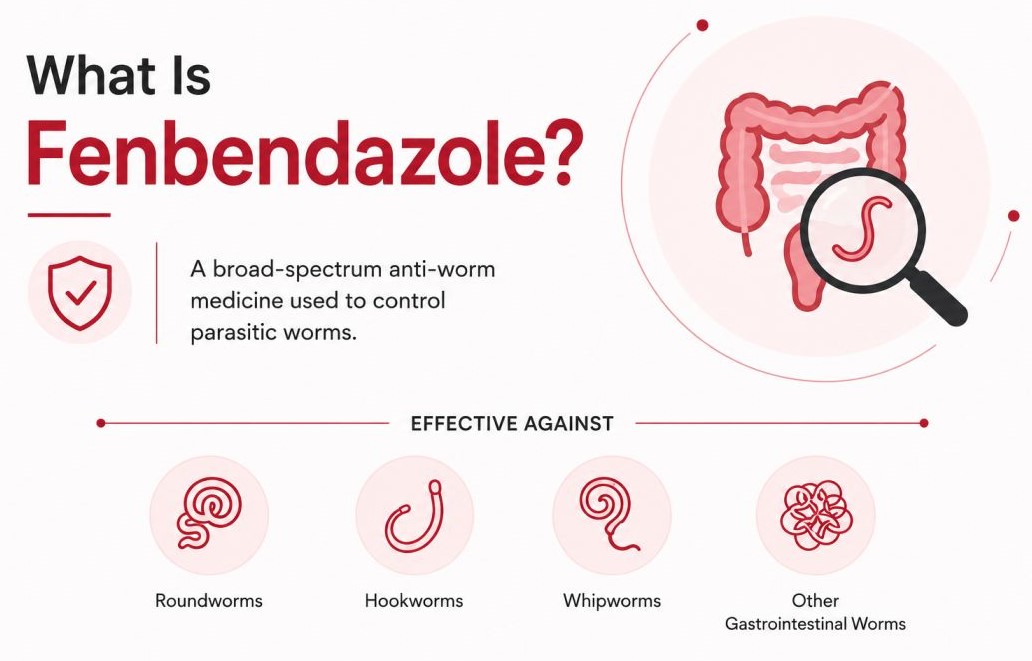
It is commonly used in veterinary medicine as a broad-spectrum anthelmintic for controlling different types of parasitic worms. Oral Fenbendazole tablets work by targeting structures inside parasites that are important for their growth, reproduction, and survival. Because of this activity, it has been studied for its ability to affect various intestinal worms and other parasitic organisms.
The medicine is mainly discussed in relation to parasite control, especially:
- Roundworms
- Hookworms
- Whipworms
- Other gastrointestinal worms
Fenbendazole is often described as a broad-spectrum anti-worm medicine because it can act against different types of parasitic worms rather than only one specific organism.
How Does Fenbendazole Work?
To understand how it works, it helps to look at how parasites survive inside a host. Parasites depend on cellular structures called microtubules. These structures help transport nutrients, maintain cell function, and support growth.
It works by interacting with beta-tubulin, a protein involved in forming microtubules inside parasite cells. When this process is disrupted, parasites may have difficulty performing functions required for survival.
The general mechanism can be explained as follows:
- Interferes With Microtubule Formation: Fenbendazole affects tubulin activity in parasites, which can disrupt the formation and function of microtubules.
- Reduces Nutrient Processing: When parasite cell structures are affected, the parasite may become less efficient at absorbing and using nutrients.
- Limits Parasite Growth and Survival: Over time these effects can weaken the parasite. Reduce its ability to survive within the host.
Unlike some medicines that target parasite nerve activity, Fenbendazole mainly works through effects on cellular structures.
What Is Fenbendazole Used For?
It is mainly used as an antiparasitic medicine in veterinary settings to help control and manage different types of worm infections.
Fenbendazole for Worm Infections
One of the main reasons Fenbendazole is discussed is its activity against different types of parasitic worms. In veterinary medicine, this medication is used for parasite control in various animals, including infections caused by gastrointestinal worms. These may include:
- Roundworms
- Hookworms
- Whipworms
- Other intestinal parasites
The exact parasites affected can vary depending on the animal species, formulation, and veterinary guidance.
Fenbendazole for Parasites
Fenbendazole is considered a broad-spectrum anthelmintic because it can affect multiple types of parasitic worms rather than targeting only one specific parasite. Research and veterinary applications have focused on its role in parasite management, particularly for:
- Gastrointestinal worm infections
- Intestinal parasite control
- Veterinary deworming programs
Identifying the specific parasite involved is an important part of choosing appropriate parasite treatment information. Different parasitic skin infections may require different approaches depending on the organism involved.
Potential Benefits of Fenbendazole
This drug is mainly recognised for its antiparasitic properties and its use in veterinary medicine. Researchers have also studied this compound to understand how it interacts with parasites and affects their normal biological functions.
1. Activity Against Different Types of Parasites
It belongs to a group of medicines known as benzimidazole anthelmintics. It works by interfering with microtubules inside certain parasites, which are important for their growth and normal activity. Because of this action, Fenbendazole has been used in veterinary settings to help manage different types of worm infections.
2. Research Into Its Antiparasitic Action
Scientists have investigated how Fenbendazole affects parasite cells, particularly its connection with tubulin proteins. These proteins play an important role in maintaining cellular structures and processes that parasites need to survive.
Studies on Fenbendazole and similar benzimidazole compounds have provided more information about how these medicines work against specific parasitic organisms.
3. Use in Veterinary Parasite Control
This medicine has an established role in animal healthcare, where it is used as part of parasite management programs. Its long history in veterinary use has also led to further research into benzimidazole compounds and their broader biological effects.
Fenbendazole and Cancer Research: What Current Evidence Shows
Fenbendazole effective for cancer has become a widely searched topic because of online discussions, personal stories, and interest in whether existing medicines may have additional biological effects. Scientific interest in this medication and cancer mainly comes from laboratory research. Some studies have explored how benzimidazole compounds may influence processes involved in cancer cell growth, metabolism, and cellular structure.
However, it is important to understand the difference between:
Laboratory Research
Laboratory studies examine how a compound behaves in controlled environments, such as cancer cells grown in research settings.
These studies can help identify possible mechanisms but do not confirm that the same effect will happen in humans.
Animal Research
Animal studies can provide additional information about biological activity, but results still need to be confirmed through carefully designed human studies.
Human Evidence
Interest in Fenbendazole for humans has increased, especially among people exploring alternative approaches. However, current human evidence remains limited, and available information is not enough to establish this medication as a proven cancer treatment.
Researchers continue to study whether certain antiparasitic medicines may have broader biological effects, but more clinical research is needed to understand potential benefits, safety, and appropriate use.
Is Fenbendazole Safe for Humans?
Fenbendazole safety is one of the most discussed topics among people researching this medicine. While it has a long history of use in veterinary parasite control, information about its effects in humans is more limited compared with medicines that have been specifically studied for human use.
When discussing Fenbendazole is safe for humans, safety depends on several individual factors, including:
- Overall health condition
- Existing medical problems
- Other medicines or supplements being taken
- Duration of use
- Individual response to the medicine
Because every person’s situation is different, understanding the available evidence and discussing health decisions with a qualified healthcare professional is important.
Fenbendazole Side Effects in Humans
Information about Fenbendazole side effects in humans is still developing because human research data is limited. Some reported concerns have focused on possible effects on the liver, particularly in cases where people have used this drug outside its traditional veterinary context.
Possible side effects that have been discussed include:
- Digestive discomfort
- Nausea
- Changes in liver enzyme levels
- Allergic reactions in sensitive individuals
The likelihood and severity of side effects may vary depending on factors such as health status, length of use, and other medications being taken.
People with existing liver conditions or those taking multiple medicines should be especially careful when researching any antiparasitic compound because the body processes medicines differently depending on individual health factors.
Fenbendazole Dosage Information
One of the most searched topics online is Fenbendazole dosage for humans. However, determining a human dosage is more complicated than simply comparing it with veterinary use.
It dosage depends on factors such as:
- The purpose of use
- The type of parasite involved
- Body weight
- Health condition
- Other medications being used
Veterinary dosing is designed for specific animal species and conditions, which means animal dosage information should not automatically be applied to humans.
For human parasitic infection treatment information, healthcare professionals usually consider the specific parasite, available evidence, and individual patient factors before selecting an appropriate approach.
Fenbendazole Tablet Strengths
This tablets are available in different strengths to suit different product formulations and requirements. Some commonly seen strengths include:
- Fenbendazole 222 mg tablets
- Fenbendazole 444 mg tablets
- Fenbendazole 500 mg tablets
- Fenbendazole 1000 mg tablets
The strength of a tablet indicates the amount of Fenbendazole it contains. Different products may come in different strengths depending on the manufacturer and intended use. Always refer to the product information for details about the specific formulation.
Fenbendazole vs Other Antiparasitic Medicines
| Factor | Fenbendazole | Ivermectin |
|---|---|---|
| Drug class | Benzimidazole anthelmintic | Macrocyclic lactone |
| Main action | Affects parasite microtubule function | Affects parasite nerve and muscle activity |
| Common discussion | Worm infections and veterinary parasite control | Various parasitic conditions |
| Main research focus | Parasite cell structure and metabolism | Parasite nervous system pathways |
It belongs to the benzimidazole group of antiparasitic medicines. Other antiparasitic drugs may work through different mechanisms and are selected based on the type of parasite being treated. A common comparison people search for is the difference between ivermectin and fenbendazole.
Both medicines belong to the broader category of antiparasitic medication, but they work differently inside parasites. The right antiparasitic medicine depends on the type of infection, the organism involved, and individual health considerations.
Who Should Avoid Fenbendazole?
Certain people should take extra care when researching or discussing fenbendazole use.
- People With Existing Health Conditions: Individuals with ongoing health conditions, especially liver-related concerns, should discuss any medicine use with a healthcare professional.
- People Taking Other Medicines: Drug interactions can depend on the specific medicines a person is already using. A healthcare professional can help review possible concerns before combining different treatments.
- Pregnant or Breastfeeding Individuals: There is limited information about it use during pregnancy and breastfeeding in humans. Because of the lack of comprehensive human data, medical guidance is important for anyone in these situations.
- People With Known Allergies: Anyone who has experienced reactions to similar medicines should discuss this with a healthcare provider before considering related compounds.
Conclusion
It has been widely used in veterinary medicine for managing certain parasitic infections. Because of its effects on parasite cells, it has also attracted attention from researchers and people looking for more information about its possible uses.
Interest in this medicine for humans and for cancer research has grown in recent years, but the available evidence is still being studied. Understanding what is currently known about Fenbendazole, along with its safety information and research background, can help readers get a clearer picture of this medicine.
⚠️ Medical Disclaimer
This article is intended for informational and educational purposes only. It does not replace professional medical advice, diagnosis, or treatment recommendations. Always consult a qualified healthcare professional regarding medicines, health conditions, and treatment options.
References
Oral Fenbendazole for Cancer Therapy – Anticancer Research.
Fenbendazole – PubChem/National Library of Medicine NCBI.
FAQ
Can I buy Fenbendazole over the counter?
Its availability depends on the country and product type. It is commonly used as a veterinary antiparasitic medicine, and availability may vary by region.
How much Fenbendazole can humans take?
There is no established standard Fenbendazole dosage for humans. Dosage information from animals should not be directly applied to people, as human safety and dosing require proper medical evaluation.
Is Fenbendazole poisonous to humans?
Fenbendazole has limited human safety data. Some reports have raised concerns about possible side effects, including liver-related effects in certain situations. More research is needed to fully understand its safety profile.
What are the negative side effects of Fenbendazole?
Reported concerns around fenbendazole side effects in humans may include digestive discomfort, nausea, allergic reactions, and possible changes in liver enzymes. Individual responses can vary.
Is fenbendazole safe for humans?
The safety of Fenbendazole in humans is still being studied. Factors such as health condition, other medicines, and duration of use can influence how a person responds.
Can fenbendazole cause liver problems?
Some reports have discussed possible liver-related effects with it use. People with existing liver concerns should consider medical advice before using any medicine.
Is Fenbendazole the same as Mebendazole?
No. Both belong to the benzimidazole group, but it is mainly associated with veterinary use, while Mebendazole is commonly used for certain human worm infections.

Years of Experience: 12+ Years Education: Master of Sexology - [University of Sydney] MBBS (Bachelor of Medicine, Bachelor of Surgery) - [Torrens University Australia] BSc in Medical Laboratory Technology -…

