




 Dr. Arjun Srivastav
Eprisan 150 mg is a prescription medicine containing eperisone hydrochloride, an active ingredient classified as a centrally acting muscle relaxant. It is available as a sustained release capsule under the Eprisan SR name. The product is manufactured by Eisai Pharmaceuticals India Pvt Ltd. Its prescribing instructions depend on the formulation and individual requirements. This guide covers the composition, product information, recognised uses, dosage considerations, possible side effects, precautions and medicine interactions associated with Eprisan 150 mg.
What Is Eprisan 150 mg?
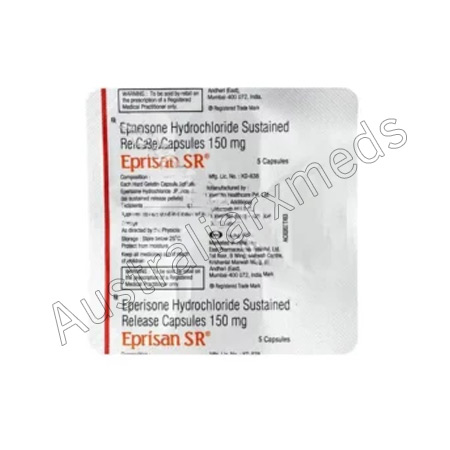
Eprisan 150 mg is a medicine containing eperisone hydrochloride. It belongs to a group of medicines known as centrally acting skeletal muscle relaxants. This classification refers to medicines that act through the central nervous system rather than directly on the affected muscle.
The medicine is listed as Eprisan SR Capsule, with a strength of 150 mg. The sustained release formulation is designed to release its active ingredient over a period of time.
Eperisone is associated with the management of certain conditions involving increased muscle tone, stiffness and spasms. Healthcare professionals determine whether this type of medicine is appropriate after considering the patient’s symptoms and medical history.
Eprisan 150 mg is not a general purpose painkiller. Its active ingredient and pharmacological classification distinguish it from medicines primarily used for pain or inflammation.
Eprisan 150 mg Composition and Product Information
The following table summarises the available product information for Eprisan 150 mg.
| Attribute | Details |
|---|---|
| Product name | Eprisan 150 mg |
| Active ingredient | Eperisone hydrochloride |
| Strength | 150 mg |
| Drug class | Centrally acting muscle relaxant |
| Dosage form | Sustained release capsule |
| Release type | Sustained release |
| Administration | Oral |
| Manufacturer | Eisai Pharmaceuticals India Pvt Ltd |
Each capsule contains eperisone equivalent to 150 mg as the active ingredient. The SR designation identifies the sustained release formulation. Product packaging should always be checked to confirm the composition and formulation of the supplied pack.
What Is Eprisan 150 mg Used For?
Eprisan 150 mg contains eperisone, an ingredient associated with the management of certain muscle related conditions. Its use is determined by a healthcare professional according to the patient’s diagnosis and medical requirements.
The recognised areas of use for eperisone include:
Muscle stiffness and rigidity
Muscle stiffness involves difficulty relaxing or moving certain muscles. Eperisone is used in the management of conditions associated with increased muscle tone.
Muscular spasms
Muscle spasms involve involuntary muscle contractions. Eperisone belongs to the muscle relaxant category and may be prescribed in relevant cases.
Myotonic conditions
Myotonic conditions involve increased muscle tone or persistent muscular tension. Eperisone has been used in the management of certain conditions involving these symptoms.
Spastic paralysis
Certain neurological conditions can involve increased muscle tone and involuntary muscle activity. Eperisone has recognised prescribing uses in specific conditions involving spastic paralysis.
The exact reason for prescribing Eprisan depends on the individual’s condition. The medicine should not be considered a treatment for every cause of back pain, neck discomfort or muscle related symptoms. A healthcare professional must determine whether it is appropriate for the particular diagnosis.
Muscle related discomfort can have different underlying causes, and treatment options are not identical for every condition. An overview of muscle relaxers provides additional context about this medicine category.
How Does Eprisan 150 mg Work?
Eperisone acts on the central nervous system, particularly the pathways involved in regulating skeletal muscle tone. Its pharmacological action is associated with the brain and spinal cord, which participate in controlling muscle activity.
Spinal reflex pathways contribute to the regulation of involuntary muscle responses. Changes in these pathways can be associated with increased muscle tension and stiffness.
Eperisone acts on these regulatory mechanisms and is classified as a centrally acting muscle relaxant. This explains its use in certain conditions involving increased muscle tone and muscular spasms.
The medicine is not classified as an anti inflammatory drug. Its pharmacological category is different from medicines that primarily target inflammation or pain signalling.
The way a person responds to eperisone depends on several individual factors, including the underlying condition and the prescribed formulation.
Benefits and Expected Effects of Eprisan 150 mg
Eprisan 150 mg is prescribed in connection with specific muscle related conditions. Its intended use is linked to the muscle relaxing properties of eperisone hydrochloride. The choice of a muscle relaxant depends on the underlying condition, medical history and prescribed treatment. These factors are important when choosing a muscle relaxant medicine rather than comparing medicines by strength alone.
The treatment related considerations include:
- Management of muscle stiffness associated with relevant conditions.
- Use in certain cases involving increased muscle tone.
- Management of muscular spasms where eperisone is considered appropriate.
- A prescription option within the centrally acting muscle relaxant category.
The expected response is not identical for every individual. The underlying diagnosis, treatment plan and prescribed administration instructions all influence how the medicine is used.
It is important to follow the healthcare professional’s instructions rather than changing the treatment based on expectations about its effects.
Eprisan 150 mg Dosage and Administration
The appropriate Eprisan 150 mg dosage must be determined by the prescribing healthcare professional. The capsule contains 150 mg of eperisone hydrochloride in a sustained release formulation, so dosing instructions should not be taken from standard release eperisone tablets.
Muscle relaxants differ in their ingredients, formulations and administration instructions. Understanding different muscle relaxer options can help readers recognise why dosing guidance should always be specific to the prescribed medicine.
Consider the following administration points:
- Follow the prescribed dose and frequency.
- Take the capsule according to the instructions provided with the medicine.
- Check whether food related instructions apply to the supplied formulation.
- Do not crush, chew or open a sustained release capsule unless the product instructions specifically permit it.
- If a dose is missed, follow the supplied patient information or ask a pharmacist what to do.
- Do not take an additional capsule to compensate for a missed dose without professional advice.
The prescribed amount may depend on the patient’s circumstances and the reason for treatment. Do not increase the dose, change the timing or extend the treatment period independently.
If the capsule is difficult to swallow or the administration instructions are unclear, speak with a pharmacist before taking it.
💡 Tip
Possible Side Effects of Eprisan 150 mg
Like other medicines, Eprisan 150 mg may be associated with unwanted effects. Their occurrence and severity can differ between individuals.
😊 Common Side Effects
🚨 Serious (Rare) Side Effects
😊 Common Side Effects
🚨 Serious (Rare) Side Effects
These warning signs should not be ignored. Stop and seek urgent medical assessment if a serious reaction is suspected.
The side effect information should be considered alongside the patient information supplied with the exact product.
⚠️ Warning
Precautions and Safety Information
Before using Eprisan 150 mg, discuss relevant medical history and existing health conditions with a healthcare professional.
Liver and kidney conditions: Inform the prescriber about existing liver or kidney problems. This information may be relevant when assessing the suitability of the medicine.
Pregnancy and breastfeeding: Anyone who is pregnant, planning pregnancy or breastfeeding should obtain professional advice before using eperisone.
Driving and machinery: If dizziness, lightheadedness or weakness occurs, avoid driving and activities that require full alertness until it is safe to resume them.
Older adults: Age and other medicines may influence treatment considerations. Older patients should follow individual prescribing instructions.
Previous allergic reactions: Inform the healthcare professional about any previous reaction to eperisone or other medicine ingredients.
Alcohol: Discuss alcohol consumption with a pharmacist or prescriber, particularly if other medicines affecting alertness are also being used.
Do not start treatment without checking whether the medicine is suitable for your circumstances.
❗ Important
Drug Interactions
Before using Eprisan 150 mg, provide your healthcare professional with a complete list of medicines, supplements and other products you currently take.
Particular attention may be needed when eperisone is used alongside:
- Other muscle relaxants.
- Medicines associated with drowsiness or reduced alertness.
- Sedatives and medicines acting on the central nervous system.
- Prescription medicines used for other ongoing conditions.
- Non prescription medicines and herbal products.
Not every combination necessarily causes an interaction. However, checking the full medication list helps a healthcare professional assess possible risks and determine whether any changes are necessary.
Do not combine Eprisan with another muscle relaxant or alter an existing medicine schedule without professional guidance.
🔵 Reminder
Storage and Handling of Eprisan 150 mg
Keep Eprisan 150 mg in its original packaging and follow the storage conditions printed on the product label. Protect the capsules from excessive heat and moisture. Store the medicine in a secure location away from children and pets. Do not use capsules beyond their stated expiry date or if the packaging appears damaged. Ask a pharmacist how to dispose of unused medicine safely.
Important Information Before Using Eprisan 150 mg
Eprisan 150 mg is a prescription medicine containing eperisone hydrochloride. Check the product packaging for the exact formulation and administration instructions before use. Follow the prescribed treatment schedule and report any concerning reactions to a healthcare professional. Do not change the dose or combine it with other medicines without appropriate advice.
AustraliaRxMeds encourages customers to obtain professional guidance when reviewing medicine information and treatment requirements.
FAQs
1. What is Eprisan 150 mg used for?
Eprisan 150 mg contains eperisone hydrochloride, a centrally acting muscle relaxant. It is used in the management of certain conditions involving increased muscle tone, stiffness and muscular spasms.
2. Is Eprisan 150 mg a muscle relaxant?
Yes. Eprisan contains eperisone, which belongs to the centrally acting skeletal muscle relaxant category. The product is available as a sustained release capsule.
3. What is the active ingredient in Eprisan 150 mg?
The active ingredient is eperisone hydrochloride. Each capsule is labelled as containing 150 mg of the ingredient.
4. How long does Eprisan 150 mg take to work?
The time required for an individual to notice a response can vary. It depends on the formulation, prescribed treatment and individual circumstances. Follow the instructions provided by the prescribing healthcare professional rather than adjusting the dose based on perceived results.
5. Can Eprisan 150 mg cause sleepiness?
Dizziness, lightheadedness and weakness have been reported with eperisone. If you experience reduced alertness, avoid driving or operating machinery and seek professional advice.
6. Can Eprisan 150 mg be taken with other medicines?
This depends on the medicines involved and your medical history. Inform your prescriber about all prescription medicines, non prescription products and supplements before starting treatment.
7. Is Eprisan 150 mg suitable for long term use?
The suitability of continued treatment depends on the reason for prescribing it and the individual’s response. The duration should be determined by a healthcare professional. Do not continue or extend treatment without reviewing the prescription.