

Pink Eye and Blurry Vision: Causes, Symptoms & When to Worry
By Erica Wilson, Nov-20-2026

 Dr. Arjun Srivastav Medical Reviewer (Pharm D)
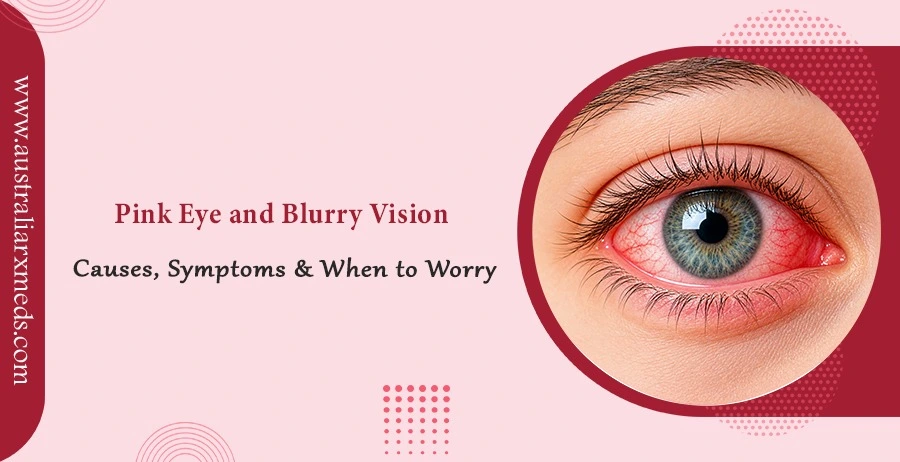
Redness, watery eyes and changes in eyesight can make everyday activities uncomfortable. When these symptoms appear together, one common question is whether pink eye is responsible for the blurry or cloudy appearance of objects.
Pink eye, medically known as conjunctivitis, refers to inflammation of the thin membrane covering the white part of the eye and the inner eyelids. It can occur alongside excessive tearing, irritation and discharge, which may affect how clearly someone sees.
However, changes in eyesight deserve attention, particularly when they continue after visible discharge has been cleared. Understanding the possible connection between conjunctivitis and visual disturbances can help you recognise different symptoms and decide when professional eye care is needed.
Quick Answer: Can Pink Eye Cause Blurry Vision?
Yes, pink eye can cause temporary blurry vision due to excess tears, mucus and eye discharge. However, persistent blurring, eye pain or light sensitivity should not be ignored, as these symptoms may require an eye examination.
Can Pink Eye Cause Blurry Vision?
Yes, blurry vision can occur alongside pink eye. The reason may be related to discharge, excess tears o r changes affecting the surface of the eye.
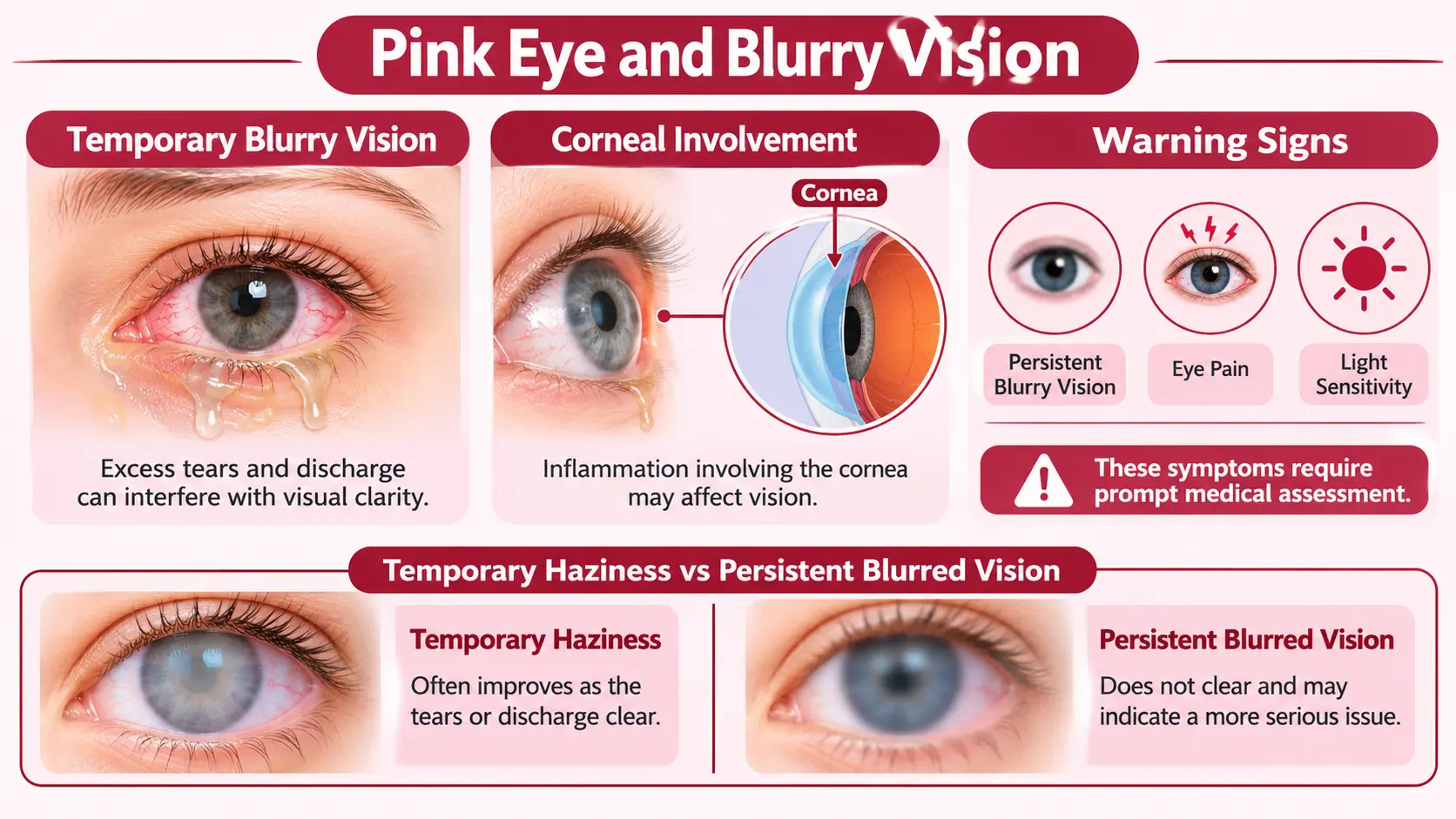
When mucus collects around the eyelashes or spreads across the eye surface, it can create a cloudy appearance. Excessive watering may also cause vision to fluctuate, making objects appear less defined at certain times.
However, not every visual disturbance associated with a red eye has the same explanation. The conjunctiva is the outer membrane surrounding the eye, while the cornea is the transparent structure at the front that helps focus incoming light.
If inflammation extends beyond the conjunctiva and involves the cornea, the resulting visual changes may require closer medical attention.
An important distinction is whether the haziness comes and goes with watering or discharge, or whether eyesight remains unclear regardless of these symptoms.
Why Does Pink Eye Cause Blurry Vision?
Several changes around the eye can contribute to reduced visual clarity. Looking at each one separately makes it easier to understand the different experiences people may notice.
1. Accumulation of Eye Discharge
Some forms of conjunctivitis produce sticky mucus that gathers around the eyelids and eyelashes. This material may also spread across the eye surface, creating temporary visual obstruction.
The effect can be particularly noticeable after waking up, when dried discharge may leave the eyelids feeling sticky.
Gently cleaning the surrounding eyelid area with a clean, damp cloth can remove visible residue. Avoid rubbing the eyeball or using unclean materials.
2. Excessive Watering
Watery eyes are another feature that may accompany conjunctival irritation.
When tears accumulate, the surface of the eye can become uneven for short periods. This may make objects appear hazy or cause vision to change from one moment to another.
People may notice this while reading, working on a computer or looking at distant objects.
3. Changes in the Tear Film
The tear film is a delicate layer covering the front of the eye. It helps maintain a smooth surface through which light can pass.
Irritation around the eye may affect how this moisture is distributed. When the tear layer becomes uneven, visual sharpness may fluctuate.
This can explain why some people notice occasional haziness rather than continuous blurring. Dry eye can also cause irritation, discomfort and fluctuating vision, although its symptoms and underlying causes differ from conjunctivitis. Read more about dry eye symptoms and the treatment approaches used to manage them.
4. Inflammation Involving the Cornea
The cornea is the clear front covering of the eye. It plays an important role in focusing light and maintaining sharp vision.
Certain infections associated with conjunctivitis can also involve this structure. Inflammation of the cornea is known as keratitis.
Unlike surface discharge, corneal involvement may produce more persistent visual disturbances. Pain, light sensitivity and reduced eyesight are important accompanying symptoms that need prompt assessment.
What Does Blurry Vision With Pink Eye Feel Like?
Visual disturbances do not always present in the same way. Some people notice occasional haziness, while others describe difficulty seeing details clearly.
Common descriptions include:
Cloudy eyesight: Objects may appear as though a thin layer is covering the field of vision.
Fluctuating clarity: The sharpness of vision may change throughout the day, particularly when the eyes are watering.
Difficulty reading: Letters and smaller details may become harder to distinguish when visual clarity is reduced.
Unequal vision: One eye may feel more affected than the other, making it difficult to focus comfortably.
Ongoing haziness: The visual disturbance remains even after visible mucus or discharge has been removed.
These descriptions help explain the experience, but they cannot establish the cause. A persistent change in eyesight deserves an appropriate eye examination.
Can Different Types of Pink Eye Affect Vision Differently?
Conjunctivitis can develop for different reasons. The accompanying symptoms often depend on the underlying trigger.
Viral Conjunctivitis
Viral conjunctivitis is commonly associated with watery eyes, redness and irritation. It may begin in one eye before affecting the other.
Some viral infections can also involve the corneal surface. This is an important consideration when visual changes occur alongside increased light sensitivity.
Bacterial Conjunctivitis
Bacterial conjunctivitis is often associated with thicker discharge and sticky eyelids. The material may accumulate overnight, leaving the eyelashes crusted when someone wakes up.
Discharge around the eye can interfere with visual clarity, although persistent blurring requires further investigation.
Allergic Conjunctivitis
Allergic conjunctivitis is associated with exposure to substances that trigger an allergic response.
Itching is a particularly noticeable feature. Watery eyes, redness and repeated irritation may also occur.
Frequent rubbing can increase discomfort and make the surrounding eyelids more irritated.
Irritant Conjunctivitis
Contact with smoke, chlorine, dust or certain chemical substances may irritate the conjunctiva.
The symptoms can include watering, redness and discomfort. The nature of the exposure is important when deciding what type of care is appropriate.
How Long Does Blurry Vision Last With Pink Eye?
The duration of visual disturbances depends on their underlying cause. There is no universal recovery period that applies to everyone.
When mucus or excess tears interfere with eyesight, the haziness may change as the amount of discharge and watering fluctuates.
The broader course of conjunctivitis also varies according to its type.
| Type | General recovery pattern |
|---|---|
| Viral conjunctivitis | Often improves within one to two weeks, although some cases last longer |
| Bacterial conjunctivitis | Recovery varies according to the underlying infection and individual circumstances |
| Allergic conjunctivitis | Symptoms may continue while exposure to the triggering substance remains |
Corneal involvement requires separate consideration because the recovery process may differ from uncomplicated conjunctivitis.
If your vision remains unclear after the other symptoms have improved, arrange an eye examination rather than assuming that additional waiting will resolve the problem.
Pink Eye and Blurry Vision: What Should You Notice?
The type of vision change and other symptoms can help indicate whether an eye assessment is needed.
Temporary haziness
Vision clears after blinking or gently cleaning away discharge. Tears or mucus may be affecting the tear film.
Warning signs
Blur that persists, eye pain, light sensitivity or worsening vision needs prompt medical assessment.
Important: Sudden vision loss or severe eye pain needs emergency assessment. Contact lens wearers with a red, painful or blurry eye should seek urgent eye care.
Can Pink Eye Cause Permanent Vision Problems?
Concerns about lasting eyesight changes are understandable, particularly when blurred vision accompanies eye redness.
The conjunctiva and cornea are different structures, and inflammation affecting each area can have different implications for vision.
Uncomplicated conjunctivitis is generally associated with surface irritation. However, certain infections or inflammatory conditions can extend to the cornea.
Keratitis is one condition involving corneal inflammation. Depending on its underlying cause and severity, it may affect the transparency of the corneal surface.
Other conditions, including corneal ulcers, also require appropriate medical attention because of their potential effect on eyesight.
It is therefore important to distinguish ordinary surface irritation from symptoms involving deeper eye structures.
Persistent blurred vision, significant discomfort or increased sensitivity to light should be assessed by an eye care professional.
Pink Eye or Another Eye Condition?
A red eye accompanied by reduced visual clarity does not automatically indicate conjunctivitis. Several other eye conditions can produce overlapping symptoms. Swollen eyelids can occur alongside several conditions, and eyelid puffiness does not necessarily mean a person has conjunctivitis. You can also understand the causes of puffy eyes and how they differ from eye redness.
| Condition | Features to understand |
|---|---|
| Conjunctivitis | Redness, irritation, watering and discharge |
| Keratitis | Corneal inflammation, discomfort and visual changes |
| Corneal abrasion | Damage to the corneal surface, often accompanied by pain and watering |
| Uveitis | Inflammation inside the eye, sometimes associated with redness, pain and light sensitivity |
The differences are important because these conditions involve different parts of the eye.
For example, someone experiencing significant pain and blurred vision may need an examination of the cornea and other internal structures rather than an assumption that the redness is caused by conjunctivitis.
A professional examination helps determine the underlying reason for the symptoms.
When Should You Worry About Pink Eye and Blurry Vision?
Changes in eyesight deserve particular attention when they occur with other unusual symptoms.
Look out for the following warning signs:
Sudden changes in eyesight: A noticeable reduction in vision or sudden blurring needs urgent medical assessment.
Significant eye pain: Discomfort that becomes severe or continues to increase should not be ignored.
Light sensitivity: Difficulty tolerating ordinary indoor lighting or sunlight may indicate a problem requiring further investigation.
Severe redness: Marked redness accompanied by discomfort or changes in vision deserves professional attention.
Persistent haziness: Vision that remains unclear after visible discharge has been removed needs assessment.
Contact lens related symptoms: Redness, pain or reduced vision in contact lens wearers requires prompt evaluation.
If you experience sudden significant vision loss, seek emergency medical care rather than waiting for the symptoms to settle.
In Australia, an optometrist or doctor can assess the affected eye and determine whether further specialist attention is necessary.
What Can Help When Pink Eye Causes Blurry Vision?
The appropriate approach depends on the reason behind the symptoms. A few general eye care practices may help maintain comfort while the underlying problem is being assessed.
Keep the Eyelids Clean
Visible discharge can be gently removed using a clean cloth or cotton pad dampened with clean water.
Use a fresh material for each eye and avoid sharing towels or personal eye care items.
Apply a Cool Compress
A clean, cool compress placed gently over closed eyelids may help ease irritation.
Avoid applying ice directly to the skin or putting pressure on the eyeball.
Consider Lubricating Eye Drops
Lubricating drops may be suitable when dryness or surface irritation accompanies other symptoms.
Ask a pharmacist or eye care professional about an appropriate option, particularly if you are experiencing blurred vision.
Avoid Contact Lenses
Avoid wearing contact lenses while experiencing symptoms. Ask an eye care professional when it is appropriate to resume their use.
If contact lens wear is accompanied by pain, light sensitivity or reduced vision, arrange prompt medical assessment.
Medical Disclaimer
FAQ
1. Can pink eye cause blurry vision in one eye?
Yes, conjunctivitis can affect one eye or both eyes. Discharge, watering and irritation may interfere with visual clarity. However, persistent blurring affecting one eye needs appropriate assessment to investigate other possible causes.
2. Is blurry vision normal with pink eye?
Temporary haziness may occur when mucus or excessive tears interfere with the eye surface. However, persistent or sudden visual changes should not be treated as an ordinary feature of conjunctivitis.
3. Can pink eye cause permanent vision loss?
Uncomplicated conjunctivitis is generally not associated with permanent vision loss. However, certain conditions involving the cornea may affect eyesight and require appropriate medical attention.
4. Why is my vision still blurry after pink eye clears?
Visual changes that remain after redness and discharge improve may have another explanation. Corneal inflammation, surface dryness or a separate eye condition may need investigation.
5. Can eye discharge make vision look cloudy?
Yes, accumulated mucus and sticky discharge can interfere with clear sight. This may be particularly noticeable after sleeping, when material gathers around the eyelashes.
6. Should I wear contact lenses with pink eye?
Avoid contact lenses while symptoms are present. Ask an eye care professional when you can safely return to wearing them, particularly if you have experienced pain or changes in eyesight.

Years of Experience: 10+ years Education: B.Sc. in Biomedical Science (Monash University, Melbourne, Australia) PG Diploma in Health & Medical Communication (University of Sydney, Australia) Experience: Erica Wilson is an…