

Morning High Blood Pressure: What Causes It?
By Erica Wilson, Mar-16-2023


 Dr. Arjun Srivastav Medical Reviewer (Pharm D)
Waking up to a higher-than-usual reading can feel unsettling, especially when the numbers seem to climb just as the day begins. Morning high blood pressure is a pattern many Australians notice when they check their readings shortly after getting out of bed.
A natural rise occurs as the body shifts from sleep to wakefulness, but consistently elevated morning high blood pressure readings may point to underlying contributors worth exploring. Poor sleep, sleep apnoea, ongoing stress, medication coverage gaps and certain health conditions can all play a role.
Understanding what drives morning high blood pressure helps explain when a reading reflects a normal daily rhythm and when it deserves a closer medical assessment.
Quick Answer: Why Is Blood Pressure High in the Morning?
Blood pressure naturally begins rising before waking as part of the body’s daily rhythm. However, consistently high morning readings may be linked to sleep apnoea, poor sleep, stress, excess salt intake, alcohol use, medication coverage, or underlying health conditions. Repeated readings should be discussed with a healthcare professional.
What Is Morning High Blood Pressure?
Morning high blood pressure refers to readings that remain elevated during the early part of the day, typically measured within the first hour after waking.
A single high reading does not mean someone has morning high blood pressure, since pressure naturally fluctuates throughout the day and can spike temporarily due to movement, stress or caffeine. The key distinction lies between a one-off elevated reading and a pattern of consistently high morning measurements over time.
Readings taken in the morning may differ noticeably from afternoon or evening results because the body is shifting from a resting state to an active one, which influences circulation and heart rate. This is why morning high blood pressure can appear more pronounced than daytime readings.
Establishing whether morning high blood pressure is present requires multiple readings taken across several days, usually with a validated home monitor or through ambulatory monitoring supervised by a healthcare professional.
Why Does Blood Pressure Rise in the Morning?
Blood pressure generally decreases during sleep as the body rests and the cardiovascular system operates at a lower demand level.
The circadian rhythm, which governs the body’s internal 24-hour cycle, influences patterns across the day and night. As waking approaches, sympathetic nervous system activity increases, preparing the body for movement and alertness.
Hormonal activity also shifts during this transition, with cortisol levels rising as part of the natural waking response. Together, these changes cause morning high blood pressure to gradually increase as the body moves into daytime activity.
A morning rise is a normal physiological process that occurs in most people, but an unusually large surge or readings that stay elevated well into the day may need investigation to rule out contributing factors behind morning high blood pressure.
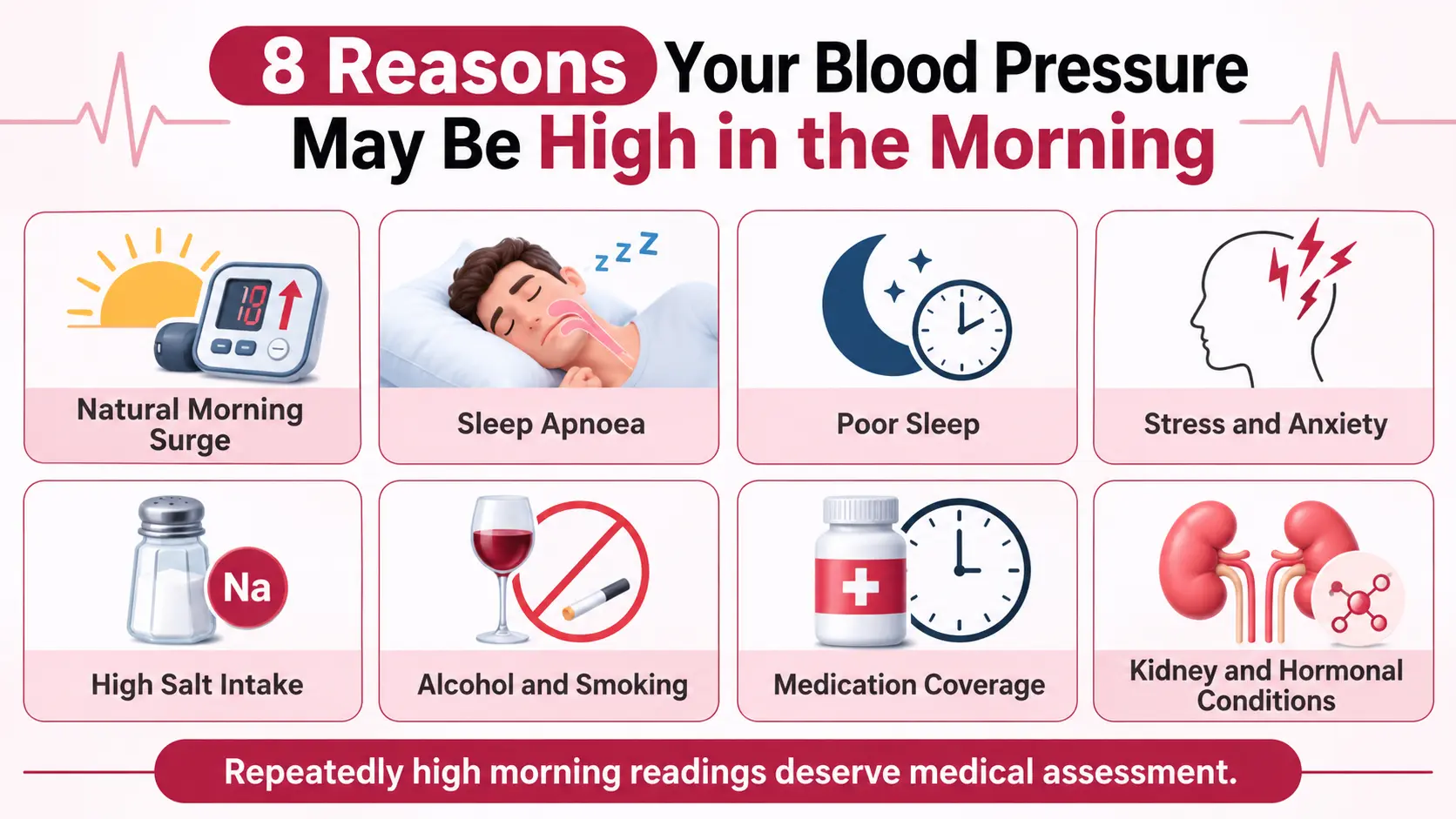
8 Common Causes of High Blood Pressure in the Morning
Several factors can contribute to morning high blood pressure, ranging from natural biological rhythms to lifestyle patterns and underlying health conditions. Understanding each one helps clarify what may be influencing your readings.
1. Natural Morning Blood Pressure Surge
A natural increase occurs before and after waking as the body prepares for daily activity. The circadian rhythm and the sympathetic nervous system work together to raise alertness, heart rate and circulation during this transition.
The size of the rise varies between individuals based on factors such as age, overall health, fitness level and stress responses. Distinguishing a normal rise from consistently high morning readings matters, because a moderate increase is expected while persistent elevation may signal that something else is contributing to morning high blood pressure.
2. Obstructive Sleep Apnoea
Obstructive sleep apnoea involves repeated interruptions in breathing during sleep, often caused by temporary blockage of the upper airway. These interruptions create oxygen fluctuations that trigger sympathetic nervous system activation, keeping pressure elevated through the night.
This condition is associated with nighttime hypertension and reduced nighttime dipping, where pressure fails to fall as expected during sleep.
Common signs include loud snoring, gasping or choking during sleep, and noticeable daytime tiredness despite what seems like a full night in bed. Sleep apnoea can contribute to morning high blood pressure because the body remains in a heightened stress state overnight.
3. Poor Sleep Quality
Insufficient or disrupted sleep can affect how the body regulates pressure overnight. Irregular sleeping schedules, frequent nighttime waking, and generally restless sleep reduce the restorative period the cardiovascular system relies on.
When sleep is fragmented over time, the body may not reach the deeper stages where pressure naturally lowers. Ongoing sleep problems may contribute to morning high blood pressure because the regulation process is interrupted repeatedly, leaving readings higher than they would be after restful sleep.
4. Stress and Anxiety
Stress triggers the release of hormones such as adrenaline and noradrenaline, which activate the nervous system and can temporarily increase pressure. Morning anxiety and anticipatory stress about the day ahead can produce a short lived rise in readings taken shortly after waking.
This type of increase often settles as the day progresses and the stress response eases. The difference between a temporary stress-related spike and persistent morning high blood pressure is important, because the latter involves sustained elevation rather than a brief reaction to a stressful moment.
5. High Salt Intake and Evening Eating Habits
Excess sodium in the diet can contribute to fluid retention, which increases the volume of blood the heart pumps and can raise pressure. Consistently high sodium intake over time may keep readings elevated, including in the morning after a salty evening meal.
Individual responses to sodium vary, meaning some people are more sensitive to dietary salt than others. Eating heavy or salty meals late in the evening may also affect overnight fluid balance and contribute to morning high blood pressure.
6. Alcohol Consumption and Smoking
Regular excessive alcohol consumption can contribute to elevated pressure over time. Nicotine from smoking produces short-term effects that raise both pressure and heart rate, and these effects can linger into the morning after an evening cigarette.
Evening alcohol use may also disrupt sleep quality, which in turn affects overnight regulation. The combination of alcohol and smoking can create a pattern where morning high blood pressure remains higher than expected.
7. Poorly Controlled Hypertension or Medication Coverage
Existing hypertension may remain uncontrolled overnight if the current treatment plan does not provide adequate coverage across the full 24-hour period. Missed doses and inconsistent medication use can leave gaps where pressure climbs, particularly in the early morning hours before the next dose takes effect.
Some treatment plans may need review to ensure they cover the morning window effectively. Medication reviews with a healthcare professional can help identify whether timing or coverage needs adjustment to manage morning high blood pressure.
Anyone taking prescribed medication should not change their timing or dosage independently, as doing so may affect how well the treatment works.
8. Kidney Disease and Hormonal Conditions
The kidneys play a central role in regulating fluid balance and pressure by managing sodium and water levels in the body. Kidney disease can disrupt this regulation and contribute to morning high blood pressure.
Hormonal conditions such as primary aldosteronism, where the adrenal glands produce excess aldosterone, can also drive pressure up. These conditions may not produce obvious symptoms in the early stages, which is why they often require medical investigation through blood tests, urine tests or imaging.
Identifying and assessing them is part of understanding the full picture behind persistent morning high blood pressure.
Excess weight can also contribute to higher blood pressure by placing additional strain on the cardiovascular system. The relationship between weight gain and blood pressure is worth considering when morning readings remain elevated.
Morning Blood Pressure Surge vs Morning Hypertension
Distinguishing between a morning surge and morning hypertension helps clarify what your readings mean. The two concepts differ in meaning and significance, and confusing them can lead to unnecessary concern or missed follow-up.
A morning surge is a normal increase associated with waking, part of the body’s daily rhythm that varies between individuals and does not automatically indicate disease.
Over time, uncontrolled high blood pressure can damage blood vessels and affect how blood moves through the body. Understanding blood circulation can provide additional context about the role of healthy blood vessels.
Morning hypertension involves elevated average readings that may indicate inadequate control and requires assessment using repeated measurements over time. This is what separates true morning high blood pressure from a normal waking rise.
Two related patterns also matter:
- Nocturnal hypertension refers to pressure that stays high during sleep rather than dipping as expected
- Nondipping describes a pattern where pressure fails to fall by the usual amount overnight
Both can contribute to morning high blood pressure and may be associated with increased cardiovascular risk.
Because these patterns are hard to detect with occasional home readings, a doctor may recommend 24-hour ambulatory monitoring to capture measurements throughout the day and night.
Is High Blood Pressure in the Morning Dangerous?
Persistently elevated morning readings should not be ignored, as ongoing morning high blood pressure is associated with cardiovascular complications over time. Repeated high readings may indicate that pressure is not adequately controlled and warrants professional assessment.
One unusually high reading on its own does not automatically indicate an emergency, since many factors can produce a temporary spike. Repeated measurements and a healthcare professional’s evaluation provide a clearer picture of morning high blood pressure than a single result.
Very high readings accompanied by chest pain, breathing difficulty, weakness, confusion or symptoms that may suggest a stroke require emergency attention.
How to Measure Blood Pressure Correctly After Waking
Accurate morning high blood pressure readings depend on a consistent measurement process. Following a reliable routine each morning helps produce readings that reflect your actual levels rather than momentary fluctuations.
- Empty your bladder before measuring, since a full bladder can raise readings
- Sit quietly for five minutes beforehand to let your body settle
- Keep your back supported and your feet flat on the floor, avoiding crossed legs
- Position your bare upper arm at heart level with the cuff placed directly on the skin
- Use a validated upper arm monitor with the correct cuff size for your arm
- Take two readings approximately one minute apart and record both numbers
- Follow a consistent morning measurement schedule so your results are comparable over time
A few additional details help keep readings accurate:
- Avoid caffeine, smoking and exercise for at least 30 minutes before measuring
- Measure before breakfast and before taking any morning medication, unless your healthcare professional advises otherwise
- Do not change prescribed medication based on an individual reading, as single results can be misleading
How to Manage High Blood Pressure in the Morning
Several practical measures can support healthier morning high blood pressure readings. These steps work alongside any prescribed treatment and focus on lifestyle factors that influence pressure over time.
Improve Your Sleep Quality
Maintaining a consistent sleep schedule helps regulate the body’s internal clock and supports overnight dipping. Aiming for sufficient sleep each night gives the cardiovascular system the rest it needs.
If you experience symptoms that suggest sleep apnoea, such as loud snoring or daytime tiredness, seeking assessment from a healthcare professional is an important step toward managing morning high blood pressure.
Reduce Sodium Intake
Limiting high-sodium processed foods and checking food labels helps manage daily salt consumption. Choosing balanced meals with fresh ingredients supports overall pressure management.
Reducing sodium gradually can make the change easier to sustain over time and may help lower morning high blood pressure.
Maintain Regular Physical Activity
Consistent moderate activity, such as walking, swimming or cycling, supports overall pressure management. Regular movement helps the cardiovascular system function efficiently and complements other lifestyle measures.
Building activity into a daily routine makes it easier to maintain and contributes to better morning high blood pressure control.
Follow Your Prescribed Medication Schedule
Taking medication according to professional instructions ensures consistent coverage across the day and night. Avoiding missed doses helps prevent gaps where pressure can climb.
If morning high blood pressure remains persistently high despite following your schedule, discussing this with a healthcare professional allows for a review rather than self-adjustment.
Monitor Your Blood Pressure Consistently
Recording both morning and evening readings builds a clearer picture of your patterns over time. Looking for repeated trends rather than focusing on isolated results gives a more reliable indication of where your morning high blood pressure stands.
Sharing this record during medical appointments helps your healthcare professional make informed decisions about managing morning high blood pressure.
When Should You See a Doctor?
Several situations warrant a conversation with a healthcare professional about morning high blood pressure:
- Repeated elevated morning readings taken over several days suggest a pattern worth assessing
- Morning readings that remain high despite following prescribed treatment indicate the current plan may need review
- Symptoms suggesting sleep apnoea, such as snoring and daytime tiredness, deserve investigation
- Suspected kidney or hormonal conditions may require tests that only a healthcare professional can arrange
- When home readings are persistently elevated, ambulatory monitoring may be appropriate to capture a full day and night profile
A reading of 180/120 mmHg or higher should be repeated after at least one minute. Seek immediate medical advice if it remains that high, and call 000 if it is accompanied by concerning symptoms.
Medical Disclaimer
FAQ
1. Why is my blood pressure high when I wake up?
A natural rise occurs as the body wakes and the sympathetic nervous system becomes more active. Several factors can amplify this rise, including poor sleep, stress, sleep apnoea, medication coverage gaps and dietary patterns.
2. Is morning blood pressure higher than nighttime blood pressure?
Pressure typically dips during sleep and rises again as waking approaches. This means morning readings are often higher than nighttime readings in a normal pattern.
3. What is a normal morning blood pressure reading?
Common home thresholds sit below 120 over 80 mmHg for adults, though individual targets vary based on age, existing conditions and other factors.
4. Can sleep apnoea cause high blood pressure in the morning?
Sleep apnoea can contribute to morning high blood pressure because repeated breathing interruptions keep the sympathetic nervous system active overnight. This reduces the usual nighttime dipping and can leave readings elevated by morning.
5. Should I measure blood pressure before taking medication?
Morning readings are commonly taken before breakfast and before any morning medication, unless the treating professional advises differently.
6. Can stress cause high blood pressure after waking?
Stress can produce a temporary increase after waking, particularly when morning anxiety or anticipatory stress is present. This type of rise often eases as the day progresses.

Years of Experience: 10+ years Education: B.Sc. in Biomedical Science (Monash University, Melbourne, Australia) PG Diploma in Health & Medical Communication (University of Sydney, Australia) Experience: Erica Wilson is an…

