

PCOS and Irregular Periods: Causes, Symptoms and Treatment
By Erica Wilson, Nov-02-2026


 Dr. Arjun Srivastav Medical Reviewer (Pharm D)
Polycystic ovary syndrome is a common hormonal condition that affects many women during their reproductive years. One of the most noticeable signs of PCOS is a change in menstrual cycle patterns. For many women, PCOS irregular periods are the first clue that something in their hormonal system is off balance.
The connection between PCOS and irregular periods is well recognized because the condition directly affects how the ovaries function and how hormones interact throughout the cycle.
When a woman has PCOS, her ovaries may produce higher than typical levels of androgens, which are sometimes called male hormones even though all women naturally have them. These elevated levels can interfere with the normal release of an egg each month.
Without regular ovulation, the menstrual cycle becomes unpredictable, leading to delayed periods, missed periods or cycles that arrive infrequently. Understanding why this happens and what can be done about it is important for managing the condition effectively.
Quick Answer: PCOS and Irregular Periods
PCOS can cause irregular periods by affecting hormone levels and disrupting ovulation. This may lead to delayed, missed, infrequent or unpredictable periods. Treatment depends on individual symptoms and may include hormonal medication, progestogen or metformin.
Missed periods
Irregular ovulation
Hormonal changes
Important: If you go three months or longer without a period, consult a healthcare professional for assessment.
How Does PCOS Affect Your Menstrual Cycle?
A normal menstrual cycle is controlled by a careful balance of hormones including estrogen, progesterone, luteinizing hormone and follicle-stimulating hormone. These hormones work together in a sequence. First, a follicle matures inside the ovary. Then ovulation occurs when the mature egg is released.
After ovulation, progesterone rises to prepare the lining of the uterus. If pregnancy does not happen, hormone levels drop and the lining sheds, resulting in a period. Understanding how the menstrual cycle works can make it easier to recognise how PCOS-related hormonal changes affect period timing.
In PCOS, this sequence gets disrupted. The follicles may start developing but do not complete the maturation process needed for ovulation. Instead of a single dominant follicle releasing an egg, multiple small follicles remain on the ovaries.
This is why the condition is called polycystic, although these are not true cysts but rather partially developed follicles. Because ovulation does not happen or happens irregularly, progesterone is not produced in adequate amounts, and the menstrual cycle becomes irregular or stops altogether.
The result is that periods may come less frequently than the typical 21 to 35 day cycle, may be lighter or heavier than usual, or may not come at all for extended stretches. Some women experience unpredictable cycles where the gap between periods varies widely from month to month with no consistent pattern at all.
Why Does PCOS Cause Irregular Periods?
The question of why are periods irregular with PCOS comes down to hormones. Three interconnected factors play a central role in disrupting the menstrual cycle. Understanding each one helps explain why women with PCOS often experience irregular periods PCOS patterns and what makes the condition so complex.
Hormonal changes can affect several aspects of reproductive health, not just menstrual timing. Understanding hormonal imbalance in women provides a broader picture of how these changes may influence the body.
Hormonal Imbalance
Women with PCOS frequently have elevated levels of androgens such as testosterone. These hormones, while present in all women, are produced in higher amounts in PCOS. Excess androgens interfere with the development and release of eggs from the ovaries.
When the ovaries do not release an egg each month, the hormonal sequence that triggers a period does not unfold properly. This is why do women with PCOS have irregular periods at its core. The hormonal signals that should coordinate ovulation and menstruation become confused and the cycle loses its rhythm.
Insulin Resistance
Many women with PCOS also have insulin resistance, meaning their bodies produce insulin but the cells do not respond to it effectively. To compensate, the body produces even more insulin. High insulin levels can stimulate the ovaries to produce more androgens, which in turn worsens the disruption of ovulation.
This creates a cycle where insulin resistance feeds into hormonal imbalance, and hormonal imbalance further affects menstrual regularity. Insulin resistance is also linked to weight gain, which can compound the effect on the menstrual cycle.
Irregular or Absent Ovulation
The most direct reason for irregular periods in PCOS is that ovulation itself becomes irregular or does not happen at all. Without ovulation, the body does not produce the progesterone needed to trigger a period. The uterine lining may continue to build up without shedding, leading to long gaps between periods.
When a period does arrive, it may be heavier because the lining has thickened over a longer time. In some cases, the lining may shed unpredictably, causing bleeding between expected periods.
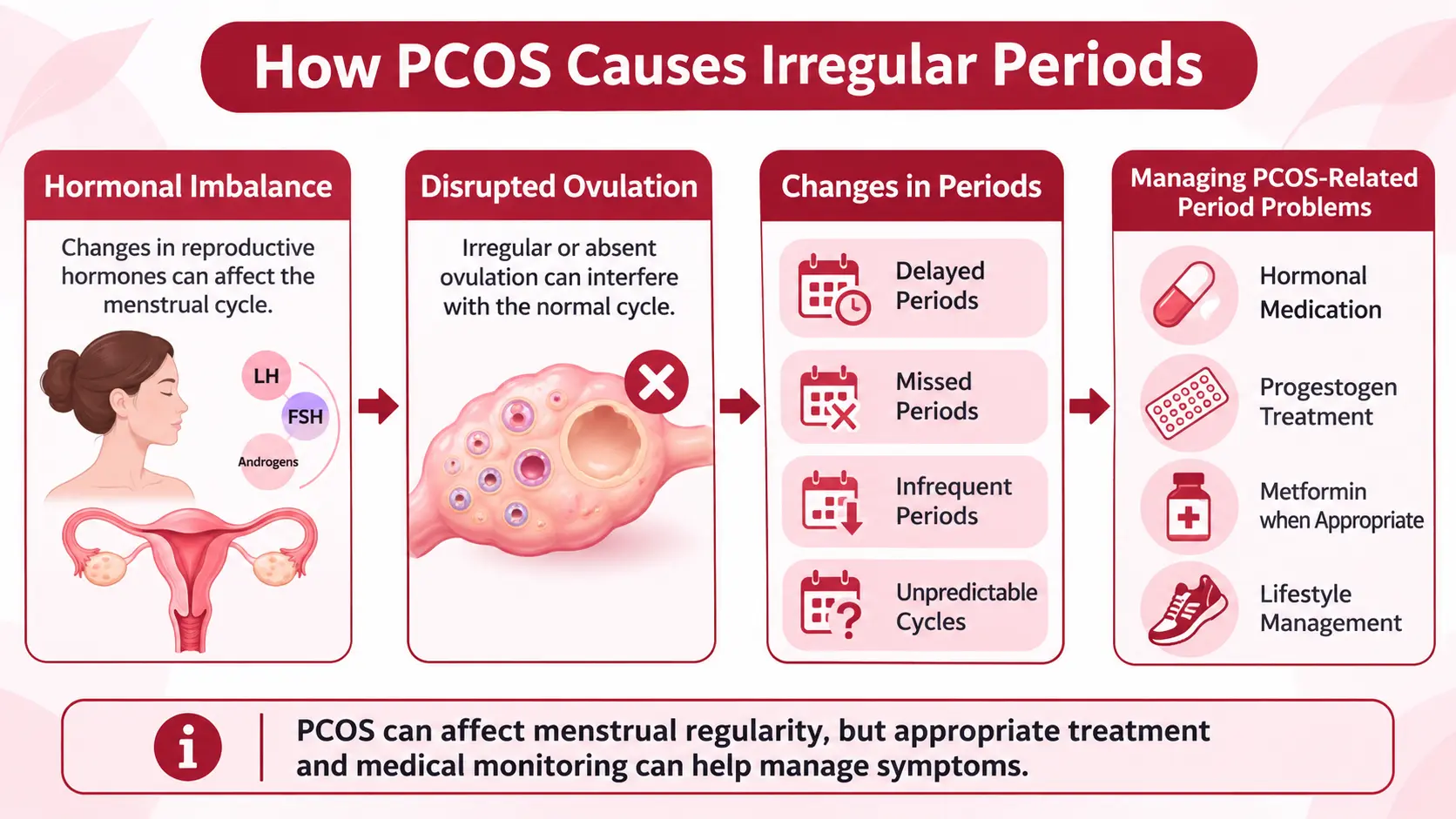
What Do Irregular Periods With PCOS Look Like?
Many women wonder how irregular are periods in PCOS and the answer is that the pattern can vary significantly from one person to another. There is no single way that PCOS affects the menstrual cycle, which is part of what makes the condition challenging to identify and manage.
Some women with irregular periods PCOS patterns may have cycles that are consistently longer than the typical 28 days. Instead of getting a period every month, they might have one every 40, 50 or even 60 days. The flow may be normal or lighter than usual because ovulation happened late or not at all during that cycle.
Other women may experience prolonged or heavy bleeding when a period does arrive, especially after a long gap. This happens because the uterine lining has had extra time to thicken. Some may notice unpredictable cycles where the interval between periods changes each time. Infrequent periods, meaning fewer than eight in a year, are also common. In more pronounced cases, periods may stop entirely for several months, which is known as amenorrhea.
Bleeding between periods can also occur. This happens when the uterine lining sheds partially at unexpected times rather than as part of a regular cycle. Any unusual bleeding pattern deserves medical attention, especially if it is new or has changed from what was previously normal for you.
| Menstrual Pattern | What It May Look Like |
|---|---|
| Infrequent periods | Fewer than eight periods in a year, with long gaps between cycles |
| Delayed periods | Cycles longer than 35 days, sometimes extending to 60 days or more |
| Missed periods | No period for three months or longer despite not being pregnant |
| Unpredictable cycles | Varying interval between periods with no consistent pattern |
| Heavy or prolonged bleeding | Periods that are unusually heavy or last longer than usual, often after a gap |
| Bleeding between periods | Spotting or bleeding at unexpected times outside the normal cycle |
How Long Can PCOS Delay Your Period?
PCOS can delay a period by weeks or even months. In some cases, women with PCOS go three to six months or longer without a period. The delay happens because ovulation does not occur on a predictable schedule. Since the menstrual cycle depends on ovulation to set its timing, the entire cycle shifts when ovulation is late or absent.
The length of the delay varies from person to person and can even change over time for the same individual. Some months may be closer to a normal cycle length while others stretch much longer. Factors such as stress, weight changes, diet and physical activity levels can all influence how long a delay lasts in addition to the underlying hormonal imbalances of PCOS.
Going without a period for three months or longer is generally considered a reason to seek medical advice. Prolonged gaps between periods can lead to the uterine lining becoming thicker than usual, which may increase the risk of endometrial changes over time. A healthcare provider can evaluate the situation and recommend whether treatment to induce a period is appropriate.
Other PCOS Symptoms That May Occur Alongside Irregular Periods
PCOS rarely shows up as irregular periods alone. Most women experience a combination of symptoms that reflect the underlying hormonal imbalances. Hormonal changes can also affect sexual wellbeing at different stages of life. For a separate discussion, read about the return of sexual drive after menopause.
Recognizing these alongside irregular periods can help in understanding the broader picture of the condition.
Common symptoms that may appear with irregular periods include excess facial or body hair growth, a condition known as hirsutism. This happens because elevated androgen levels stimulate hair growth in areas typically associated with male patterns. Acne and oily skin are also common for similar hormonal reasons. Hair thinning on the scalp may occur in some women.
Weight changes are frequently reported, particularly difficulty losing weight or unexplained weight gain. Darkened skin patches, especially around the neck, underarms or skin folds, can appear and are linked to insulin resistance. Many women also report difficulty conceiving, which connects directly to irregular or absent ovulation.
PCOS may also be associated with changes in vaginal discharge, although discharge alone is not a defining symptom. Understanding PCOS and vaginal discharge can help distinguish these changes from other possible causes.
How Are PCOS Related Irregular Periods Diagnosed?
Diagnosing PCOS as the cause of irregular periods involves looking at the full clinical picture rather than relying on a single test. Healthcare providers typically use a combination of medical history, physical examination, blood tests and sometimes imaging to reach a diagnosis. The process is designed to rule out other possible causes of menstrual irregularity before confirming PCOS.
Medical and Menstrual History
The diagnostic process usually begins with a detailed conversation about your menstrual history. Your healthcare provider will ask about the frequency, duration and flow of your periods, when the irregularity started and whether there are any patterns.
They may also ask about other symptoms such as hair growth, acne, weight changes and any difficulties with fertility. Family history is relevant because PCOS tends to run in families, so information about relatives can provide useful context.
Blood Tests
Blood tests help measure hormone levels and rule out other conditions. Your provider may check androgen levels, thyroid function, prolactin and other hormones that affect the menstrual cycle. Blood sugar and insulin levels may also be tested since insulin resistance is closely linked to PCOS.
These tests help build a complete picture of your hormonal profile and identify whether PCOS is the likely cause of irregular periods or whether another condition is responsible.
Pelvic Ultrasound
A pelvic ultrasound may be used to examine the ovaries. In many women with PCOS, the ovaries appear larger than typical and contain multiple small follicles arranged around the surface.
However, the presence of these follicles alone does not confirm PCOS, and not every woman with PCOS has this finding on ultrasound. Ultrasound is one piece of information that contributes to the diagnosis but is not compulsory for everyone. The diagnosis is based on a combination of factors including symptoms, blood test results and imaging when used.
Treatment for Irregular Periods Due to PCOS
When it comes to how to treat irregular periods in PCOS, the approach depends on each individual situation including symptoms, overall health and whether pregnancy is a goal. Treatment is personalized because PCOS affects every woman differently and the best results come from addressing the specific needs of each person rather than applying a one size fits all solution.
Combined Oral Contraceptive Pills
For women who are not trying to conceive, combined oral contraceptive pills are often recommended as a first option. These pills contain both estrogen and progestin and work by regulating hormone levels.
They help create a predictable menstrual cycle, typically resulting in a period each month during the inactive pill days. Beyond cycle regulation, these pills can also help reduce acne and excess hair growth by lowering androgen levels. They may also help protect the lining of the uterus from becoming too thick, which is a concern when periods are infrequent.
Progestogen Treatment
For women who cannot or prefer not to take combined pills, progestogen treatment may be an alternative. This involves taking a progestogen medication for a specific number of days each cycle to trigger a period.
It does not regulate the cycle in the same ongoing way that combined pills do, but it ensures that the uterine lining sheds regularly, which helps reduce the risk of endometrial changes. Progestogen treatment is often used when the main goal is to protect the uterus rather than to prevent pregnancy.
Metformin
Metformin is a medication commonly used for type 2 diabetes but is sometimes prescribed for women with PCOS, particularly those who have insulin resistance. By improving how the body responds to insulin, metformin may help lower androgen levels and in some cases improve the frequency of ovulation.
This can lead to more regular menstrual cycles for some women. The effect varies and metformin is often used alongside lifestyle changes rather than as a standalone solution.
Treatment When Trying to Conceive
When a woman with PCOS is trying to become pregnant, the treatment approach shifts. Medications that stimulate ovulation may be prescribed to help the ovaries release eggs more regularly.
Letrozole is commonly used for this purpose and other options may be considered depending on individual circumstances. Lifestyle changes are also emphasized because weight management can improve ovulation frequency. In some situations, assisted reproductive technologies may be discussed if other approaches are not successful.
When conception does not occur despite trying, an assessment of female infertility may help identify other factors that need attention.
Lifestyle Changes That May Support Menstrual Regularity With PCOS
Alongside medical treatment, lifestyle changes play a meaningful role in managing PCOS and supporting menstrual regularity. These changes focus on areas that influence insulin sensitivity, hormone balance and overall well being. Many women find that consistent lifestyle adjustments can lead to improvements in cycle regularity over time.
Follow a Balanced Eating Pattern
A balanced eating pattern that includes a variety of vegetables, fruits, whole grains, lean proteins and healthy fats may help support hormone balance. Since insulin resistance is a key factor for many women with PCOS, choosing foods that have a gentler effect on blood sugar can be beneficial.
There is no single diet that works for everyone, but focusing on whole foods and minimizing highly processed options is a practical starting point that most healthcare providers agree on.
Stay Physically Active
Regular physical activity helps improve how the body uses insulin and may support weight management. Both aerobic exercise and strength training can be valuable. Even moderate activity such as brisk walking for 30 minutes most days can make a difference. Exercise may also help lower androgen levels and support more regular ovulation, which can contribute to a more predictable menstrual cycle.
Maintain Healthy Sleep Habits
Sleep quality affects hormone regulation more than many people realize. Poor sleep can increase insulin resistance and disrupt the hormones that control appetite and stress. Aim for consistent sleep and wake times, limit screen exposure before bed and create a restful environment. Better sleep habits may not directly fix irregular periods but they support the overall hormonal environment that influences cycle regularity.
Manage Stress
Chronic stress raises cortisol levels, which can interfere with the hormones that regulate the menstrual cycle. Stress management techniques such as deep breathing, meditation, yoga or simply making time for activities you enjoy can help. While stress alone is not the cause of PCOS, reducing stress may help improve overall hormonal balance and support more regular cycles over time.
Your PCOS Period Tracking Checklist
Keep a record of these changes to discuss with your healthcare provider.
Period datesStart and end dates
Flow changesLight, normal or heavy
Cycle gapsDays between periods
Other symptomsPain, spotting or changes
Tip: Share your cycle records during your medical appointment to help explain your menstrual pattern.
When Should You See a Doctor About Irregular Periods With PCOS?
Knowing when to seek medical advice is important. If your periods have become consistently irregular, if you are having fewer than eight periods a year, or if you have gone three months or longer without a period, it is time to consult a healthcare provider. These patterns suggest that ovulation is not happening regularly and a medical evaluation can help determine whether PCOS or another condition is the cause.
You should also see a doctor if you experience unusually heavy or prolonged bleeding, bleeding between periods, or any sudden change in your menstrual pattern. If you are trying to conceive and are having difficulty, irregular periods may be a contributing factor and a healthcare provider can evaluate your situation and discuss options.
Other signs that warrant a medical visit include new or worsening excess hair growth, persistent acne that does not respond to standard treatments, unexplained weight changes or darkened skin patches. These symptoms alongside irregular periods may point to an underlying hormonal condition that needs professional assessment.
⚕️ Medical Disclaimer
FAQ
Does PCOS Cause Irregular Periods?
Yes, PCOS is one of the most common reasons for irregular periods in women of reproductive age. Hormonal imbalances interfere with ovulation, which disrupts the normal menstrual cycle and leads to unpredictable, infrequent or sometimes absent periods.
Can You Have PCOS Without Irregular Periods?
Yes, some women with PCOS continue to have regular menstrual cycles. PCOS presents differently in each person and symptoms can vary widely. A woman may have other signs of PCOS such as acne, excess hair growth or difficulty conceiving while still experiencing regular periods.
How to Cure PCOS Irregular Periods?
There is no permanent cure for PCOS but irregular periods can often be managed. Treatment options include hormonal medications, lifestyle changes and in some cases insulin sensitising medicines. A healthcare provider can recommend an approach based on individual symptoms and goals.
Can PCOS Cause Periods to Stop Completely?
Yes, in some cases PCOS can cause periods to stop entirely for months at a time. When ovulation does not occur regularly, the menstrual cycle may pause. Going without a period for three months or longer warrants medical evaluation.
How Many Periods Should Someone With PCOS Have in a Year?
A typical menstrual cycle results in roughly 11 to 13 periods per year. Women with PCOS may have fewer than eight periods annually. Having very infrequent periods or going longer than three months without one is a reason to speak with a healthcare provider.

Years of Experience: 10+ years Education: B.Sc. in Biomedical Science (Monash University, Melbourne, Australia) PG Diploma in Health & Medical Communication (University of Sydney, Australia) Experience: Erica Wilson is an…

