

Enclomiphene for Male Fertility: A Guide to Testosterone & Sperm Health?
By Ezra Allen, Aug-12-2026


 Dr. Arjun Srivastav Medical Reviewer (Pharm D)
 Are you feeling too low, tired, or having problems conceiving with your partner? Many men with such concerns look for treatment options to improve hormone levels without fully understanding how these treatments work or the possible risks involved.
When exploring treatment options, maintaining reproductive wellness is an important consideration. Having a clear understanding of different approaches can help you discuss suitable options with a healthcare professional.
Among the available options, the use of Enclomiphene Citrate for hormonal support and fertility-related concerns in men has gained attention. Let us find out how enclomiphene may help support sperm production and male reproductive health.
How Does Testosterone Relate to Male Fertility?
To understand how fertility treatments work, it is important to have an idea of how the male reproductive system functions. Hormones act as chemical messengers that help regulate processes, including sperm production.
Role of Testosterone
Testosterone is the male sex hormone and plays an important role in male reproductive health. Inside the testes, testosterone is required in high concentrations inside the testes to support sperm development.
However, normal sperm production does not depend on testosterone. It also requires communication between the brain, pituitary gland, and testes.
Role of LH and FSH
Apart from testosterone the pituitary gland in the brain releases two hormones involved in male fertility:
- Luteinizing hormone (LH)
- Follicle-stimulating hormone (FSH)
LH stimulates the Leydig cells in the testes to produce testosterone, which supports sperm development.
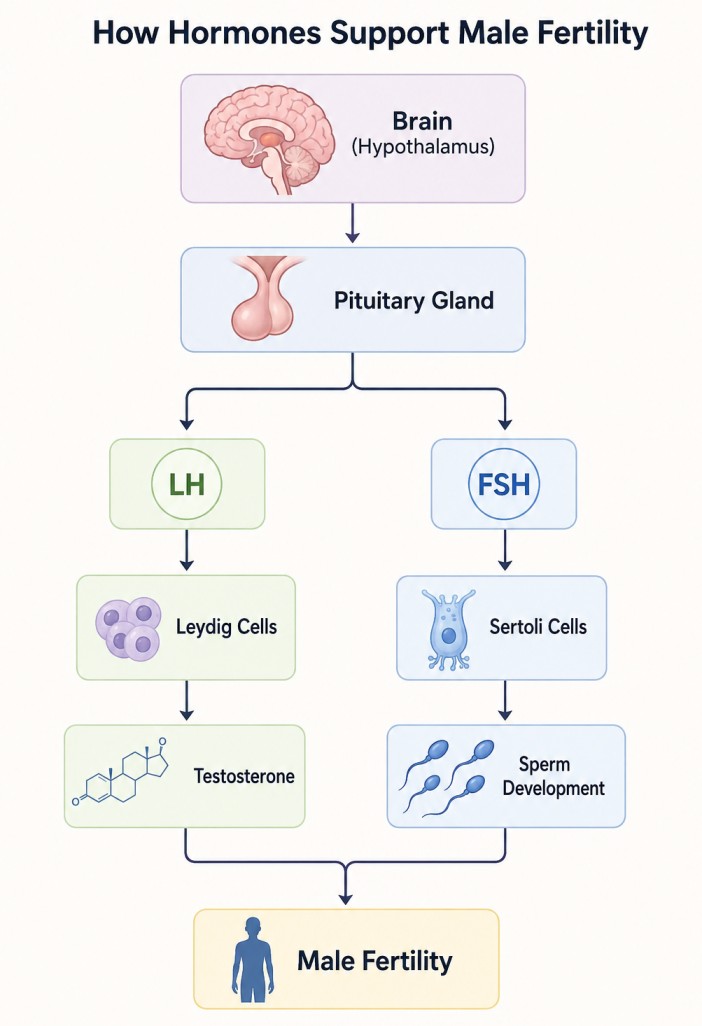
FSH works directly on the Sertoli cells in the testes. Helps regulate sperm production. Both hormones play a role, in maintaining the hormonal environment required for normal sperm development.
Sperm Production Process
Spermatogenesis is a process that requires continuous hormonal support. If the levels of LH and FSH are not properly regulated the testes may not receive the signals needed for sperm production.
This is why hormonal evaluation is often a part of assessing male fertility problems.
How Does Enclomiphene Work in Men?
Enclomiphene belongs to a group of medicines called selective estrogen receptor modulators (SERMs). If you want to understand its composition and how it works in more detail, you can read what is enclomiphene citrate. It has been studied for men with low testosterone levels, particularly those with secondary hypogonadism, where the brain does not send enough hormonal signals to stimulate testosterone production.
Unlike external testosterone therapy, enclomiphene works by supporting the body’s own hormone signalling pathway.
- Enclomiphene affects estrogen feedback signals in the hypothalamus and pituitary gland.
- This may encourage the pituitary gland to release more LH and FSH.
- Increased LH and FSH signalling may help support natural testosterone production and sperm development in suitable patients.
Studies have shown that enclomiphene may increase testosterone levels while maintaining sperm production in some men, although individual results can vary.
How May Enclomiphene Support Fertility?
Enclomiphene works through a different approach compared with external hormone replacement. Instead of directly adding testosterone into the body, it helps support the body’s own hormone signalling process.
Hormone Production Stimulation
- Enclomiphene works by affecting estrogen feedback signals between the brain and pituitary gland.
- This may encourage the pituitary gland to release higher levels of LH and FSH.
- Increased LH and FSH levels can support the natural production of testosterone and help maintain the hormonal environment needed for sperm development.
The response to treatment can vary from person to person. Men with secondary hypogonadism, where the brain is not sending enough signals to stimulate testosterone production, may be more likely to respond compared with men who have other causes of infertility.
Hormonal Support for Sperm Production
- By supporting LH and FSH production, enclomiphene may help improve the hormonal signals involved in sperm production.
- Some studies have shown that enclomiphene can increase testosterone levels while helping maintain sperm production in selected men. However, improvement in sperm count or quality depends on individual health factors and the underlying cause of fertility problems.
Enclomiphene vs TRT for Fertility
The choice of treatment for improving testosterone levels is an important consideration, especially for men who want to maintain their chances of having children in the future. Understanding the difference between Enclomiphene and TRT can also help explain why these treatments affect testosterone and fertility differently.
External Testosterone Effects
- Testosterone replacement therapy (TRT) provides testosterone from an external source.
- When the body detects higher levels of external testosterone, the brain may reduce the signals that normally stimulate natural testosterone production.
Fertility Considerations
- TRT can lower the production of LH and FSH, which may reduce testosterone production inside the testes and affect sperm production.
- Some men using TRT experience a significant decrease in sperm count because of this hormonal suppression.
- Enclomiphene works differently because it supports the body’s natural hormone signalling rather than replacing testosterone directly.
- For men who are concerned about fertility, doctors may consider treatments that help maintain natural reproductive hormone pathways.
However, the right treatment depends on the reason behind low testosterone in men or fertility problems. A medical evaluation is important before choosing any hormonal therapy.
Enclomiphene vs Clomid: Key Differences for Male Fertility
| Feature | Enclomiphene | Clomid (Clomiphene Citrate) |
|---|---|---|
| What it is | The enclomiphene isomer of clomiphene citrate | A medicine containing two isomers, including enclomiphene and zuclomiphene |
| How it works | Helps reduce estrogen feedback and may encourage the release of LH and FSH | Works on estrogen receptors and can increase LH and FSH signalling |
| Effect on testosterone | May support the body's natural testosterone production | May also increase natural testosterone production in some men |
| Sperm production | Has been studied for maintaining sperm production while increasing testosterone in some men | Has been used off-label in men with fertility concerns and may support sperm production |
| Fertility consideration | May be considered for selected men who want to maintain fertility while addressing low testosterone | May also be considered in some men, depending on their hormone levels and fertility needs |
| Response | Results can vary depending on the underlying condition | Results can also vary from person to person |
| Medical guidance | Requires assessment of hormones and fertility status | Requires medical evaluation to determine whether it is appropriate |
Enclomiphene and Clomid are closely related, but they are not exactly the same medicine. You can learn more about the Enclomiphene vs Clomiphene differences, including how they may affect LH and FSH signalling. The appropriate option depends on the man’s hormone levels, fertility goals, and underlying condition.
Can Enclomiphene Increase Sperm Count?
Many men want to know whether enclomiphene can increase sperm count. The answer depends on the individual’s hormone levels, overall health, and the reason behind reduced sperm production.
Individual Response
Every person responds differently to hormone treatments. Some men may experience improvements in sperm count, motility, or other semen parameters, especially when fertility issues are related to low hormonal signalling.
However, enclomiphene may not improve fertility problems caused by conditions such as blocked sperm pathways, genetic factors, or severe testicular problems.
Necessity of Testing Semen
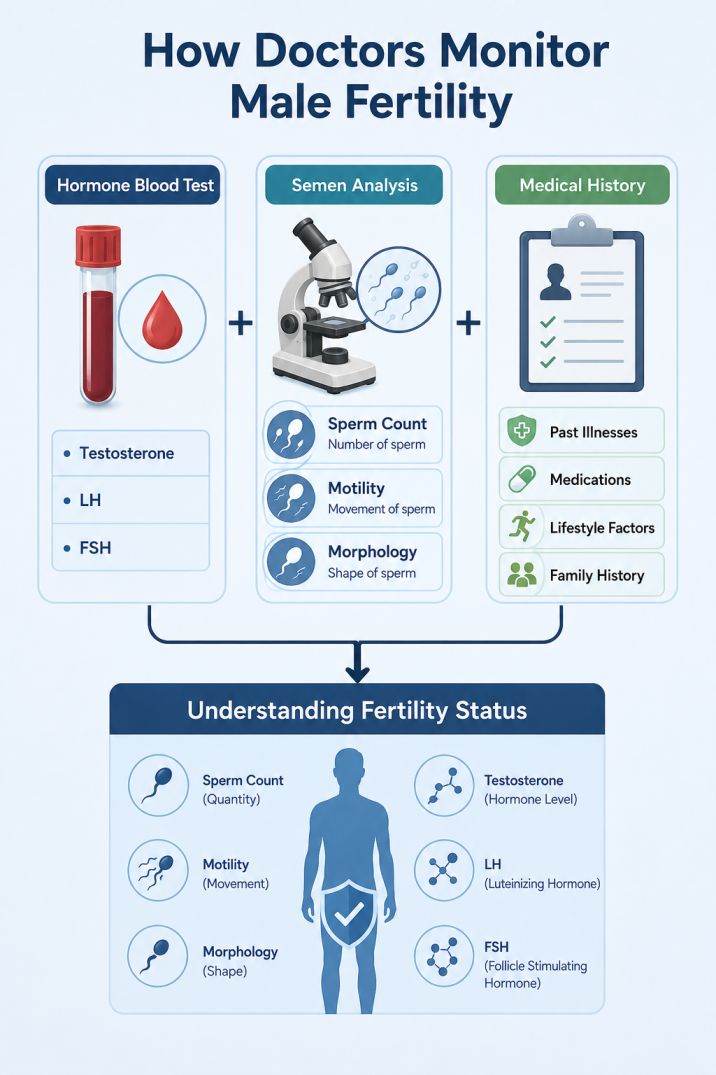
A semen analysis is the most reliable way to evaluate changes in sperm health. Doctors may recommend testing before and during treatment to monitor:
- Sperm count
- Sperm movement (motility)
- Sperm shape (morphology)
Regular monitoring helps determine whether the treatment is providing benefits for an individual’s fertility goals.
Who Can Use Enclomiphene for Infertility Treatment?
Enclomiphene is not suitable for every type of male infertility problem. It may be considered for certain men, especially when fertility issues are related to hormonal signalling problems.
Men with Hormonal Issues
Men with secondary hypogonadism, where the brain does not send enough signals to stimulate testosterone production, may be potential candidates for enclomiphene treatment.
In this condition, the testes may still have the ability to produce testosterone and sperm, but they may require stronger signals from hormones such as LH and FSH.
However, enclomiphene may not help fertility problems caused by other factors such as blocked sperm pathways, genetic conditions, or problems directly affecting the testes.
Doctor Evaluation
Before starting any fertility-related treatment, proper medical evaluation is important. A healthcare professional may recommend:
- Blood tests to check testosterone, LH, FSH, and other hormone levels.
- Semen analysis to evaluate sperm count, movement, and quality.
- Physical examination to understand the possible cause of fertility concerns.
The treatment approach depends on the individual’s hormone levels, fertility goals, and overall health condition.
Possible Side Effects of Enclomiphene
Like any medication, enclomiphene may cause side effects in some people. The response can vary from person to person.
Some possible side effects may include:
- Headache
- Mood changes
- Hot flashes
- Nausea
- Changes in hormone levels
- Visual disturbances (rare)
If any unusual symptoms occur during treatment, it is important to discuss them with a healthcare professional.
Conclusion
Male fertility depends on several factors, including hormone balance, sperm production, and overall reproductive health. Enclomiphene may help some men by supporting natural hormone signals that are involved in testosterone and sperm production, especially when low hormone signalling is the main concern.
However, it is not suitable for every fertility problem, and results can vary from person to person. If you are experiencing low testosterone symptoms or fertility concerns, a proper medical evaluation can help identify the cause and guide the right treatment approach.
Reference
Male infertility – Mayo Clinic.
Low Testosterone & fertility – Cleveland Clinic.
FAQ
Q.1: Does Enclomiphene help with fertility?
Enclomiphene may help support fertility in some men, especially those with hormonal issues such as low LH and FSH signalling. It works by encouraging the body to produce its own testosterone and maintain the hormones involved in sperm production. Results can vary depending on the cause of fertility problems.
Q.2: Can you get to 1000 testosterone with Enclomiphene?
Enclomiphene may increase testosterone levels in some men, but reaching a specific level like 1000 ng/dL is not guaranteed. The response depends on factors such as baseline testosterone levels, hormone balance, and individual response to treatment.
Q.3: What happens if a man takes Enclomiphene?
When a man takes enclomiphene, it may help increase signals from the brain that stimulate the production of LH and FSH. These hormones support natural testosterone production and sperm development. However, the effects can differ between individuals, and medical guidance is recommended before starting treatment.
Q.4: Which is better for fertility, Enclomiphene or Clomid?
Both enclomiphene and Clomid (clomiphene citrate) belong to the same medication group called selective estrogen receptor modulators (SERMs). Enclomiphene is one component of clomiphene and has been studied for supporting testosterone levels while maintaining sperm production. The better option depends on the individual's hormone levels, fertility goals, and doctor's evaluation.
Q.5: Does Enclomiphene increase testosterone without affecting fertility?
Enclomiphene has been studied as an option that may increase natural testosterone production while supporting sperm production in certain men. This is different from external testosterone therapy, which can suppress LH and FSH signals needed for sperm production.
Q.6: Can Enclomiphene replace TRT for men who want children?
Enclomiphene and TRT work differently. Some men who want to maintain fertility may discuss options like enclomiphene with a healthcare professional because it supports the body's own hormone production instead of providing external testosterone. The right choice depends on individual health factors.

Years of Experience: 12+ Years Education: Master of Sexology - [University of Sydney] MBBS (Bachelor of Medicine, Bachelor of Surgery) - [Torrens University Australia] BSc in Medical Laboratory Technology -…

