




 Dr. Arjun Srivastav
Glycopyrrolate 2 mg is an oral tablet built around the active ingredient glycopyrrolate. It is delivered at a 2 mg strength and sits within the anticholinergic, also called antimuscarinic, class of medicines.
The tablet form sets it apart from injectable or inhaled versions of the same ingredient, which are used in different clinical settings. It is supplied as a prescription product.
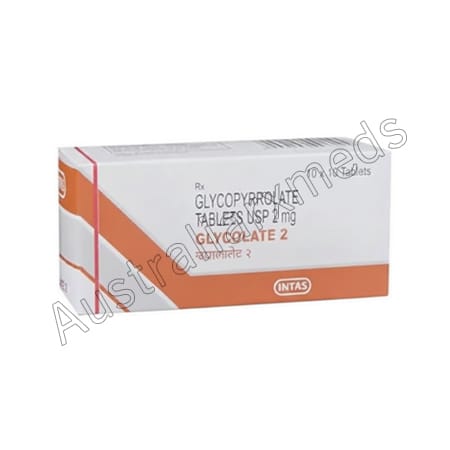
In Australia the 2 mg tablet is most often recognised under the Glycolate 2 name. This brand is manufactured by Intas Pharmaceuticals Ltd. Pharmacists and prescribers refer to Glycolate 2 when discussing this strength.
Glycopyrrolate 2 Mg at a Glance
| Product detail | Information |
| Active ingredient | Glycopyrrolate |
| Strength | 2 mg |
| Form | Tablet |
| Drug class | Anticholinergic / antimuscarinic |
| Brand | Glycolate 2 |
| Manufacturer | Intas Pharmaceuticals Ltd |
| Prescription status | Prescription medicine |
What Is Glycopyrrolate 2 Mg?
Glycopyrrolate is the active ingredient that gives this medicine its effect. The 2 mg figure refers to the amount of that ingredient in each tablet.
The oral tablet is swallowed whole with water. It works through the digestive system rather than being injected or inhaled.
Classification places glycopyrrolate among anticholinergic, or antimuscarinic, medicines. That grouping describes how the ingredient interacts with certain receptors in the body.
The 2 mg oral tablet and the injectable or inhaled forms share the same active ingredient. They are not interchangeable because the route of delivery changes how and where the medicine acts.
Glycolate 2 is the brand name for this 2 mg tablet, produced by Intas Pharmaceuticals Ltd. Searching for Glycolate 2 tablet or glycopyrrolate 2 mg Intas points to this same presentation.
💡 Tip
What Is Glycopyrrolate 2 Mg Used For?
The oral Glycopyrrolate 2 mg tablet is used as an adjunct in managing peptic ulcer symptoms. An adjunct role means it supports a broader treatment plan rather than working as a standalone ulcer healing option.
Peptic ulcer symptoms can include:
- Abdominal discomfort
- Related digestive complaints
The tablet is intended to ease those symptoms alongside other measures directed at the underlying cause.
Treatment always depends on what is driving the ulcer. The tablet forms only one part of the approach a prescriber puts together.
The Glycolate 2 uses people read about online almost always relate to this oral tablet context. It is worth separating the oral tablet from injectable or inhaled glycopyrrolate, which are used for different purposes.
Mixing indications from those other formulations leads to misunderstanding. The focus here stays on what the oral tablet is used for.
How Does Glycopyrrolate 2 Mg Work?
The body uses a messenger called acetylcholine to switch on muscarinic receptors. These receptors drive certain secretions and smooth muscle activity.
Glycopyrrolate blocks peripheral muscarinic activity. This reduces those secretions and alters how smooth muscle behaves in parts of the digestive tract.
Because this anticholinergic effect changes secretions and muscle tone, it can also produce effects people notice directly. These can include:
- Dry mouth, as certain secretions are reduced
- Constipation, from slowed movement through the gut
- Blurred vision, from changes to the eye muscles
- Difficulty urinating, from effects on the bladder
Glycopyrrolate is described as an antimuscarinic as well as an anticholinergic. Both terms point to the same receptor blocking action.
Glycopyrrolate 2 Mg Dosage
The dosage of Glycopyrrolate 2 mg is set by a prescriber. It is not something to adjust independently.
The product information describes a typical adult dosing schedule for the 2 mg tablet. It is taken two or three times daily at equally spaced intervals.
Frequency is decided according to how each person responds. The aim is always to use the lowest effective dose that keeps symptoms controlled.
Key dosage details to keep in mind:
- Typical adult schedule is 2 mg two or three times daily
- Maximum recommended daily dosage is 8 mg
- The lowest effective dose principle guides every decision
- If symptoms can be controlled at a lower strength, the prescriber may switch to the 1 mg tablet
This is why 2 mg is not automatically suitable for everyone. Increasing or decreasing the dose without guidance changes how the tablet behaves and can shift the balance between benefit and the effects described earlier.
Glycopyrrolate 2 Mg Missed Dose
If a dose is missed, take it when remembered, unless the time for the following dose is close. In that case skip the missed dose and continue the usual schedule. Two doses are never taken together to make up for one that was missed.
Glycopyrrolate 2 Mg Overdose
Taking more than the prescribed amount increases the anticholinergic effects. Signs that warrant urgent attention include:
- Severe effects on the eyes
- Severe effects on the bladder
- Severe effects on the heartbeat
- Severe effects on mental state
If an overdose is suspected, contact a healthcare professional or emergency service immediately.
How to Take Glycopyrrolate 2 Mg
Taking Glycopyrrolate 2 mg means following the prescription exactly as written. Consistent dosing at spaced intervals keeps the effect steady across the day.
A few points help the tablet work as intended:
- Follow the prescription exactly
- Keep dosing consistent at spaced intervals
- Do not change strength on your own
- Tell the prescriber about other medicines and supplements already being used
If the tablet causes drowsiness, dizziness, or blurred vision, driving or operating machinery should be approached with caution until the effect is clear.
Common Side Effects of Glycopyrrolate 2 Mg
The common Glycopyrrolate 2 mg side effects reflect the anticholinergic action described earlier. Not everyone experiences all of them, and they often settle as the body adjusts.
Warnings and Precautions for Glycopyrrolate 2 Mg
Glaucoma
Glycopyrrolate 2 mg precautions include attention to glaucoma. The anticholinergic effect can increase pressure within the eye. Anyone with glaucoma needs their prescriber to review suitability before the tablet is used.
Urinary Retention
The tablet can affect bladder emptying, so Glycopyrrolate 2 mg warnings cover urinary retention. People already prone to difficulty urinating need this reviewed in advance.
Gastrointestinal Conditions
The tablet alters movement through the gut. Certain gastrointestinal conditions change how appropriate it is. Obstruction or severe slowing of the gut is relevant here, and the prescriber weighs this before prescribing.
Heart Conditions
Effects on heart rate fall under Glycopyrrolate 2 mg safety considerations. People with existing heart conditions need the prescriber to assess the tablet against their cardiac history.
Reduced Sweating and Heat Exposure
Reduced sweating is one of the anticholinergic effects. This means the body may handle heat less well. In hot weather or during exercise, this deserves attention and adequate fluid intake.
Kidney or Liver Problems
Kidney or liver function can influence how the tablet is handled. Glycopyrrolate contraindications and cautions take these into account. The prescriber adjusts or reviews use accordingly.
Older Adults
Older adults can be more sensitive to anticholinergic effects. Dosing and monitoring are approached with extra care in this group.
Other Considerations
A few additional situations require the prescriber to weigh use carefully:
- Myasthenia gravis, where anticholinergic effects are a concern
- Pregnancy, since the tablet is not automatically appropriate
- Breastfeeding, which also requires careful review
⚠️ Warning
Glycopyrrolate 2 Mg Drug Interactions
The Glycopyrrolate 2 mg interactions that matter most come from combining anticholinergic influences. Other anticholinergic medicines can add to the effect of the tablet.
Categories that genuinely change how the tablet behaves include:
- Other anticholinergic medicines
- Medicines that increase anticholinergic effects overall
- Relevant gastrointestinal motility interactions, since the tablet already alters movement through the gut
- Prescription medicines, over the counter preparations, and supplements
Tell the prescriber about everything already being taken so medicines to avoid with glycopyrrolate can be identified before the tablet is started. The aim is not to build a long list but to focus on the categories that genuinely change how the tablet behaves.
🚨 Important
Glycopyrrolate 1 Mg vs 2 Mg
| Feature | Glycopyrrolate 1 mg | Glycopyrrolate 2 mg |
|---|---|---|
| Active ingredient | Glycopyrrolate | Glycopyrrolate |
| Strength | 1 mg | 2 mg |
| Form | Tablet | Tablet |
| Drug class | Anticholinergic | Anticholinergic |
| Dose selection | Prescription dependent | Prescription dependent |
Both strengths share the same active ingredient and class. The difference is the amount per tablet.
The 2 mg option is not simply better or automatically more appropriate because it is a higher strength. Dose selection stays prescription dependent.
The lowest effective dose principle means a prescriber may prefer the 1 mg tablet if symptoms can be controlled at that level. This is why Glycopyrrolate tablet strengths are chosen by response rather than by assuming that more is preferable.
🔔 Reminder
Buy Glycopyrrolate 2 Mg in Australia
Glycopyrrolate 2 mg is available in Australia through AustraliaRxMeds. It is supplied as the Intas Glycolate 2 tablet in the strengths and packs shown on the product page.
The tablet is a prescription medicine, so use follows guidance from a healthcare professional. Pack options and pricing are listed with the product, and any questions about suitability are best directed to the prescriber before ordering.
FAQs
What is Glycopyrrolate 2 mg used for?
The oral tablet is used as an adjunct in managing peptic ulcer symptoms. It supports a wider treatment plan directed at the underlying cause.
Is Glycopyrrolate 2 mg an anticholinergic?
Yes. The tablet is classified as an anticholinergic, also described as antimuscarinic, because it blocks peripheral muscarinic activity.
Can Glycopyrrolate 2 mg cause dry mouth?
Yes. Dry mouth is one of the anticholinergic effects, since the tablet reduces certain secretions.
Can Glycopyrrolate 2 mg cause constipation?
Yes. Slowed movement through the gut can show up as constipation, which is one of the commonly noted effects.
Can I switch from Glycopyrrolate 1 mg to 2 mg?
Switching strengths is a decision for the prescriber. The 2 mg tablet is not automatically appropriate just because it is higher, and the lowest effective dose principle guides the choice.