
Sex Life With Prostate Cancer: How To Stay Active?
By Erica Wilson, Nov-02-2024


 Dr. Arjun Srivastav Medical Reviewer (Pharm D)
A prostate cancer diagnosis does not automatically mean the end of your sex life with prostate cancer. Treatment can change erections, libido, orgasm, ejaculation and intimacy. But sexual activity often continues in some form for many people.
The effects vary according to the type of treatment, the recovery process, your existing sexual function, your general health and your emotional wellbeing. In many situations, sex may need to change rather than stop completely.c
This article works as a practical guide to staying sexually active during and after treatment. It covers what to expect and how to approach intimacy when your sex life with prostate cancer feels uncertain.
Yes. Prostate cancer does not automatically mean the end of your sex life. However, treatment may affect erections, sexual desire, orgasm or ejaculation. Many people can remain sexually active by allowing time for recovery, adapting intimacy and discussing sexual-health concerns with their healthcare team.
Can You Still Have Sex With Prostate Cancer?
Yes, many people with prostate cancer can remain sexually active. But cancer treatment can change how sex feels and how sexual function works. Your sex life with prostate cancer may look different, but it does not have to disappear.
The diagnosis itself is different from the effects of treatment. Whether sex is appropriate depends on your health and where you are in the treatment process.
Recovery after surgery may require a period without sexual activity while tissues heal. Radiation, hormone therapy and other treatments can affect sexual function in different ways.
Anyone experiencing pain, bleeding or other concerning symptoms should speak with their healthcare team before continuing sexual activity. Getting the right guidance early can help you maintain a healthy sex life with prostate cancer.
Does prostate cancer itself cause sexual problems?
Sexual difficulties can result from several factors. Physical effects, anxiety after diagnosis, fatigue, relationship stress and treatment side effects can all play a part.
The Prostate Cancer Foundation of Australia makes an important distinction between sex, sexuality and intimacy. This broadens the conversation beyond erections alone.
Sex refers to physical activity. Sexuality covers how you experience yourself as a sexual person. Intimacy is about emotional closeness with a partner. Each of these can be affected in different ways.
How Can Prostate Cancer Affect Your Sex Life?
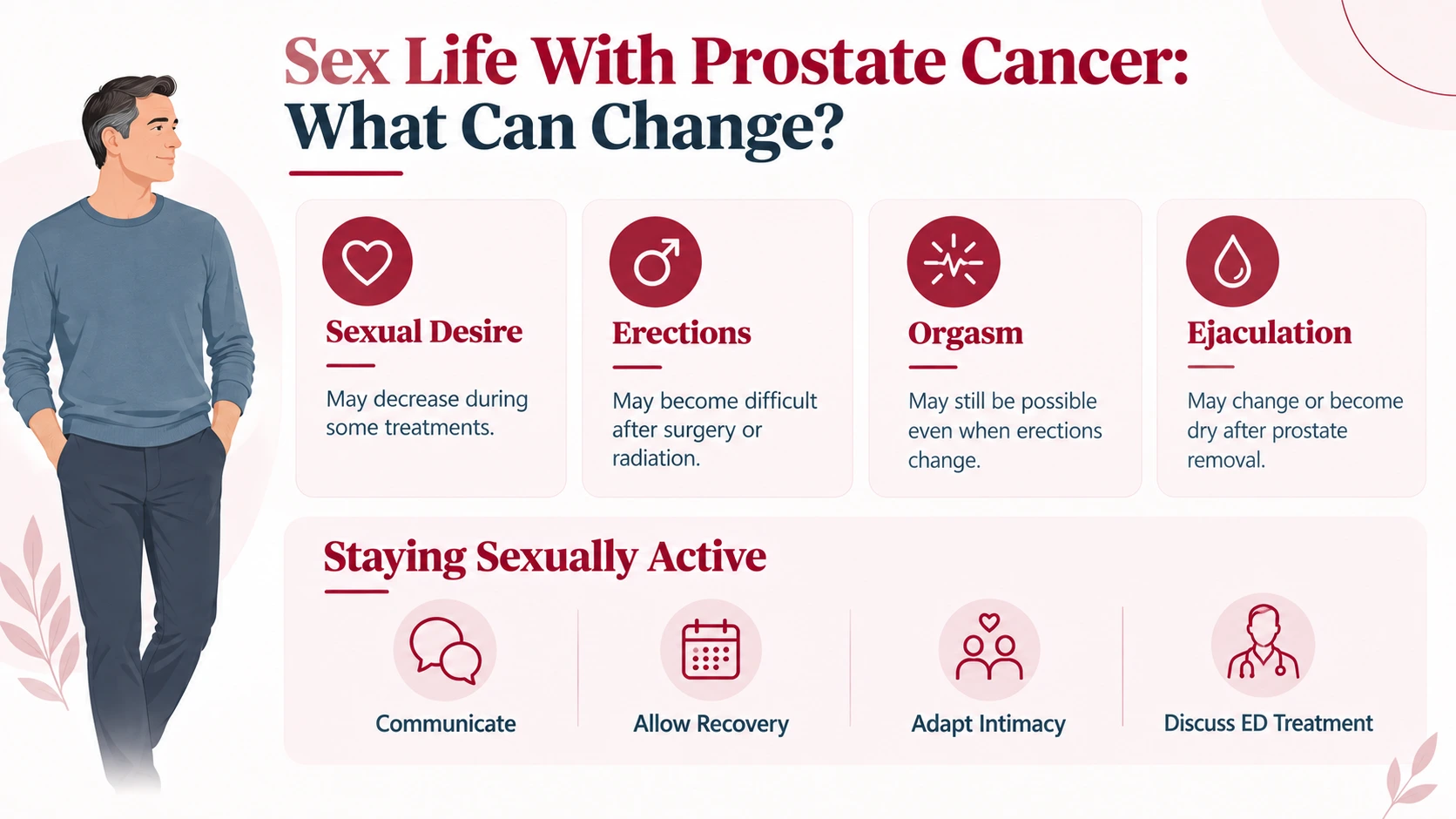
Treatment can bring several changes to sexual function. Understanding each one can help you prepare and respond as you navigate your sex life with prostate cancer.
Erectile dysfunction
Erectile dysfunction involves difficulty getting or maintaining an erection. Nerves and blood vessels involved in erections sit close to the prostate.
Surgery and radiation can affect erectile function. Recovery varies considerably from person to person. The extent of change often depends on the treatment type and your sexual function before treatment.
Lower sex drive
Hormone therapy can reduce testosterone, which may lower interest in sex. Fatigue and emotional stress can also reduce desire, even when the physical ability to have sex remains.
Changes in orgasm
Orgasm and erection are not the same thing. Someone may have difficulty achieving an erection but still experience orgasm. Understanding this distinction can reduce anxiety about what sexual function means after treatment.
Changes in ejaculation
After prostate removal, ejaculation changes because the prostate and seminal vesicles are removed. This can lead to what is called a dry orgasm. The sensation of climax occurs without semen release.
Changes in confidence and intimacy
Body image concerns, fear of disappointing a partner, anxiety about sexual performance and relationship strain can all affect intimacy.
The Prostate Cancer Foundation of Australia and Cancer Council Australia both identify erectile dysfunction, reduced libido, orgasm changes, ejaculation changes and emotional or intimacy effects as important aspects of sexual wellbeing after prostate cancer treatment.
Can You Have Sex During Prostate Cancer Treatment?
Many articles focus on sex after treatment. But the question of what happens during treatment matters just as much when thinking about your sex life with prostate cancer.
During prostate surgery recovery
Sexual activity may need to pause while tissues heal. Follow the surgeon’s instructions about when it is appropriate to resume.
There is no fixed rule that everyone can resume sex after a certain number of days. Recovery differs for each person.
During radiation therapy
Fatigue, erectile changes and shifts in sexual desire can occur during radiation therapy. Individual tolerance varies. What feels manageable can change from week to week.
During hormone therapy
Androgen deprivation therapy lowers testosterone. Libido may decrease, and erections and orgasm may also be affected. These changes can begin during treatment and may continue depending on the treatment plan.
During chemotherapy
Fatigue, general wellbeing and treatment specific advice may influence sexual activity during chemotherapy. Energy levels can fluctuate. What feels right can differ from one day to another.
Because every treatment plan is different, keep this section individualised. Rather than assuming sex is automatically safe or unsafe throughout a particular treatment, speak with your healthcare team for guidance specific to your situation.
Cancer Council Australia guidance confirms that cancer treatments can affect sexual desire, physical sexual function and intimacy.
What Happens to Sex After Prostate Surgery?
People searching for information on sex after prostatectomy, sex after prostate surgery or sex after prostate removal often want to understand what changes and what remains possible for their sex life with prostate cancer.
Erectile function
The nerves involved in erections sit close to the prostate. Nerve sparing surgery may preserve them in appropriate cases. But erectile recovery can take time.
Some people require treatment for erectile dysfunction after surgery. Recovery timelines vary.
Ejaculation
After radical prostatectomy, there is no semen ejaculation. Orgasm may still occur, though it may feel different for some people. The experience of climax can change even when the physical release of semen does not happen.
Urinary leakage
Some people experience urine leakage during sexual activity or orgasm after surgery. This can feel unsettling, but it is a known effect of prostate removal for some individuals.
Recovery
There is no single recovery timeline that applies to everyone. Cancer Research UK and the American Cancer Society both explain that prostatectomy can affect erections and ejaculation. Orgasm can remain possible despite the absence of ejaculation.
Can You Still Orgasm After Prostate Cancer Treatment?
Yes. An erection, ejaculation and orgasm are different sexual functions. So difficulty with one does not necessarily mean losing the others.
Orgasm may remain possible after prostate removal. It may become dry, and the sensation may be different.
Some people experience reduced intensity, while others find the experience changes in other ways. Hormone therapy can affect desire and orgasm. Individual experiences vary widely.
The American Cancer Society and Cancer Research UK both specifically explain dry orgasm following prostate removal. Understanding these distinctions can ease anxiety and support your sex life with prostate cancer.
7 Ways To Stay Sexually Active With Prostate Cancer
Practical actions can help you stay connected to intimacy and protect your sex life with prostate cancer during and after treatment.
1. Talk openly with your partner
Discuss changes in erections, libido, expectations, fears and what feels comfortable. Honest conversation reduces uncertainty and helps both partners adjust to changes together rather than separately.
2. Don’t make penetration the only goal
Intimacy can include kissing, touching, massage, mutual stimulation and other forms of sexual activity. Cancer Council and the Prostate Cancer Foundation of Australia both support broadening the definition of intimacy beyond penetration alone.
3. Start slowly after treatment
A gradual return to sexual activity after your healthcare team confirms recovery is appropriate can feel more manageable. Expecting everything to return to how it was immediately adds pressure.
4. Give yourself time to adjust
An early erection problem is not proof that sexual function will never improve. Recovery often unfolds over months. Early changes do not always reflect long term outcomes.
5. Explore what feels comfortable now
Sexual preferences and physical sensations may change after treatment. Being open to discovering new ways of experiencing pleasure can reduce pressure and create space for connection.
6. Address erection problems early
Discuss erectile difficulties with a urologist or doctor rather than silently accepting them. Early conversation opens up options that may be harder to access later.
7. Look after overall health
Physical activity, a healthy diet, sleep, avoiding smoking, limiting excessive alcohol and managing stress can support general wellbeing. These measures support overall health rather than serving as a cure for treatment related erectile dysfunction.
- Penetrative sex may become more difficult
- Erections may take longer or need support
- Sexual desire may fluctuate
- Orgasm or ejaculation may feel different
- You may need more time after treatment
- Kissing and physical affection
- Touching and massage
- Mutual sexual stimulation
- Emotional closeness with your partner
- Exploring new ways to enjoy intimacy
What Can Help Erectile Dysfunction After Prostate Cancer?
If erection problems continue, several medical approaches may be considered. Erectile dysfunction treatment options can vary depending on the underlying cause and your overall health. The right option depends on your health, cancer treatment and other medicines. These decisions belong in conversation with your healthcare team as you work on your sex life with prostate cancer.
PDE5 inhibitor medicines
This category of medication may be discussed with your doctor as one possible approach to erectile dysfunction after treatment.
Vacuum erection devices
These devices work by drawing blood into the penis to create an erection. They may be an option for some people.
Penile injections
These are prescription treatments administered as directed by a healthcare professional. They are typically considered when other approaches are not suitable.
Penile implants
A penile implant may be a possible option when other treatments are not suitable or effective. It is usually discussed after other approaches have been explored.
Penile rehabilitation
This concept involves structured approaches to supporting erectile function after treatment. There is no single proven protocol that applies to everyone.
Cleveland Clinic lists medications, vacuum devices, injections and implants among erectile dysfunction treatment options. It notes that penile rehabilitation approaches vary.
What If You Don’t Have an Erection?
No erection does not automatically mean no sex life with prostate cancer. Touching, kissing, massage, mutual stimulation and other forms of sexual intimacy can remain part of your relationship.
Communication with a partner about what feels good and what you both want can open up new ways of connecting. Sex therapy may also help where appropriate.
Cancer Research UK specifically notes that a person can still have a sex life even without a full erection. The Prostate Cancer Foundation of Australia encourages focusing on intimacy and different ways of giving and receiving pleasure.
How Can Prostate Cancer Affect Your Relationship?
Prostate cancer can affect relationships in several ways. Fear of rejection, embarrassment, changes in masculinity or body image, partner uncertainty, performance anxiety and avoiding intimacy because of fear of failure can all create distance between partners.
Open communication and understanding each other’s needs can help couples adapt to changes in sexual activity. Sexual responsiveness in a relationship can also be an important part of maintaining emotional and physical intimacy when sexual expectations change.
The most helpful response is to talk about the problem rather than avoiding intimacy. Couples counselling, sex therapy, cancer support services and speaking with the oncology or urology team can all help.
Cancer Council NSW recommends communication and adapting intimacy when prostate cancer changes sexual function. Open conversation is one of the strongest tools for protecting your sex life with prostate cancer.
When Should You Talk to Your Doctor About Sexual Problems?
Talk to your healthcare professional if you experience any of the following:
- Persistent erectile difficulties
- Painful orgasm or sex
- Significant urinary leakage
- Bleeding
- Major loss of libido
- Distress about sexual changes
- Relationship difficulties
- Uncertainty about when sexual activity is safe
- Concerns about fertility
Don’t wait until sexual problems become severe before bringing them up. The Prostate Cancer Foundation of Australia specifically recommends discussing sexual function with the healthcare team before treatment and seeking help when sexual changes become difficult to manage.
⚕️ Medical Disclaimer
Can Prostate Massage Enhance Sexual Pleasure?
Learn more about prostate massage, sexual pleasure and important considerations when exploring different forms of intimacy.
FAQ
Can you still have sex if you have prostate cancer?
Yes, many people remain sexually active. Treatment can change how sex feels and how sexual function works. What is appropriate depends on your treatment stage and overall health.
Does prostate cancer affect your sex drive?
Treatment, hormone changes, fatigue and emotional wellbeing can all influence sexual desire. The effect varies according to the treatment type and your individual circumstances.
Can you have sex after prostate removal?
Sexual activity may resume after recovery, with clearance from your healthcare team. Erectile function and ejaculation can change, and recovery timelines differ for each person.
Can you still orgasm after prostate cancer surgery?
Yes. Orgasm and ejaculation are different functions. Orgasm may remain possible after prostate removal, often as a dry orgasm, though the sensation may feel different.
Does hormone therapy affect sexual desire?
Hormone therapy lowers testosterone, which can reduce libido. Erections and orgasm may also be affected during treatment.
What helps erectile dysfunction after prostate cancer treatment?
Medical approaches such as medications, vacuum devices, injections, implants and penile rehabilitation may be considered. The right option depends on your health and treatment history.
Can you have intimacy without an erection?
Yes. Touching, kissing, massage and other forms of closeness can remain part of intimacy. Communication with a partner and sex therapy can also help.

Years of Experience: 10+ years Education: B.Sc. in Biomedical Science (Monash University, Melbourne, Australia) PG Diploma in Health & Medical Communication (University of Sydney, Australia) Experience: Erica Wilson is an…