

Enclomiphene Side Effects: What Should You Know?
By Ezra Allen, Aug-20-2026


 Dr. Arjun Srivastav Medical Reviewer (Pharm D)
 Starting treatment for low testosterone can feel like an important step for many men who are looking for options beyond regular hormone injections. Many people prefer treatments that work with the body’s natural hormone signals instead of directly replacing testosterone.
Enclomiphene Citrate is an oral medicine that has been studied for supporting testosterone production in men with certain hormone-related conditions while helping maintain sperm production. Like any medicine that affects hormone levels, it can cause Enclomiphene side effects in some people.
Knowing about Enclomiphene side effects before starting treatment helps you understand what changes may occur and when you should speak with a healthcare professional.
TL;DR – Quick Answer
Enclomiphene may cause side effects due to changes in hormone levels. Some commonly reported effects include headache, hot flashes, nausea, abdominal discomfort, fatigue, and mood changes. In rare cases, some people may experience vision-related symptoms or other serious reactions that require medical attention.
How Can Enclomiphene Cause Side Effects?
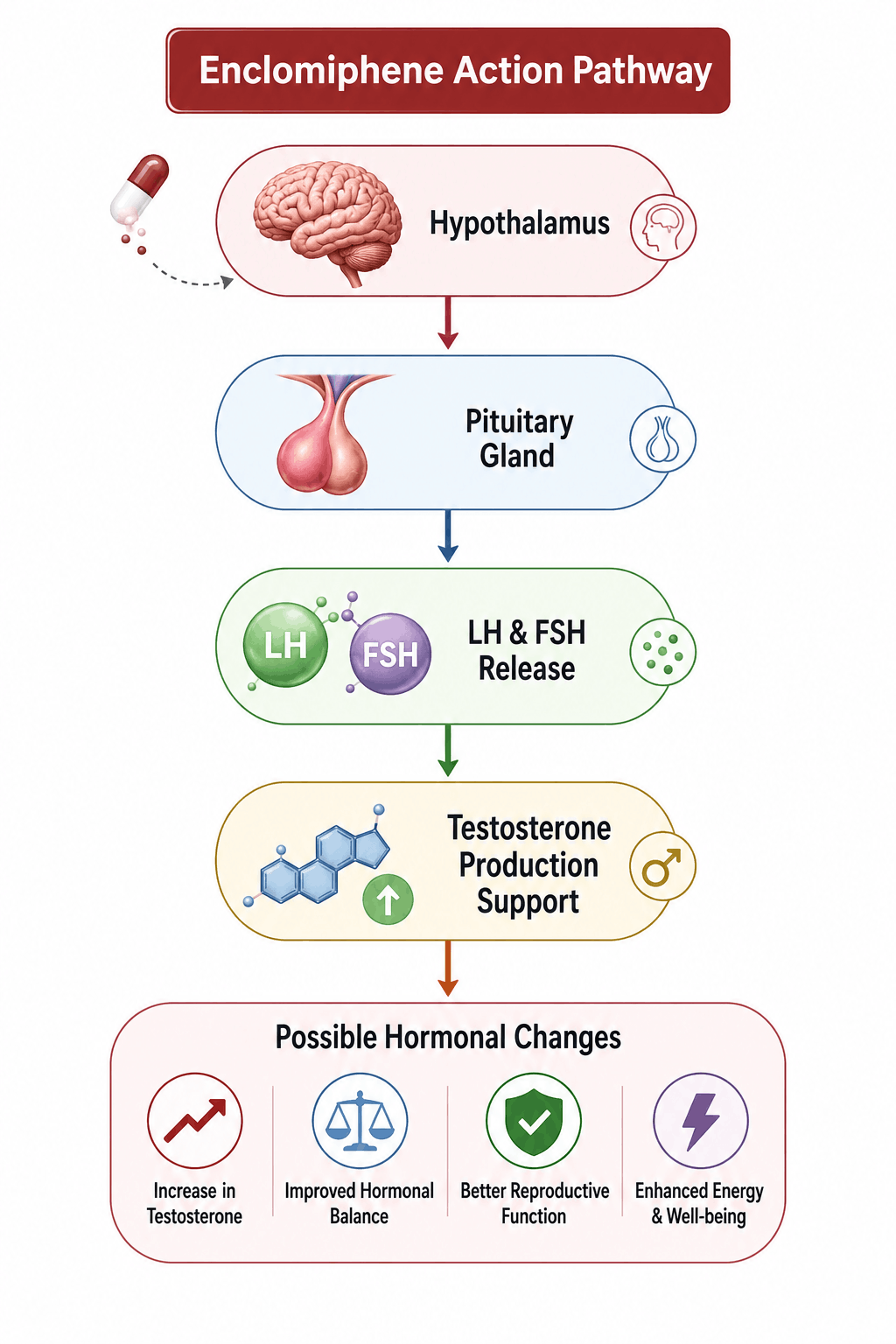
To understand why Enclomiphene side effects may happen, it is useful to know how enclomiphene works inside the body.
Enclomiphene belongs to a group of medicines called selective estrogen receptor modulators (SERMs). It affects estrogen signals in the brain, particularly in areas involved in hormone regulation. This can influence the release of hormones such as luteinizing hormone (LH) and follicle-stimulating hormone (FSH), which play a role in testosterone production.
Because the medicine changes normal hormone communication, some people may notice changes while their body adjusts. The way someone responds can depend on different factors, including existing hormone levels, age, metabolism, and overall health.
Not everyone experiences Enclomiphene side effects, and some people may notice only mild changes during treatment.
Common Enclomiphene Side Effects
When starting treatment, some people may experience enclomiphene citrate side effects as their body adapts to hormonal changes. Most reported reactions are generally mild, but any unusual or persistent symptoms should be discussed with a healthcare provider.
Headache
Headache is one of the commonly reported Enclomiphene side effects associated with enclomiphene use. Hormonal changes can sometimes affect the way the body feels during the early stages of treatment. Some people may notice occasional headaches, while others may not experience this symptom.
Maintaining proper hydration, getting enough rest, and informing your healthcare provider if headaches become frequent or severe can help manage the situation.
Mood Changes
Changes in hormone levels may also affect mood in some individuals. Some people may experience:
- Irritability
- Changes in emotional balance
- Increased feelings of anxiety
Keeping track of these changes can help your doctor understand how your body is responding to treatment. Never change your dose or stop taking the medicine without professional guidance.
Hot Flashes
Hot flashes may occur because enclomiphene influences estrogen-related pathways in the body. These sudden feelings of warmth may appear around areas such as:
- Face
- Neck
- Upper chest
Wearing comfortable clothing and avoiding personal triggers, such as excessive heat, may help reduce discomfort.
Nausea
Some people may experience mild digestive issues while taking enclomiphene. Possible symptoms may include:
- Nausea
- Stomach discomfort
- Mild abdominal pain
If stomach-related symptoms continue or become uncomfortable, it is better to discuss them with a healthcare professional.
Fatigue
Although many men take enclomiphene to address symptoms linked with low testosterone, some people may notice tiredness during the adjustment period.
The body may need time to adapt to hormonal changes. Maintaining healthy sleep habits, regular activity, and balanced nutrition may support energy levels during this period. If fatigue becomes persistent, medical advice should be considered.
Changes in Vision (Rare)
Vision-related problems are considered uncommon, but they should not be ignored. Some people using medicines from this class have reported symptoms such as:
- Blurred vision
- Light sensitivity
- Other visual disturbances
If you notice sudden changes in your vision, contact a healthcare professional promptly for advice.
Serious Enclomiphene Side Effects That Require Medical Attention
Although many people may experience only mild reactions, some symptoms should not be ignored. Understanding the possible serious side effects of enclomiphene can help you recognise when medical advice may be needed.
Severe Vision Problems
Vision-related symptoms are uncommon, but they require attention if they appear. You should contact your healthcare provider if you notice sudden changes such as:
- Blurred vision
- Flashes of light
- Dark spots or floaters
- Difficulty focusing
Do not continue ignoring these symptoms, especially if they appear suddenly or become worse over time.
Allergic Reactions
Although uncommon, some people may experience an allergic reaction after taking a medicine. Possible warning signs may include:
- Swelling of the face, lips, tongue, or throat
- Skin rash or hives
- Trouble breathing
- Severe discomfort
If these symptoms occur, seek medical help immediately.
Signs of Blood Clotting Problems
Medicines that affect estrogen pathways, including SERMs, have been associated with clot-related concerns. Although serious clotting events are considered uncommon, it is important to be aware of warning signs. Seek medical advice if you experience symptoms such as:
- Unusual swelling or pain in one leg
- Sudden chest discomfort
- Difficulty breathing
These symptoms should always be checked by a healthcare professional.
Factors That May Increase Enclomiphene Side Effects Risk
Enclomiphene does not affect everyone in the same way. Certain health conditions, medicines, and lifestyle factors may increase the chance of experiencing unwanted effects.
Understanding these factors before starting treatment can help you have a safer conversation with your healthcare provider.
Incorrect Dosage
Taking more than the prescribed amount will not necessarily improve results and may increase the chance of Enclomiphene side effects.
Always follow the dosage instructions provided by your healthcare professional. If you feel the treatment is not working as expected, discuss it with your doctor instead of changing the dose yourself.
Existing Health Conditions
Certain medical conditions may require additional caution before using enclomiphene. Inform your healthcare provider if you have a history of:
- Liver problems
- Pituitary gland conditions
- Blood clotting disorders
- Hormone-related health issues
A complete medical history helps your doctor decide whether enclomiphene is a suitable option for you.
Other Medicines and Supplements
Taking other medicines or supplements along with enclomiphene may affect how your body responds to treatment. Always share details about:
- Prescription medicines
- Over-the-counter products
- Hormonal supplements
- Herbal Products
This allows your healthcare provider to identify possible interactions and provide appropriate guidance.
Enclomiphene Side Effects in Women
Enclomiphene has mainly been studied for its effects on male hormone health, but medicines that influence estrogen pathways can also affect women differently.
In women, medicines related to this group have been used in fertility-related situations because they can influence ovulation. However, the possible reactions may differ from those seen in men. Possible effects may include:
- Hot flashes
- Breast tenderness
- Mood changes
- Pelvic discomfort
- Abdominal bloating
In fertility-related use, stimulation of the ovaries can rarely lead to a condition called ovarian hyperstimulation syndrome (OHSS), which may involve enlarged ovaries and fluid accumulation. Anyone experiencing severe abdominal pain, rapid weight gain, or breathing difficulties should seek medical advice.
Who Should Avoid Enclomiphene?
Before starting enclomiphene, it is important to discuss your health history with a healthcare provider.
The medicine may not be suitable for everyone, especially people with certain medical conditions or risk factors. Extra caution may be needed in people with:
- A history of liver disease
- Certain pituitary gland disorders
- Unexplained bleeding conditions
- Previous allergic reactions to enclomiphene or similar medicines
Your doctor can review your medical history and decide whether this treatment is appropriate for you.
How Can Enclomiphene Side Effects Be Managed?
Managing Enclomiphene side effects usually starts with regular monitoring and keeping your healthcare provider informed about any changes. Small adjustments and proper follow-up can help identify problems early.
Follow the Prescribed Dose
Take enclomiphene exactly as recommended by your healthcare provider. Avoid increasing, reducing, or changing your treatment schedule without medical advice, as hormone levels can be affected by these changes.
Regular Health Monitoring
Your doctor may recommend regular check-ups and blood tests to monitor your response to treatment. Depending on your situation, monitoring may include:
- Testosterone level test
- Hormone levels
- Liver function tests
- Other health markers
Regular follow-up helps ensure that the treatment continues to be appropriate for your needs.
Communicate Any Changes
Pay attention to changes in your body during treatment. Whether it is a change in mood, unusual discomfort, or a new symptom, discussing these concerns early allows your healthcare provider to guide you properly.
Final Thoughts
Enclomiphene can affect the body differently from person to person because it works by influencing hormone pathways. Understanding the possible Enclomiphene side effects, reactions and staying aware of any unusual changes can help you manage your treatment more responsibly.
Always follow your healthcare provider’s guidance and avoid making changes to your treatment without medical advice. If any concerning symptoms appear, discuss them with a healthcare professional for proper evaluation.
FAQ
What are the dangers of Enclomiphene?
Enclomiphene may cause side effects related to hormone changes in the body. Common reactions can include headaches, hot flashes, mood changes, nausea, and fatigue. Rarely, some people may experience vision problems, allergic reactions, or symptoms that need medical attention.
How long can I stay on Enclomiphene?
The duration of Enclomiphene treatment depends on your health condition, treatment goals, and how your body responds. Your healthcare provider can decide how long it should be continued based on regular check-ups and hormone monitoring.
What happens when you start taking Enclomiphene?
After starting Enclomiphene, it works by affecting hormone signals in the brain that help regulate testosterone production. Some people may notice changes such as improved hormone levels, while others may experience mild side effects during the adjustment period.
Is it bad to take Enclomiphene every day?
Taking Enclomiphene daily may be appropriate for some people when prescribed by a healthcare provider. However, using it without proper guidance or changing the dose yourself may increase the risk of side effects.
Can Enclomiphene Citrate affect sperm production?
Enclomiphene has been studied for supporting testosterone production while helping maintain sperm production in some men. However, fertility results can vary depending on individual health factors.

Years of Experience: 12+ Years Education: Master of Sexology - [University of Sydney] MBBS (Bachelor of Medicine, Bachelor of Surgery) - [Torrens University Australia] BSc in Medical Laboratory Technology -…

