

Irregular Period Causes: 12 Reasons Your Menstrual Cycle May Change
By Erica Wilson, Nov-08-2026


 Dr. Arjun Srivastav Medical Reviewer (Pharm D)
A menstrual cycle that shifts in length, skips a month, arrives with unpredictable bleeding or shows a different flow can feel unsettling. Many people notice these changes and start looking into irregular period causes to understand what lies behind them.
Irregular periods can have several causes, from everyday stress and poor sleep to changes in reproductive hormones. Understanding hormonal imbalance in women can provide further context on how these changes may affect the menstrual cycle.
Having an irregular period does not automatically point to a serious medical problem. Still, when changes persist or come with other symptoms, seeking an assessment from a healthcare professional can bring clarity and peace of mind.
What Causes Irregular Periods?
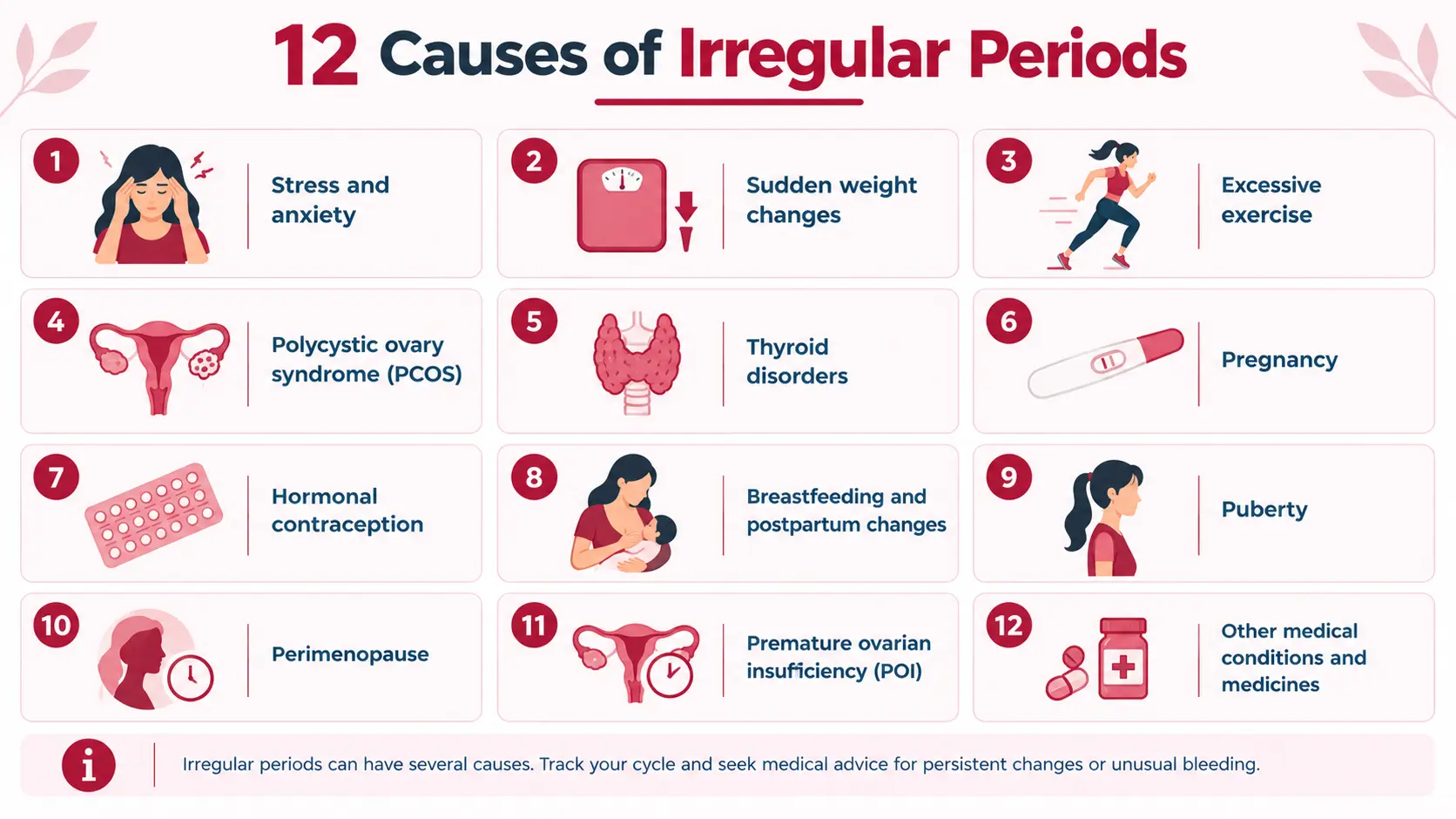
Irregular period causes range from temporary lifestyle changes to hormonal or medical conditions.
- Stress, weight changes and intense exercise
- PCOS and thyroid disorders
- Pregnancy and hormonal contraception
- Puberty, breastfeeding and perimenopause
- Other medical conditions or medicines
Track changes in your cycle and seek medical advice for persistent irregularity or unusual bleeding.
What Is Considered an Irregular Period?
Understanding what lies behind menstrual changes begins with knowing what a typical cycle looks like. Cycles differ from person to person, and some fluctuation is part of normal physiology.
The key is recognising when a pattern falls outside your usual range or brings changes that warrant attention. Identifying this baseline is the first step in exploring irregular period causes and working out whether further questions are needed.
What Is a Normal Menstrual Cycle?
A menstrual cycle is counted from the first day of one period to the first day of the next. For most adults, a cycle falls somewhere around 21 to 35 days.
Bleeding generally lasts between two and seven days. Cycles can vary with age and reproductive stage. Teenagers often have longer or less predictable cycles, while people approaching menopause may notice their patterns shifting again.
What matters most is establishing your personal baseline. Tracking whether new changes stay within or move away from it helps identify what is normal for you and when irregular period causes may be worth investigating.
Signs Your Period May Be Irregular
Several signs can suggest a cycle is moving away from its usual pattern. Periods may arrive earlier or later than expected. Cycle lengths might change frequently rather than staying consistent.
Some people experience missed periods or unusually long gaps between them. Others notice bleeding between periods or changes in how heavy or light the flow is.
Any of these signs can point to irregular period causes that are worth understanding. Tracking these details over a few months helps reveal whether a shift is a one off event or part of an ongoing pattern.
What Does Your Period Pattern Suggest?
Different changes can have different explanations. These patterns are clues, not a diagnosis.
Period arrives late
Possible factors: pregnancy, stress, weight changes, or hormonal conditions.
Periods are skipped
Possible factors: pregnancy, PCOS, thyroid disorders, intense exercise, or changes in energy intake.
Bleeding happens more often
Possible factors include hormonal changes, contraception, or conditions affecting the uterus.
Cycle timing keeps changing
Stress, life-stage changes, medicines, and hormonal or other medical conditions may contribute.
Your next step
Record your cycle dates and symptoms. Consider a pregnancy test if pregnancy is possible. Seek medical advice for persistent changes, and urgent care for severe pain, fainting, or heavy bleeding with dizziness.
General educational information only. A period pattern cannot confirm its cause.
12 Common and Medical Causes of Irregular Periods
Many factors can influence the timing and flow of a period. The twelve causes below cover both everyday influences and medical conditions.
Each one explains what happens, how it may affect menstruation, the clues that sometimes accompany it and when professional assessment may be appropriate.
1. Stress and Anxiety
Stress is one of the most common irregular period causes. It can affect the hormonal signals involved in ovulation, and when the body is under pressure, the signals that coordinate the reproductive cycle can shift.
This may delay or advance ovulation, which in turn changes when a period arrives. Work demands, emotional strain, disrupted sleep or major life changes can all play a role.
A stressful period at work or a significant life event can alter timing for a cycle or two. When stress related changes resolve, cycles often return to their usual pattern.
If irregularity continues after a stressful phase has eased, looking into other factors can be worthwhile.
2. Sudden Weight Loss or Weight Gain
Substantial weight changes are well known to affect menstrual regularity. Rapid weight loss, restrictive eating or inadequate nutritional intake can reduce the energy and nutrients available to support a regular cycle.
Significant weight gain can also influence hormone balance and menstrual timing. Body weight alone does not determine menstrual regularity, and many people with varied body sizes have consistent cycles.
When a notable weight shift coincides with menstrual changes, it can be one of several irregular period causes worth discussing with a healthcare professional.
3. Excessive Exercise and Low Energy Availability
Intense training combined with insufficient food intake can disrupt ovulation. Endurance exercise and heavy training schedules without adequate recovery may leave the body without enough available energy to maintain a regular cycle.
Some athletes and highly active people experience missed periods as a result. Persistent missed periods linked to training and nutrition warrant assessment.
The body may be signalling that it needs more fuel or recovery time to support normal function.
4. Polycystic Ovary Syndrome (PCOS)
Polycystic ovary syndrome is one of the medical irregular period causes that can interfere with regular ovulation. People with PCOS may experience infrequent or prolonged cycles.
Other possible signs include acne, increased facial or body hair and difficulty maintaining a consistent cycle. These symptoms alone cannot confirm PCOS.
A healthcare professional considers cycle history, physical signs and sometimes blood tests or ultrasound together before reaching any conclusion. When infrequent periods persist alongside other associated signs, seeking evaluation can help identify whether PCOS is one of the irregular period causes involved.
People exploring other symptoms associated with PCOS can also read about vaginal discharge and PCOS, although discharge alone cannot confirm the condition.
5. Thyroid Disorders
An underactive or overactive thyroid may affect menstrual timing and bleeding. The thyroid regulates many body processes through its hormones, and changes in its function can influence the reproductive cycle.
Possible accompanying symptoms include fatigue, sensitivity to heat or cold and unexplained weight changes. When menstrual changes appear alongside these signs, thyroid testing may be considered by a healthcare professional as part of understanding the irregular period causes involved.
6. Pregnancy
A missed period can be an early sign of pregnancy. When pregnancy is possible and a period is late or absent, taking a pregnancy test can provide helpful information.
Ovulation can occur before a period returns after childbirth or during other irregular cycles. This means pregnancy remains possible even before menstruation resumes.
If pregnancy is possible and symptoms such as severe abdominal pain, fainting or concerning bleeding arise, urgent medical assessment is needed.
7. Hormonal Contraception and Changes in Contraceptive Use
Starting, stopping or changing hormonal contraception may alter bleeding patterns. Some methods can make periods lighter, less frequent or absent altogether.
Shifts in the type or dose of contraception can also prompt temporary changes as the body adjusts. For unexpected or persistent bleeding after a contraception change, professional advice can help determine whether the method needs review or whether another factor is involved.
8. Breastfeeding and Postpartum Hormonal Changes
Breastfeeding can delay the return of menstruation. The hormones involved in producing milk can suppress ovulation, which means periods may not resume for some time after childbirth.
When cycles do return, they may take several months to become regular again. Postpartum hormonal shifts are a natural part of this transition.
It is worth noting that pregnancy remains possible before the first returning period. Contraception choices may need consideration even while cycles are still absent.
9. Puberty and the First Few Years of Menstruation
Cycles may be irregular while ovulation patterns mature during puberty. In the first few years after menstruation begins, longer intervals between periods and varying cycle lengths are common.
Age and time since the first period both matter when interpreting these changes. At the same time, persistent or pronounced irregularity should not automatically be dismissed as a normal part of this stage.
If cycles remain very unpredictable well into the later teenage years or come with other concerns, an assessment can help clarify whether anything beyond puberty needs attention.
10. Perimenopause
Changes in ovarian hormone production during perimenopause may cause shorter, longer or skipped cycles. The years leading up to menopause often bring shifts in bleeding patterns.
Possible symptoms include hot flushes and sleep changes. Even within this natural transition, unusually heavy or concerning bleeding still requires assessment.
Perimenopause is a stage rather than a diagnosis for every change. Significant bleeding or new patterns can have other explanations worth investigating.
11. Premature Ovarian Insufficiency (POI)
Ovarian function can decline before age 40 in some people. Premature ovarian insufficiency may affect menstrual cycles and fertility, leading to infrequent or absent periods.
This condition is distinct from ordinary cycle variation and from the natural decline around menopause. Because the implications differ, POI is one of the irregular period causes that needs medical investigation to understand what is occurring and what options may be appropriate.
12. Other Medical Conditions and Medicines
Several other medical conditions and medicines may contribute to menstrual changes. Elevated prolactin and other endocrine conditions can influence ovulation and cycle timing.
Diabetes and certain medicines may also play a role in altering menstrual patterns. Uterine conditions such as fibroids and polyps can be relevant, particularly when bleeding is heavy, prolonged or occurs between periods.
Irregular cycle timing and abnormal bleeding can have overlapping but different causes. This is why understanding the specific type of change matters when seeking answers about irregular period causes.
What Causes a Period to Be Irregular at Different Times?
The type of menstrual change a person notices can help guide further questions. No specific pattern confirms a diagnosis on its own.
Different shifts point toward different possible explanations. The table below outlines common patterns and the possible explanations a healthcare professional might explore.
| Period pattern | Possible explanations to discuss |
|---|---|
| Period arrives late | Pregnancy, stress, delayed ovulation, PCOS or thyroid disorders |
| Period comes earlier than expected | Normal cycle variation, hormonal changes or other causes of abnormal bleeding |
| Period is missed | Pregnancy, breastfeeding, energy deficiency, PCOS or other hormonal conditions |
| Bleeding occurs between periods | Contraceptive effects, hormonal changes, cervical causes or uterine conditions |
| Period becomes unusually heavy or prolonged | Fibroids, polyps, hormonal causes or other conditions needing assessment |
When Should You See a Doctor About Irregular Periods?
Several circumstances make medical advice appropriate. Irregularity that persists or represents a significant change from your usual pattern is worth discussing.
Previously regular periods that stop for around three months call for investigation. Bleeding between periods or after sex should be assessed.
Periods that become unusually heavy, prolonged or painful also warrant attention. When irregular periods occur with new facial hair, persistent acne, nipple discharge or other unexplained symptoms, professional evaluation can help identify the cause.
If pregnancy is possible and a period is late or missed, a test and appropriate advice can clarify the situation.
Urgent assessment: Severe abdominal pain, fainting or heavy bleeding with dizziness or other severe symptoms require urgent medical care. Do not wait for a routine appointment.
How Are the Causes of Irregular Periods Diagnosed?
A healthcare appointment for irregular periods typically begins with a conversation. Further investigations may follow depending on what the history suggests about possible causes.
The process aims to understand the pattern, identify possible contributing factors and determine whether any underlying condition needs attention.
Medical History and Cycle Tracking
Recording period start dates, duration, flow and associated symptoms gives a healthcare professional valuable information. Discussing medicines, contraception, recent lifestyle changes and the possibility of pregnancy helps narrow down the causes.
Bringing several months of cycle records to an appointment makes the discussion more productive and helps pinpoint the reason for the changes more efficiently.
Tests That May Be Considered
Pregnancy testing is often relevant when a period is late or missed. Blood tests may be ordered based on symptoms and medical history, potentially including thyroid function or other hormone tests.
Ultrasound or other investigations may be considered when clinically indicated, such as when a physical condition is suspected. Not everyone needs every test. Investigations depend on the suspected cause and the information gathered during the consultation.
What Can Help Manage Irregular Periods?
- Maintain adequate nutrition and avoid restrictive eating that may affect hormone function.
- Balance exercise with sufficient energy intake and recovery to support a regular cycle.
- Use a menstrual calendar to identify recurring patterns and changes over time.
- Manage stress through rest, relaxation and adequate sleep.
- Seek treatment for any identified underlying condition where appropriate.
- Avoid taking hormonal medicines or supplements to regulate periods without appropriate medical guidance.
Medical Disclaimer
A Guide to Libido for Men and Women
Understand sexual desire, factors that can affect libido, and how it differs from the physical erectile response.
FAQ
What causes period to be irregular?
Irregular periods can result from stress, changes in weight or exercise, pregnancy, contraception, polycystic ovary syndrome, thyroid disorders and other hormonal or medical conditions. Each person's situation is different, and a combination of factors can sometimes be involved.
What causes irregular period when it was regular before?
When a previously regular cycle becomes irregular, possible explanations include pregnancy, stress, changes in contraception, illness, weight changes and newly developing medical conditions. A sudden shift from a consistent pattern often prompts a closer look at what has changed recently.
Can stress cause irregular periods?
Stress may affect ovulation and cycle timing by influencing the hormonal signals that coordinate the reproductive cycle. Other causes may also need consideration, so persistent changes are worth assessing rather than attributing them to stress alone.
Can hormonal imbalance cause irregular periods?
Reproductive hormone changes and endocrine disorders can affect ovulation and menstruation. Irregular periods alone do not prove a hormonal imbalance. Understanding the full picture, including symptoms and history, helps determine whether hormone related factors are involved.
When should I worry about an irregular period?
Persistent changes, prolonged absence of periods, unusual bleeding or significant associated symptoms warrant medical assessment. Severe symptoms such as intense pain or heavy bleeding with dizziness may require urgent care rather than waiting for a routine appointment.
Can irregular periods affect fertility?
Irregular ovulation can make conception less predictable because the fertile window becomes harder to identify. Irregular periods do not automatically mean infertility. The underlying cause determines the implications, which is why identifying the reason for the changes can provide useful guidance.

Years of Experience: 10+ years Education: B.Sc. in Biomedical Science (Monash University, Melbourne, Australia) PG Diploma in Health & Medical Communication (University of Sydney, Australia) Experience: Erica Wilson is an…

