

Is There a Surgery for Premature Ejaculation? What Men Should Know
By Erica Wilson, Oct-12-2026


 Dr. Arjun Srivastav Medical Reviewer (Pharm D)
 Yes surgical procedures have been investigated for premature ejaculation but surgery is not a standard or routinely recommended treatment for this condition.
Researchers have explored certain nerve based and injection based procedures in clinical studies. None have become part of mainstream clinical care.
The focus keyword surgery for premature ejaculation often leads men to look for a quick fix. The medical consensus points toward safer and better established options. Established non surgical alternatives remain the preferred starting point for most men including behavioural techniques, topical anaesthetics and prescription medicines.
This article explains what the research shows and what men should consider before pursuing any surgical path.
✨Is There a Surgery for Premature Ejaculation?
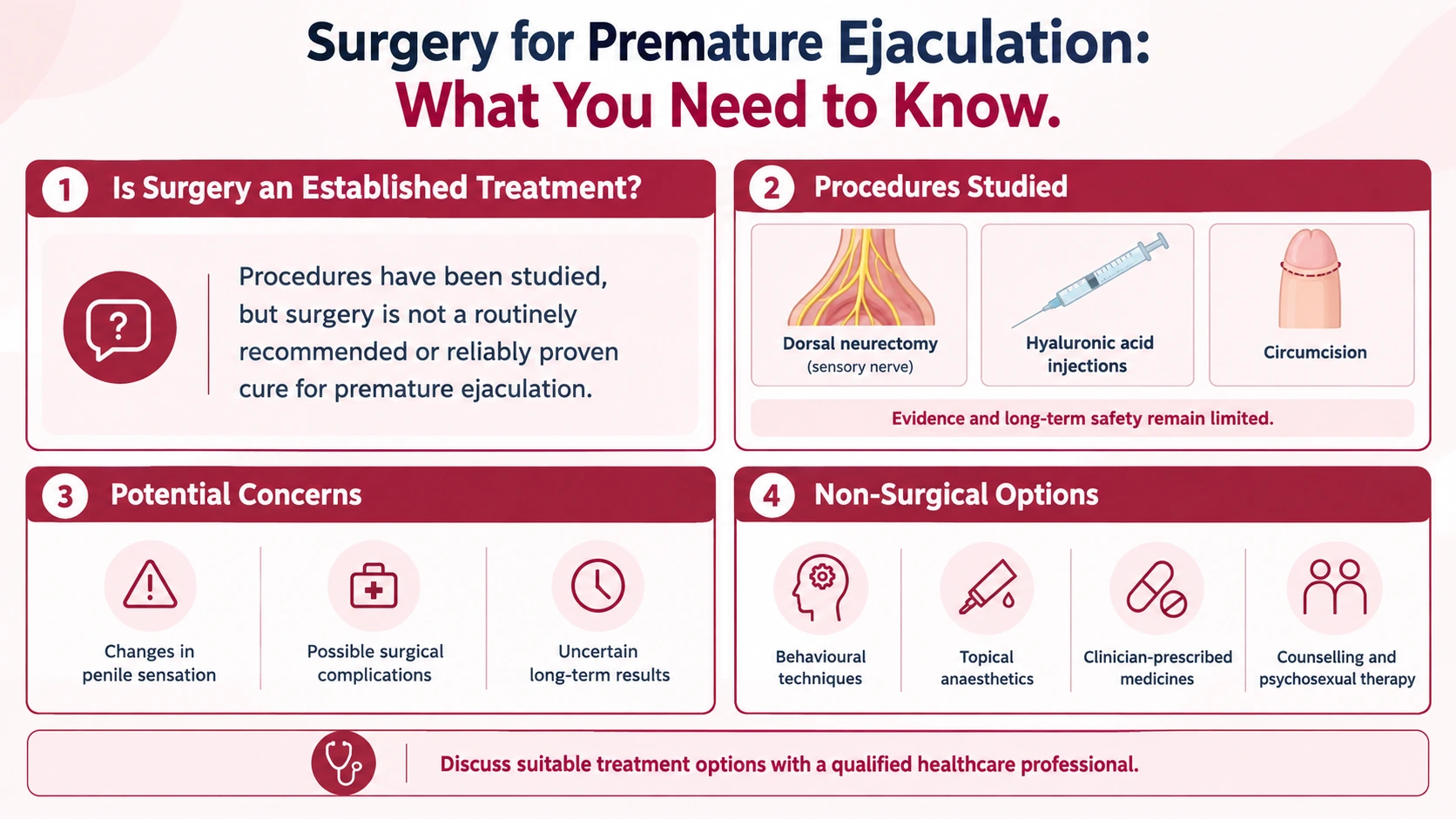
Surgical procedures have been studied for premature ejaculation, but none is established as a routine, reliably proven cure. Procedures such as dorsal neurectomy and hyaluronic acid injections remain experimental because long-term benefits and safety are uncertain.
What can help? Behavioural techniques, counselling, topical anaesthetics and appropriate prescription medicines are established options to discuss with a healthcare professional.
What Is Premature Ejaculation?
Premature ejaculation is a common sexual health concern where ejaculation happens sooner than a man or his partner would like during sexual activity.
The main symptom is a lack of control over ejaculation which may occur before or shortly after penetration. For many men this happens occasionally and causes no distress. When the pattern is persistent it can affect confidence, create anxiety around intimacy and put strain on relationships.
During an assessment, a healthcare professional may ask whether early ejaculation happens during partnered sexual activity, masturbation or both. Understanding when it occurs can help clarify the pattern and guide the next steps. The relationship between masturbation and early ejaculation is worth considering without assuming that masturbation itself causes premature ejaculation.
Men often search for surgery for premature ejaculation hoping to find a definitive solution. Understanding the type of PE first helps guide appropriate care.
Lifelong Premature Ejaculation
Lifelong PE is present from the first sexual experiences and continues throughout a mans sexual life. Men with this type have experienced rapid ejaculation almost always since becoming sexually active. It is thought to have a neurological basis where the natural reflex controlling ejaculation is overly sensitive.
Acquired Premature Ejaculation
Acquired PE develops after a period of normal sexual function. A man may previously have had no issues with ejaculation control but begins experiencing rapid ejaculation later in life. This form can be linked to psychological factors, relationship stress, erectile difficulties or underlying health problems.
Identifying the type helps clinicians recommend the most suitable treatment rather than considering surgery for premature ejaculation as a first option.
💡 A Useful Starting Point
Is There a Surgery for Premature Ejaculation?
The short answer is that no surgical procedure is established as a standard reliable treat for premature ejaculation.
While the question of surgery for premature ejaculation is commonly searched the reality is different. Any procedures discussed exist mainly within research settings rather than routine clinical practice.
Clinical studies have looked at certain techniques aimed at reducing penile sensitivity or altering nerve pathways. Evidence remains limited and inconclusive. Major medical guidelines do not recommend surgery for premature ejaculation as a first line or even second line treatment.
The distinction matters because something being studied in research does not mean it is proven safe or effective enough for widespread use. Men exploring surgery for premature ejaculation should understand that these procedures carry real risks and lack the robust evidence needed to support routine recommendation.
Non surgical treatments remain the established pathway for managing this condition.
Types of Surgery and Procedures Studied for Premature Ejaculation
Several procedures have been explored in clinical research as potential options for men seeking surgery for premature ejaculation. None of these are routinely offered in standard clinical practice and each carries its own uncertainties. Below is an overview of what has been studied how each is intended to work and where the evidence stands.
Selective Dorsal Neurectomy
Selective dorsal neurectomy involves identifying and cutting specific branches of the dorsal nerve of the penis. The dorsal nerve carries sensory signals from the glans to the spinal cord.
The idea behind this procedure is that by reducing nerve input to the glans a man may experience decreased sensitivity and therefore better control over the timing of ejaculation. Some small studies have reported improvements in ejaculation latency but the evidence base is narrow.
Risks include:
- Permanent changes in penile sensation
- Reduced pleasure
- Numbness
- Pain in some cases
Long term data is lacking and complications can be difficult to reverse. This is why surgery for premature ejaculation involving nerve cutting is not endorsed by mainstream clinical guidelines.
Penile sensitivity is one factor that may be discussed when assessing premature ejaculation, although it is not the only possible explanation. Understanding the relationship between a hypersensitive penis and premature ejaculation can help put proposed sensitivity-reducing procedures into context. Increased sensitivity alone does not establish that surgery is necessary or appropriate.
⚠️ Consider the Possible Trade-Offs
Hyaluronic Acid Injections Into the Glans
Hyaluronic acid gel injections into the glans penis have been studied as a minimally invasive option. The proposed mechanism is that the injected gel increases the volume of tissue beneath the skin of the glans which may reduce surface sensitivity during intercourse.
Some studies from select research groups have reported increased ejaculatory latency times following treatment. However the quality and independence of much of this evidence has been questioned. Results may not be permanent as the body gradually absorbs hyaluronic acid over time meaning repeat procedures could be necessary.
Risks include lump formation, uneven results, infection and altered sensation. As with other approaches to surgery for premature ejaculation these injections are not a recognised standard treatment and remain experimental.
Does Circumcision Help With Premature Ejaculation?
Circumcision is sometimes discussed in relation to PE because removing the foreskin changes the surface of the glans and may reduce sensitivity over time. Some studies have suggested that circumcised men report longer ejaculation times while others have found no meaningful difference.
The evidence is mixed and inconsistent which means circumcision cannot be recommended specifically as a treatment for premature ejaculation. Circumcision is a surgical procedure with its own risks including bleeding, infection, pain and changes in sensation.
Men considering this should not view it as a reliable form of surgery for premature ejaculation. The decision to undergo circumcision should be based on separate medical, cultural or personal reasons rather than as a PE intervention.
Other Experimental Nerve Based Procedures
Other experimental approaches have been explored including various nerve modulation techniques and glans resurfacing procedures. These remain at an early investigative stage with very limited published evidence.
Some aim to alter sensory feedback through different nerve pathways while others attempt to change the physical characteristics of the glans tissue. None of these have reached a point where they are considered reliable options within mainstream care.
Men searching for surgery for premature ejaculation should be cautious about any clinic offering experimental procedures outside of a formal research setting. The absence of long term safety data and standardised techniques means these interventions cannot be presented as proven solutions.
Why Is Surgery for Premature Ejaculation Not Routinely Recommended?
Several reasons explain why surgery for premature ejaculation has not become a routine clinical recommendation.
The most significant factor is the limited quality of clinical evidence. Studies that exist are often small, conducted at single centres and lack the independent validation needed to support widespread adoption. Long term results remain uncertain because few studies track outcomes over several years.
Procedures that alter penile nerves can produce permanent changes in sensation. Some men report reduced pleasure, numbness or discomfort that persists after the procedure. These sensory changes may be irreversible and can themselves contribute to sexual dissatisfaction.
Additionally the availability of effective non surgical treatments means there is no clinical need to pursue invasive options first. Behavioural techniques, topical products and prescription medicines offer meaningful help for many men without the risks associated with surgery for premature ejaculation. The balance of potential harm against uncertain benefit weighs against routine surgical intervention.
What Are the Alternatives to Surgery for Premature Ejaculation?
For men looking beyond surgery for premature ejaculation a range of established non surgical treatments exists. The right option depends on individual symptoms, medical history and personal circumstances. A healthcare professional can help identify the most appropriate starting point.
Behavioural Techniques
Behavioural methods include the stop start technique and the squeeze technique. Both involve practising awareness of arousal levels during sexual activity and using specific pauses or pressure to delay ejaculation. These techniques require practice and patience but can be effective for many men without any medication or procedure.
Pelvic floor muscle training is another approach some men explore to improve awareness and control of the muscles involved in ejaculation. Correct technique and consistent practice matter, and the results are not guaranteed. Men interested in this approach can learn more about Kegel exercises for premature ejaculation and discuss whether pelvic floor training is suitable for their circumstances with a healthcare professional.
Topical Anaesthetics
Topical anaesthetics such as lidocaine based sprays and creams can reduce sensitivity of the penis during intercourse. These products are applied before sexual activity. Some men find them helpful while others experience reduced pleasure or transfer the numbing effect to their partner. Using a condom can help manage this.
Prescription Medicines
Certain prescription medicines have been used to help manage PE. These include selective serotonin reuptake inhibitors which may extend ejaculation time as a side effect of their action. A topical spray containing a combination of lidocaine and prilocaine has also been licensed in some countries specifically for PE. A doctor can advise on suitability and potential side effects.
Dapoxetine is a short-acting selective serotonin reuptake inhibitor used for premature ejaculation in some countries, subject to local approval and prescribing requirements. Its suitability depends on individual health factors, possible interactions and adverse effects. Men considering medication can find out more about dapoxetine for premature ejaculation and discuss the available options with a qualified healthcare professional.
Psychosexual Therapy and Counselling
Psychosexual therapy addresses the psychological and relationship aspects of PE. Anxiety, performance pressure and communication difficulties can all contribute to the problem. Talking with a trained therapist either individually or with a partner can help reduce anxiety and improve sexual confidence. This approach is often combined with other treatments for better outcomes.
Treating Underlying Health Problems
When PE is acquired rather than lifelong it may be linked to other health issues such as erectile difficulties, prostate concerns, thyroid disorders or medication side effects. Identifying and addressing these underlying factors can improve symptoms. This is why a proper medical assessment is important before considering any treatment including surgery for premature ejaculation.
🔎 Progress May Take Practice
Can Premature Ejaculation Be Treated Permanently?
Many men search for a permanent solution to PE and the term surgery for premature ejaculation often appears in that context. However there is no treatment that guarantees a permanent fix for every man.
Treatment outcomes vary widely depending on the underlying cause, the type of PE and individual response. Some men find that behavioural techniques or medication provide long lasting improvement while others may need ongoing management.
Surgery for premature ejaculation does not offer a reliable permanent solution. The evidence is too limited and the risks too uncertain to support this expectation. A realistic approach focuses on effective management rather than a one time cure. Working with a healthcare professional gives the best chance of finding a strategy that provides sustainable improvement over time.
📌 Set Realistic Treatment Expectations
When Should You See a Doctor About Premature Ejaculation?
Men should consider speaking with a GP, urologist or sexual medicine specialist when symptoms persist over time and cause distress. A sudden change in ejaculation control especially after previously normal function is another reason to seek assessment.
Associated erection difficulties such as trouble achieving or maintaining an erection also warrant professional evaluation as these can be linked. Seeking help early allows for proper diagnosis and avoids unnecessary consideration of surgery for premature ejaculation. A healthcare professional can identify any underlying factors and guide toward evidence based options tailored to individual needs.
Final Thoughts
Surgery for premature ejaculation remains an experimental area rather than a proven treatment pathway. The evidence is limited and long term outcomes are uncertain. The risks include permanent changes in sensation.
Established non surgical options offer meaningful help for many men and carry fewer risks. Anyone experiencing persistent symptoms should speak with a qualified healthcare professional to explore evidence based treatments tailored to their individual situation.
FAQ
Is There a Surgery for Premature Ejaculation?
No surgery is established as a standard treatment for PE. Certain procedures have been studied in research settings but surgery for premature ejaculation is not part of routine clinical care. Mainstream guidelines do not recommend any surgical procedure as a reliable option.
Can Surgery Permanently Cure Premature Ejaculation?
There is no surgical procedure that offers a guaranteed permanent cure. Studies on surgery for premature ejaculation are limited and long term outcomes remain uncertain. Some men may experience changes in sensation without reliable improvement in symptoms. A permanent cure is not something that current evidence supports.
Is Dorsal Neurectomy Safe?
Dorsal neurectomy carries significant risks including permanent changes in penile sensation, numbness, pain and reduced sexual pleasure. The procedure is not widely performed outside research settings. Long term safety data is lacking which is why it is not recommended as a standard treatment.
Does Circumcision Help With Premature Ejaculation?
The evidence on circumcision and PE is mixed. Some studies suggest a possible benefit while others find no significant difference. Circumcision is not recommended specifically as a treatment for PE. Any decision should be based on separate medical or personal reasons rather than as an approach to managing premature ejaculation.
What Is the Best Treatment Without Surgery?
The best treatment varies from person to person. Established options include behavioural techniques, topical anaesthetics, prescription medicines and psychosexual therapy. A healthcare professional can help determine which approach suits an individuals symptoms and circumstances rather than pursuing surgery for premature ejaculation.
Which Doctor Treats Premature Ejaculation?
A GP is usually the first point of contact. Depending on the situation a referral to a urologist or a sexual medicine specialist may follow. These clinicians can assess symptoms, identify any underlying causes and recommend evidence based treatment options.

Years of Experience: 10+ years Education: B.Sc. in Biomedical Science (Monash University, Melbourne, Australia) PG Diploma in Health & Medical Communication (University of Sydney, Australia) Experience: Erica Wilson is an…

