

Can Sitting Too Much Affect Erectile Function?
By Ezra Allen, Sep-28-2026


 Dr. Arjun Srivastav Medical Reviewer (Pharm D)
 If you spend most of your day sitting, you may wonder whether all those hours in a chair could affect your sex life and erectile function. The short answer is possibly, but sitting alone is not proven to directly cause erectile dysfunction (ED).
The bigger concern is what prolonged sitting can represent. When sitting takes up most of the day, it often means less walking, less exercise, and less overall movement. Over time, those habits can overlap with health factors that are associated with erectile problems, including obesity, diabetes, and cardiovascular disease.
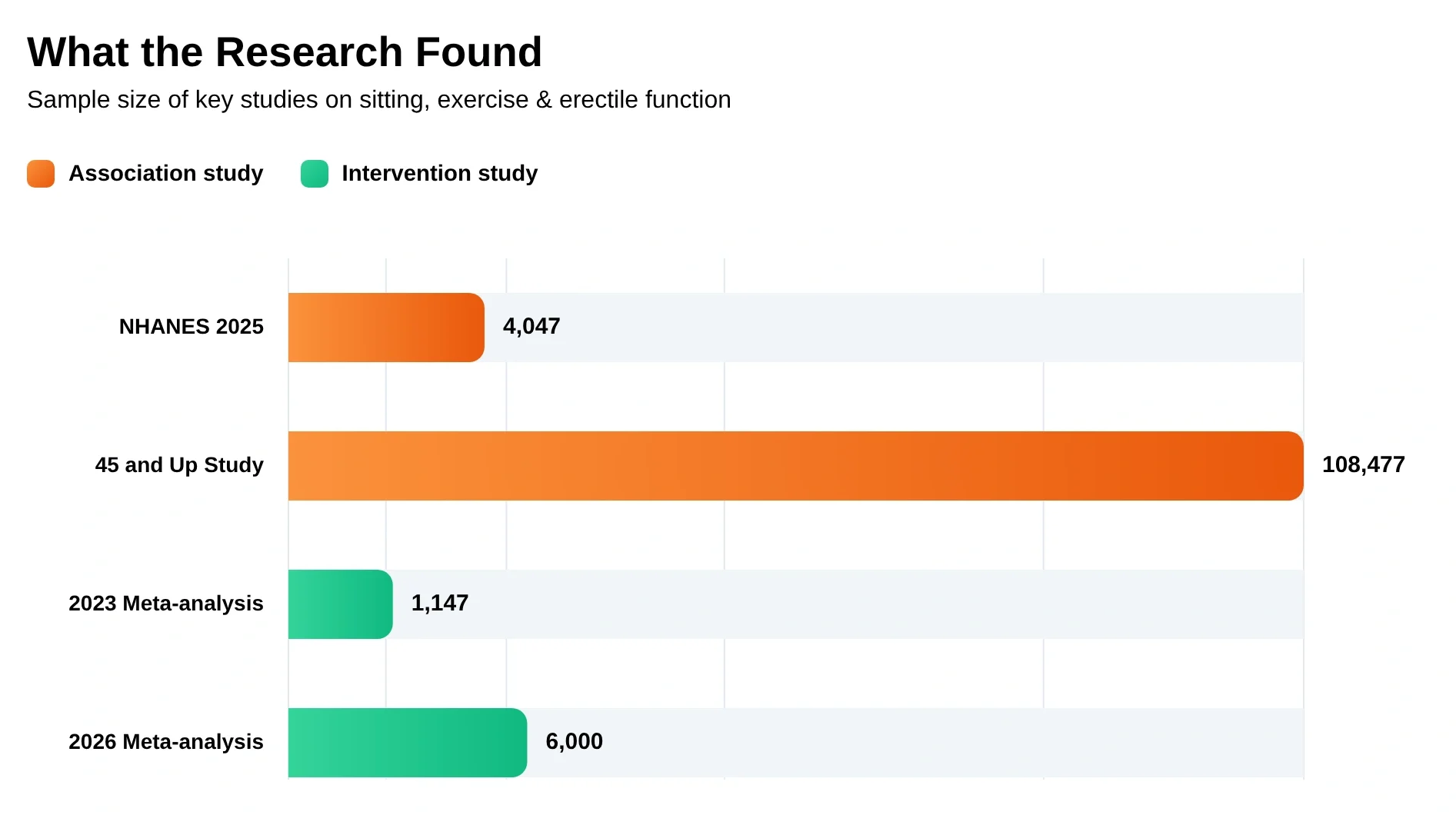
Research has found a relationship between sedentary behavior and ED, but that does not mean every man who sits for several hours will develop erection problems. A 2025 analysis of 4,047 adult men found that more than two hours a day of screen-based sedentary behavior was associated with higher odds of ED. However, because the study was cross-sectional, it could identify an association rather than prove that screen time or sitting caused ED.
So, if you work at a desk, drive for long periods, or spend your evenings on the sofa, there is no reason to assume that your chair is the cause of an erection problem. It is more useful to look at your overall pattern of movement and health.
Is Sitting Too Much the Same as Having a Sedentary Lifestyle?
Not quite.
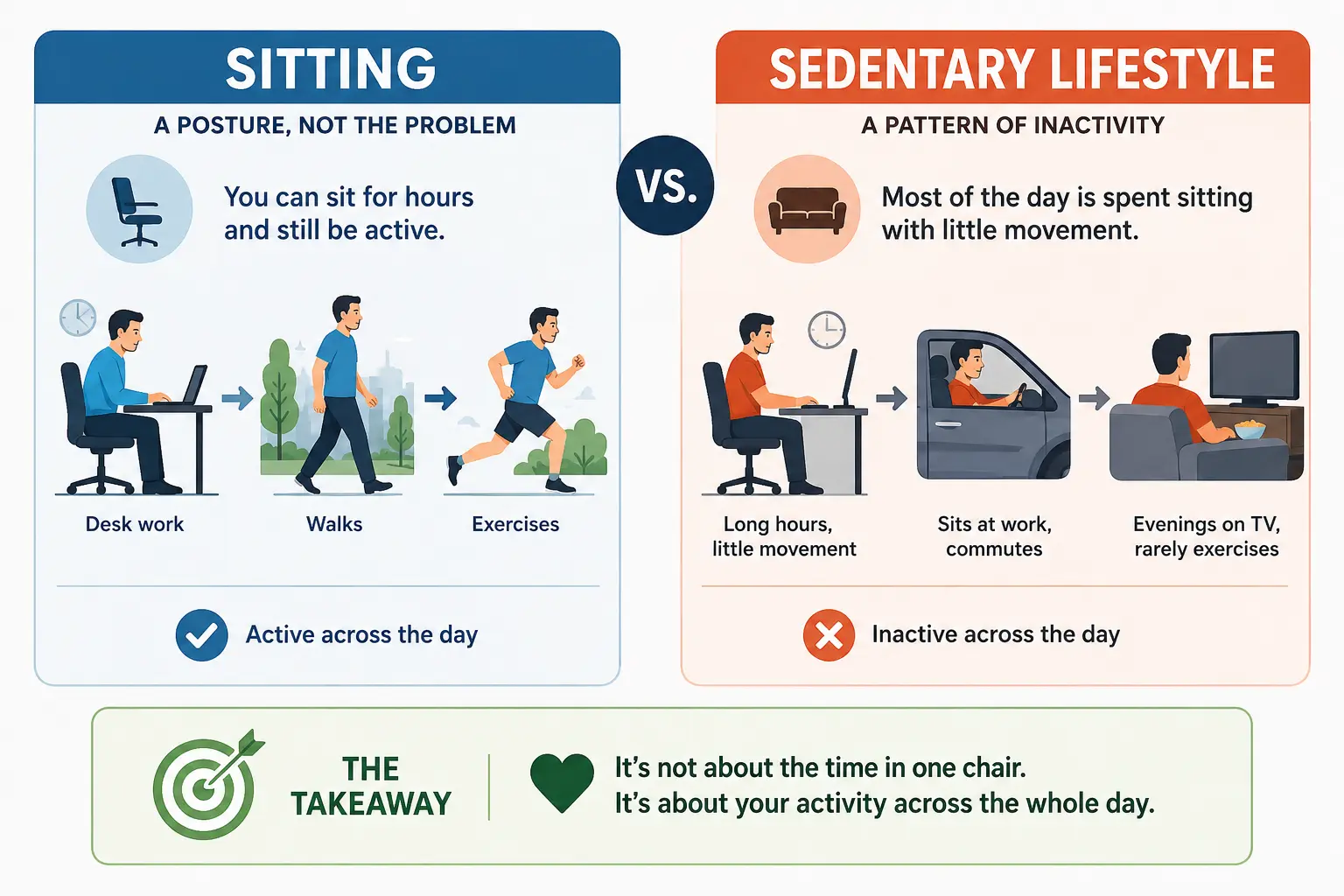
You can sit for several hours because of work and still be physically active. For example, someone might work at a desk during the day, walk regularly, exercise several times a week, and remain active outside working hours.
A sedentary lifestyle is a broader pattern in which a large part of the day is spent sitting or reclining with relatively little physical activity.
That distinction matters when talking about erectile function.
| Daily pattern | What it means |
| Desk work followed by regular exercise and plenty of walking | Sitting is present, but the overall routine may still be active |
| Long work hours with very little movement | More sedentary overall |
| Sitting at work, commuting by car, and spending the evening watching TV | A largely inactive day |
| Regular movement throughout the day plus structured exercise | Less sedentary overall |
The issue, therefore, is not simply how long you sit in one particular chair. Your activity across the whole day matters.
Why Could a Sedentary Lifestyle Be Linked With Erectile Problems?
An erection depends on healthy communication between the brain, nerves, hormones, and blood vessels. Blood vessels are particularly important because the penis needs adequate blood flow to become and remain firm.
That is where physical activity and general health come into the picture.
Cardiovascular Health
The blood vessels that support an erection are affected by many of the same health problems that affect the cardiovascular system.
High blood pressure, diabetes, obesity, and cardiovascular disease are all associated with erectile dysfunction. A consistently inactive lifestyle can also make some of these conditions harder to manage.
This does not mean that sitting at a desk temporarily stops blood from reaching the penis. The relationship is much more complicated than that.
Less Movement During the Day
Long sitting periods can replace walking, exercise, and other everyday activity.
If someone spends eight or nine hours sitting, drives home, and then spends another few hours sitting in front of a screen, the problem is not simply the chair. It is the lack of movement across much of the day.
That distinction is important because research on exercise provides stronger evidence for improving erectile function than research showing that simply standing up prevents ED.
Weight and Metabolic Health
Physical inactivity can make maintaining a healthy weight more difficult, especially when combined with an unhealthy diet.
Excess weight, insulin resistance, and diabetes can affect blood vessels and other systems involved in sexual function. Improving these underlying health factors may therefore be more meaningful for erectile health than focusing on sitting time alone.
What Does Research Actually Say About Sitting and ED?
This is where it is worth separating evidence from headlines.
Research has Found an Association
The 2025 study using NHANES data examined 4,047 US adult men and found that screen-based sedentary behavior of more than two hours per day was associated with increased odds of ED after adjustment for potential confounding factors. The researchers also stated that further prospective research is needed.
That finding is interesting, but it should not be interpreted as:
“Sitting for more than two hours causes erectile dysfunction.”
The study cannot establish that.
Other characteristics may influence both how much time someone spends sitting and their likelihood of having ED.
Australian Research Adds Useful Context
There is also relevant evidence from Australia.
Researchers using data from the 45 and Up Study examined 108,477 Australian men aged 45 and older. Among men without a previous prostate cancer diagnosis, moderate or complete ED was associated with several factors, including being sedentary, higher BMI, smoking, diabetes, and heart disease. Greater physical activity was associated with lower odds of ED across age groups.
Because this was a cross-sectional study, it also cannot prove that sedentary behaviour caused ED. Still, it provides useful Australian population-level evidence showing that physical activity and erectile health are connected within a wider group of lifestyle and health factors.
Exercise Research Strengthens the Picture
There is stronger intervention evidence when we look at physical activity itself.
A 2023 systematic review and meta-analysis included 11 randomised controlled trials involving 1,147 men. Regular aerobic exercise produced a statistically significant improvement in erectile-function scores compared with non-exercising controls.
More recently, a 2026 systematic review and meta-analysis of 16 randomised controlled trials found that lifestyle interventions involving diet and/or physical activity were associated with a modest improvement in erectile function. The researchers noted substantial clinical differences between the studies, so the findings need to be interpreted in context.
Taken together, the evidence gives us a more useful message:
The concern is not that sitting automatically causes ED. It is that a consistently inactive lifestyle can coexist with several factors that influence erectile health, while regular physical activity appears to benefit erectile function.
Is There a Certain Number of Hours of Sitting That Causes ED?
There is no established sitting-time threshold at which a man suddenly becomes at risk of erectile dysfunction.
You may come across claims that sitting for a specific number of hours will cause erectile function, but the available evidence does not support such a simple cut-off.
Your overall routine is more informative. Consider:
- How much of your day is spent sitting?
- Do you regularly walk or exercise?
- Do you take breaks from prolonged sitting?
- Are you maintaining a healthy weight?
- Do you smoke?
- Do you have diabetes, high blood pressure, or cardiovascular disease?
- Are you taking medicines that may affect sexual erectile function?
- Are erection problems happening repeatedly?
Someone who sits for six hours while working and then walks, exercises, and remains active may have a very different risk profile from someone who sits for most of the day and rarely moves.
Can a Desk Job Affect Erectile Function?
Having a desk job does not automatically put you at risk of erectile function. The bigger issue is what happens around the job.
A typical sedentary day might involve sitting through a morning commute, working at a computer for several hours, driving home, and then spending the evening watching television or using a laptop. There may be very little movement from morning until bedtime.
This pattern can occur with:
- Office work
- Working from home
- Long-distance driving
- Gaming
- Studying
- Extended computer use
- Long commutes
On the other hand, a person with the same desk job may take walking breaks, exercise regularly, walk after work, and stay active on weekends.
So desk work and sedentary living are related, but they are not the same thing.
Can Breaking Up Sitting Time Help?
Breaking up long periods of sitting is a practical way to add more movement to your day.
You do not need to turn your workplace into a gym. Small changes can make the day less static:
- Walk around during suitable breaks.
- Stand while doing tasks that do not require you to sit.
- Walk around during some phone calls.
- Take a short walk instead of spending every break at your desk.
- Use stairs when practical.
- Add regular exercise outside working hours.
- Look for opportunities to move between long periods of computer work.
There is no scientifically established rule that says a particular standing schedule will prevent ED. The sensible goal is simply to avoid spending almost the entire day inactive.
Can Exercise Improve Erectile Function?
This is one area where the evidence is particularly useful.
The 2023 meta-analysis of randomised controlled trials found that aerobic exercise improved erectile-function scores, with greater improvements observed among men who started with lower erectile-function scores.
The 2026 review reached a similar overall conclusion for lifestyle interventions. Exercise-only, diet-only, and combined diet-and-exercise interventions were each associated with improvements in erectile-function measures, although the size of the benefit varied between studies.
This does not mean exercise is a guaranteed treatment for every man with ED. Erectile dysfunction can have several underlying causes.
But it does mean that becoming more physically active is supported by considerably more evidence than simply worrying about the amount of time spent sitting.
What Other Factors Can Affect Erectile Function?
It is easy to blame a sedentary routine when an erection problem appears, but erectile function can have many different contributors.
| Possible factor | How it can relate to erectile function |
| Diabetes | Can affect blood vessels and nerves |
| High blood pressure | May contribute to vascular problems |
| Cardiovascular disease | Healthy blood vessels are important for erections |
| Excess weight | Can be associated with metabolic and hormonal changes |
| Smoking | Can damage blood vessels |
| Heavy alcohol use | Can interfere with sexual erectile function |
| Certain medicines | Some medicines can contribute to erection problems |
| Hormonal problems | Hormonal changes can affect sexual response |
| Stress or anxiety | Can interfere with arousal and erection |
| Neurological conditions | Nerve signalling plays a role in erections |
The studies found associations between erectile function and several of these factors, including diabetes, heart disease, higher BMI, smoking, and sedentary behavior.
That is why persistent ED should not automatically be attributed to sitting.
When Should You Get Erectile Problems Checked?
An occasional erection problem can happen after a stressful day, poor sleep, illness, or drinking alcohol. It does not necessarily indicate a medical condition.
Repeated problems are different. Consider speaking with a healthcare professional if:
- You regularly have difficulty getting or keeping an erection.
- The problem is becoming more frequent.
- Your sexual function has changed noticeably.
- You experience pelvic or genital pain or numbness.
- The problem is affecting your relationship or quality of life.
Persistent erectile function can sometimes occur alongside cardiovascular or metabolic conditions, so finding the underlying reason is more useful than assuming that sitting is responsible.
What Medicines Are Used to Treat Erectile Dysfunction?
If erectile difficulties continue despite addressing lifestyle factors, a healthcare professional may consider medication as part of the treatment plan.
The medicines most commonly used for ED are PDE5 inhibitors, which work by relaxing blood vessels in the penis and improving blood flow during sexual stimulation. In Australia, commonly prescribed options include:
Some studies notes that ED medicines are prescription medicines in Australia and that a doctor should assess whether a particular medicine and dose are appropriate.
How to Make a Sedentary Day More Active
You do not need to stop sitting altogether. A more realistic approach is to create a better balance between sitting, movement, and exercise. Try to:
- Break up long sitting periods whenever practical.
- Walk more throughout the day, rather than relying entirely on one workout.
- Exercise regularly, particularly with aerobic activities.
- Include strength training as part of a balanced fitness routine.
- Maintain a healthy weight through diet and physical activity.
- Avoid smoking to support vascular health.
- Manage conditions such as diabetes and high blood pressure with appropriate medical care.
- Pay attention to persistent erection problems rather than assuming they are caused by your daily routine.
The aim is not to make every hour of the day active. It is to avoid a pattern where sitting occupies nearly all of your waking hours.
The Bottom Line
Sitting for several hours does not mean that erectile dysfunction is inevitable. The more important concern is a persistently inactive lifestyle, particularly when long sitting periods are combined with little exercise and other health risks.
Research in Australian men has linked sedentary behavior with ED, while randomised trials provide evidence that regular physical activity can improve erectile function.
So rather than blaming the chair, look at the bigger picture: how much you move, how active you are, your cardiovascular and metabolic health, and whether erection problems continue over time.

Years of Experience: 12+ Years Education: Master of Sexology - [University of Sydney] MBBS (Bachelor of Medicine, Bachelor of Surgery) - [Torrens University Australia] BSc in Medical Laboratory Technology -…

