

Parasite Infection Symptoms: Common Signs and When to Seek Medical Care
By Erica Wilson, Sep-04-2026


 Dr. Arjun Srivastav Medical Reviewer (Pharm D)
 Parasite infection symptoms can vary depending on the type of parasite, where the infection occurs, and the person’s overall health. Some parasitic infections cause noticeable symptoms within days or weeks, while others may cause mild symptoms or no symptoms at all. The symptoms of a parasite infection can also resemble other digestive or skin conditions, making it difficult to identify the cause based on symptoms alone. Knowing the common signs and when to seek medical care can help you take the right next step. If you want to understand what a parasite infection is, its causes, types, and how it spreads, you can learn more from our detailed article.
The symptoms of a parasite infection can include diarrhea, abdominal pain, bloating, nausea, fatigue, appetite loss, unexplained weight loss, or itching. Symptoms vary by parasite, and some infections may cause few or no noticeable symptoms. Severe or persistent symptoms should be assessed by a healthcare professional.
What Are the Common Symptoms of a Parasite Infection?
The symptoms of a parasite infection can affect the digestive system, skin, and overall well-being. The signs can vary considerably depending on the parasite and the part of the body affected.
Common symptoms may include:
- Stomach pain or abdominal cramps
- Diarrhea
- Nausea or vomiting
- Bloating and gas
- Itching around the anus
- Fatigue
- Loss of appetite
- Unintentional weight loss
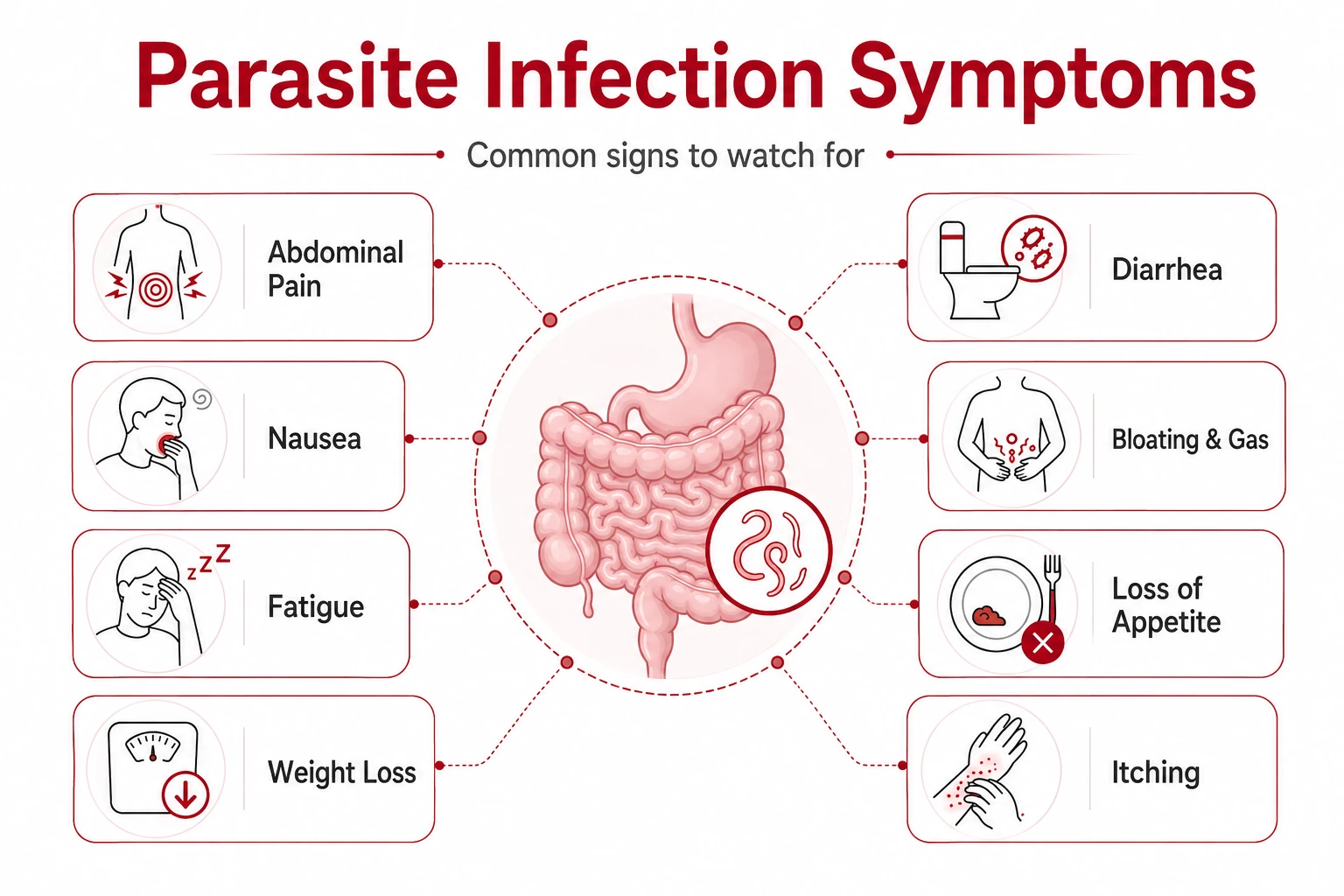
Early Signs of a Possible Parasite Infection
The initial parasitic infection symptoms depend on the kind of parasite and the part of the body affected by the parasite. These symptoms may be slight abdominal cramps, bloating, nausea, diarrhea, fatigue, or appetite changes. Some parasites cause itching in the anus area, especially during nighttime.
But it should be noted that these symptoms do not only occur in parasitic infections but can be caused by many other diseases.
💡 Tip
Digestive Symptoms
Abdominal Pain
It could also be among the parasitic infection symptoms where the parasite invades the digestive system of the patient. It could manifest itself in the form of cramps, aches, or pain in the abdominal area. The level and frequency of the pains will depend on the type and the nature of the infection.
Diarrhoea
Diarrhea is one of the more common parasite infection symptoms associated with certain intestinal infections, including giardiasis. When symptoms occur, Giardia may cause frequent diarrhea along with stomach cramps, gas, bloating, nausea, and tiredness.
Stools may sometimes appear greasy or float because Giardia can interfere with normal digestion and fat absorption. However, diarrhea has many possible causes, so this symptom alone cannot confirm a parasitic infection.
Bloating and Gas
Bloating and excess gas can occur as symptoms of a parasite infection affecting the digestive tract. Others include belching, abdominal cramps, and diarrhea. Parasites in the intestines can cause interference with digestion or nutrient absorption depending on how long the infection continues.
Nausea and Appetite Changes
Nausea, vomiting, tiredness, and loss of appetite can be seen in some forms of parasitic infection. The presence of persistent parasitic infection symptoms might make eating a bit difficult, while other forms of infection will hamper the absorption of nutrients.
Skin-Related Symptoms
Skin-related symptoms of a parasite infection are more commonly associated with ectoparasitic infestations, such as scabies and head lice, rather than intestinal parasites. You can learn more about parasitic skin infections, including their common causes, symptoms, and treatment options.
Symptoms may include:
- Itching
- Rash
- Skin irritation
- Small burrows or track-like marks, particularly with scabies
Other Possible Symptoms
Other parasite infection symptoms may occur depending on the type of parasite and the part of the body affected. Possible symptoms include:
- Fever
- Anaemia
- Coughing
These symptoms are not specific to parasitic infections and can also occur with many other medical conditions.
Parasite Symptoms by Type
The symptoms of a parasite infection can differ significantly depending on the parasite involved. The table below highlights some common parasitic infections, their possible symptoms, and common routes of infection.
Parasite Symptoms
| Parasite / Infection | Possible Symptoms | Common Route of Infection |
|---|---|---|
| Giardia (giardiasis) | Watery diarrhea, greasy or floating stools, stomach cramps, gas, bloating | Contaminated water or food, contaminated surfaces, or contact with an infected person |
| Roundworms, hookworms, whipworms | Abdominal pain, diarrhea, weakness, and nutritional problems in heavier infections | Contaminated soil or food; hookworms can also enter through the skin |
| Scabies mites | Intense itching, pimple-like rash, burrows, itching that may worsen at night | Prolonged close skin-to-skin contact |
| Cryptosporidium / Cyclospora | Diarrhea and other gastrointestinal symptoms | Contaminated water or food |
| Fasciola (liver fluke) | Abdominal pain, fever, and other symptoms depending on the stage of infection | Eating contaminated aquatic plants |
🔔 Reminder
Parasite Infection Symptoms vs Other Conditions
Parasite infection symptoms can resemble those of many other digestive and skin conditions. Because symptoms often overlap, it can be difficult to identify the cause based on symptoms alone.
IBS (Irritable Bowel Syndrome)
IBS can cause abdominal pain, bloating, diarrhea, constipation, and changes in bowel habits. These symptoms can overlap with some intestinal infections, but IBS is not caused by a parasite.
Food Poisoning
Food poisoning can cause sudden nausea, vomiting, diarrhea, abdominal cramps, and sometimes fever. Symptoms may overlap with symptoms of a parasite infection, although the timing and duration can vary depending on the cause.
Food Intolerance
Food intolerance can cause symptoms such as bloating, abdominal discomfort, diarrhea, or nausea after consuming certain foods. Unlike a parasitic infection, the symptoms are related to difficulty processing or tolerating a particular food or ingredient.
Gastroenteritis
Gastroenteritis can be caused by viruses, bacteria, parasites, or other infectious organisms. It may cause diarrhea, vomiting, abdominal cramps, and fever, making it difficult to distinguish from some parasitic infections based on symptoms alone.
Other Gastrointestinal Conditions
Gastrointestinal Conditions such as inflammatory bowel disease, coeliac disease, and peptic ulcers can also cause digestive symptoms that resemble parasite infection symptoms.
Because these conditions can have similar symptoms, a healthcare professional may recommend appropriate testing or other investigations to determine the underlying cause.
When Should You See a Doctor?
If symptoms of a parasite infection are persistent, severe, recurrent, or after any potential exposure to infection, consult a physician. Immediate medical treatment can be especially crucial in the case where symptoms point to dehydration or bleeding.
Symptoms That Need Prompt Medical Attention
- Severe or persistent abdominal pain
- Blood in the stool
- Severe or persistent vomiting
- Signs of dehydration
- High fever
- Significant or unexplained weight loss
⚠️ Warning
How Doctors Diagnose a Parasite Infection
Because parasite infection symptoms can overlap with many other conditions, a healthcare professional may recommend testing based on your symptoms, medical history, possible exposure, and the parasite being considered. Understanding how antiparasitic medications are used can also help explain why treatment varies depending on the type of parasite.
- Stool testing: According to the suspected parasite, one or more stool specimens may be tested for parasites, ova, antigens, or other signs of infection. In some cases, several stool samples from different days may help in detecting the parasite in question.
- Blood tests: Blood tests can be performed for some parasitic infections. Certain blood tests test for antibodies or antigens, whereas others check for changes in blood cells or any other signs of infection. There is no one-size-fits-all blood test that will detect all types of parasites.
- Skin examination: The healthcare provider may perform an examination of any rashes or burrows, among other skin signs. In some cases, a skin scraping or another sample may be taken for laboratory analysis.
- Other investigations: If the symptoms persist despite initial investigations failing to find their cause, further investigations may sometimes be conducted depending on the symptoms and suspected condition.
What Treatment Is Available?
Treatment depends on the specific parasite, the location of the infection, the severity of symptoms, and the person’s overall health. Different parasites require different medicines. You can learn more about medicines used to treat parasitic infections and how treatment varies according to the type of parasite.
- Albendazole or Mebendazole: These medicines may be used to treat certain intestinal worm infections.
- Giardiasis: Medicines such as metronidazole or tinidazole may be prescribed for certain cases of Giardia infection.
- Scabies or head lice: Specific topical antiparasitic treatments may be recommended depending on the infestation.
People should speak with a healthcare professional if they suspect a parasitic infection rather than choosing treatment based only on symptoms of a parasite infection. The appropriate medicine depends on the parasite involved.
📌 Important
Related Medicines for Parasite Infections
Treatment varies according to the type of parasite and the infection involved. Some medicines are used for intestinal worm infections, while others are prescribed for protozoal or external parasitic infections. The medicines below are related to conditions discussed in this article, but treatment should be selected based on professional medical advice.
- Albendazole 400 mg – Used for certain intestinal worm infections.
- Mebendazole 500 mg– Used for several common intestinal worm infections.
- Ivermectin – Different medicines may be used for infections such as giardiasis or scabies, depending on the diagnosis.
Conclusion
Parasite infection symptoms can range from mild digestive or skin problems to more noticeable symptoms such as diarrhea, abdominal pain, fatigue, or unexplained weight loss. Because these signs can overlap with other conditions, persistent or severe symptoms should be assessed by a healthcare professional. Proper testing can help identify the cause and determine the appropriate treatment.
FAQ
Can a parasitic infection go away on its own?
Some parasitic infections may resolve on their own, while others require treatment. Persistent parasite infection symptoms should be assessed by a healthcare professional.
How long can a parasitic infection last?
It varies by parasite and individual. Some infections resolve quickly, while others can last weeks or longer. Persistent symptoms of a parasite infection need medical assessment.
Can I have a parasitic infection without symptoms?
Yes. Some infections cause no noticeable symptoms, while others may cause diarrhea, cramps, bloating, fatigue, or itching.
Does itching always indicate a parasitic infection?
No. Itching can result from allergies, eczema, fungal infections, or other skin conditions. Itching alone does not confirm a parasitic infection.
Will a doctor recommend a stool test if symptoms are mild?
It depends on your symptoms, duration, exposure, and the suspected parasite. Some infections require specific tests rather than routine stool testing.

Years of Experience: 10+ years Education: B.Sc. in Biomedical Science (Monash University, Melbourne, Australia) PG Diploma in Health & Medical Communication (University of Sydney, Australia) Experience: Erica Wilson is an…

