

Is It Erectile Dysfunction? ED Symptoms to Look For
By Ezra Allen, Oct-11-2024


 Dr. Arjun Srivastav Medical Reviewer (Pharm D)
Many men wonder how to tell whether erection difficulties are erectile dysfunction or simply a temporary issue. Erectile dysfunction involves recurring difficulty getting or maintaining an erection firm enough for sexual activity.
One unsuccessful sexual experience does not automatically indicate ED, but recurring changes deserve attention. Understanding these signs early can help you decide when to seek professional advice and what information to share with a healthcare provider.
This guide explains what to look for and when changes in erectile function may warrant assessment.
What Are the Main Symptoms of ED?
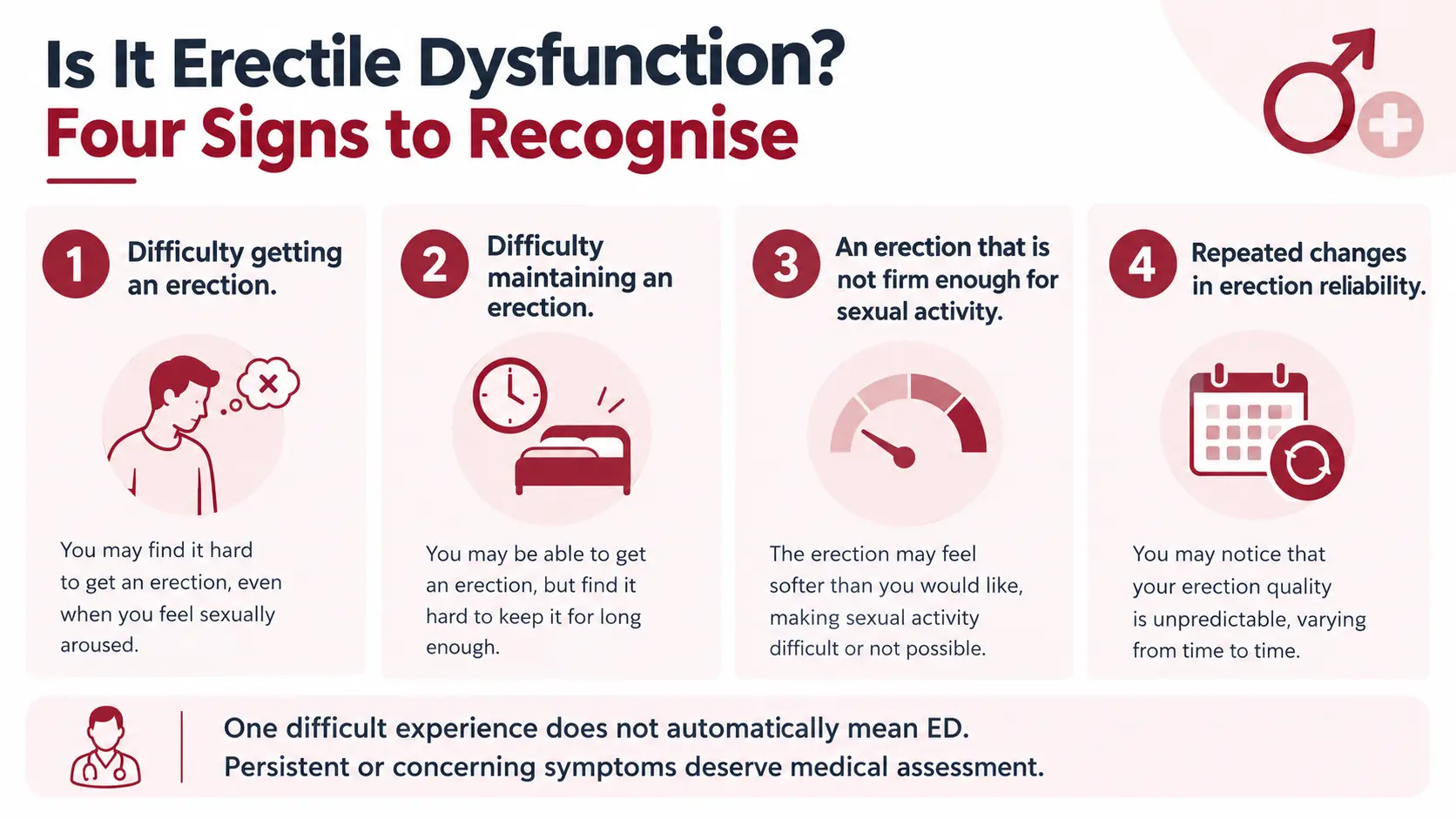
Erectile dysfunction (ED) involves recurring difficulty getting or maintaining an erection firm enough for sexual activity.
- Difficulty getting an erection
- Losing an erection before or during sex
- Erections that are not firm enough for sex
- Repeated changes in erection reliability
An occasional erection problem does not automatically mean ED. If difficulties persist or concern you, speak with a healthcare professional.
What Are the Symptoms of Erectile Dysfunction?
The ed symptoms generally fall into three main categories. Each person may experience these differently, and a clinician considers their frequency, context and possible causes when evaluating concerns.
The most common male erectile dysfunction symptoms involve difficulty getting an erection, difficulty maintaining one, or erections that are not firm enough for sex. Below, each of these erectile dysfunction symptoms is explained in detail. You can also understand the different types of erectile dysfunction to learn how erection difficulties may vary.
Difficulty Getting an Erection
A person may still experience sexual desire but find it difficult to develop an erection. Erections depend on coordinated blood flow, nerve signals, hormones and psychological factors.
When one or more of these elements are affected, achieving an erection can become harder. This is one of the signs that often prompts people to seek information.
The experience can differ from one occasion to the next, which is why looking at patterns over time is more useful than focusing on a single instance.
Difficulty Maintaining an Erection
Losing an erection before or during sexual activity is another sign to be aware of. Repeated difficulty maintaining firmness can be a symptom even when an erection initially develops.
Among the various signs, this one can be particularly frustrating because the process begins normally but does not continue as expected. Some people notice that firmness fades quickly, while others find that it fluctuates during sexual activity.
Either pattern, when it happens repeatedly, is worth discussing with a healthcare professional.
Erections That Are Not Firm Enough for Sex
Sometimes an erection develops but does not become firm enough for the intended sexual activity. This variation is still relevant when considering these signs, because firmness plays a role in satisfactory sexual function.
A person might notice that the erection is present but softer than expected, or that it does not last long enough to complete sexual activity. These changes can happen occasionally without indicating a broader concern.
When they become a recurring pattern, they fit within the range of erectile dysfunction symptoms. Symptoms vary between individuals, and a clinician considers their frequency, context and possible causes.
What Are the Early Signs of Erectile Dysfunction?
Early signs of ED can be subtle and may become noticeable before erection difficulties are consistently disruptive. Recognising these early signs of ED allows you to seek assessment sooner rather than later.
Erections may become less reliable than usual. You might notice increasing difficulty maintaining firmness. Repeated erection problems in different situations can also be among the early erectile dysfunction symptoms.
Growing worry about sexual performance because of recurring difficulties is another sign worth paying attention to.
There is no single universal sequence of early symptoms. Sudden changes should also be taken seriously, especially when accompanied by other health symptoms. Tracking these patterns can help you describe the changes to a clinician.
Is It ED or a Temporary Erection Problem?
Many men ask how to know if you have erectile dysfunction or a passing issue. Tiredness, stress, alcohol use, relationship difficulties and performance anxiety can all contribute to occasional erection problems.
These temporary factors do not necessarily indicate ED. A demanding period at work, poor sleep or a difficult personal situation can all affect sexual function in the short term.
However, persistent or recurrent difficulties may be signs of erectile dysfunction or another issue that warrants assessment.
The comparison below outlines the difference between occasional and recurrent erection difficulty:
| Occasional erection difficulty | Recurrent erection difficulty |
|---|---|
| May occur during periods of stress or fatigue | Continues to happen over time |
| May resolve when temporary factors change | May require assessment of physical or psychological causes |
| Does not necessarily indicate ED | May be consistent with ED, but is not a diagnosis by itself |
There is no single number of episodes that establishes a diagnosis. Readers should seek advice if the problem persists, recurs or causes concern.
Understanding these signs of erectile dysfunction can help you decide when professional input is appropriate.
What Is Erectile Dysfunction? Understanding the Symptoms
Erectile dysfunction is defined as ongoing or recurrent difficulty achieving or maintaining an erection sufficient for satisfactory sexual activity. The term impotence is an older expression commonly used to describe ED, although it can be imprecise because it has been applied to a wide range of sexual concerns over the years.
Understanding common erectile dysfunction terms can help clarify the language used in sexual health information.
When exploring what is erectile dysfunction symptoms, it helps to understand that ED is different from low sexual desire, premature ejaculation and difficulty reaching orgasm, even though these concerns can sometimes occur together.
Distinguishing between them matters because each may have different considerations and may lead to different conversations with a healthcare professional.
Do Morning Erections Help Identify ED?
Spontaneous and morning erections can offer useful information about erectile function. Their presence does not rule out ED, and their absence does not establish a diagnosis.
Sleep quality, stress, age, health conditions and medications can all affect these erections. Rather than relying on morning erections as a self test, readers should discuss noticeable changes with a healthcare professional.
This conversation can provide clearer insight into erectile dysfunction symptoms than any informal method.
Can Erectile Dysfunction Happen in Your 20s?
ED can affect younger men as well as older adults. Erectile dysfunction symptoms in 20s are more common than many people assume.
Potential contributors include performance anxiety, stress, depression, diabetes, medication effects, smoking and other health conditions. Younger age does not rule out a physical cause, and erection difficulties should not automatically be dismissed as anxiety.
Some younger adults experience occasional difficulties that resolve on their own, while others notice a more consistent pattern that warrants attention.
The likelihood and causes of ED can change with age, but age alone cannot determine an individual diagnosis. Being aware of age erectile dysfunction symptoms across different life stages helps readers understand that this concern is not limited to older adults.
Can an Enlarged Prostate Cause Erectile Dysfunction?
Benign prostate enlargement and ED can occur together, but prostate enlargement does not automatically cause ED. It is important to distinguish urinary symptoms such as a weak urine stream, difficulty starting urination, frequent urination and waking at night to urinate from erection related symptoms.
Both conditions become more common with age, which partly explains why they can appear at the same time, yet they involve different bodily systems. Age, associated health conditions and some treatments may influence both problems.
When exploring enlarged prostate symptoms erectile dysfunction connections, readers should seek assessment when urinary or sexual symptoms develop.
Can Nerve Damage Cause Erectile Dysfunction?
Erection signals rely on communication between the brain, nerves and blood vessels. Nerve damage associated with diabetes, certain neurological conditions or pelvic surgery may affect erectile function.
The nervous system plays a central role in transmitting the signals that begin and sustain an erection, so any disruption along those pathways can be relevant.
Altered genital sensation, numbness or other neurological symptoms may provide additional context, but they are not present in every case. New or unexplained neurological symptoms warrant medical evaluation.
Understanding erectile dysfunction nerve damage symptoms can help readers recognise when additional signs may be relevant alongside erection difficulties.
Does Persistent Erectile Dysfunction Mean It Is Permanent?
Persistent ED does not automatically mean the condition is permanent. The outlook depends on its underlying cause, general health and the effectiveness of appropriate management.
Many factors that contribute to erection difficulties can change over time, and some situations that initially seem permanent may improve with the right approach. No particular symptom proves permanent damage.
Readers experiencing permanent erectile dysfunction symptoms should seek assessment rather than delay care because they assume nothing can help. Persistent erectile dysfunction symptoms deserve professional evaluation, and earlier assessment often provides more options.
What Causes Erectile Dysfunction Symptoms?
Several factors can contribute to erectile dysfunction symptoms. Potential causes can be organised into three broad groups.
Physical factors include cardiovascular disease, diabetes, blood flow problems, nerve disorders and hormonal conditions. Psychological factors involve stress, depression, anxiety and relationship difficulties. Lifestyle and medication factors include smoking, excessive alcohol use, poor sleep and certain medicines.
Multiple factors can contribute simultaneously, which is why a single cause is not always easy to identify. ED can sometimes be an early sign of an underlying health issue, which is another reason assessment is important. Understanding the contributing factors can help guide discussions about ways to manage erectile dysfunction with a healthcare professional.
Recognising the range of these signs and their possible contributors helps readers understand why professional evaluation matters.
When Should You See a Doctor About ED Symptoms?
Speaking with a GP is recommended if erection difficulties are recurrent, persistent, sudden or concerning. Assessment may include medical and sexual history, medication review, physical examination and relevant tests.
A GP can help identify whether the changes are related to physical factors, psychological factors or a combination of both. Emergency medical attention is advised for an erection lasting four hours or longer, particularly when painful. Erection difficulties can sometimes occur alongside other sexual health concerns, including when ED and PE occur together.
Readers do not need to wait a fixed number of months before seeking help. If erectile dysfunction symptoms are affecting wellbeing or relationships, professional advice is worth seeking promptly.
Conclusion
Recognising erectile dysfunction symptoms early helps you make informed decisions about when to seek professional advice. Whether changes are occasional or recurrent, understanding the difference between temporary erection problems and ongoing concerns is an important first step.
Erectile dysfunction symptoms can vary between individuals and may involve difficulty getting an erection, maintaining one, or achieving sufficient firmness. Factors such as age, stress, underlying health conditions and lifestyle can all play a role.
If these signs persist, recur or cause concern, speaking with a healthcare professional is the most reliable way to understand what is happening and what options may be available.
Medical Disclaimer
Common Erectile Dysfunction Mistakes Men Should Avoid
Understand common mistakes in managing erectile dysfunction, including treatment misconceptions and habits that may affect results.
FAQ
What are the first signs of erectile dysfunction?
The first signs often involve changes in erection firmness, reliability or the ability to maintain an erection. These early erectile dysfunction symptoms may appear gradually and become more noticeable over time.
Can you have ED if you still get morning erections?
Yes. Morning erections do not rule out ED. Sleep quality, stress and other factors can influence their presence, so they should not be relied upon as a self test for erectile dysfunction symptoms.
Can stress cause erectile dysfunction?
Stress and anxiety can contribute to erection difficulties, but physical causes are also possible. Because multiple factors can overlap, erectile dysfunction symptoms warrant professional assessment rather than assumption.
Can ED happen at any age?
Yes. ED can affect adults of different ages, including younger men. Age alone does not determine whether someone experiences erectile dysfunction symptoms, and younger adults should not dismiss persistent concerns.
Does persistent ED mean it is permanent?
Not necessarily. Persistent symptoms need assessment and do not automatically indicate permanence. The outlook depends on the underlying cause and overall health, so erectile dysfunction symptoms should be evaluated by a healthcare professional.

Years of Experience: 12+ Years Education: Master of Sexology - [University of Sydney] MBBS (Bachelor of Medicine, Bachelor of Surgery) - [Torrens University Australia] BSc in Medical Laboratory Technology -…