

How Do You Get Rid Of A Headache?
By Erica Wilson, Jun-17-2025

 Dr. Arjun Srivastav Medical Reviewer (Pharm D)
A headache can interrupt your concentration, affect your mood and make everyday responsibilities harder to manage. It may develop after a demanding day, inadequate sleep, missed meals or prolonged screen use. Finding an appropriate way to manage the discomfort starts with understanding what might be contributing to it.
If you are searching for how to get rid of a headache, several everyday measures may be worth considering. Drinking water, resting in a quiet environment, adjusting your posture and taking an appropriate pain relief medicine are common options.
However, not every headache has the same cause. This guide covers practical relief methods, possible triggers, medication considerations and warning signs that require medical attention.
How Do You Get Rid Of A Headache?
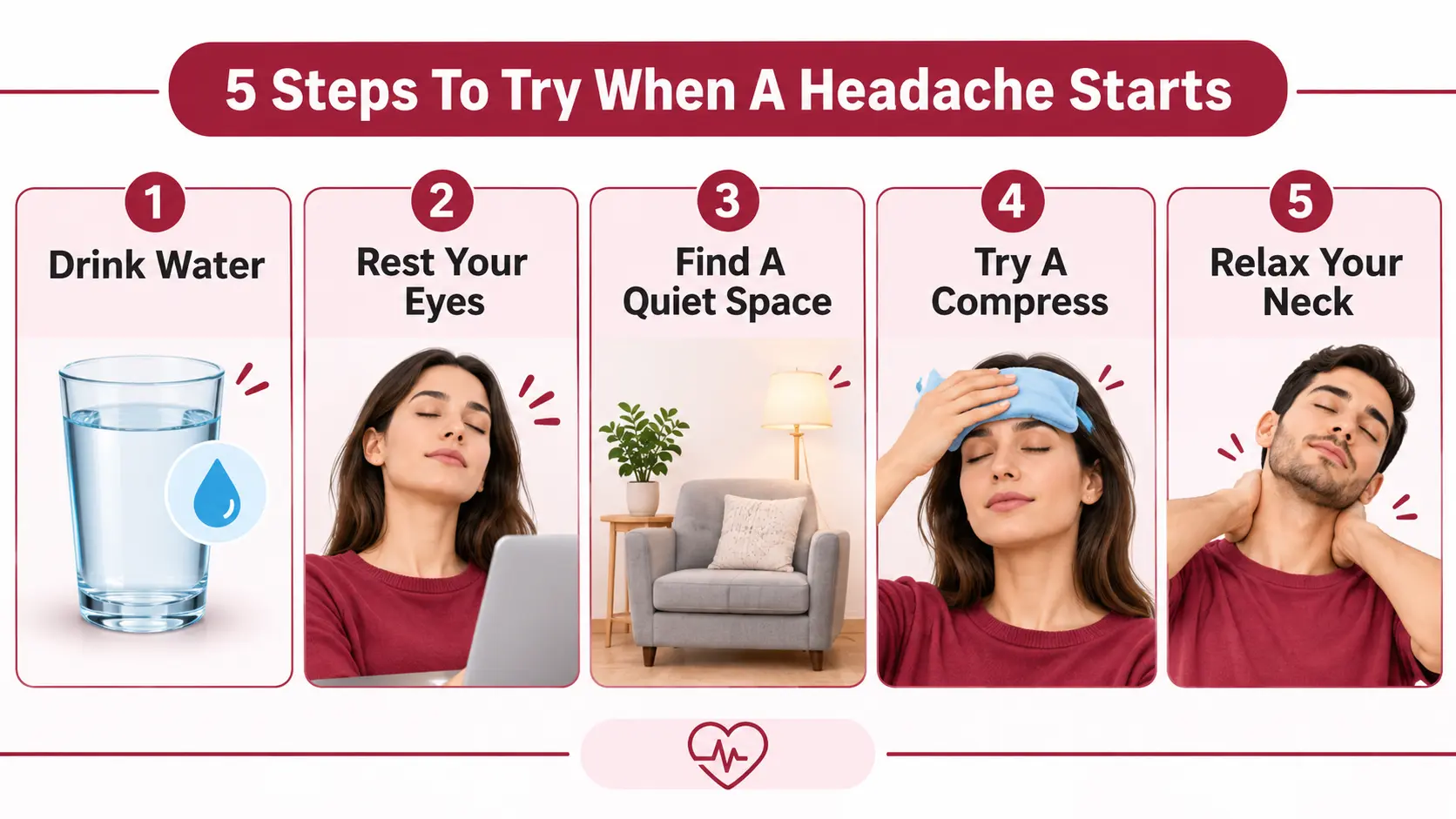
For mild headaches, these simple steps may help ease discomfort:
Drink water if you may be dehydrated.
Rest in a quiet, comfortable environment.
Take a break from screens and bright lighting.
Try a cool or comfortably warm compress.
Relax your neck and shoulder muscles.
How Do You Get Rid Of A Headache Quickly?
When head pain begins, most people want to know what they can do immediately. Although no approach guarantees instant relief, making a few simple changes may help manage mild symptoms.
Start by considering what happened before the pain appeared. A missed meal, insufficient fluids, bright lighting or a long period at your desk may provide useful clues.
The following measures are worth considering:
Drink water: If your fluid intake has been low, have a glass of water and continue drinking throughout the day.
Find a quieter environment: Move away from excessive noise and bright lighting. Rest somewhere comfortable, particularly if your surroundings make the pain harder to tolerate.
Pause screen activities: Put electronic devices aside temporarily. Give your eyes a break from prolonged close up viewing.
Apply a compress: A cool cloth across the forehead or a comfortably warm compress around the neck may provide temporary comfort. Avoid extreme temperatures.
Relax your shoulders: Adjust your sitting position and allow tense muscles to relax. Gentle movement may be helpful after spending considerable time at a desk.
These are reasonable first steps for mild episodes. Sudden or unusually intense pain requires medical assessment rather than repeated attempts at self care.
How To Reduce Headaches Naturally
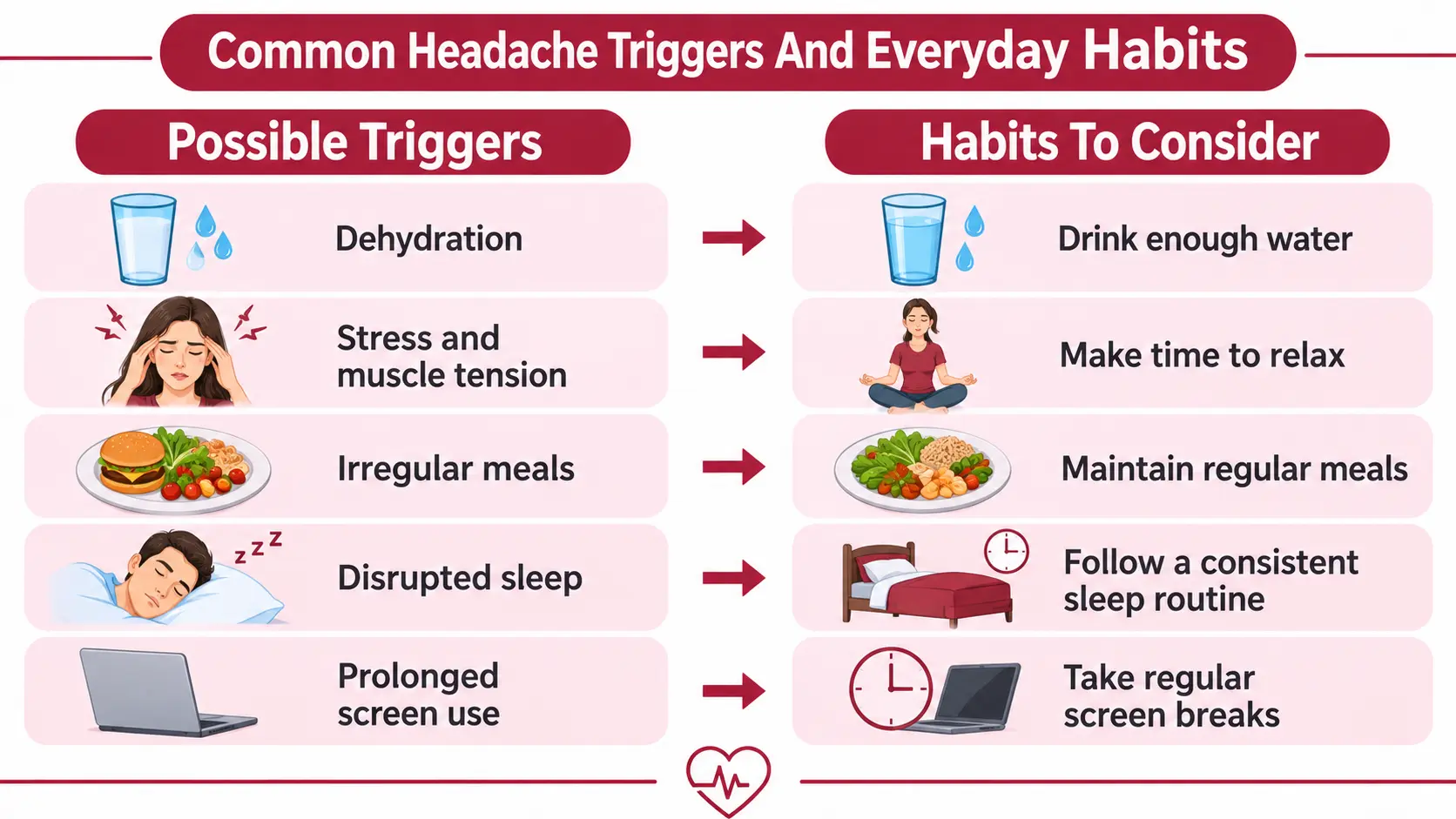
People interested in how to reduce headaches naturally often look for lifestyle adjustments that fit into their everyday routine. Rather than relying on one remedy, consider several habits that may influence headache patterns.
Maintain Adequate Fluid Intake
Your daily water intake can vary with activity, weather and individual needs. Keep a drink nearby and pay attention to periods when you may not be consuming enough fluids.
Follow Consistent Eating Habits
Skipping breakfast or leaving long gaps between meals may coincide with head pain in some individuals. A balanced eating routine can help avoid irregular meal patterns.
Make Time For Relaxation
Work pressures and personal responsibilities can contribute to stress. Meditation, controlled breathing or another calming activity may help create opportunities to unwind.
Improve Your Working Posture
Poor desk positioning can place unnecessary strain on the neck and shoulders. Adjust your chair, position your screen comfortably and avoid remaining in one position for extended periods.
Keep Sleep Times Consistent
Changes in sleeping habits may be associated with recurring episodes. Aim for a predictable bedtime and waking schedule instead of frequently changing your routine.
These approaches are not guaranteed treatments. Their usefulness depends on individual circumstances and the underlying reason for the symptoms.
What Causes A Headache?
There is no single explanation for every headache. The location of the pain, its duration, accompanying symptoms and circumstances surrounding its appearance can all provide useful information.
Common contributing factors include:
Stress and muscle tension: Emotional pressure and tightness around the neck or shoulders may be associated with tension type headaches.
Dehydration: Insufficient fluid consumption can contribute to head pain.
Changes in eating patterns: Missing meals or inconsistent food intake may coincide with episodes.
Sleep disruption: Insufficient rest and irregular sleeping hours can influence headache frequency.
Eye strain: Extended computer use, visual demands and uncorrected eyesight problems may contribute to discomfort.
Hormonal fluctuations: Menstrual cycle changes and menopause can influence headache patterns in some individuals.
Other possible contributors include illnesses, dental problems, sinus conditions and certain medicines.
If you are wondering why do I have a headache, consider whether anything changed before the episode began. Keeping a record of these circumstances can help when discussing recurring problems with a healthcare professional.
Which Medicines Can Help Relieve A Headache?
When lifestyle adjustments are insufficient, some people consider non prescription pain relief. The appropriate medicine depends on personal health circumstances, other medications and potential contraindications.
A pharmacist can help assess available options.
Paracetamol
Paracetamol is commonly used to manage mild to moderate pain, including headaches. It is available in several formulations.
Follow the instructions on the packaging and check the ingredients of other products you use. Some combination medicines also contain paracetamol, which can increase the risk of accidental overdose.
Taking more than the recommended amount can cause serious liver damage.
Ibuprofen And Other Anti Inflammatory Medicines
Ibuprofen belongs to a group of medicines known as non steroidal anti inflammatory drugs. These products are used for various painful conditions, including certain types of headaches.
They are not appropriate for everyone. Kidney problems, stomach ulcers, cardiovascular conditions, pregnancy and interactions with other medicines can affect whether ibuprofen is suitable.
Seek advice from a pharmacist or doctor before using it if you have concerns about its safety.
Important Precautions When Using Pain Relief
Frequent use of pain relief medicines can contribute to medication overuse headaches. Repeatedly taking tablets without addressing recurring episodes may therefore create additional problems.
Never exceed the recommended dosage or combine different products without checking their ingredients and suitability. If you regularly need medication for head pain, arrange a medical review.
How To Relieve Different Types Of Headaches
Recognising the characteristics of different headache conditions can help explain why one approach may not be appropriate for everyone.
Tension Headaches
Tension type headaches are often described as a tight band or pressure around the head. The neck and shoulder muscles may also feel tense.
Gentle movement, comfortable posture and relaxation techniques are reasonable measures to consider. Frequent episodes warrant a discussion with a healthcare professional.
Migraine Headaches
Migraine is a neurological condition that can involve throbbing head pain, nausea and sensitivity to light or sound. Episodes can affect daily activities in different ways.
Some individuals prefer resting in a dark, quiet room. Repeated attacks may require an individual management plan from a doctor.
Sinus Related Headaches
Sinus conditions can involve facial pressure, nasal congestion and discomfort around the forehead or cheeks. However, similar sensations can occur with other conditions.
Avoid assuming that every headache around the forehead or eyes originates from the sinuses. Persistent or worsening symptoms should be assessed professionally.
Why Do I Keep Waking Up With A Headache?
Morning head pain can have several possible explanations. If you frequently ask why do I wake up with a headache, consider whether your sleep quality or overnight habits have changed.
Potential contributors include sleep apnoea, teeth grinding, dehydration, disrupted sleep and certain medication effects.
Pay attention to how often the problem occurs, when the pain begins and whether other symptoms accompany it. A simple sleep and symptom diary can help you organise these observations.
Persistent morning episodes deserve medical assessment, particularly when they are becoming more frequent or affecting your daily activities.
How Can You Prevent Headaches From Returning?
Reducing recurring episodes involves recognising personal triggers and making manageable adjustments. A consistent routine can also make it easier to notice patterns.
Consider the following habits:
- Maintain predictable sleeping and waking times.
- Avoid regularly missing meals.
- Take breaks during extended computer work.
- Stay hydrated according to your daily needs.
- Make time for activities that help you unwind.
- Record possible triggers and changes in symptoms.
- Discuss frequent reliance on pain relief with a healthcare professional.
A headache diary can be particularly useful. Record the date, duration, location and intensity of each episode, along with relevant activities, meals, sleep patterns and medicines taken.
This information may help your doctor assess whether the episodes share a common pattern.
When Should You Worry About A Headache?
Although many headaches can be managed without emergency treatment, certain warning signs require immediate attention.
Seek medical help if you experience a sudden, extremely severe headache or head pain accompanied by concerning symptoms such as:
- Confusion or unusual drowsiness.
- Weakness or numbness, particularly on one side.
- Difficulty speaking or understanding speech.
- Fever accompanied by neck stiffness.
- Seizures or loss of consciousness.
- Significant changes in vision.
Arrange a medical assessment if episodes become progressively worse, occur more frequently, interfere with everyday activities or feel different from previous experiences.
Do not assume that a concerning episode is harmless simply because rest or pain relief has temporarily changed how you feel. Prompt assessment is important when warning signs are present.
Conclusion
Managing head pain begins with recognising possible triggers and choosing an appropriate response. Hydration, rest, posture adjustments and suitable pain relief are among the options worth considering. If episodes become persistent, unusual or severe, seek professional advice rather than relying entirely on home measures.
Medical Disclaimer: This article is intended for general educational purposes only. It does not replace professional medical advice, diagnosis or treatment. Consult a qualified healthcare professional about persistent or concerning symptoms and before using medicines when their suitability is uncertain.
Scientific Data
The content published on AustraliaRxMeds is intended for informational purposes and is based on trusted medical references such as Healthdirect. Always seek guidance from a qualified healthcare professional for personalized medical advice.
FAQ
How Can I Get Rid Of A Headache In 2 Minutes?
There is no established method that reliably removes a headache within two minutes. You can begin by resting somewhere comfortable, drinking water if needed and stepping away from bright screens. The time required for improvement varies according to the underlying cause.
Does Drinking Water Help Relieve A Headache?
Adequate hydration may help when insufficient fluid intake contributes to the problem. However, drinking water is not a universal solution for every headache condition.
Can Sleeping Help Get Rid Of A Headache?
Rest can be useful when tiredness or disrupted sleep is involved. However, sleeping for longer than necessary does not guarantee relief. Maintaining consistent sleeping habits is a more sensible long term approach.
How Long Does A Typical Headache Last?
Duration depends on the type and underlying cause. Some episodes settle relatively quickly, while others continue for several hours or longer. Persistent, worsening or unusual pain should be medically assessed.
Can Stress Cause Frequent Headaches?
Stress is associated with certain headache patterns, particularly tension type headaches. Relaxation activities, appropriate breaks and manageable daily routines may help address potential triggers. Repeated episodes should be discussed with a healthcare professional.

Years of Experience: 10+ years Education: B.Sc. in Biomedical Science (Monash University, Melbourne, Australia) PG Diploma in Health & Medical Communication (University of Sydney, Australia) Experience: Erica Wilson is an…


