

What Is Semaglutide? Uses, Benefits, Risks, and Side Effects
By Erica Wilson, Nov-10-2026


 Dr. Arjun Srivastav Medical Reviewer (Pharm D)
When people type the question what is semaglutide into a search bar, they are usually trying to understand a medicine they have heard about from a doctor, a news segment, or someone they know. Semaglutide is a prescription treatment that belongs to a group of medicines called GLP 1 receptor agonists. It interacts with specific receptors in the body to influence blood glucose levels and appetite.
Several products contain this active ingredient, and each one carries its own approved use. This guide explains how the medicine functions, what it is prescribed for, the benefits it may offer, the side effects and risks involved, and the current availability situation across Australia.
💡 Quick Answer:
It is a prescription medicine that mimics the GLP-1 hormone, helping regulate blood sugar and appetite. It is used in specific medicines for type 2 diabetes and, in eligible patients, weight management. Common side effects include nausea, diarrhoea, vomiting and constipation. Its benefits and risks depend on the individual and the product prescribed.
What Is Semaglutide?
At its core, semaglutide is a medicine classified within the GLP 1 receptor agonist family. GLP 1 is a naturally occurring hormone in the body that plays a role in regulating blood glucose, appetite, and the speed at which food leaves the stomach. Semaglutide is designed to mimic certain actions of this hormone.
To understand what are semaglutides, it helps to separate the active ingredient from the branded products on the market. Semaglutide itself is the active compound, while names like Ozempic, Wegovy, and Rybelsus refer to specific branded formulations that contain it. Each brand may have a different delivery method, dosage schedule, and approved medical indication.
So what does semaglutide do in the body? It interacts with GLP 1 receptors to help regulate glucose and reduce appetite signals. The medicine is prescribed for particular medical conditions where these effects are clinically relevant, and it is not appropriate for every person. A qualified healthcare professional must assess individual suitability before it is used.
How Does Semaglutide Work?
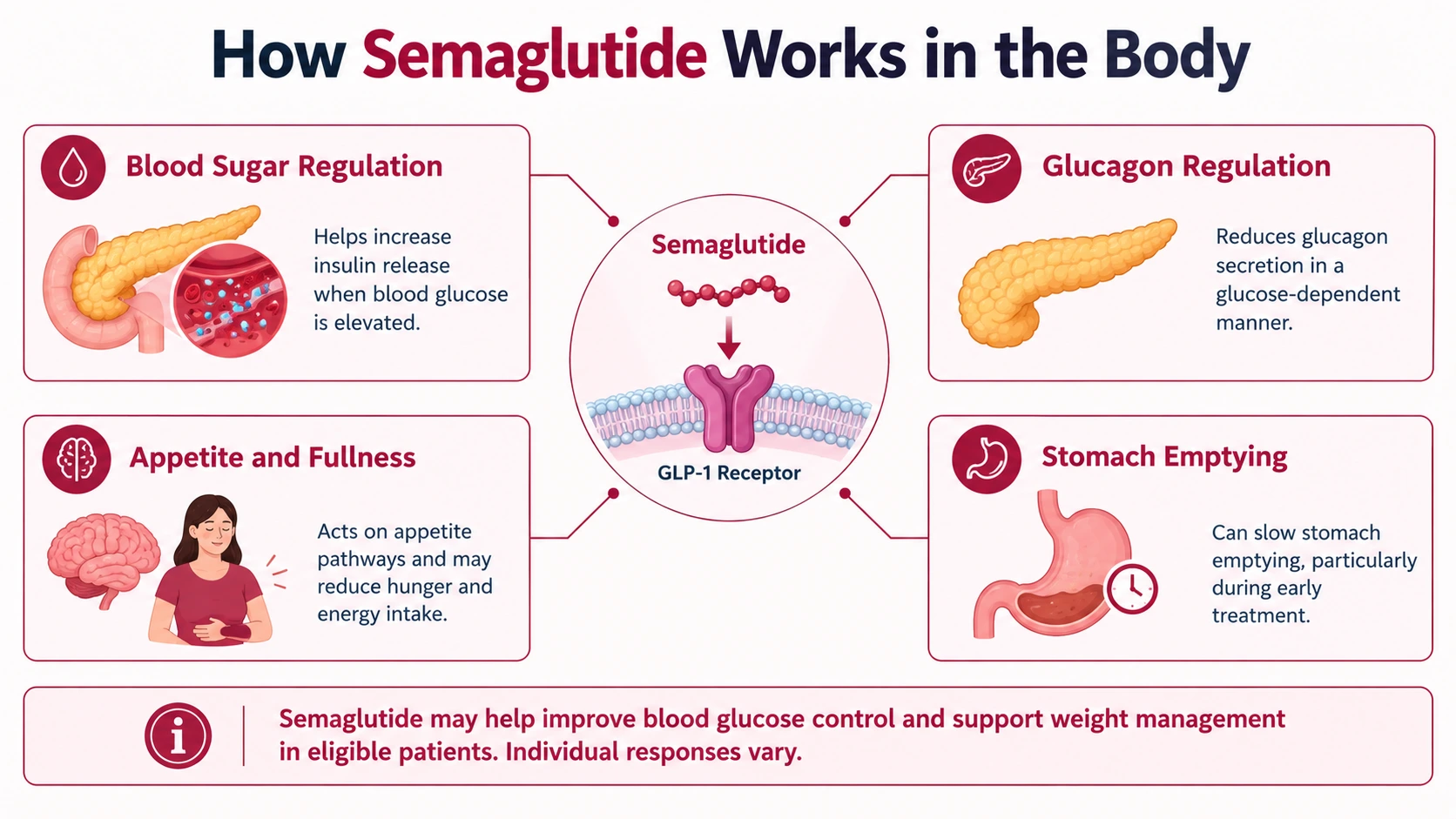
Understanding how does semaglutide work requires looking at the way this medicine interacts with the body rather than diving into complex pharmacology. The mechanism can be broken down into a few key areas.
How semaglutide affects blood sugar
Semaglutide stimulates the release of insulin from the pancreas when blood glucose levels are elevated. It also reduces the amount of glucagon the body secretes. Glucagon normally raises blood sugar, so limiting its release helps keep glucose within a healthier range.
This glucose dependent action means the medicine tends to act more when blood sugar is high and less when it is already within a normal range.
How It affects appetite and digestion
The medicine also influences appetite by signaling fullness to the brain. People often feel satisfied with smaller portions during meals.
Additionally, semaglutide slows the rate at which food empties from the stomach. This delayed emptying contributes to the sense of fullness. The effect on stomach emptying can change over the course of treatment as the body adjusts to the medicine.
Why these effects matter
For those wondering how do semaglutides work in practical terms, these combined actions support blood glucose management and reduced energy intake. The glucose regulation and appetite reduction work together rather than in isolation.
This is why the medicine is paired with dietary guidance and physical activity recommendations rather than used as a standalone solution.
What Is Semaglutide Used For?
The uses of semaglutide depend on the specific branded product and its approved indication in Australia. It is important not to assume that every product containing this ingredient serves the same purpose.
Type 2 diabetes management
Injectable semaglutide products are approved to help improve blood glucose control in adults with type 2 diabetes. This use is intended alongside diet, physical activity, and other appropriate treatments as determined by a treating clinician. The medicine supports glucose regulation as part of a broader management plan.
Weight management
For those asking how does semaglutide work for weight loss, Wegovy is the product containing semaglutide that is approved for chronic weight management in eligible patients. This indication involves use alongside a reduced energy diet and increased physical activity. Eligibility depends on specific clinical criteria that a healthcare professional evaluates for each person.
Physical activity is one part of a broader weight-management plan, alongside dietary changes and appropriate medical care. Regular aerobic exercise can also support general health.
Other potential health benefits
Some research has explored additional effects of GLP 1 receptor agonist medicines, including cardiovascular and kidney related outcomes. It is important to distinguish between:
- An approved indication that is recognized in the Australian Product Information for a specific product
- An effect that is still being investigated in research studies
Only benefits supported by the relevant Australian Product Information should be considered part of a product approved use.
What Are the Benefits of Semaglutide?
The potential benefits of it relate to the mechanisms described earlier but are worth summarizing from a practical standpoint. For suitable patients, the medicine may support:
- Improved blood glucose control
- Reduced appetite and greater feelings of fullness during meals
- Weight management can also relate to other aspects of health, including the relationship between body weight and blood pressure.
- Cardiovascular or kidney related benefits in certain populations, where supported by the relevant product information
Results vary between individuals. The medicine is not a replacement for appropriate clinical care or the healthy lifestyle measures that support overall wellbeing over time.
What Are the Common Side Effects of Semaglutide?
Most side effects reported with semaglutide are gastrointestinal in nature. These effects tend to appear most often when a person first begins treatment or when the dose is increased.
| Side effect | What readers should know |
|---|---|
| Nausea | May occur during treatment, especially during dose escalation |
| Diarrhoea | Can contribute to fluid loss |
| Vomiting | Persistent vomiting can lead to dehydration |
| Constipation | Changes in bowel habits may occur |
| Abdominal discomfort | Persistent or severe pain needs medical assessment |
The severity and duration of these effects vary from person to person. Not everyone experiences them, and they do not always resolve on their own.
Some symptoms may be manageable with guidance from a healthcare professional. Persistent or worsening symptoms warrant contacting a doctor. The key distinction is between temporary discomfort that may settle and ongoing issues that need proper medical assessment.
What Are the Serious Risks of Semaglutide?
While most people tolerate the medicine, there are important risks that require awareness and sometimes urgent medical attention.
- Pancreatitis: Warning signs include severe and persistent abdominal pain that may radiate toward the back
- Gallbladder problems: Have been reported in connection with this class of medicines
- Dehydration and kidney complications: Can result from severe gastrointestinal symptoms
- Hypoglycaemia: Risk increases when semaglutide is combined with insulin or certain other diabetes medicines
- Severe gastrointestinal symptoms: Require prompt evaluation
- Sudden vision changes: Require urgent medical assessment
The Therapeutic Goods Administration updated warnings for GLP 1 medicines in July 2026 to include information about a rare but serious eye condition called non arteritic anterior ischaemic optic neuropathy, also known as NAION. This condition can cause sudden vision loss. The TGA advises that anyone experiencing sudden vision loss or significant vision changes while using a GLP 1 medicine should seek urgent medical assessment. The warning applies across the class of medicines and is based on reported cases reviewed by the regulator.
This information is provided to support awareness rather than to cause alarm. The absolute risk remains low, and decisions about treatment should always be made together with a healthcare professional.
Is Semaglutide Ozempic?
Ozempic is a brand name for a medicine that contains semaglutide as its active ingredient. Semaglutide itself is the compound, not the brand.
Other products also contain semaglutide, and they may carry different approved indications, formulations, and dosing instructions. Switching between products should never be done without professional guidance from a doctor or pharmacist who can assess whether a change is appropriate for the individual.
Is Mounjaro a Semaglutide?
Mounjaro does not contain semaglutide. It contains a different active ingredient called tirzepatide.
Semaglutide activates GLP 1 receptors, while tirzepatide acts on both GIP and GLP 1 receptors. Because they work differently and have different approved indications, dosing schedules, and safety profiles, the two medicines are not interchangeable.
Is Semaglutide a Peptide?
Semaglutide is a modified peptide medicine. It is based on the structure of the naturally occurring GLP 1 hormone.
Structural modifications allow it to remain active in the body for longer than the natural hormone, which is why it can be taken less frequently than the body own GLP 1 would permit.
Is Oral Semaglutide Available in Australia?
Semaglutide is available in both injectable and oral tablet forms, but the different products have different approved uses. Rybelsus is an oral semaglutide medicine registered in Australia for eligible adults with type 2 diabetes.
Registration of a medicine does not mean it is always in stock at every pharmacy. Supply can vary, and current availability is best confirmed through a pharmacist or the TGA register. Importing, compounding, or using unapproved alternatives is not recommended.
💰 Semaglutide Cost in Australia
Approximate medicine costs based on Australian pricing information checked in October 2026. Prices can change by dose and pharmacy.
Important pricing difference
Ozempic’s $25 figure is the PBS co-payment, not its full private price. Semaglutide prescribed for weight management is generally not PBS-subsidised for that purpose, so patients may pay the full private price.
Prices are indicative, not guaranteed quotes. Confirm current pricing, PBS eligibility and prescription requirements with an Australian pharmacist.
Who Should Take Precautions Before Using Semaglutide?
A prescriber needs to review a person full medical history, current medicines, and treatment goals before recommending semaglutide. Several factors call for careful consideration:
- Pregnancy or plans to become pregnant
- Any history of pancreatitis or gallbladder problems
- Significant gastrointestinal conditions
- The risk of low blood glucose when combined with certain other diabetes medicines
Because the medicine can delay stomach emptying, patients should inform healthcare professionals about their semaglutide use before any surgery or procedure involving deep sedation. Individual assessment by a qualified clinician is always necessary rather than relying on a general checklist.
Conclusion
Semaglutide is a GLP 1 receptor agonist medicine prescribed for specific conditions, with different branded products carrying different approved uses. Understanding both its potential benefits and its risks helps people make informed decisions alongside their healthcare professional.
Anyone considering or currently using this medicine should discuss suitability, treatment expectations, and safety questions with a qualified clinician.
FAQ
How long does semaglutide take to work?
Changes occur gradually over time rather than immediately. The timeline depends on the treatment goal, the rate of dose escalation, and how the individual responds. Some effects on appetite and glucose may be noticed before changes in body weight become apparent.
Is semaglutide intended for long term use?
Treatment duration depends on the approved indication, the individual response, tolerability, and ongoing review by a clinician. Some patients may use it for extended periods, while others may have different treatment plans based on their circumstances.
What happens when semaglutide is stopped?
After stopping, appetite, blood glucose, or body weight may change. The outcome depends on the person individual circumstances, lifestyle, and any other treatments in place. Not everyone experiences the same result after discontinuation.

Years of Experience: 10+ years Education: B.Sc. in Biomedical Science (Monash University, Melbourne, Australia) PG Diploma in Health & Medical Communication (University of Sydney, Australia) Experience: Erica Wilson is an…

