
What Is a Parasite Infection? Causes, Symptoms, Types & Treatment
By Erica Wilson, Aug-10-2026

 Dr. Arjun Srivastav Medical Reviewer (Pharm D)
Parasite infections occur when a parasite lives in or on the human body and uses the host for nourishment or survival. Depending on the type of parasite, an infection may affect the digestive system, blood, skin, muscles, or other parts of the body.
Some parasitic infections cause only mild or temporary symptoms, while others can lead to serious complications if they are not diagnosed and treated appropriately. Parasites can spread through contaminated food or water, undercooked meat, insect bites, contaminated soil, close contact with an infected person, or contact with infected animals.
Understanding the common types, symptoms, causes, diagnosis, treatment options, and prevention measures can help you recognize when medical advice may be necessary.
What is a Parasite Infection?
A parasite is a living being that lives within another being called the host. It gets nutrients or any other advantage from its host.
A parasite infection is one where the parasitic living thing infects or infests the body. The parasite could be microscopic, or some larger parasites like some worms could become visible.
The symptoms depend on the kind of parasite, its location in the body, and how the body responds through its immune system. Some individuals might show obvious symptoms, whereas others might not have any or very few symptoms.
Since there are many similarities between the symptoms of parasite infection and other illnesses, there is a need for proper diagnosis of the problem.
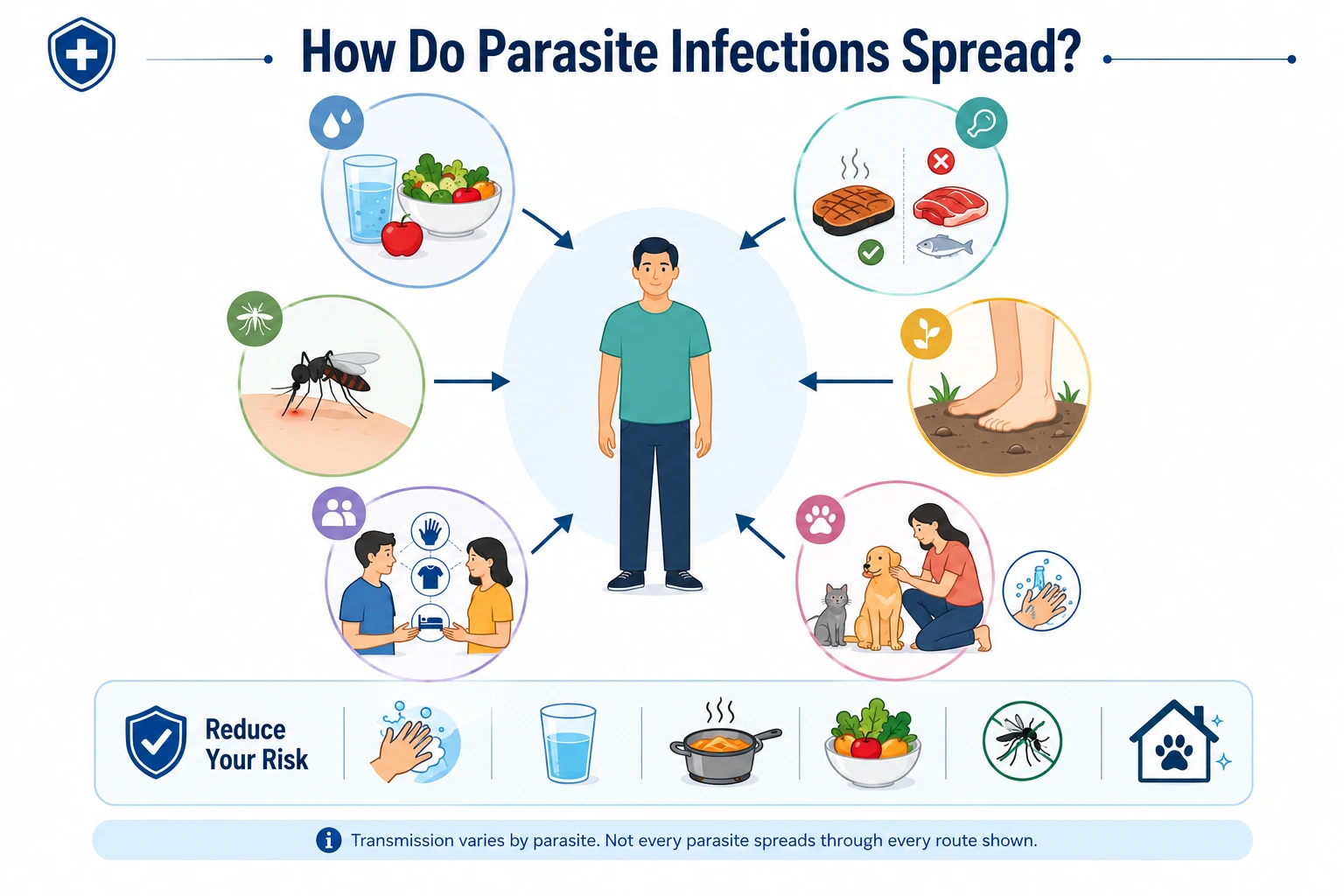
How Do Parasite Infections Spread?
There are several ways by which parasites can gain entry into the body. Infection transmission will depend on the particular parasite.
Contaminated Food and Water
Contaminated food and water are one of the major sources of parasitic infections.
Contamination may occur if food or water comes into contact with infected feces. This is especially common in places with low sanitation standards and a lack of proper water supply.
Travelers will be at risk if they consume contaminated water, inadequately cleaned fruits and vegetables, or eat food prepared in unsanitary conditions.
Undercooked Meat and Fish
Some parasites may require hosts for survival. Undercooked meat and fish can put one at risk of parasitic infections.
One can minimize the risk by eating well-cooked meat and fish and observing hygienic practices when preparing food.
Insect Bites
Some parasites are transmitted via insect bites. For instance, mosquitoes can transfer malaria parasites from an infected host to an uninfected individual by biting them.
Contaminated Soil
Some parasites can infect an individual if he/she comes into contact with contaminated soil.
There are certain larvae of worms that might enter the body, especially when people move around barefoot in places where there is contaminated soil.
Person-to-Person Contact
Some parasitic diseases can be transmitted from one person to another, either directly or indirectly.
For instance, pinworms can spread through contaminated clothes, hands, bedsheets, or home surfaces. Scabies infection can be spread via prolonged physical touch, while trichomoniasis is usually sexually transmitted.
Contact With Animals
There are some parasites that can be spread from animals to people.
For instance, coming into contact with the feces of an infected cat might be linked to toxoplasmosis infection.
What Are the Main Types of Parasites?
Parasites that affect humans are commonly grouped into three broad categories:
- Protozoa
- Helminths
- Ectoparasites
Each group includes different organisms and can cause different types of infections or infestations.
Protozoa: Microscopic Parasites
Protozoa are single-celled organisms that can cause infections in humans.
Some protozoa live primarily in the intestines, while others can affect the blood or other tissues. Depending on the organism, infection may occur through contaminated food or water, insect bites, or other routes.
Examples include:
- Malaria: A disease caused by Plasmodium parasites and transmitted through infected mosquitoes.
- Giardiasis: An intestinal infection commonly associated with contaminated food or water.
- Trichomoniasis: A sexually transmitted infection caused by Trichomonas vaginalis.
- Toxoplasmosis: An infection caused by Toxoplasma gondii, which can be acquired through several routes, including contaminated food and exposure to infected cat feces.
- Cryptosporidiosis: An intestinal infection that can cause watery diarrhea and may spread through contaminated water or food.
Helminths: Parasitic Worms
Helminths are parasitic worms that can infect humans. They include several different groups with distinct life cycles and methods of transmission.
Unlike many microscopic parasites, adult forms of some helminths can be visible to the naked eye.
Common groups include:
Roundworms
Roundworms include parasites such as pinworms, hookworms, whipworms, and Ascaris.
Depending on the species, they may spread through contaminated soil, contaminated food or water, or contact with infected material.
Tapeworms
Tapeworms are flat, segmented worms that can infect the digestive tract. Some species may be acquired by eating undercooked infected meat or fish.
Certain tapeworm infections can also involve tissues outside the intestine, depending on the species.
Flukes
Flukes are flatworms that can infect different parts of the body, including the liver, lungs, intestines, or blood vessels.
Some are associated with exposure to contaminated freshwater or consumption of certain raw or undercooked foods.
Ectoparasites: Parasites That Live on the Body
Ectoparasites live on the surface of the body rather than primarily inside it. They may feed on blood, skin, or other tissues. Skin-related parasitic conditions can cause itching, irritation, rashes, and other uncomfortable symptoms. For more information, see our guide to parasitic skin infections.
Examples include:
- Lice: These can affect the scalp, body, or pubic region.
- Mites: Certain mites can cause scabies, which produces significant itching and a characteristic rash.
- Ticks: Ticks attach to the skin and can transmit infectious organisms.
- Fleas: Fleas can bite humans and, in some circumstances, transmit infections.
- Bedbugs: Bedbugs feed on blood and commonly cause itchy bites.
These conditions are often described as infestations rather than internal parasitic infections, although they are caused by parasitic organisms.
What Are the Symptoms of a Parasite Infection?
There is wide variability in the symptoms associated with various parasites and the parts of the body they affect. Some individuals may show no signs while others become very ill.
Typical symptoms may include:
General Symptoms
- Fever
- Fatigue
- Muscle/body aches
- Weight loss
- General malaise
Digestive Symptoms
In cases where an individual is infected with intestinal parasites, the following symptoms could be experienced:
- Diarrhea
- Abdominal pains
- Nausea
- Vomiting
- Bloating
- Excess flatulence
- Changes in eating habits/appetite
- Nutrient deficiency
- Anemia in some infections
- Anal itching, especially with pinworm infections
In more serious cases, intestinal worm infections could lead to intestinal obstruction and other complications.
Skin Symptoms
Skin parasites could produce the following symptoms:
- Itching
- Redness
- Rash
- Sores
- Bites
- Crawling/itchy sensations
For example, a scabies infection causes intense itching which becomes worse during the nighttime.
Neurological Symptoms
Certain parasitic diseases can affect the nervous system. Depending on the infection, symptoms may include:
- Severe headache
- Confusion
- Changes in mental status
- Seizures
- Other neurological problems
Neurological symptoms require prompt medical assessment because they can have many possible causes, some of which may be serious.
⚠️ Warning
Who Is More Likely to Develop a Parasitic Infection?
Anyone can develop a parasitic infection, but certain circumstances can increase exposure or the risk of complications.
Higher-risk groups may include:
- People traveling to areas where certain parasites are common
- People living in regions with limited sanitation or access to clean water
- Young children
- Older adults
- People with weakened immune systems
- People who frequently work with contaminated soil
- People exposed to untreated water
- People who consume raw or undercooked foods associated with parasitic infections
Risk also depends on the specific parasite and the individual’s environment, activities, and health status.
How Are Parasite Infections Diagnosed?
Diagnosing a parasite infection usually involves reviewing symptoms and exposure history along with appropriate laboratory tests.
A healthcare professional may ask about:
- Recent travel
- Food and water exposure
- Undercooked meat or fish consumption
- Contact with animals
- Insect bites
- Outdoor activities
- Contact with people who have similar symptoms
- The duration and severity of symptoms
Depending on the suspected infection, testing may include:
Stool Tests
Stool tests are widely used to search for parasites, their eggs, cysts, or other manifestations of infection.
Sometimes several samples of stool are needed since parasites may be absent in all of them.
Blood Tests
A blood test helps to diagnose some parasitic infections by identifying the presence of the parasite or immunological responses that result from infection.
For instance, a blood test is crucial for the diagnosis of malaria.
Tape Test
When pinworm infection is suspected, the patient may have a tape test. Special clear adhesive tape is applied to the perianal skin early in the morning before bathing or going to the bathroom. It allows for the identification of pinworm eggs in the stool.
Molecular or PCR Testing
Sometimes the laboratory conducts molecular tests in order to reveal genetic material of some specific parasites. Such tests are helpful if there is an opportunity to conduct them.
Physical Examination
Some ectoparasites, for example, lice and scabies, may be diagnosed by examining the skin lesion site.
How Are Parasite Infections Treated?
Treatment depends on the specific parasite, the location of the infection, the severity of the illness, and the individual’s health.
There is no single medicine that treats every parasitic infection. Treatment should be based on the specific parasite and appropriate medical guidance. You can also read more about fenbendazole for human parasitic infections and the current information surrounding its use.
Depending on the diagnosis, treatment may involve:
- Antiparasitic medicines: Antiparasitic Medicines are selected according to the parasite involved.
- Supportive treatment: Fluids, nutritional support, or medicines for symptoms such as nausea or diarrhea may sometimes be needed.
- Additional treatment: Certain infections may require other medicines or treatment for complications.
Common Medicines Used for Certain Parasite Infections
Some medicines commonly used for particular parasitic infections include:
-
Albendazole and Niclosamide Tablets: Used for several intestinal worm infections, depending on the parasite.
-
Metrogyl (Metronidazole): Used for specific protozoal infections, including giardiasis and trichomoniasis.
- Tinidazole 300: Another medicine used for certain protozoal infections, including some cases of giardiasis and amebiasis.
- Nitazoxanide 500: Used for certain intestinal infections, including some Giardia and Cryptosporidium infections.
- Albendazole 400 – Used for certain intestinal worm infections.
- Mebendazole 500 – Available in different formulations and strengths, including 100 mg depending on the product and treatment indication.
- Ivermectin – Used for specific parasitic infections and should be taken according to the appropriate medical guidance.
💡 Important
For ectoparasites such as scabies or lice, treatment may involve creams, lotions, shampoos, or other products specifically intended for the particular infestation.
Household hygiene may also be important for some conditions. Washing clothing, bedding, and towels appropriately can help reduce the chance of continued exposure or reinfection.
Can You Prevent Parasite Infections?
Many parasitic infections can be prevented by reducing exposure and following good hygiene and food-safety practices.
1. Wash Your Hands Regularly
Wash your hands thoroughly:
- Before preparing or eating food
- After using the toilet
- After changing diapers
- After handling animals
- After gardening or working with soil
2. Drink Safe Water
Always drink water that has been properly treated, boiled, or filtered whenever you are in regions where the quality of water is not certain.
Exercise caution concerning ice cubes, fresh fruits and vegetables that may be rinsed with untreated water, and any other foods that may be contaminated with water.
3. Cook Food Properly
Cook meat and fish thoroughly according to appropriate food-safety recommendations. Avoid eating raw or undercooked foods when they may carry a parasitic infection risk.
4. Wash Fruits and Vegetables
Rinse your fruits and vegetables well before consumption, especially when they are going to be eaten raw. For more information about dietary approaches and commonly discussed foods, see our guide to foods for parasite prevention.
5. Protect Yourself From Insects
In regions where mosquito-borne or other insect-borne parasitic diseases are common:
- Appropriate use of insect repellents
- Covering body parts by wearing protective clothes
- Using mosquito nets where necessary
- Adherence to local health guidelines
6. Wear Shoes Outdoors
Wearing shoes can minimize any direct contact between your feet and soil, especially in regions where soil-transmitted worms are prevalent.
7. Practice Good Pet Hygiene
Follow veterinarian instructions on parasite prevention in pets. Wash your hands after interacting with pets and taking care of their droppings.
8. Maintain Good Household Hygiene
Hand washing, cleaning of surfaces often touched, and not sharing personal objects will help to reduce parasitic infections and infestations.
When Should You See a Doctor?
You should consider speaking with a healthcare professional if you have persistent or unexplained symptoms that could be associated with a parasitic infection.
Medical advice is particularly important if you experience:
- Persistent or severe diarrhea
- Blood in your stool
- Unexplained weight loss
- Persistent abdominal pain
- Prolonged fever
- Severe weakness or dehydration
- Persistent anal itching
- Symptoms after traveling to an area where parasitic infections are common
- Symptoms following exposure to untreated water or potentially contaminated food
- Severe headache, confusion, or seizures
🚨 Warning
Remember that these symptoms do not necessarily mean you have a parasite infection. A healthcare professional can determine whether testing or further investigation is needed.
The Bottom Line
Parasite infections are caused by organisms that live in or on a host and can affect different parts of the body. They include infections caused by protozoa and helminths, as well as infestations caused by ectoparasites.
Symptoms can range from mild digestive problems and skin irritation to more serious complications. However, many symptoms associated with parasites can also occur with other conditions, so symptoms alone cannot confirm an infection.
Diagnosis generally depends on the suspected parasite and may involve stool tests, blood tests, molecular testing, a tape test, or physical examination.
Treatment is also parasite-specific. Medicines such as albendazole, pyrantel, metronidazole, tinidazole, nitazoxanide, and antimalarial drugs may be used for particular infections, but the appropriate medicine depends on the diagnosis.
Good hygiene, safe food and water practices, proper cooking, insect protection, and appropriate pet care can reduce the risk of many parasitic infections.
FAQ
Can a parasite infection go away on its own?
Some parasitic infections may resolve without specific treatment, but others can persist or cause complications if untreated. Whether treatment is necessary depends on the particular parasite and the person's health. If symptoms persist, medical evaluation is recommended.
Who is most at risk of parasite infections?
Risk varies according to the specific parasite. People traveling to areas where particular parasitic diseases are common, individuals exposed to contaminated food or water, young children, and people with weakened immune systems may have increased risk of infection or complications.
How do doctors test for intestinal parasites?
Doctors may use stool tests to look for parasites, eggs, cysts, or other evidence of infection. Depending on the suspected parasite, blood tests or molecular testing may also be appropriate.
What are the most common symptoms of a parasite infection?
Common symptoms can include diarrhea, abdominal pain, bloating, nausea, vomiting, fatigue, unexplained weight loss, fever, anal itching, and skin irritation. Symptoms vary depending on the parasite and the part of the body affected.
How do people get parasite infections?
Parasites can spread through contaminated food or water, undercooked meat or fish, insect bites, contaminated soil, person-to-person contact, or contact with infected animals. The route of transmission depends on the specific parasite.
Can parasite infections be treated?
Yes, many parasitic infections can be treated effectively when the specific parasite is identified. Treatment may involve an antiparasitic medicine or other supportive care, depending on the infection.
How can I prevent parasite infections?
Good hand hygiene, safe drinking water, properly cooked food, washing fruits and vegetables, insect protection, wearing shoes in areas with contaminated soil, and appropriate pet hygiene can reduce the risk of many parasitic infections.

Years of Experience: 10+ years Education: B.Sc. in Biomedical Science (Monash University, Melbourne, Australia) PG Diploma in Health & Medical Communication (University of Sydney, Australia) Experience: Erica Wilson is an…