

Kidney Failure Symptoms: Early Warning Signs You Should Never Ignore
By Erica Wilson, Nov-23-2026


 Dr. Arjun Srivastav Medical Reviewer (Pharm D)
Kidneys play an important role in filtering waste from the blood, balancing fluids and maintaining the body’s internal environment. When their function becomes impaired, different changes can occur throughout the body. However, these changes are not always easy to recognise, particularly during the early stages of kidney disease.
Understanding kidney failure symptoms can help people recognise unusual changes and know when to seek medical advice. Some individuals experience swelling, persistent tiredness or changes in urination, while others may not notice anything unusual until kidney function has declined considerably.
Kidney problems can develop gradually over several years or occur suddenly due to an acute injury. The symptoms, underlying causes and medical assessment can differ between these conditions.
This article explains the early warning signs, advanced symptoms, five stages of chronic kidney disease, possible causes and tests used to assess kidney function.
Quick Answer: What Are the Symptoms of Kidney Failure?
Common kidney failure symptoms include swelling in the feet and ankles, changes in urination, persistent fatigue, nausea, itchy skin, muscle cramps and shortness of breath. Early chronic kidney disease may not cause noticeable symptoms, so blood and urine tests are important for assessing kidney health.
What Are the Symptoms of Kidney Failure?
The symptoms of kidney failure depend on how much kidney function has been affected and whether the problem developed suddenly or gradually. In chronic kidney disease, noticeable changes may not appear during the early stages.
Common kidney failure symptoms include:
- Swelling around the feet, ankles, legs or eyes
- Changes in urine frequency or appearance
- Persistent tiredness and weakness
- Nausea or vomiting
- Reduced appetite
- Itchy skin
- Muscle cramps
- Difficulty concentrating
- Shortness of breath
- Disturbed sleep
These changes can also occur with other health conditions. Experiencing one or more of them does not automatically mean that someone has kidney failure. Medical assessment and appropriate testing are needed to understand their cause.
Kidney health is also closely connected with heart and blood vessel health. People with kidney disease may have a higher risk of cardiovascular complications, making it important to understand related cardiovascular disease symptoms and discuss potential risk factors with a healthcare professional.
Early Warning Signs of Kidney Failure You Should Not Ignore
Early kidney problems can be difficult to recognise because the body may not show obvious changes. Some people continue with their usual activities without realising that their kidney function has changed.
Knowing the possible early signs of kidney failure can help people understand which changes deserve attention.
Changes in Urine Colour and Appearance
Urine changes are among the indicators that may be associated with kidney problems. You might notice that your urine looks different, appears unusually foamy or contains visible blood.
Other changes can include:
- Passing urine more frequently, particularly at night
- Producing less urine than usual
- Persistent frothy or foamy urine
- Blood appearing in the urine
Foamy urine can sometimes be associated with protein passing into the urine. However, its appearance alone cannot establish whether kidney damage is present.
Swelling Around the Feet, Ankles and Eyes
Swelling, also called oedema, can occur when excess fluid collects in body tissues.
You may notice that your shoes feel tighter, your ankles appear puffy or your eyelids look swollen, particularly after waking up.
Fluid retention has several possible causes, including problems affecting kidney function. Persistent or unexplained swelling deserves medical assessment.
Persistent Fatigue and Low Energy
Feeling tired occasionally is common, but ongoing exhaustion without an obvious explanation may deserve further attention.
Kidney disease can be associated with anaemia, which means the body has fewer healthy red blood cells available to carry oxygen. This can contribute to weakness, reduced energy and difficulty managing everyday activities.
High Blood Pressure
High blood pressure and kidney disease are closely connected. Kidney problems can affect blood pressure regulation, while prolonged high blood pressure can also damage the small blood vessels inside the kidneys.
Many people with high blood pressure do not experience noticeable symptoms. Regular blood pressure measurements are therefore important, particularly for people with other kidney disease risk factors.
Long term high blood pressure can place additional strain on the small blood vessels in the kidneys. Understanding how high blood pressure can affect the body helps explain why regular blood pressure monitoring is important.
Poor Appetite and Digestive Discomfort
Some people with reduced kidney function experience changes in appetite, nausea or an unpleasant taste in the mouth.
These digestive symptoms may become more noticeable as kidney disease advances. They can also have many other explanations, so they should be considered alongside other symptoms and medical test results.
Advanced Kidney Failure Symptoms
As kidney function becomes severely reduced, waste products and excess fluid may accumulate in the body. This can affect several body systems and lead to more noticeable health changes.
Advanced kidney failure symptoms may include:
- Significant swelling in the legs, feet or other areas
- Persistent nausea and vomiting
- Severe tiredness and weakness
- Reduced appetite and unintended weight changes
- Ongoing itching
- Muscle cramps
- Difficulty thinking clearly
- Changes in breathing
- Reduced urine output
The severity and combination of these symptoms differ between individuals. Some people may experience several changes, while others have a different pattern.
Severe breathlessness, chest pain, confusion, seizures or a sudden major reduction in urine output require urgent medical assessment.
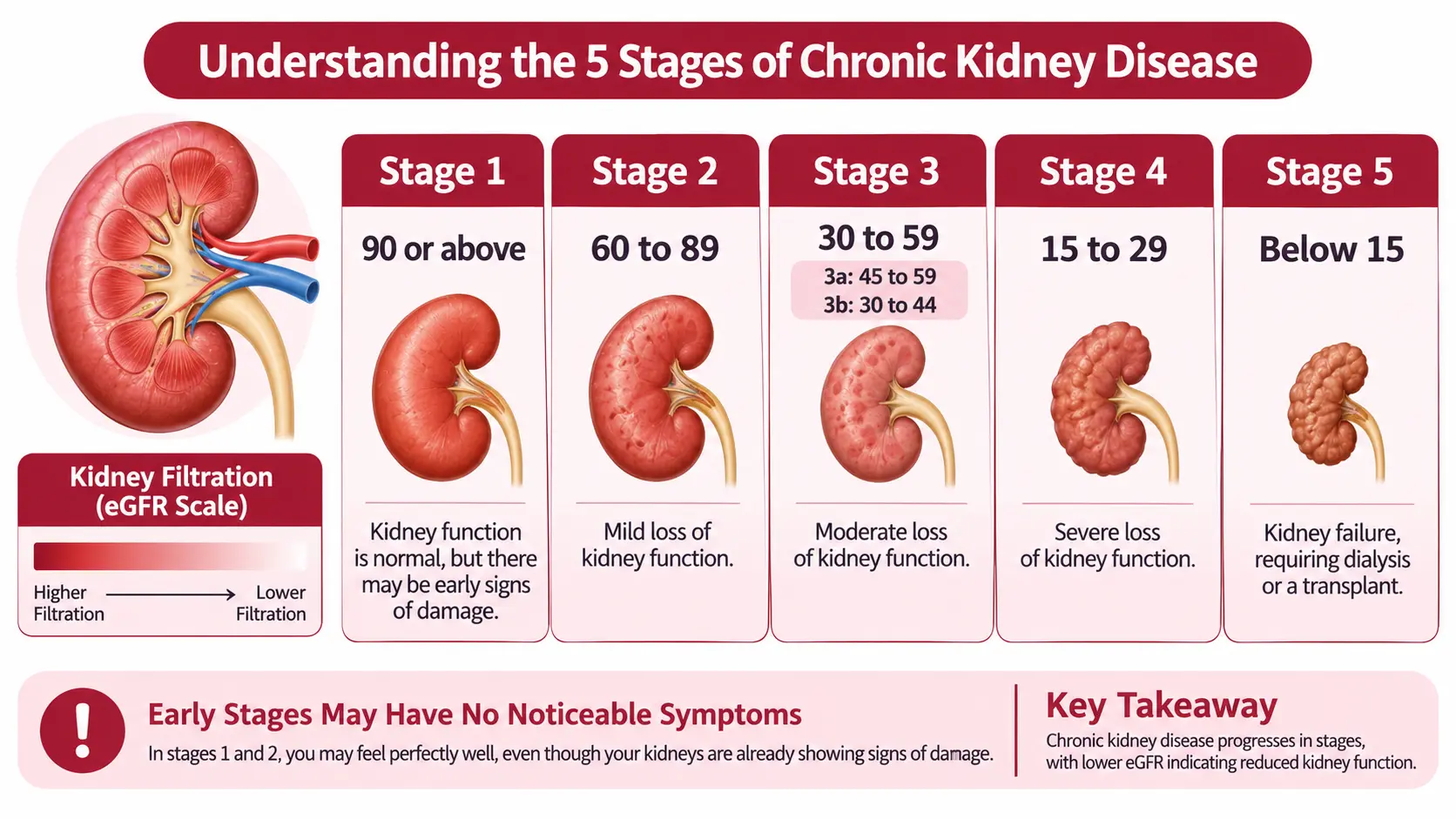
What Are the 5 Stages of Kidney Failure Symptoms?
Chronic kidney disease is divided into five main stages according to kidney function and evidence of kidney damage. Healthcare professionals use estimated glomerular filtration rate, known as eGFR, alongside urine albumin measurements and other clinical information.
The stages describe the extent of kidney disease rather than a fixed sequence of symptoms.
| CKD stage | eGFR result | Kidney function description |
|---|---|---|
| Stage 1 | 90 or above | Normal or high filtration with evidence of kidney damage |
| Stage 2 | 60 to 89 | Mildly reduced filtration with evidence of kidney damage |
| Stage 3a | 45 to 59 | Mild to moderately reduced filtration |
| Stage 3b | 30 to 44 | Moderately to severely reduced filtration |
| Stage 4 | 15 to 29 | Severely reduced filtration |
| Stage 5 | Below 15 | Kidney failure |
eGFR values are measured in mL/min/1.73 m². Stages 1 and 2 require evidence of kidney damage, as the filtration result alone does not establish chronic kidney disease.
Stage 1 and Stage 2: Early Kidney Disease
During the first two stages, kidney filtration may remain within or close to the usual range. However, other findings may indicate kidney damage, such as albumin in urine or structural abnormalities.
Many people do not experience noticeable symptoms during these stages. Kidney problems may instead be identified through routine blood and urine testing.
Stage 3: Moderate Reduction in Kidney Function
Stage 3 is divided into two categories, stage 3a and stage 3b.
Some individuals may begin noticing changes such as tiredness, swelling, appetite changes or alterations in urination. Others may continue to feel relatively well.
Regular medical monitoring helps assess kidney function and identify changes in test results.
Stage 4: Severe Kidney Function Loss
At stage 4, kidney filtration is considerably reduced. Possible symptoms include persistent fatigue, swelling, nausea, itching and changes in appetite.
This stage also requires careful assessment of kidney related complications and planning for future treatment options.
Stage 5: Kidney Failure
Stage 5 represents the most advanced stage of chronic kidney disease, with an eGFR below 15.
Waste removal and fluid regulation become severely impaired. Possible kidney failure symptoms include significant tiredness, nausea, vomiting, swelling, itching and changes in concentration.
Treatment planning may involve dialysis, kidney transplantation or supportive kidney care, depending on the person’s circumstances and medical assessment.
What Causes Kidney Failure?
Several medical conditions and circumstances can affect kidney function. Some develop over a long period, while others can cause sudden changes.
Diabetes
Diabetes is an important risk factor for chronic kidney disease. Persistently elevated blood glucose can damage the small blood vessels and filtering structures within the kidneys.
High Blood Pressure
Long standing high blood pressure can place additional strain on kidney blood vessels. Kidney damage can also make blood pressure more difficult to regulate.
Kidney Infections and Inflammation
Certain infections and inflammatory conditions can affect kidney tissue. The location, severity and duration of the condition influence the type of kidney involvement.
Severe Dehydration and Reduced Blood Flow
Significant fluid loss from vomiting, diarrhoea or other circumstances can reduce blood flow to the kidneys. This may contribute to acute kidney injury.
Urinary Tract Blockages
Conditions such as kidney stones or an enlarged prostate can obstruct the normal flow of urine. A blockage affecting urine drainage may interfere with kidney function.
Certain Medicines
Some medicines can affect kidney function, particularly in people with existing kidney problems or during episodes of dehydration. Nonsteroidal anti inflammatory drugs, commonly called NSAIDs, are one example.
Medicine use should be discussed with a doctor or pharmacist when kidney health is a concern.
How Is Kidney Failure Diagnosed?
Symptoms alone cannot confirm kidney failure. Healthcare professionals use medical history, physical examination and laboratory investigations to assess kidney function.
Blood Tests and Creatinine Levels
A blood test measures creatinine, a waste product produced through normal muscle activity. The result is used to calculate estimated glomerular filtration rate.
The eGFR provides an estimate of how effectively the kidneys filter waste from the blood. Changes in results over time can help healthcare professionals assess kidney function.
Urine Tests
A urine test can identify substances that may indicate kidney damage.
One important investigation is the urine albumin to creatinine ratio, commonly called ACR. It measures the amount of albumin, a type of protein, relative to creatinine in a urine sample.
Other urine investigations may check for blood, protein and additional abnormalities.
Blood Pressure Monitoring and Imaging
Blood pressure measurements form part of kidney health assessment.
Depending on the findings, a healthcare professional may also request an ultrasound or other imaging investigation to examine kidney structure and check for possible urinary blockages.
Chronic kidney disease is generally identified when abnormalities in kidney structure or function persist for at least three months.
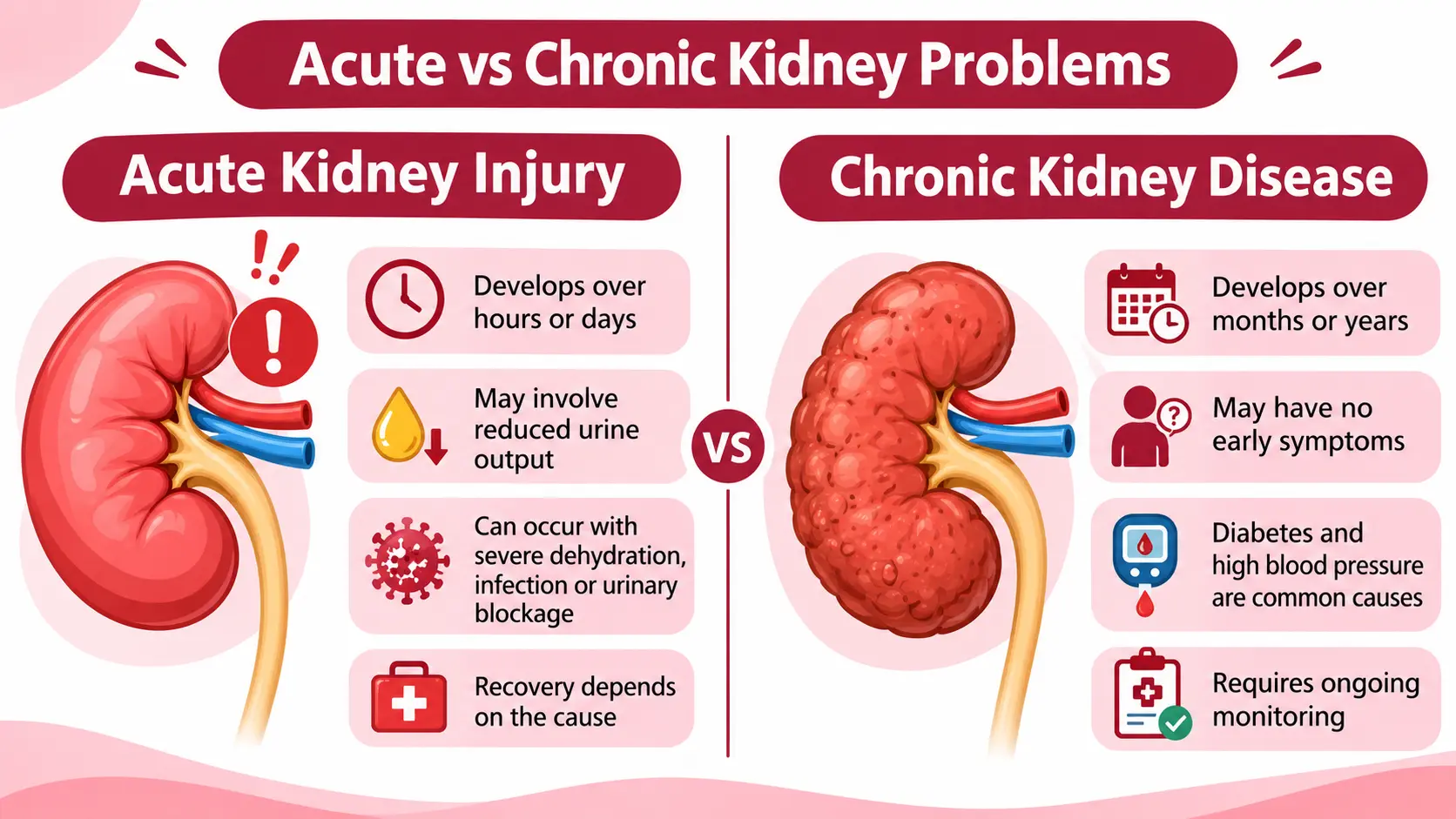
Acute vs Chronic Kidney Failure: How Are the Symptoms Different?
Kidney failure can develop suddenly or occur as part of a long term decline in kidney function. Understanding the difference between acute kidney injury and chronic kidney disease is important because their development and management are not the same.
| Comparison | Acute kidney injury | Chronic kidney disease |
|---|---|---|
| Development | Occurs over hours or days | Develops over months or years |
| Early presentation | May involve reduced urine output | Often has no noticeable symptoms |
| Possible symptoms | Reduced urine, swelling and changes in fluid balance | Fatigue, itching, swelling and urine changes |
| Common causes | Severe dehydration, infection, medicines or urinary blockage | Diabetes, high blood pressure and other kidney conditions |
| Course | Kidney function may recover, depending on the cause | Requires ongoing assessment and management |
Acute kidney injury can occur during a serious illness or following an event that affects blood flow to the kidneys. Chronic kidney disease involves abnormalities in kidney structure or function that persist for at least three months.
A sudden reduction in urine output should not be treated as an ordinary symptom, particularly when accompanied by swelling, breathlessness or feeling seriously unwell.
When Should You Seek Medical Attention?
Persistent urine changes, unexplained swelling, ongoing fatigue or other unusual symptoms should be discussed with a healthcare professional.
A sudden reduction in urine output, particularly alongside other signs of acute illness, needs urgent medical assessment.
Seek emergency assistance for severe breathlessness, chest pain, collapse, seizures or serious confusion. In Australia, call 000 when a medical emergency occurs.
Do not wait for several symptoms to develop before seeking help. A doctor can assess your symptoms and determine whether blood tests, urine investigations or further examinations are appropriate.
How Can You Reduce the Risk of Kidney Failure?
Kidney health is influenced by several factors, including existing medical conditions, family history and everyday habits.
The following measures can form part of general kidney health management:
- Keep blood pressure within the range recommended by your healthcare professional.
- Manage blood glucose levels if you have diabetes.
- Follow a balanced eating pattern.
- Maintain a healthy weight.
- Avoid smoking.
- Discuss medicine safety with a doctor or pharmacist.
- Attend recommended health checks, particularly if you have diabetes, high blood pressure or a family history of kidney disease.
Maintaining a healthy weight can support blood pressure management and overall cardiovascular health. Understanding how weight gain can affect blood pressure can help explain why weight management is an important part of reducing certain risk factors associated with kidney disease.
People with existing kidney conditions may require individual advice about fluid intake, dietary choices and medicines. A general approach may not be suitable for everyone.
Final Thoughts
Recognising unusual changes in urination, persistent swelling, unexplained fatigue and other physical symptoms can help people understand when kidney health needs attention. However, early chronic kidney disease may not produce noticeable warning signs.
Understanding kidney failure symptoms is only one part of assessing kidney health. Blood tests, urine investigations and professional medical assessment provide a clearer picture of kidney function.
If you notice persistent or sudden changes that concern you, speak with a qualified healthcare professional rather than relying on symptoms alone.
⚠️ Medical Disclaimer
FAQ
What Are the First Signs of Kidney Failure?
Early chronic kidney disease often develops without noticeable symptoms. Some people may experience changes in urine appearance, frequent urination at night, swelling or unexplained tiredness as kidney problems progress. Blood and urine tests are needed to assess kidney health.
How Do You Know If Your Kidneys Are Failing?
There is no reliable way to confirm kidney failure based on how you feel alone. A blood test measuring creatinine and eGFR, together with a urine ACR test, can help assess kidney function and identify possible damage.
What Are the 5 Stages of Kidney Failure Symptoms?
The five stages refer to chronic kidney disease severity, classified using eGFR and evidence of kidney damage. They range from early disease with relatively preserved filtration to stage 5 kidney failure. Symptoms do not follow the same pattern in everyone.
Can Kidney Failure Develop Without Symptoms?
Yes. Chronic kidney disease may remain unnoticed for a long time, particularly during its earlier stages. Some individuals discover changes through routine blood or urine tests rather than physical symptoms.
What Are the Symptoms of Stage 5 Kidney Disease?
Stage 5 kidney disease can involve swelling, severe tiredness, nausea, vomiting, itching, appetite changes and difficulty concentrating. The symptoms vary according to the person’s condition and other health factors.
Can Kidney Function Improve After Kidney Failure?
Recovery depends on the type and cause of kidney damage. Some people recover kidney function after acute kidney injury, while established chronic kidney damage is generally not reversible. Treatment and ongoing monitoring depend on the medical findings.

Years of Experience: 10+ years Education: B.Sc. in Biomedical Science (Monash University, Melbourne, Australia) PG Diploma in Health & Medical Communication (University of Sydney, Australia) Experience: Erica Wilson is an…
